Mouse-ear Chickweed
Mouse-ear Chickweed
Biology: Mouse-ear chickweed (Cerastium vulgatum) is a broadleaf weed that normally acts as a perennial; however, it has the ability to act as a winter annual depending climate conditions. Mouse-ear chickweed germinates by seed from late summer to fall or early spring. As long as cool climate conditions and moist soil persist, germination can also continue into the summer. Similar to common chickweed, its prostrate growth habit and capabilities to withstand low mowing practices make mouse-ear chickweed a prominent weed in turfgrass and other mowed areas throughout the United States.
|
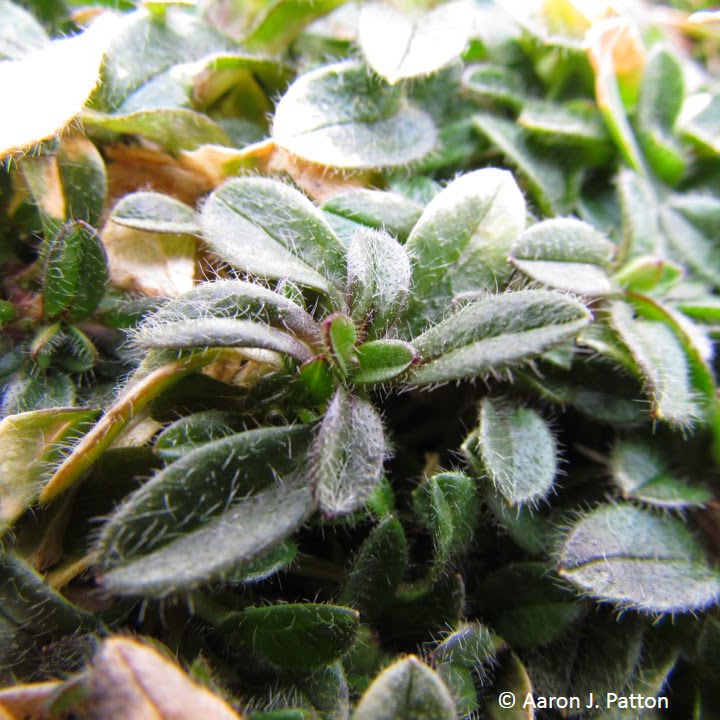
| Oblong leaves with dense hairs on upper surface |
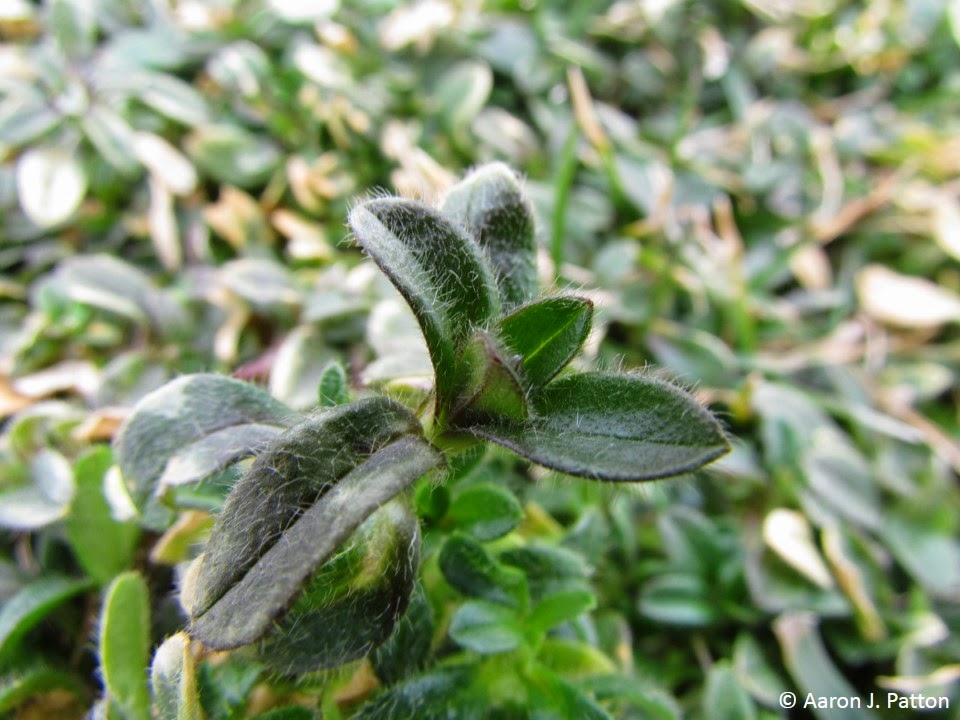 |
| Oblong leaves with dense hairs on upper surface |
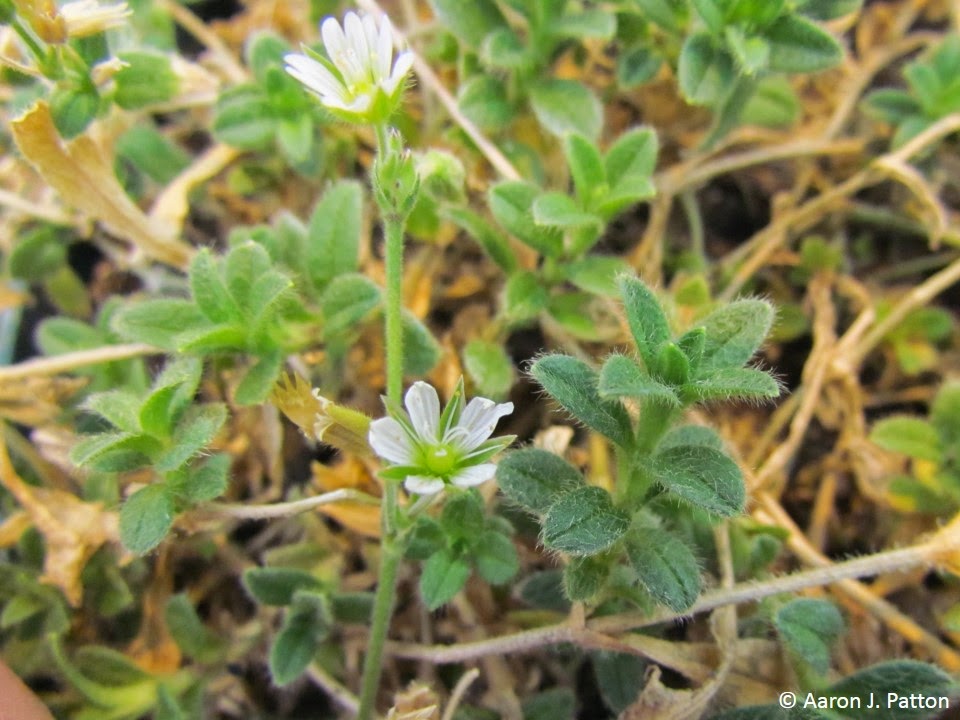 |
| Daisy-like petals with 5 petals. Deep clefts in the center of each petal give the appearance of 10 total petals. |
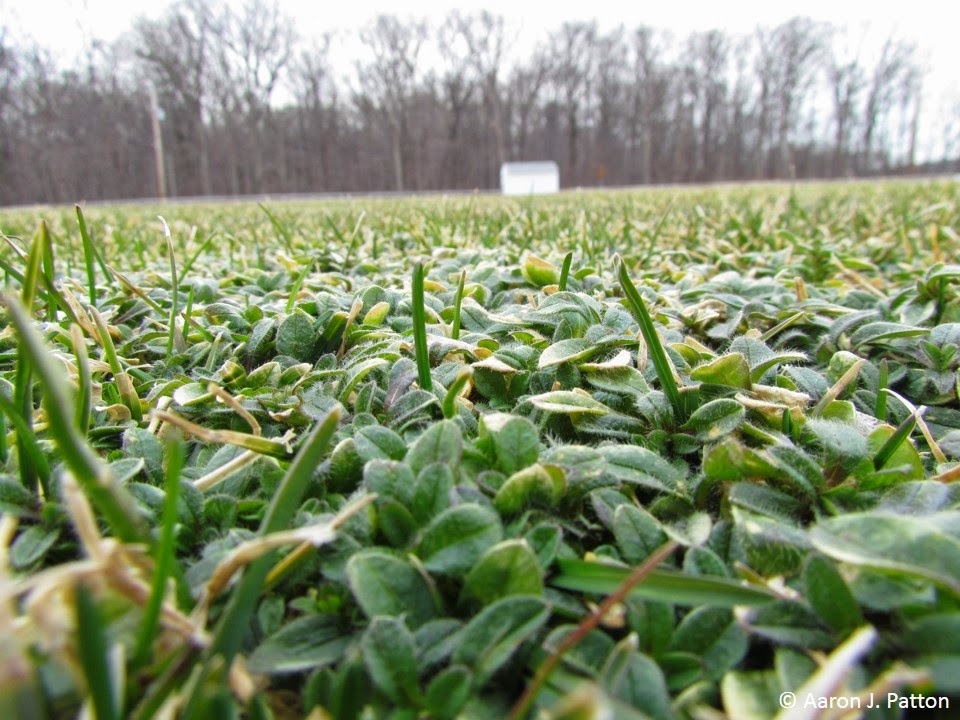 |
| Dense, mat-like growth at low mowing heights |
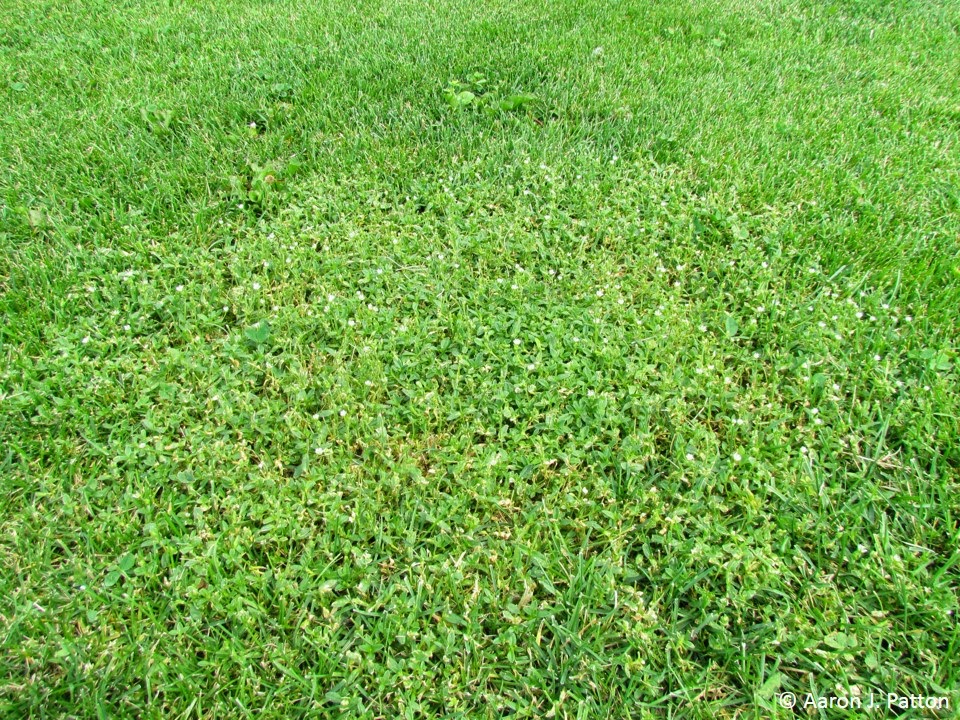 |
| Large patch of mouse-ear chickweed in cool-season turf |
Other organic products that contain iron HEDTA (FeHEDTA), may be used to manage mouse-ear chickweed; however, their ability to control this weed has not been effectively researched.
Postemergence control can be achieved with repeat applications of two or three-way mixtures of 2,4-D, dicamba, MCPP, or MCPA. A repeat application may be required.
For archives of past weed of the month postings, visit our Weed of the Month Archive.