September 1, 2026: Mending the Muck
Summer heat meets early fall; pervasive algae = difficult situation on putting greens; decisions on lawn disease management and recovery.
Weather
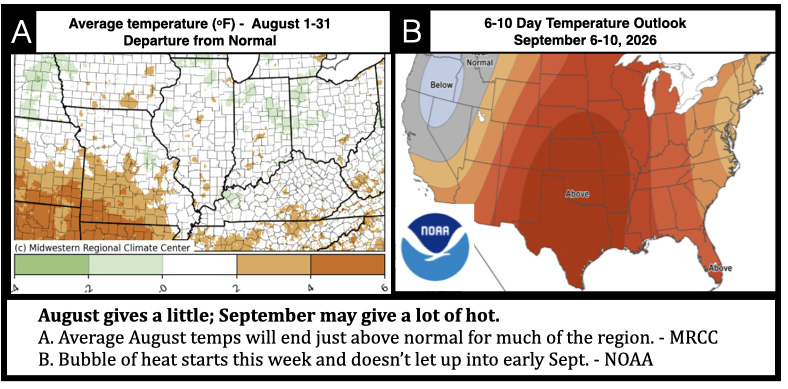
As August comes to a close, September is supposed to reveal the full glory of fall. Or does it? August 2026 was fairly average temperature-wise across much of the region, with Indianapolis lows generally in the mid to upper 60s and daily temperatures averaging only about half a degree above normal. Wasn’t the 57°F low on August 24 in Indy a welcome break?
Early September, however, will not bring much in the way of cool fall breezes. Overnight lows will remain in the mid-70s, beginning yesterday and continuing through the week. These summer-like temperatures, ~ 14–17°F above average, will create significant late-season heat stress for cool-season grasses. On a positive note, the photoperiod in early September is only about 13 hours and continues to shorten, roughly two hours less than in late June and early July. Unfortunately, however, plants are at their weakest after enduring a long summer. As a result, heat stress this late in the season can have a much greater impact than it would at the end of spring.
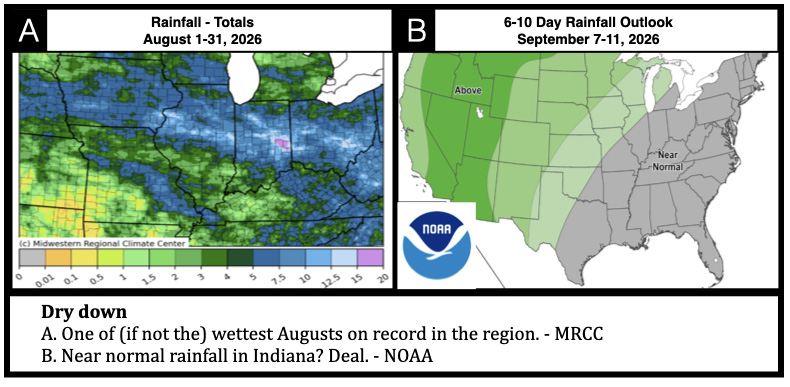
The intense rainfall of August may compound the problem. The official August 2026 rainfall tally in Indy was 7.33 inches more than doubling the average of 3.2. The rainfall record was 8.34 inches, set in 1980. Based on the rainfall chart above and the severe rainfall intensity east of the city, August 2026 will likely rank as the wettest August statewide on record. Fortunately, the region dried out somewhat in the last half of August, and an intersection of this current/forecasted heat didn’t directly abut the flooding. When the heat thankfully breaks, the region should get some rainfall but as a whole, near normal rainfall into mid-September will be very welcome to help soggy soils recuperate.
Algae Issues on Putting Greens
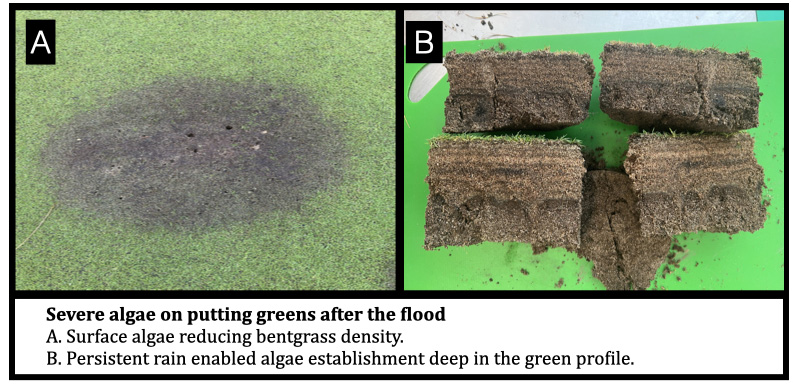
Over the last 7-10 days, several samples and reports have been received of putting greens succumbing to substantial algae (or cyanobacteria) infestations. Algae on the surface after significant rainfall or overirrigation is normally associated with a lack of turfgrass density, potentially in conjunction with other stressors. In surface infestations, algae are found within the leaf sheath, and these organisms can produce secondary toxins that limit turfgrass growth and help their cause. Chlorotic yellow spot symptoms associated with Oscillatoria or Phormidium spp. are an obvious flare up of algae toxin effects on plant growth.
Conversely, black layer in the soil profile can also be associated with cyanobacteria and sulfur-reducing bacteria that invade in saturated soil conditions. Poor drainage through the profile leaves soil pore spaces full of water and devoid of oxygen, leading to a shift to anaerobic soil conditions and giving these bacteria a quick advantage over plants. These bacteria reduce sulfur to hydrogen sulfide, or the rotten egg “smell of death”, that causes root decline from the bottom up.
What happens when both occur at the same time in a large flooding event? How does the superintendent encourage recovery? This is the situation of several courses in the area after the floods receded. As shown in this video, the entire thatch/mat layer is infested with algae, trapping water and perpetuating the poor condition. Rarely does algae penetrate this far down into the soil profile to produce these significant symptoms, and not much information is available to remedy it.
Out of the spray nozzle, chlorothalonil is the gold standard suggestion for yellow spot and surface algae control. Mancozeb and Junction is also highly considered along with a routine phosphite program. Thiram used to be part of this regimen for many superintendents, but has been removed from the market over toxicity concerns. The catch is that much of the research conducted on algae control has assessed preventive applications, rather than curative use. New products including AlgaeZyme, based on fermented barley extracts, are showing promise in some trials, particularly when combined with chlorothalonil. Oils including thyme and cinnamon have also shown efficacy in removing algae. I have been asked my opinion of newer products including Zerotol 2.0 and Jet-Ag which contains sterilization type ingredients of hydrogen peroxide and peroxyacetic acid. To my knowledge, these products haven’t been researched for this purpose on golf putting greens.
My advice in these situations is to take a breath. Read the label. Some of the products above come with fairly significant cautionary statements regarding phytotoxicity risk. The heat we are currently experiencing, adds to this risk. Adhere to label statements, such as those on the oils, regarding safe temperature ranges for application. If the label states to test the application on a small area to assess phytotoxicity risk, and you haven’t already done it, now is not the time to add the untested into your program. Late August/early September is the weakest time for your putting greens. Let’s not throw the baby out with the bathwater, although the water does need to go.
My three-step suggestion for this persistent deep algae infestation is (in order) to vent the affected greens, apply chlorothalonil or chlorothalonil + mancozeb or Junction and apply a slightly heavier topdressing than normal. Solid tine venting should aid in drying the soil profile out, and spot core aeration with core removal should be considered. Chlorothalonil and mancozeb are known as effective algaecides, and with caution a product like Junction with mancozeb + copper hydroxide (which can accumulate to toxic levels with repeated use) could also be considered. Last, topdressing with fresh sand should aid in the drying process, protect the crown somewhat from further algae invasion and, like the organic matter, dilute the algae.
Disease Control vs. Planning for Lawn Recovery
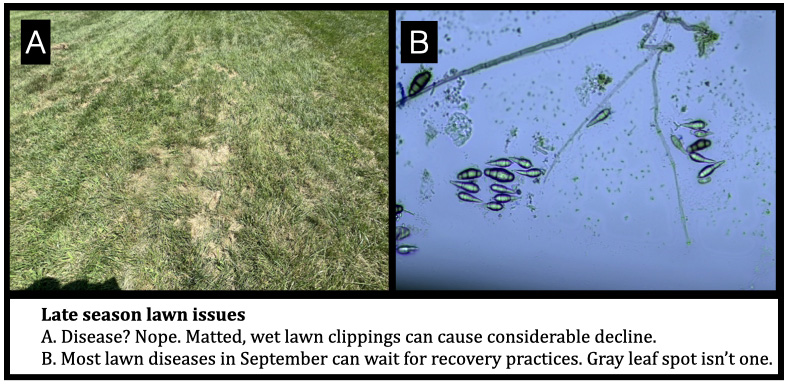
A slate of issues has been observed in the diagnostic lab over the last two weeks on lawns, ranging from more brown patch on tall fescue, decline of weedy grasses such as Poa trivialis and creeping bentgrass, to some lingering dollar spot and leaf spot on Kentucky bluegrass. Grass clippings, however, remain one of the bigger, yet often disregarded factors involved in lawn decline. Frequent and heavy rainfall events make it difficult to maintain mowing frequency, which can cause obvious clipping accumulation. Mowing when the turf is too wet not only causes compaction damage but also additional damage when wet mats of clippings are compressed on the grass by mower tires. In the above photo, only bare soil remains under the clippings after a week without removal. If a lawn is bumpy or uneven, wet, matted leaf clippings may be the true issue rather than disease.
When a true disease is present on lawns in late August/early September, my advice is usually to wait and save the focus for turfgrass recovery rather than fungicide application. Yesterday, an exception to this rule came into the lab… gray leaf spot on tall fescue was diagnosed from a declining lawn in Terre Haute. This disease spreads very quickly via spores and can cause severe damage in a short amount of time. Additionally, gray leaf spot affects seedlings, so stopping disease progression now is also important for reseeding efforts.
A tank mix of thiophanate methyl plus azoxystrobin is suggested for curative control. The QoI fungicides, such as azoxystrobin, are the standard choice for brown patch control, but alone don’t provide adequate curative control of gray leaf spot or preventive control in heavy epidemics. Conversely, thiophanate methyl doesn’t effectively control brown patch on tall fescue, but does provide a good boost for controlling gray leaf spot. The two combined, however, are effective for gray leaf spot management.
Fall/Winter Events – Mark Your Calendars
REGISTRATION OPEN: October 12, 2026 – MRTF Golf Day Fundraiser: The Sagamore Club
November 17-18, 2026 – Turf & Landscape Seminar: Daniel Turfgrass Research Center
December 10, 2026 – Turf Herbicide Workshop: Daniel Turfgrass Research Center
February 8 – 10, 2027 – 2027 Indiana Green Expo: Indiana Convention Center
Lee Miller
Extension Turfgrass Pathologist – Purdue University
Follow on Twitter: @purdueturfpath
Follow on LinkedIn: @purdueturfpath

August 14, 2026: Awful tired boss
Rain, rain go away… threat of saturated soil profiles in the toughest time for cool season turfgrass; four foliar diseases that have been and are now becoming problems.
Weather
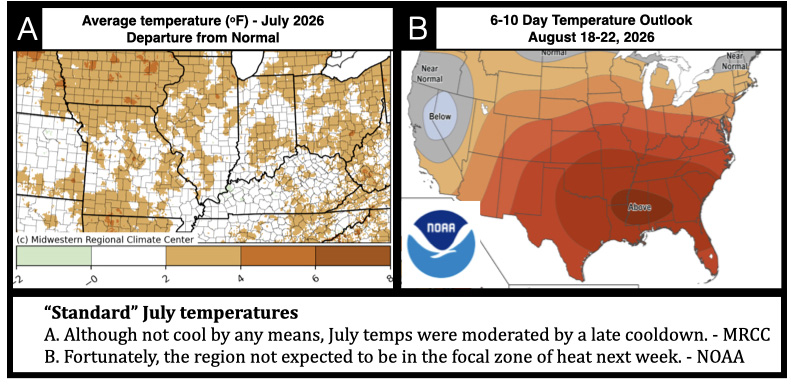
Extraordinarily high temperatures have not been the theme thus far this summer. Indianapolis posted 10 days in the 90s early in July but also had an extended break later in the month with highs in the 70s and even a low of 57 F on July 23. August has posted a few days right at the 90-degree high mark, but nothing too severe. More importantly, nighttime temperatures also haven’t had a sustained spike into the mid and high 70s like last year. Cool season turfgrass growth has been fairly consistent and heat stress is low, especially compared to last summer’s 4-6 degrees above normal temperatures in both June and July.
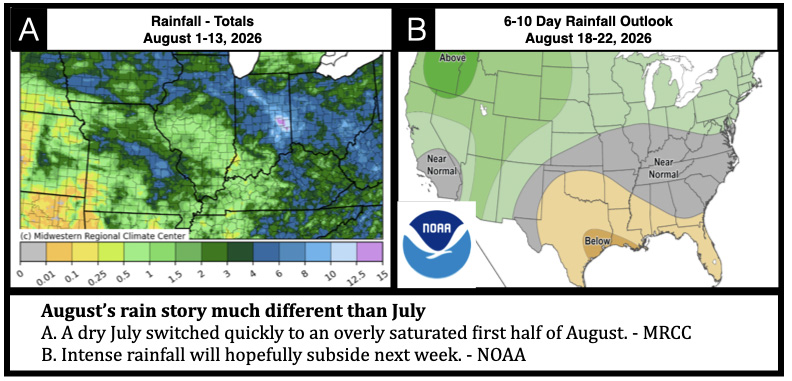
The story instead has been the intense rainfall and consistent humidity. Lower temperatures = higher relative humidity. Add in our corn sweat and “London fog” type of mornings were commonplace in July. Apart from Chicago, western Kentucky and the southern tip of Illinois, most of the region had slightly below average rainfall in July. Boy, has that changed in August. A static front has produced waves of heavy rainfall over the past week, saturating a diagonal swath from Chicago across Indiana into Cincinnati with 6, 8 and up to 15 inches of rainfall. For perspective, the average for the month is 3.2 inches. The White River crested to a record level causing severe flooding and disastrous impacts to those in Noblesville, Muncie, Anderson and others in its path. Thoughts and prayers to those impacted.
Tired, soggy turfgrass
August is traditionally the most difficult time for cool-season turfgrass. Many miles have been logged in the marathon of summer, and the remainder of the race towards the finish line of autumn needs to happen with tired legs, or in our case, tired roots. Recovery is near, but the physiology and metabolism of the plant is at its weakest point, requiring the vigilance of care from turfgrass managers (who also are tired). As John Coffey (played by Michael Clark Duncan) said, “Awful tired boss, dog-tired”.
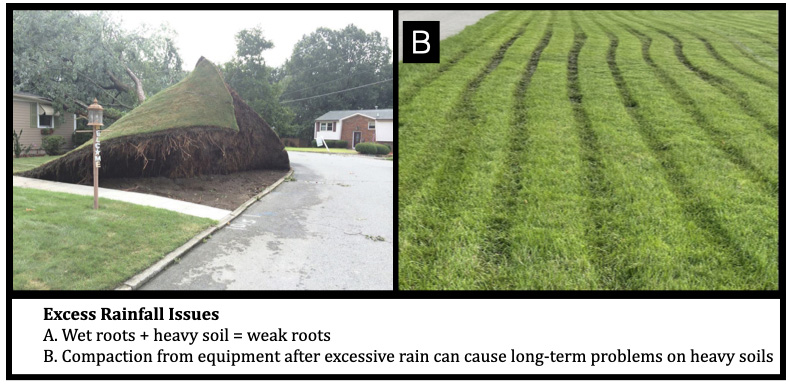
The saturated conditions from this week’s storms will not help matters. Roots need air to respire, grow and function. A saturated root profile displaces oxygen in pore space with water, causing a condition that may be called wet wilt. In this scenario, most commonly observed on golf putting greens with poor drainage and/or high organic matter, a double-edged sword is at play. One, the plant can’t take up water or nutrients because the roots can’t function properly from the lack of oxygen. Two, if high temperatures occur, the water in the soil profile gets hot and stays hot. Soggy hot root syndrome. Additionally, soil microbial activity is reduced, and switches from aerobic microflora which perform services such as nutrient release and thatch reduction which help the plant to anaerobic microbes which can be detrimental as with black layer.
Below are a few things to think about in this scenario.
- Turn off irrigation. While seeming painfully obvious to the professionals, the act of turning off the in-ground irrigation controller during excessive rainfall periods still goes unattended, particularly on home lawns. If irrigation is left running and some dry down is not allowed to occur, the root system will be compromised, the potential for disease activity increases, and plant nutrition will be lost.
- Soil water/compaction management. For lawns impacted by floods, wait for a dry down in September and consider a hollow tine aerification. Rainfall and flooding alone can compact heavy soil and during the fall this can be a good time to combine some overseeding, fertility and aerification to encourage recovery.
On golf putting greens, vent and poke holes with solid tine aerification as soon as the rains pass and the soil structure will allow it. Going too soon after a heavy rain can cause some lifting and shearing. Light weight rolling after venting may help settle and smooth the green. Wetting agent applications will still need to be watered in, so gauge with a soil corer prior to application to determine if post-application irrigation and the wetting agent will travel down into the profile.
- Mowing/Traffic Threat. Equipment and heavy, saturated soils don’t mix. Compaction and turfgrass damage from mowing with heavy equipment can cause issues well after the storm has passed. If the mower tracks, get off it, wait and relax.
- Disease Threats. On lawns, foliar diseases will be primed even further with high rainfall and excessive humidity. Fortunately, temperatures will likely not get high enough for Pythium blight to be a concern, but the likelihood of the four noted below will greatly increase in the next few weeks. As noted below, if nitrogen hasn’t been applied all summer, consider applying a lighter 0.5 lb N/1000 sq ft in the next few weeks to supplement growth and nitrogen removal from excess rainfall.
On golf putting greens, where to start? Saturated soil conditions in mid-August are not a recipe for success. Hopefully, a good base of disease prevention has been set with cultural practices and fungicide scheduling. Pythium root rot is the major concern since flooding primes the pathogen to quickly produce zoospores that can facilitate infection. If watered-in applications of picarbutrazox (Serata) or cyazofamid (Segway) haven’t been part of your program, this is the time to strongly consider it. Other soilborne pathogens such as take-all patch and summer patch, will also gladly walk through the open door of an oxygen deprived root system, so put prevention of those on your radar with watered in strobilurin, DMI or SDHI fungicides.
Lastly, consider anthracnose which is more severe in low fertility conditions. While our annual bluegrass research green has been getting hammered over the past month, bentgrass samples are also coming in showing early signs of basal rot. Recent rains have likely leached nutrients, including nitrogen, through the sandy soil profile. Using clipping volume as an indicator, a small addition to your spoon-feeding program may help in avoiding anthracnose issues. Along with a small bump in nitrogen, consider micronutrients, like manganese, which may also aid with patch disease suppression.
A Fearsome Foursome
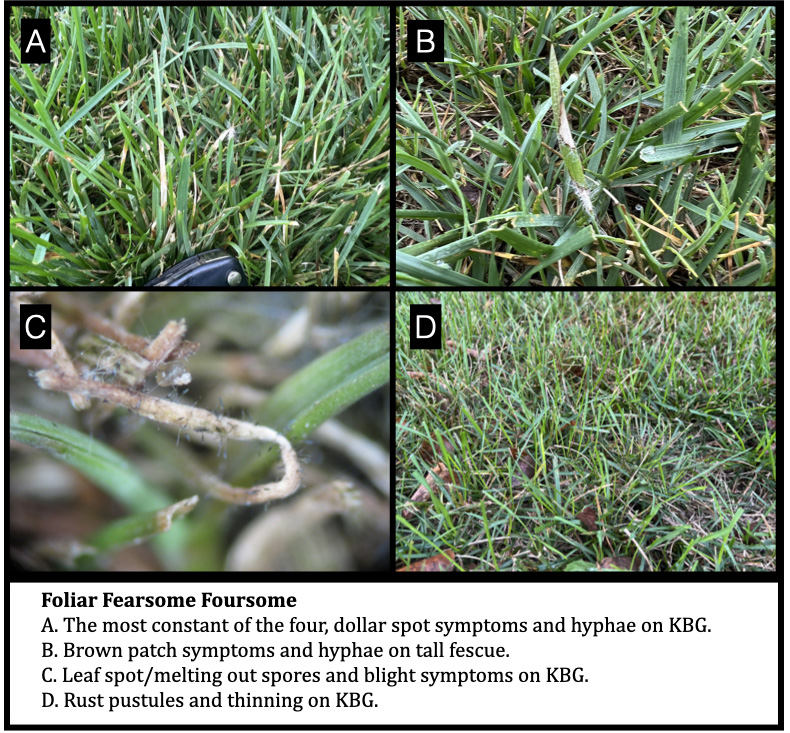
With the constant humidity and now more than adequate rainfall, foliar diseases have been problematic this summer. Joining dollar spot (Deacon Jones) and brown patch (Merlin Olsen) discussed in the previous report, leaf spot/melting out (Rosey Grier) and rust (Lamar Lundy) have joined the group in the past two weeks.
Leaf spot/melting out caused by Bipolaris spp., often B. sorokiniana in Indiana, can be a significant issue on Kentucky bluegrass lawns. For the first time this year we observed leaf spot (not red leaf spot caused by Drechslera spp.) in one of our research studies on bentgrass this summer. Interestingly, this disease is also a considerable disease issue on ultradwarf bermudagrass putting greens. The pathogen, unlike most others, can infect all plant parts including leaf, rhizomes and roots, making the disease fairly severe when populations and infection are high. Fortunately, this disease is not a common occurrence and is often limited to younger stands with attempted spring/early summer seeding. Many fungicides provide suitable control of this disease.
Rust is often overlooked and minor, but in the last few days we’ve observed some thinning and impact on Kentucky bluegrass. The disease, caused by Puccinia spp., is characterized and first noticed by orange “rust” pustules of urediniaspores that stain shoes. Darker spores called teliospores, can be observed in early fall, which can be used to identify the species. Rusts often tell a story of turfgrass need, with nitrogen fertility, compaction, irrigation or other stressors required for disease infection. Older Midnight varieties of Kentucky bluegrass are susceptible, so planting other varieties or blends can mitigate damage. Fungicides are not suggested since rust doesn’t kill the turfgrass and adding fertilizer or other cultural practices normally reduces or eliminates it.
Field Days
The Purdue Turf & Landscape Field Day was a great success on July 21, and thank you to the 480+ attendees that joined us. If you skipped it this year, you missed out on good information on autonomous mowers, curative disease control and interseeding, and that’s just from the pathology crew. Consider making it an agenda item next year.
For those attending the IPLLA field day next week at the Hendricks County Fairgrounds, I look forward to seeing you there!
Lee Miller
Extension Turfgrass Pathologist – Purdue University
Follow on Twitter: @purdueturfpath
Follow on LinkedIn: @purdueturfpath

July 7, 2026: Summer Sequels
Summer sequel of heat approaches; rainfall chances lessen perhaps furthering flash drought symptoms; brown patch awakens; dollar spot severity heightens; Curious about dollar spot recovery? Join us at Field Day on July 21.
Weather
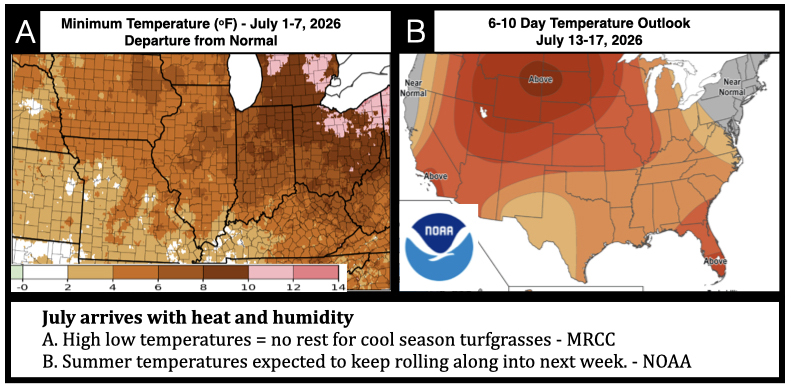
After a fairly mild month of June, the late June – early July span delivered exactly the kind of stretch that puts us back on our toes. A punishing heat dome parked over the region from June 29 through the Fourth of July holiday, pushing Indianapolis highs into the low-to-mid 90s and dragging heat index values into the 105–110°F range across central Indiana. Overnight lows barely dipped into the 70s during the worst of it, denying turfgrasses their needed nighttime recovery window.
A weak cold front finally pushed through over the weekend, and by highs have settled back to into seasonal norms. It’s a welcome breather, but July is still predicted to July. The forecast calls for a return to hotter-than-normal conditions across nearly the entire country outside the Pacific Coast. In other words, the heat dome is reloading.
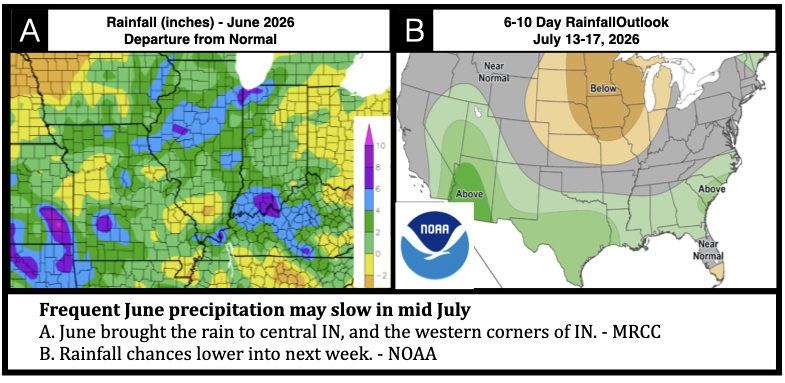
June provided above average rainfall for much of the region except for the Fort Wayne area and southern Illinois. Pockets of heavier, above average rainfall fell along the Ohio River Valley, central Illinois and the NW corner of the state. Rainfall chances are lower over the next few weeks. We observed a few instances of wet wilt or flash drought on lawns and commercial areas in early July. The problem will likely broaden further, especially on areas with high thatch and/or roots compromised by the overabundance of water in soils through May and June. This issue was explained in detail in the previous report.
Brown Patch Awakens
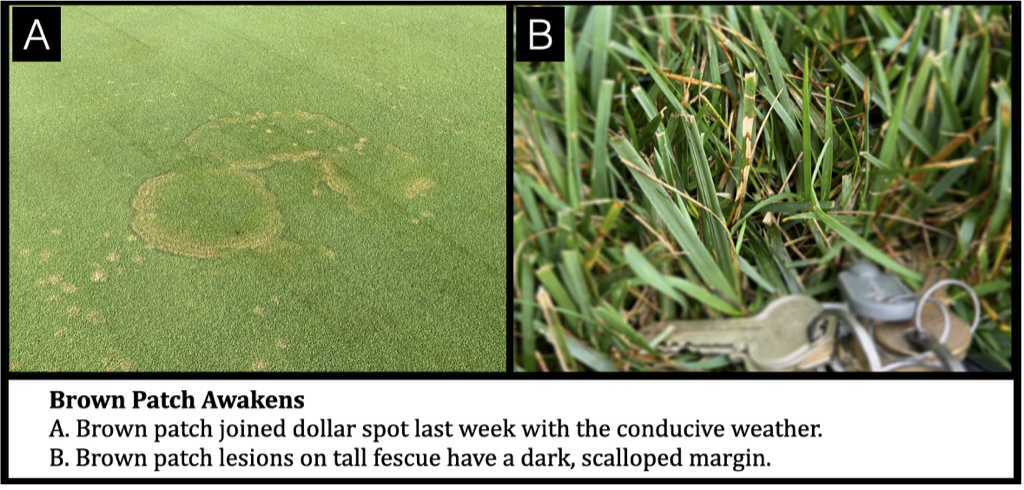
Brown patch had a quiet first half of the season, but the same heat and humidity that fueled dollar spot flipped the switch on tall fescue lawns and some bentgrass areas by the end of June. Look for the classic dark-brown-margined, tan-to-white-centered leaf lesions. Remember that unlike dollar spot’s hourglass shape, brown patch lesions tend to be scalloped and irregular across the leaf blade.
With heat and humidity back on the horizon, expect brown patch outbreaks to intensify. On tall fescue lawns specifically, the strobilurin chemistries such as azoxystrobin outperform the older DMI and benzimidazole options (propiconazole, myclobutanil, thiophanate-methyl), which are less mobile in the plant. A single, well-timed curative application after scouting typically beats an unnecessary preventive program started too early in spring. If wetter conditions develop later this month, Pythium blight may also join the party.
Dollar Spot Still All the Rage
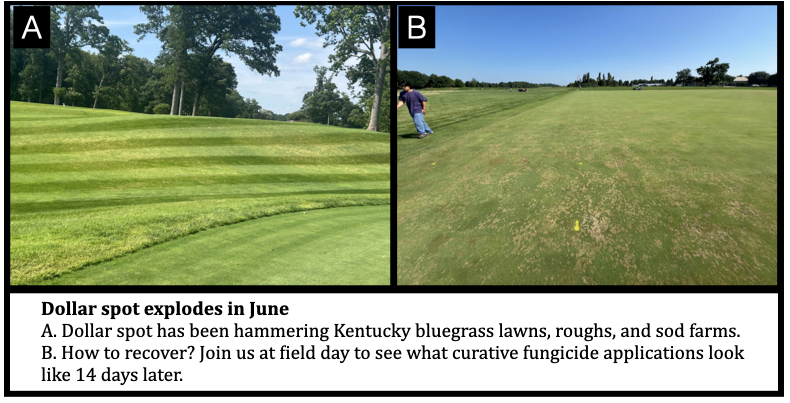
The dollar spot record keeps skipping and the amp got turned way up. In early June, dollar spot probability as forecasted by the Smith Kerns model eclipsed the 50% threshold and dollar spot outbreaks quickly followed suit. Reports from throughout Indiana noted aggressive dollar spot on creeping bentgrass fairways, tees and greens and on Kentucky bluegrass lawns, roughs and sod farms. As a golf course superintendent put it to me last week, “14 days on the label really means 14 days right now.”
Fungicide breakthroughs are being reported on bentgrass fairways at several courses. Dollar spot is the “Poa annua” of the turfgrass pathology world with a wide number of strains and biotypes. This genetic diversity lends itself to the development of fungicide resistance. Dollar spot populations have developed resistance to broad classes of fungicides including the benzimidazoles (thiophanate-methyl), the dicarboximides (e.g. iprodione), the DMIs (e.g. propiconazole) and most recently the SDHIs (e.g. boscalid). Unfortunately, the only current way of determining if a population is resistant and the failure is not from another cause is lab testing. This involves sampling, isolation of the pathogen and conducting a mycelial growth assay. The process which can take quite a bit of time.
What to do if you have an outbreak that slipped through? Higher curative rates are necessary and tank mixing a contact such as fluazinam (Secure) or chlorothalonil (Daconil) with a systemic is suggested. In limited previous field research, the SDHIs, including fluxapyroxad (Xzemplar) and pydiflumetofen (Posterity) have provided fairly quick recovery. Also, a small extra shot of nitrogen (~0.25 lb N/1000 sq ft on Kentucky bluegrass; less on creeping bentgrass) can enhance recovery.
What to expect two weeks after an application? Join us at field day in two weeks to see just that. We let a creeping bentgrass putting green research area get hammered (see photo B above), and put curative rates of eight different fungicides to the test with an application today. We also either watered in these fungicides with 0.2 inches of post application irrigation right after the application or applied to a dry canopy and let them be. How will the treatments promote recovery? I’m also curious.
Purdue Turfgrass and Landscape Field Day – Tuesday, July 21st (Register Here)
The agenda is out and can be seen below. We have a ton of great information lined up that cover all gamuts of the turfgrass industry. For golf, we’ll be talking about autonomous mowing, new disease resistant varieties, and maximizing fungicide impact. Lawn improvement practices, nitrogen fertilization, weed control, logos and line painting for sports fields, and various other topics are on tap. Hope you can find the time to join us.
Lee Miller
Extension Turfgrass Pathologist – Purdue University
Follow on Twitter: @purdueturfpath
Follow on LinkedIn: @purdueturfpath
June 4, 2026: Entering the Cauldron
May temperatures mild before summer heat, Pythium root diseases on bentgrass greens and young fairways, curative options for dollar spot that may have slipped through, wet spring can lead to issues all summer long.
*A primary objective of the Purdue Turfgrass Pathology Program is training the next generation of turfgrass professionals. This edition is co-authored with Dr. Krishna Ghimire, a post doctoral associate in our program. Giving emerging scientists real-world experience in communicating timely field observations is an important part of preparing them for future roles. Thank you for your assistance Krishna.*
Weather
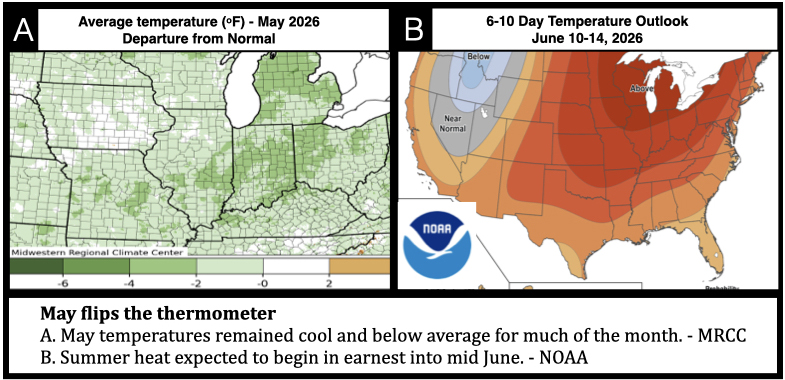
May 2026 provided favorable growing temperatures for cool-season turfgrass across much of region. Cooler than normal temperatures pervaded for much of the month, providing nighttime temperatures that mostly stayed in the 50s. Across Indiana, average May temperatures were approximately 2 to 6°F below the 1991–2020 climatological normal. After a warmer than normal April, spring temperatures have promoted steady cool-season turfgrass growth while minimizing heat stress, allowing turfgrass to maintain good color and density. Flipping the season in the quote, however “summer is coming”. Summer heat is set to arrive in full force by mid-June, coinciding with our peak photoperiod length of the year on June 20 (15 h and 2 minutes in Indy). The next few weeks will begin the test of how well prepared turfgrass health and root systems are prior to entering the summer cauldron.
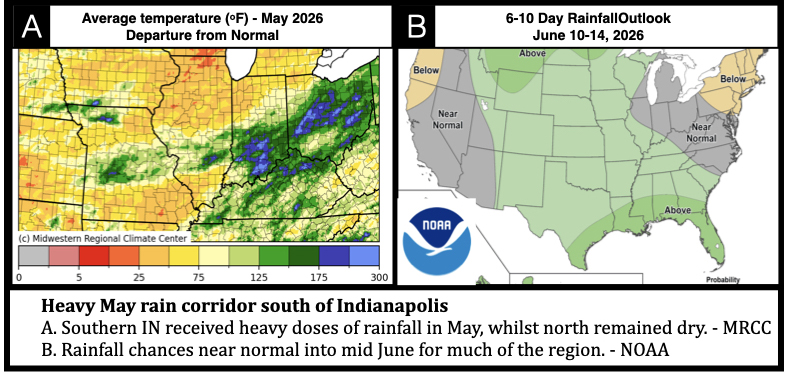
While May was mild on the temperature front, the intensity of rainfall events across the region were vibrantly dissimilar. Buoyed by a 144-year Indy rainfall record broken on Cinco de Mayo 2026 (1.92”) and another intense rainfall event May 18-20, May rainfall totals across a swath of Indiana from 1-70 southward into Kentucky (including Bloomington and Columbus) were 2 to nearly 6” above normal for the month. Conversely, Indiana’s southwestern tip into Carbondale, IL and through Cape Girardeau, MO were exceedingly dry, along with much of central Illinois, Chicago, and northern Indiana (Drought Monitor – Midwest). Storms sparked by a cold front are likely this weekend, followed by a span of speculative chances for precipitation through mid-June.
Golf: Pythium root diseases showing teeth
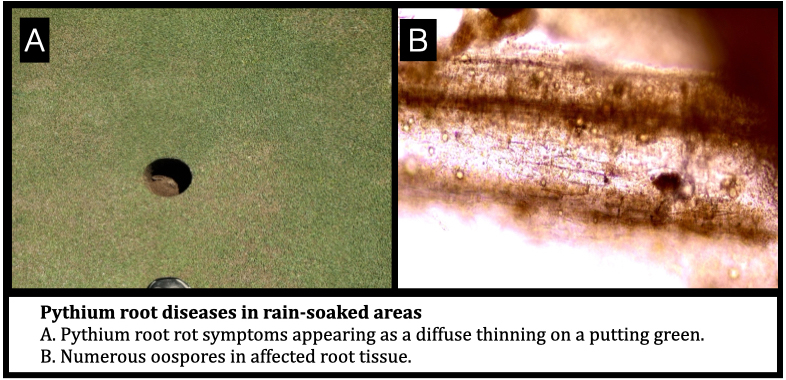
The combination of frequent rainfall and saturated soils has resulted in the first few samples of Pythium root diseases to enter the diagnostic lab. In mid-May, the Purdue Plant and Pest Diagnostic Laboratory received a bentgrass putting green sample from mid-Missouri exhibiting turf decline, chlorosis, and thinning. Microscopic examination of infected roots revealed numerous oospores of Pythium species. These thick-walled survival structures are characteristic of Pythium root infections and confirm that the pathogen was actively colonizing root tissues. More recently, bentgrass samples from southern Indiana from fairways were submitted to the lab with similar symptoms and abundant Pythium infection in roots and crowns. The common denominator is the swath of blues and greens shown in previous figure indicating several strong bursts of May rainfall.
Pythium root rot is associated with excessive soil moisture, poor drainage, and prolonged periods of root-zone saturation. When oxygen levels in the soil decline due to waterlogged conditions, turfgrass roots become stressed and more susceptible to infection. In addition, Pythium is a water mold and soil inhabiting species have this skill of producing sporangia quickly in waterlogged conditions. In as little as 1-4 hours, these sporangia rapidly mature to produce motile zoospores, which take advantage of the water highways to spread to new areas. If a plant pathogenic Pythium spp. that new nesting spot is another healthy root. As these cycles repeat, more roots are infected and symptoms express quickly when warm temperatures or other stresses occur.
Young bentgrass plantings are more susceptible to Pythium infection. Pythium root dysfunction, a different disease than Pythium root rot, is notoriously more prominent on younger bentgrass greens. In our microscopic observations on seedlings, we often see a mix of oospore types indicating species that cause Pythium root and Pythium root dysfunction don’t mind infecting the same root tissue and work in cahoots to take down the plant. Interestingly, some of my turf pathology colleagues and I are noticing Pythium root infection on fairways as well as greens. Curative applications of cyazofamid or picarbutrazox are suggested for symptomatic greens, but on larger fairway acreages these applications can get cost prohibitive. A potential preventive measure could be to start phosphite applications earlier, which are used commonly to prevent Pythium blight outbreaks on established bentgrass fairways. More research is needed to determine the amount of “nutrient phosphorus” needed to overcome any possible limitation in root uptake invoked from phosphites and the timing of these two potential rivals in the seeding process.
As summer approaches, superintendents should closely monitor root health in areas that remain wet for extended periods. Find out if what areas drain sufficiently and which hold water. Vent greens regularly, particularly after another one of these grand rain events that can leave older, organic matter heavy greens oversaturated. When fungicides are used to prevent or suppress Pythium root diseases (or fairy ring, take-all patch and/or summer patch) products should be applied with sufficient post-application irrigation to move the active ingredient into the root zone where infection occurs.
ALL: When dollar spot slips through the five-hole
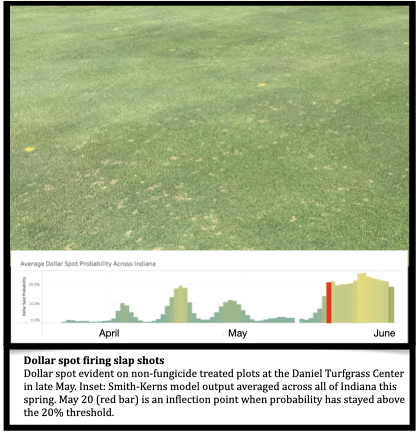
The Smith-Kerns dollar spot prediction model as shown in the Purdue Turf Disease Prediction Tool indicated an average period of moderate to high risk (above 20%) starting on May 20 in Indiana and not letting up since. Dollar spot symptoms summarily started developing quickly in late May and spread throughout our most susceptible ‘Crenshaw’ and annual bluegrass putting green plots. Symptoms have not developed yet on our fairway plots on native soils, which potentially have more plant available nitrogen or antagonistic microbial activity to stave off this first period of disease pressure.
When high risk first occurs or is forecasted, preventive fungicide applications are warranted on greens, tees and fairways intended to be disease free. Most fungicides work best applied prior to symptom development when inoculum levels are low and symptom recovery isn’t also needed during the application window. Some may wait to make early curative applications on fairways or tees (particularly if planted with a modern resistant cultivar), perhaps using a rare patch of Poa trivialis as an indicator. At this point, some may also need to recover from application skips or unintended gaps between application intervals. In these cases, applications of fungicides that either take longer to take effect (i.e. boscalid and some DMIs) or need a shorter application interval (i.e. fluazinam) may not result in quick recovery. More of our evaluation trials have a primary focus on curative activity and in these trials effective SDHI fungicides such as fluxapyroxad (Xzemplar) and pydiflumetofen (Posterity).
Dollar spot outbreaks on Kentucky bluegrass lawns were prevalent last season and should be expected again this year. Integration of sound cultural practices, including balanced fertility, dew removal, appropriate mowing frequency and height and judicious irrigation management, provides an environmentally sound management approach. Preventive fungicide programs on these lawns may not be necessary if these practices are implemented and the disease is caught early and identified properly (see BP-218-W). In severe cases, fluxapyroxad which is labeled for residential use along with a small shot of nitrogen fertilizer (0.25 lb N/1000 sq ft) can encourage rapid recovery.
LAWN: Wet feet in spring can mean a tough summer
No one likes wet feet and prolonged wet toes can cause ugly conditions such as athlete’s foot, blisters, or trench foot. The abundant rainfall that occurred this spring in southern IN raises some concern for trenched roots in lawns. Saturated soils reduce oxygen availability in the root zone, limiting root growth and function even when turf appears healthy aboveground. If warm temperatures quickly arrive even after soils dry out, turf can quickly transition from vigorous growth to decline since the depth of the root system has been restricted. In many situations, the effects of spring root stress are not fully realized until the first extended periods of summer heat. As summer approaches, careful irrigation management, attention to drainage, and monitoring of root health will be critical to quality turf maintenance.
This bears repeating from the April 2026 report and a follow up article in the Purdue Landscape Report. A common mistake in home lawn management is continuing automatic irrigation schedules despite frequent rainfall. Unlike golf course putting greens, most home lawns are established on heavier native soils that retain moisture for longer periods. Additional irrigation may unnecessarily prolong soil saturation and increase leaf wetness, creating favorable conditions for foliar diseases while limiting important spring root growth. Homeowners should regularly evaluate soil moisture before irrigating and adjust controllers to reflect current weather conditions rather than relying on fixed schedules. Poorly drained areas of lawns may also begin to reveal populations of nutsedges or rough bluegrass (Poa trivialis) as they outcompete desirable grass in these conditions. Rough bluegrass submissions for identification in the PPDL have become increasingly common. This weed, which is a common contaminant in seed, often thrives during cool, wet spring conditions but struggles during summer heat. As temperatures rise, affected areas may appear yellow, thin, or drought stressed, creating irregular patches that are frequently mistaken for disease. For more information on rough bluegrass see Dr. Aaron Patton’s description here or even better pick up the guide Turfgrass Weed Control for Professionals here.
Purdue Turfgrass and Landscape Field Day – Tuesday, July 21st (Register Here)
The agenda is out and can be seen below. We have a ton of great information lined up that cover all gamuts of the turfgrass industry. For golf, we’ll be talking about autonomous mowing, new disease resistant varieties, and maximizing fungicide impact. Lawn improvement practices, nitrogen fertilization, weed control, logos and line painting for sports fields, and various other topics are on tap. Hope you can find the time to join us.

Lee Miller
Extension Turfgrass Pathologist – Purdue University
Follow on Twitter: @purdueturfpath
Follow on LinkedIn: @purdueturfpath
May 4, 2026: Spring Hits the Brakes
May 2026 hits the brakes on spring; root infection observed on putting greens by soilborne pathogens; constant spring rains = surprise black layer; delayed (or no) spring green up on lawns is not always disease.
*An objective of the Purdue Turfgrass Pathology Program is training the next generation of turfgrass professionals. This edition is co-authored with Justice Ruwona, a PhD candidate in our program. Giving emerging scientists real-world experience in communicating timely field observations is an important part of preparing them for future roles. Thank you for your assistance Justice.*
Weather
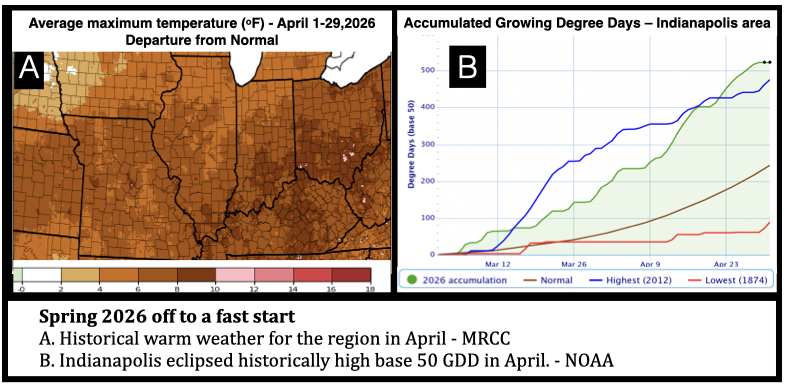
Happy May to and May 4th to my fellow Indy 500 and Star Wars fans. The light sabers were hot in April 2026, with spring heat continuing from March and accelerating the start of the growing season. Above‑normal warm temperatures, including several days over 80°F, pushed early green‑up and rapid growth well ahead of schedule. Much of the state finished the month 6-10°F above normal. The Indianapolis area recorded the highest spring growing degree day accumulation in recorded weather history, surpassing the fast start previously observed in 2012. These conditions translated into fast growth, earlier mowing, and excess leaf clippings than typically observed in April. If it feels like we are nearly a month ahead of schedule, it’s because we are.
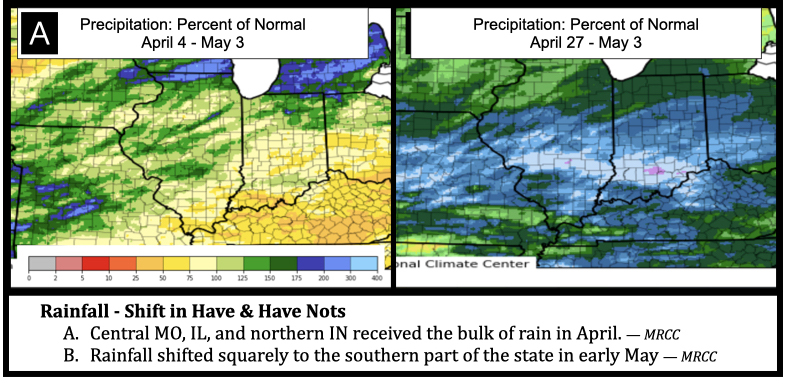
Rainfall during April was highly variable. Strong storm systems early in the month delivered heavy downpours and localized flooding, with locations in central MO, central IL and northeast IN approaching or exceeding normal monthly totals of 3.5–4.5 inches from just a few rain events. Conditions were drier for much of April in central Indiana and along the Ohio River Valley which was welcome compared to the previous deluge of rainfall last spring in the region. More recently, (including today), a distinct shift in rainfall transitioned towards central and southern IN. On April 27, severe thunderstorms passed through central Indiana and produced 1.61 inches of daily rainfall in Indianapolis, breaking the previous record of 1.56 inches set in 2002.

Following rapid early‑season growth, cooler weather has returned and slowed turf development. Forecasts call for a cooler‑than‑normal start to May, with daytime highs often below seasonal averages and overnight lows dipping into the 40s. At the time of writing, a freeze watch is in effect for portions of northern Indiana. Soil temperatures beneath established sod have reached or are above 60°F across much of the state, and a little slow down of cool season growth may be welcome. Warm season turfgrasses in southern IN will slow considerably and with the high amount of rain expected, large patch and other disease activity should be monitored. April showers are not expected to go away in May, with heavy rainfall events likely disrupting mowing and other maintenance practices.
GOLF: Look down below
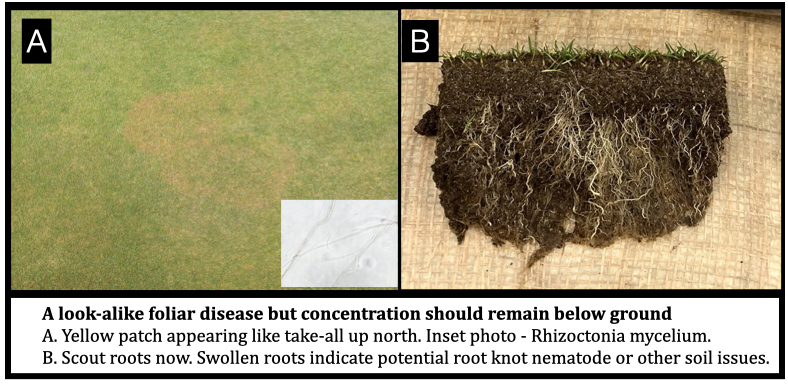
With the cooler temps, dollar spot pressure lowered over the past week with average dollar spot probability across Indiana being less than 10% in the first days of May. Prolonged leaf wetness from rainfall/irrigation combined with warming temperatures could quickly alter disease activity. One foliar disease with symptoms fooling us in April was yellow patch caused by Rhizoctonia cerealis. At a course in north central Indiana, which has been riddled with frequent rain events, this disease was prominent on several fairways. The superintendent was concerned with an early outbreak of take-all patch symptoms which as a soilborne disease is more difficult to control and recover from. Fortunately, damage from yellow patch is normally minor, but in more severe cases such as this one recovery can be hastened with a foliar application of azoxystrobin, propiconazole or tebuconazole.
Despite this anomaly, superintendents should still keep focus on their root assets below ground. Sample submissions to the diagnostic lab have begun to increase, and without a correlation to plant symptoms, roots are showing signs of infection and pathogen presence. A recent sample from a green had summer patch issues last season showed signs of multiple soilborne pathogens in the roots, including summer patch, take-all patch and Pythium root disease. Patch diseases present diagnostic challenges because they often occur simultaneously, and several produce similar runner hyphae on infected roots under microscopic examination. Fungicide applications do not eliminate these pathogens from the soil profile, and disease recurrence should be expected on historically affected sites.
Heavy rainfall events and sporadic soil saturation in spring delivers a two-fold advantage to root-invading pathogens. Free moisture is needed for infection and for Pythium root diseases, saturated soils cause the quick formation of sporangia and resulting motile swimming zoospores that disseminate the pathogen to other roots. Saturated conditions also impede root function, by replacing air and inhibiting root respiration.
This late spring is a great time to physically investigate root quality on putting greens. A 0.75” soil corer serves well to examine a portion of the roots and quality of the soil profile down to the pea gravel. The flat profile from a Mascaro soil sampler gives a better representation of root quality, and using water to rinse off excess sand is best to visualize root color and quality. In the above photo, a profile revealed white roots that were swollen towards the bottom root tips. This can be an indicator of infection by root knot nematodes or the impact of a root pruning preemergence herbicide. Additionally, darker colored brown root symptoms can provide clues to pathogen infection.
Note the density of thatch in the above photo from 30+ old greens and realize the difficulty of delivering a fungicide through that layer. Even younger bentgrass greens with newer dense cultivars and especially ultradwarf bermudagrass greens have a thatch layer that ties and binds fungicides readily, so getting preventive fungicides through this section and to the roots below is difficult. If struggling with soilborne diseases, take a hard look at the profile and plan on using heavy amounts (0.2-025” or more) of post-application irrigation to facilitate fungicide penetration.
Black layer in April
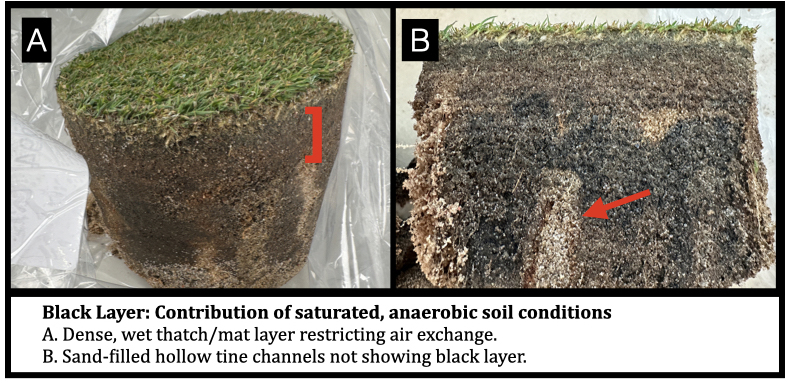
A creeping bentgrass sample from northern Indiana was submitted to the diagnostic lab in April showing symptoms consistent with black layer, an abiotic disorder caused by anaerobic soil conditions and sulfur‑reducing bacteria (Desulfovibrio spp.). These bacteria produce hydrogen sulfide gas, which is toxic to turf roots. While black layer is more commonly observed during midsummer, its appearance this early highlights the impact of prolonged soil saturation this spring.
Fungicides are ineffective against black layer. Management should instead focus on increasing soil oxygen through aeration, improving drainage, and avoiding practices that prolong excessive moisture. Fertility programs should also be reviewed, with consideration given to temporarily reducing sulfur‑ or sulfate‑containing products where symptoms persist.
LAWN: Delayed spring green-up in cool season lawns not always disease

Kentucky bluegrass samples submitted in late March raised concerns about uneven or delayed spring green‑up; however, in most cases, the underlying cause was not disease. Many newer Kentucky bluegrass cultivars are selected for improved summer performance and disease resistance, often at the expense of rapid spring green‑up. Differences in cultivar genetics, soil fertility, and site conditions can temporarily exaggerate uneven color in early spring.
As we move further into May, lawns that remain completely dormant likely experienced winter or environmental injury. Common causes include snowplow damage, salt accumulation near sidewalks and roads, buried debris, or shallow soils. On several campus areas where salt‑laden snow piles persisted, turf has not recovered and will require reseeding. In addition, crabgrass was extremely invasive and prevalent on home lawns last summer. Warm season annuals like crabgrass die off in the winter and leave an open exposed area for winter annuals like common chickweed to infiltrate.
Understanding the difference between delayed growth and true disease activity can help lawn managers avoid unnecessary inputs and focus on practices that support recovery. For actively growing cool‑season lawns, a light to moderate nitrogen application in May can help increase density and vigor ahead of summer stress.
Information on how wet springs influence excessive clippings, seedheads and lawn health, is available in the May 2025 disease report here.
Additional notes
Over the winter, I created this online module Turfgrass IPM Module – Understanding Turfgrass Fungicides course to allow you to earn CCH education credits (with six additional states also given approval). This education is delivered in a creative, modern format and covers the basics in understanding the form and function of turfgrass fungicides and how they should be considered when implementing into a program.
SAVE THE DATE: Purdue Turfgrass and Landscape Field Day – Tuesday, July 21st
Lee Miller
Extension Turfgrass Pathologist – Purdue University
Follow on Twitter: @purdueturfpath
Follow on LinkedIn: @purdueturfpath
April 13, 2026: Spring Marching into Madness
Spring well ahead of schedule; the madness of spring irrigation on lawns; soilborne diseases on putting greens over winter; status of dollar spot and soilborne disease prevention on golf greens.
Weather
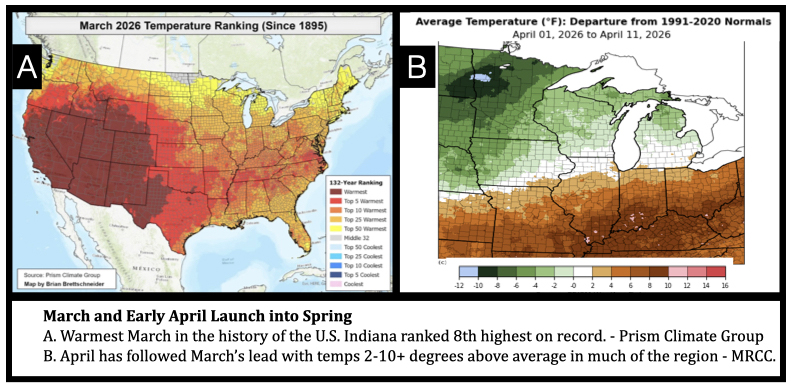
Spring 2026 got out of bed very early and proved Punxsutawney Phil wrong. March temperatures in the U.S. were the highest in recorded weather history, with Indiana having the 9th warmest March on record. Most areas in Indiana recorded 9-10 degrees above normal temperatures sparking the early arrival of forsythia, dandelions and other spring bloomers, the launch of turfgrass growth and the whirring of March mowing. The timing for crabgrass preemergent application has already passed for much of the state and as noted below the time is now in the Indianapolis area for soilborne disease prevention on golf putting greens. Comparing 2026 to last year in Indy, the Growing Degree Day Tracker hosted by Michigan State University shows 280 and 118 more base 32 and base 50 degree days this season, respectively.
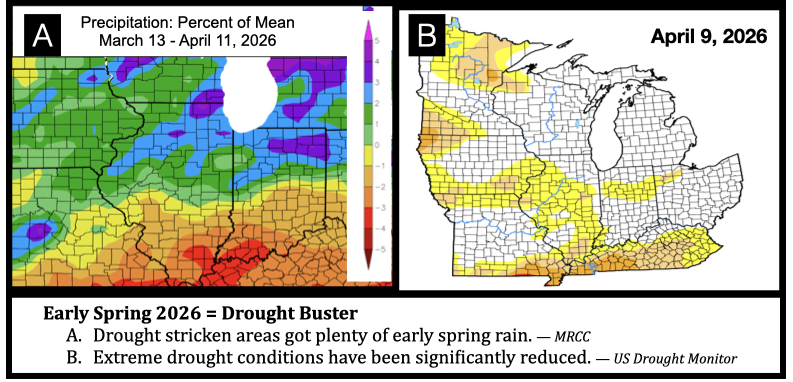
Rainfall this spring has been frequent and although heavy at times, occurring in areas where needed. Interstate 70 draws a fairly good dividing line between areas of rainfall occurrence over the last 30 days, with areas north receiving 2-4+ inches above normal with those south having 2-4 inches less than normal. Central Illinois through north central Indiana had been in a severe drought designation to start the year stemming from late summer/fall 2025. These areas have received enough spring rainfall to alleviate the drought. Conversely, spring rainfall amounts thus far through the Ohio River Valley are in stark contrast to the excesses of last year, which is also welcome to most. These drier conditions in that region may also be aiding warm season turfgrasses coming out of dormancy this spring.
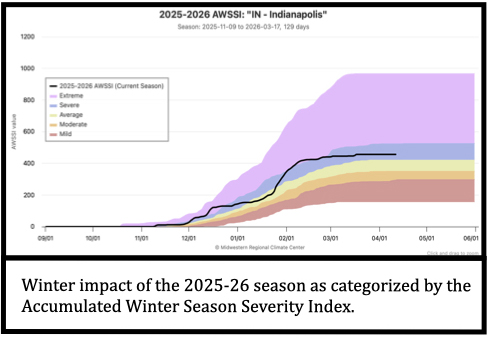
According to the Accumulated Winter Season Severity Index (AWSSI), winter was categorized as severe or extreme for much of Indiana and the region. The index is an accumulated daily score given to locations based on temperature and snowfall and depth. The score is then compared to scores from 1950-51 to current and the winter season given a category description (i.e. mild, average, extreme) based on what percentile the score lands in. Although not directly correlated to turfgrass health since snowfall is oftentimes beneficial as an insulator, this index may not be directly correlated to turfgrass health. The 1/22 – 2/9 date range came with temperatures 20+ degrees below average with highs on many days not making it out of the single digits. Fortunately, this event was preceded by a major snowfall event of 10-12 inches even in southern IN which moderated soil temperatures during the period. We have not yet heard reports of large-scale winterkill on zoysiagrass and bermudagrass as was experienced last year along the Ohio River Valley.
From the near past to far future weather potential, scientists recently predicted a super El Niño, (much warmer than normal tropical Pacific ocean surface temperatures), beginning in the next few months. The last strong El Niño occurred in 2015-16, which resulted in global temperature records for both years, so the expectation is for temperatures to continue to rise. The news isn’t all bad, however, as the Southern Plains of the U.S. including states like Arizona and Texas mired in drought, may get more rainfall from the strong El Niño pattern. Unfortunately, southern Indiana may also be included in those rainfall chances over the next few years raising the potential for localized flooding. For more information, see this article.
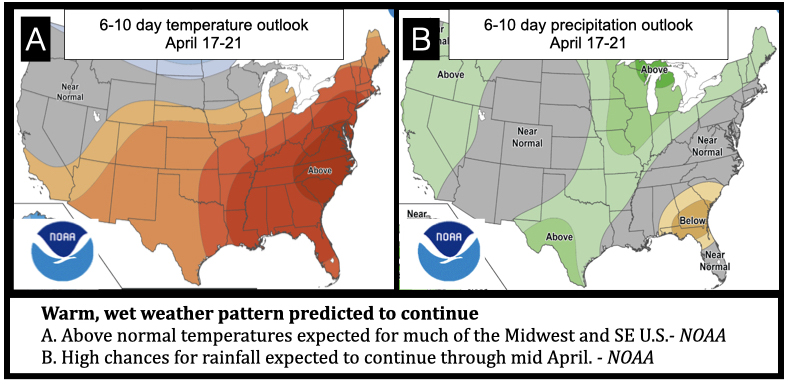
Looking forward over the next few weeks, warmer temperatures are expected to continue spring’s surge throughout the region. Bluegrasses and perhaps tall fescue should be expected to produce seedheads soon. Rainfall chances are also expected to remain high next week through mid-April, setting up a similar recipe with fast cool-season turfgrass growth. As we enter this crucial management period for cool season turfgrasses, water, and its impact on turfgrass health later in the season, should be at the forefront of turfgrass managers’ minds.
LAWN: Irrigation on Home Lawns vs. Golf
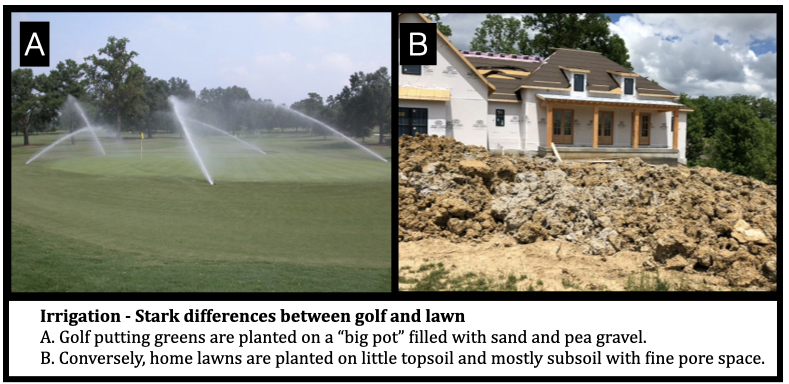
At the time of writing, the Masters golf tournament is underway and for golfers everywhere this is a true, first sign of spring. The iconic blooming azaleas and birds chirping on the broadcast give golfers a much-needed lift after a long winter. Astute viewers may have also noticed broadcasters this year commenting on the amount of water was being applied to the course, particularly the greens, and how that was affecting the difficult firm and fast playing conditions.
All are tempted to look at Augusta National and think “my lawn should look like that”. But almost nothing about how a golf course is managed translates to a home lawn, and chasing those conditions can cause damage in place of pristine. Aside from the desire to mow at lower heights, the biggest trap is irrigating the way a golf course does, particularly on putting greens.
The average golfer probably doesn’t know golf greens are established on a 16+ inch deep sand-filled pot with 12 inches of a predominant sand mixture overlying 4 inches of pea gravel (with drainage pipe). Modern sports fields fall under the same construction guidelines with an extremely coarse profile that allows for fast drainage of rain and irrigation water.
Most home lawns, particularly here in Indiana, are the opposite. During construction, topsoil is typically stripped away, leaving dense, compacted clay subsoil behind. Clay particles are fine and tightly packed, leaving little room for water to move through. The result is a lawn soil profile that saturates quickly, with stagnant water that pushes out the air that grass roots need to survive and grow.
Building a strong root system in the spring is the most important investment in having a healthy lawn throughout the difficult summer season. Heavier spring storms have become more common, delivering inches of precipitation at a time. Between these rain events resist the madness of firing up the irrigation system often in the spring, even if you see a bit of drought stress. Let the soil dry out and recharge with the air needed for root respiration and growth. Additionally, we need the soil to dry out for mowing with less potential for excess clippings and soil compaction. A lawn that heads into summer with deep roots and well-aerated soil will outperform one that was kept constantly saturated and will be far less prone to diseases.
GOLF: Diseases on newly seeded and/or covered greens
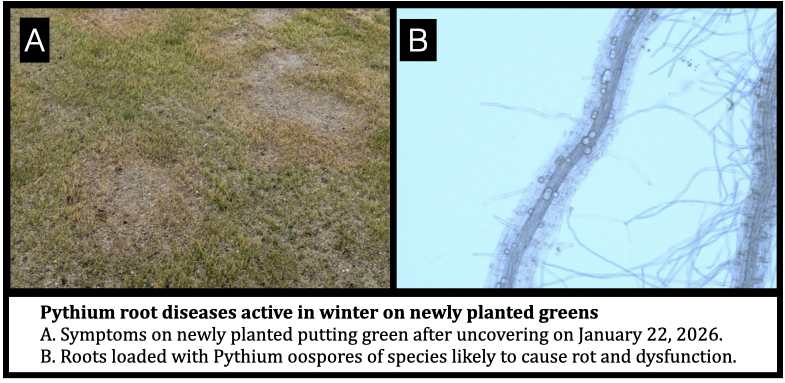
A January diagnostic call is surprising, but especially so when it carries along a surprising result. Bentgrass greens seeded the previous October were showing symptoms that initially looked like Microdochium patch (pink snow mold), but microscopic examination told a different story, as roots were heavily laden with Pythium oospores.
The most severely affected green was the youngest one with cover freshly removed. Theslightly warmer and more humid conditions allowed more Pythium infection. A similar outbreak had been documented in Missouri, where Pythium caused visible symptoms on young bentgrass greens in early February. This case, however, had an added wrinkle with multiple oospore types were present, both single and bisporous forms, pointing to several Pythium species collaborating to drive the decline. Also, the infected roots as shown above, still have root hairs. Root hairs are typically absent when Pythium volutum (a pathogen causing Pythium root dysfunction) is involved, so their presence in this case may suggest a more complex disease picture.
In mid-March, a bermudagrass green sample from Kentucky arrived at the diagnostic lab with a different soilborne disease: take-all root rot. The pathogen, Gaeumannomyces spp., had spent the winter spreading dense infection networks across crowns, roots, stolons, and rhizomes, all aided by the warm, humid environment created beneath the winter cover.
Both cases indicate a similar lesson. As with spring fungicide applications on golf putting greens, watering in fungicides prior to placing winter covers on greens may also be warranted to target soilborne pathogens. Newly seeded bentgrass putting greens are especially susceptible to Pythium root diseases so watering in cyazofamid, picarbutrazox or similar late in the fall prior to their first winter may be a good measure to avoid unexpected Pythium root disease outbreaks.
GOLF: Soilborne disease prevention on greens; dollar spot may be close at hand
*Note – On lawns, preventive fungicide applications are too early and should not be initiated at this time.*
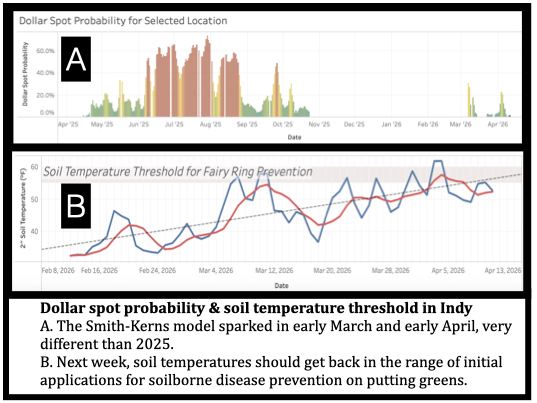
The early spring also pushed our key prediction model and soil temperature thresholds well ahead of schedule. The 55°F soil temperature threshold, the trigger for fairy ring and soilborne disease prevention on putting greens, arrived 19 days earlier than last year in Indianapolis (April 4 vs. April 23). The Smith-Kerns dollar spot model crossed the 20% risk threshold earlier than I’ve seen here: March 7–8 this year compared to May 4–5 last year. To view these two predictors for locations in Indiana, click here.
Southern Indiana should already have a preventive fungicide application down. For the rest of the state, both indicators dipped back down after those early spikes, so being behind on an application hasn’t been a major concern, until now.
Temperatures are forecast to climb into the 80s to start the week, with overnight lows staying above 50°F along with frequent rain chances, some potentially heavy. That combination creates ideal conditions for dollar spot to hit the foliage and soilborne pathogens begin infection in earnet.
Fortunately, a fungicide application targeting soilborne diseases can also provide some protection against the foliar disease dollar spot. Therefore, a fungicide application with at least 1/8” but more appropriately 0.2” – 0.25” of post application irrigation should be able to hit both birds. Suggested fungicides typically include the DMIs (i.e. Maxtima, Torque, Densicor) the newer SDHIs (i.e. Posterity, Velista) or combination products (i.e. Navicon, Tartan).
Turfgrass IPM Module – Understanding Turfgrass Fungicides
Over the winter, I created this online module course to allow you to earn CCH education credits (with six additional states also given approval) from the comfort of your favorite recliner on a rainy day. This education is delivered in a creative, modern format and covers the basics in understanding the form and function of turfgrass fungicides and how they should be considered when implementing into a program.
SAVE THE DATE: Purdue Turfgrass and Landscape Field Day – Tuesday, July 21st
Lee Miller
Extension Turfgrass Pathologist – Purdue University
Follow on Twitter: @purdueturfpath
Follow on LinkedIn: @purdueturfpath
September 25, 2025: On a Bumpy Mend
Drought impacting lawns for a variety of reasons ; dollar spot resurgence on creeping bentgrass and Kentucky bluegrass; scalping and decline in relation to nitrate spikes on putting greens.
Weather

While summer is officially over and meteorological fall began this week, the “false fall” of early September is officially gone. Above average temperatures have reigned over the region since September 10th, more than offsetting the cool period earlier in the month and causing sweat to pour again with temperatures tickling the 90s in mid-Indiana. Average two-inch soil temperatures are still in the low 70s in much of the region, meaning the microbes are still working and good grass germination should be occurring. Fortunately, although it’s “hot”, the photoperiod is just about half of the day length, meaning the duration of sun and heat is reduced by 2-2.5 hours compare to July. This means cool season turfgrass stress should be low and health should be recovering if…
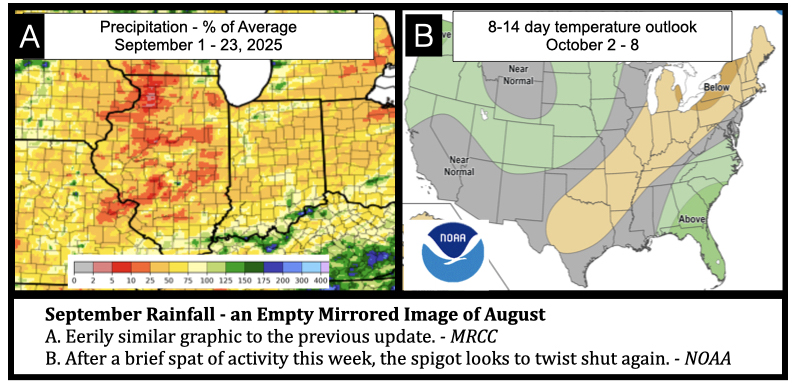
There was water. September followed the mold of August with a considerable lack of precipitation through much of the month. Recent rains totaling an inch or more in some locales cloud the fact that August and September have received woefully low rainfall totals. Over the past two months, much of the region has only received 2-3 inches total which is the amount that should be received in just one month. This lack of rainfall has plunged the region into moderate and severe drought categories (some extreme in SW Kentucky) and some very dusty crop harvests. Dry and dusty lawns have also been the norm over the past two months, and the short term two-week forecast doesn’t indicate much relief.
Drought Impact on Lawns
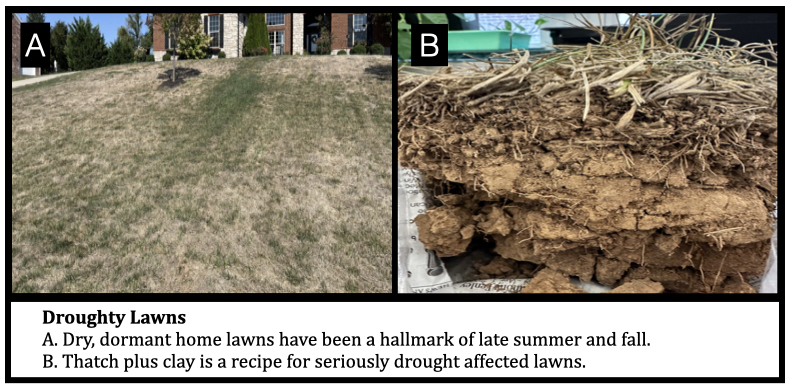
Early fall drought symptoms have been problematic on many non-irrigated lawns in Indiana over the last few weeks, with several samples arriving into the diagnostic lab. In many cases, the beige hue of drought dormancy in the hardier grasses such as newer varieties of tall fescue and Kentucky bluegrass (examples here) is quickly reversed when refreshing rainfall returns. In some cases, however, the decline may be permanent, spurred on by various other factors. Some of these to be aware of are below.
- Look alikes – Drought symptoms often appear very similar to disease and perhaps even more closely, to insect damage. Damage from chinch bugs, grubs, armyworm and other insects may also be the culprits of injury so it’s important to scout seemingly drought damaged turfgrass closely.
- Mowing – Drought stressed turfgrass that is continually trafficked and mowed has less chance for recovery. Quite simply if it isn’t growing, then we shouldn’t be mowing.
- Turfgrass species choice – Perennial ryegrass is not as drought susceptible as other cool season species and shouldn’t be a major constituent of most lawns, particularly in southern Indiana and the transition zone. Kentucky bluegrass often needs more water to stay green than tall fescue, which is considered more drought tolerant. Both of these species, however, will go into and come out of drought dormancy with much more success than perennial ryegrass.
- Soil – Home lawns on clayey subsoil left behind from construction and topsoil thievery are more difficult to irrigate and less receptive to rainfall. Turfgrass will accumulate its own organic matter and reclaim the microbial diversity and water retention of a soil, but it takes considerable time. In some cases, topdressing with a trusted compost, organic matter or topsoil can aid established lawns.
- Thatch – A sponge that steals water from the roots. Sitting on the top of a clay soil is a recipe for a very parched grass throat. Kentucky bluegrass with its rhizomatous growth habit is most prone to thatch development.
- Time of year – Late summer/early fall is potentially the worst time for an abnormal environment stress event on cool season turfgrasses. Cooler temperatures and shorter day lengths promote plant growth, but roots are at their shortest after a long summer and fertilization is needed.
Dollar Spot Resurgence
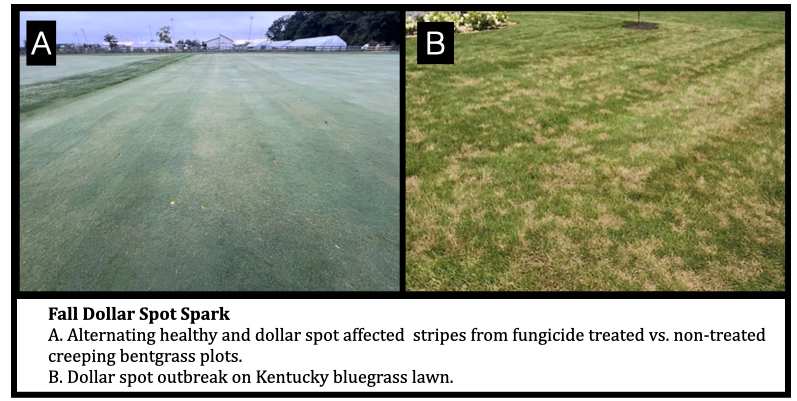
Dollar spot has returned in its normal fall vengeance over the last two weeks. Heavy dews and fog have sparked considerable activity on our research plots and Kentucky bluegrass lawns have also been affected. Fall outbreaks can be more difficult to control since nitrogen may be in shorter supply in the plant due to reduced root uptake or fertilizer addition, and the population may be higher than in spring since it’s had all season to propagate. In addition, low soil moisture levels, which have been in ample supply, were correlated with increased dollar severity by a team of researchers including Dr. Bigelow (McDonald et al. 2006). Addition of nitrogen can aid in recovery and dollar spot on lawns is often an indicator that fertilization is needed.
Scalping & Nitrate Levels on Putting Greens
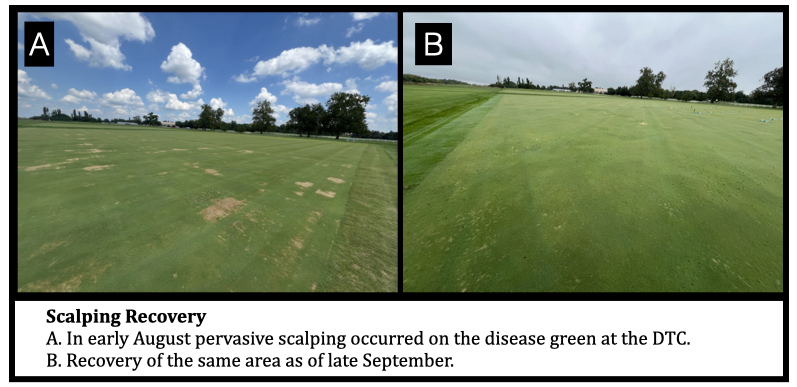
Needless to say, 2025 was an especially tough year on the health of bentgrass putting greens. Apart from disease activity and straight physiological decline, many experienced puffiness and resulting scalping issues. At the Daniel Turfgrass Center, we were not immune, as in early August scalping occurred on most of my research plots.
At the same time, several superintendents experiencing decline reported (and in some cases blamed) exceptionally high nitrate levels in areas of turfgrass decline and/or scalping. These superintendents were scrambling to adjust and, in some cases, completely restrict nitrogen spoonfeeding, while at the same time increasing the frequency and rate of plant growth regulator application. However, this stress and reaction potentially targeted the wrong problem.
Since I’m not a fertility specialist, I contacted two colleagues that are, Dr. Travis Shaddox and Dr. Doug Soldat, and posed this question. Earlier instruction charted my thought that nitrogen levels in the soil are dynamic, and soil tests were not a reliable guide to actionable fertilizer inputs. Fortunately, both Drs. Shaddox and Soldat affirmed this by stating the obvious. If the plant uptake is limited (the sink), then nitrate levels in the soil (the source) are bound to accumulate. Soil microbes rapidly churning organic matter into nitrogen in high summer temps don’t stop the factory because the plant is under duress. Therefore, nitrates naturally accumulate. When taking a soil sample from a struggling or dead area of turfgrass to aid in diagnosis, one should expect nitrogen levels to be elevated and a “result of”, rather than a “cause of” the problem – T. Shaddox. Thank you to both Doug and Travis for reminding me and clarifying this point.
With this being said, the scalping on my research plots and potentially these samples are presumably due to the comorbidity of disease activity and/or turfgrass stress. Two weeks prior, we observed considerable brown patch activity in untreated plots and treatments that did not provide control, and in these plots the scalping was most pronounced. Interestingly, only my research plots scalped, while all other putting green research areas with diseases controlled were left unscathed. Now, don’t hear what I’m not saying. Fungicides are not a recommended replacement for plant growth regulator use on putting greens. However, a clogged sink drain may play a role in scalping occurrence and keeping it clear is a good idea under low bedknives.
August 26, 2025: Cool Breeze Offers Some Ease
Summer patch hits hard in early August; fall rust outbreaks causing orange shoes; cool temperatures allowing a head start on recovery plans.
Weather
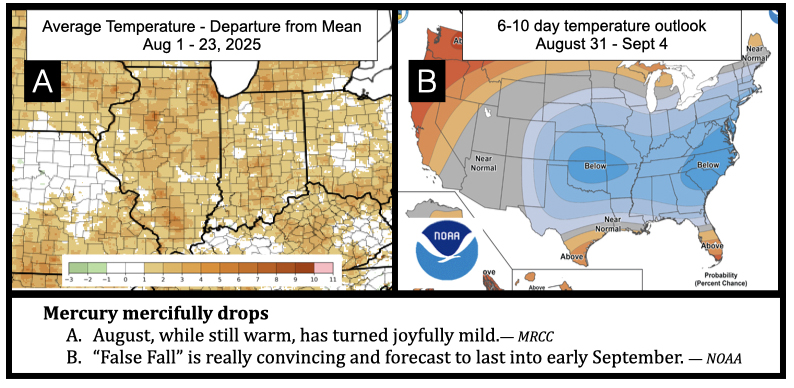
August in the region started cool, got back to summer hot, and now dare I say it feels like fall. This “false fall” in Indiana certainly is convincing as a stagnant high-pressure dome descended from Canada last week. Today was the coldest August 26 in the last 43 years with lows in the 40s across upper and middle Indiana. Recent temperatures have been 10-12 degrees below normal and brought monthly average temperatures back to near average after a solid span of heat with 90F + highs from August 8 – 19. The total number of days >= 90 F in Indy is 29 days, 5th most in the last 15 years (2018 – 38 and the brutal three year stretch from 2010 – 37, 2011 – 42, and 2012 – 51 days). With the prescribed forecast indicating no major shifts, perhaps the summer spikes are finished and the time is nigh to get into recovery mode.
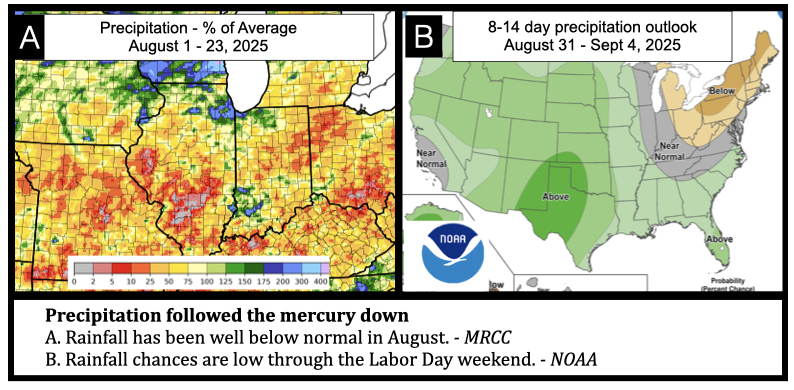
Along with the decline in heat, rainfall has also fell off a cliff. Areas in central and eastern IN are running Some non-irrigated turfgrass areas are starting to feel the pinch of drought dormancy, particularly if on substandard soils. Morning dews have been so heavy in some areas that perhaps some supplementation has occurred, but a cool rain in north central IN and central Illinois would be welcome. The forecast doesn’t indicate any major system coming through in the next week, which is good news in keeping our cool air but bad news for garnering significant rainfall.
Summer Patch on Kentucky Bluegrass Lawns/Roughs & Bentgrass Putting Greens
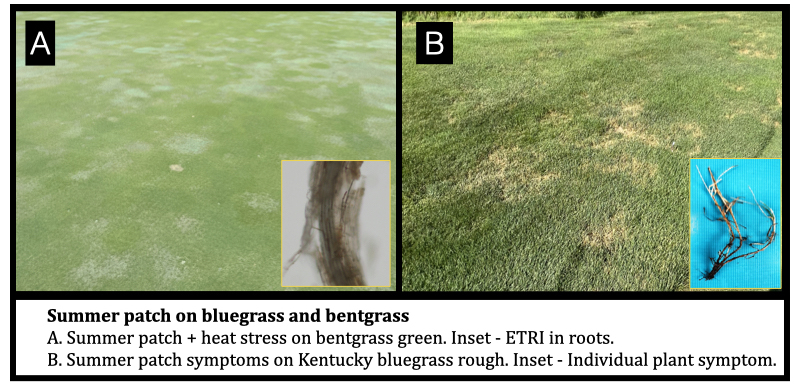
Summer patch arrived with numerous samples to the diagnostic lab starting in early August. Kentucky bluegrass on lawns and golf course roughs was severely affected as were numerous bentgrass putting greens broadly throughout the region. These summer patch infections of roots, stolons and rhizomes likely started occurring and accruing much earlier in the summer. Some of the samples displayed dark necrosis up into the leaf sheath and crown tissue.
Summer patch, necrotic ring spot, spring dead spot and take-all patch are caused by a group of pathogens known as the ectotrophic root infecting, or ETRI fungi. This group includes fungi in the genera Gaeummanomyces, Ophiosphaerella,and Magnaporthiopsis (aka Magnaporthe), and all have similar dark runner hyphae that are observed in nearly all stressed root samples. This complex, however, may also include pathogens that haven’t been studied in detail and may require a different management strategy.
Fungicide effectiveness for soilborne pathogens can be inconsistent due to a variety of factors including timing, delivery (requires post application irrigation) and organic matter composition (ties the fungicide up). Several turfgrass managers explained their exasperation that a preventive program was in place, started in the 65 F spring window, applied according to all recommendations and watered in. IPM strategies that maximized turfgrass health and targeted the pathogen (i.e. ammonium sulfate and manganese sulfate in the spring) may have also been needed, but also may have not completely turned the tide. Unfortunately, the combination of summer environmental stresses often means very light straws can break turfgrass backs. Even light ETRI infections on greens and lawns that would’ve been tolerated in previous years may have been the final straw in yielding disease symptoms in this one.
Rusts Starting to Roll
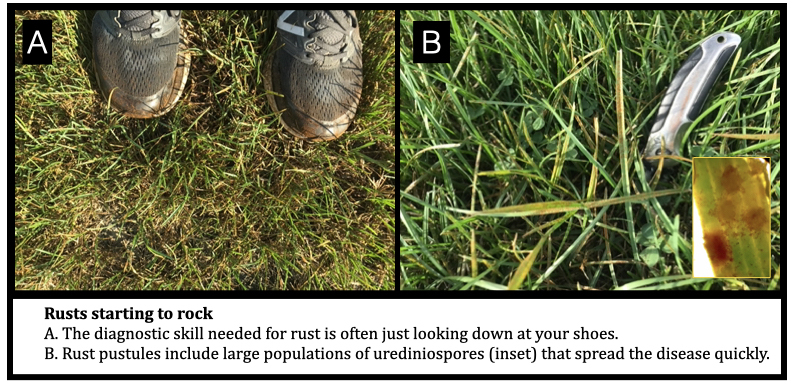
Rust on turfgrasses is a common mid-summer to early fall occurrence in the region and orange dusty shoes have raised some alarms in the last few days. The disease is caused by Puccinia spp., the same fungal genus that causes significant crop losses in wheat and other cereals throughout the world. Fortunately, turfgrasses are not needed for food and we are not interested in harvesting seedheads.
These pathogens are quite complex and can have several spore types on different alternate plant hosts. On turfgrass, the uredinia stage is most prolific with masses of pustules on leaf blades containing thousands of powdery orange spores that disperse, infect and spread the outbreak. Several types of rusts occur on turfgrass (stem, stripe, crown and leaf) and although all cool-season turfgrasses can be affected, higher cut Kentucky bluegrass and perennial ryegrass often have the most severe outbreaks.
Rusts rarely completely kill turfgrass but can cause severe thinning on newly seeded stands such as in sod fields. Rust outbreaks that reduce plant density most likely occur during a drought, low fertility or other stressor now on weakened plants after summer. Although a nuisance on shoes and pants legs, rusts are normally best treated through proper irrigation and may be an indication that the lawns need to be fertilized.
Recovery Plan
After a long hot summer, one might be squeamish to think of getting into aggressive recovery mode. The forecast, however, looks ripe to do so and September is just around next week’s corner. Not all turfgrass is managed equally, so here’s a few recovery hints for getting golf vs. lawn height turfgrass back into shape.
Golf Greens – Needless to say, this was a rough summer for golf putting greens. Some considerable loss of putting green stands occurred. If your greens struggled, know that you were not alone. This was our busiest season in the diagnostic lab since I’ve been at Purdue, correlating directly to the tough environment this season.
Overseeding and renovation of extremely damaged areas is ongoing, but don’t forget about the state of putting green health after this summer. Roots are still at their shortest and metabolism, while improving, is still weakened. When these cooler temperatures hit, bentgrass putting greens may have the environmental cues to grow, but not enough resources to pay that bill. Even if greens look fine and are growing, their hidden root bunions are still sore after that summer marathon. So perhaps help out by:
- Supplementing a tad more nitrogen in the spoonfeed (which will also help with anthracnose)
- Stretching PGR intervals just a bit longer in this cooler weather
- Lightly topdressing to, in effect, reduce mowing height without touching the bedknife
- Burping the rootzone a little with a solid tine.
Lawns/Roughs – The Canadian phrase “pitter patter let’s get at ‘er” sums up how to deal with lawns now. On lawns thinned out with disease and heat stress, the cooler weather in the region is providing a golden opportunity to get started.
- Aerify or verticut lawns dense with water and nutrient blocking thatch, particularly Kentucky bluegrass.
- Overseeding thinned lawns with good quality seed can be done now with the advantage that broadleaf weed control may still be able to be timed later this fall after seedling emergence (check the herbicide label). Promote good seed soil contact by lowering mowing height and even scalping severely declined lawns if needed. On non-irrigated lawns, perhaps wait to overseed until a storm is forecasted (perhaps next week).
- If lawns have gone since May without fertilization, now is the time to give them a kick of nitrogen to help them grow out of the summer doldrums. Even if you’ve been supplementing throughout the summer, the fall season is best time for lawn fertilization to restore density and quality. Dollar spot on Kentucky bluegrass, which is often a fall issue, is an indicator disease that the lawn needs nitrogen.
Fall Events
Open Learning Opportunity
Turfgrass IPM Module – Understanding Turfgrass Insecticides
Dr. Doug Richmond has created this online module course to allow you to earn CCH education credits (with six additional states also given approval) from the comfort of your favorite recliner. This education is delivered in a creative, modern format and is the first of a series of pest management lessons to be rolled out in the coming months.
MRTF Day of Service – September 23
Lend a hand and your expertise to help beautify spaces and enhance the community in Indiana. This year the MRTF will be having a day of service from 10 am – 3 pm on 9/23 at Abby & Libby Memorial Park.
MRTF Annual Golf Day Fundraiser – October 13
Support turfgrass research and education while playing the fantastic Warren Golf Course at Notre Dame.
Turf & Landscape Seminar – November 19 & 20
Mark your calendars for this two-day educational event designed for intermediate and advanced turf professionals to learn the latest in technology and research to advance their operations.
Lee Miller
Extension Turfgrass Pathologist – Purdue University
Follow on Twitter: @purdueturfpath
July 30, 2025: The Fuel & The Fire
Pervasive and disease conducive environment; newly grassed bentgrass green issues; basal rot anthracnose on Poa annua and creeping bentgrass; dollar spot and brown patch still rampaging; Lawn Care Diagnostic Training; New Zoysiagrass Field Day
Weather
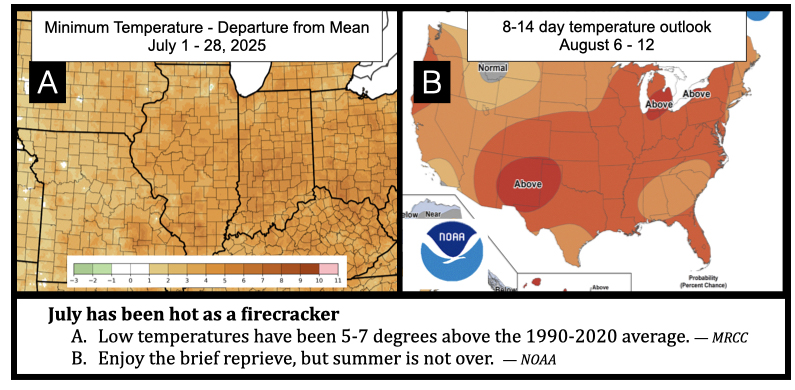
Like a boulder chasing down Indiana Jones, the stressful conditions of this summer have been relentlessly pursuing cool-season turfgrass health. July temperatures will end in the range of 4 – 7 degrees above average (1991-2020) for much of the state and region. Most of us have learned or become reacquainted with the concept of dew point (see a primer here)and associated real feel temperatures that have soared well above 100 F for much of the last two weeks. An interesting review in the Evansville Courier, puts the uniquely hot and humid summer into an overwhelmingly bleak perspective. Starting on July 14, dew points reached a “miserable” level of 75 F, starting a now 17-day streak with dewpoints at or above that mark, standing second Evansville’s weather history. Earlier floods, constant rains (9 days straight at one point), no cold fronts and corn sweat (an accurate term) have kept humidity at these high levels. The humidity is repressing the plants’ ability to transpire and cool itself, and high low temperatures aren’t providing a needed break at night. Water therefore isn’t removed from the soil and as stated in a previous report, when water gets hot it stays hot. Lastly, this free water is fuel for turfgrass diseases all too eager to take advantage of the compromised plant.
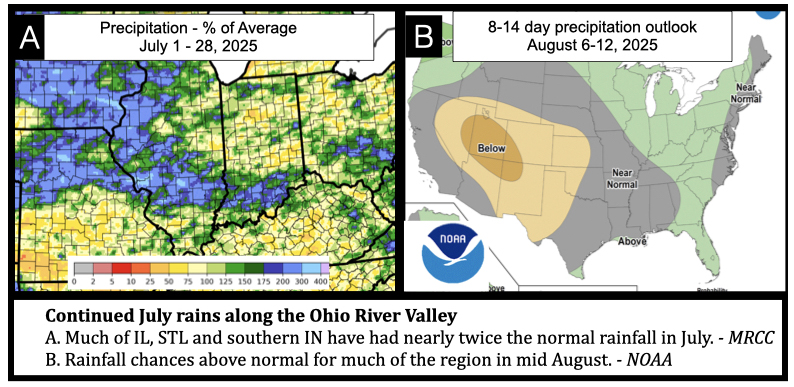
Short term fortunes have a cool front passing later this week, plunging temperatures back into the cooler 70s and 80s and importantly nighttime temperatures back into the 60s (and perhaps even high 50s). August is historically our second warmest month of the year, and the breather will be last only a few days, with summer heat and humidity set to resume into mid-August.
Golf: Young Bentgrass Green Troubles
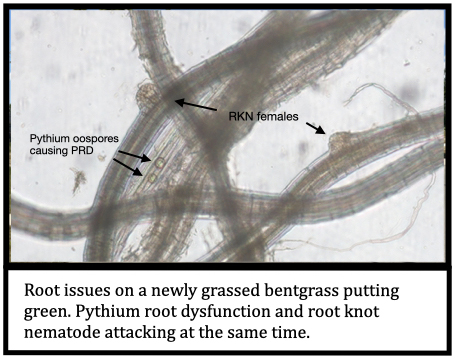
Several samples from young (a few months to two-year-old) bentgrass greens have been submitted to the diagnostic lab over the last week. These young toddlers, like those in the animal world, are susceptible to a broader range of ills, presumably due to an underdeveloped immune system of the plant and an unprimed environment “immune system” that lacks the microbial diversity to fend off initial pathogen invaders. Additionally, a turfgrass system is made up of a community of plants, and over time some of the weaker plants that aren’t suited to the challenges of the environment are naturally selected out, either conspicuously or without notice.
One of these samples (shown above) was afflicted with both root knot nematodes and Pythium root dysfunction. Apart these two maladies are a problem but together can be devastating. Particularly if sodding new greens, conducting a nematode sampling after planting (or even better before from the sod purveyor) is advisable. This service isn’t currently offered at Purdue, but Missouri, Florida and several other institutions provide nematode analyses. In a recent survey of the region by my previous student Asa McCurdy, M.S., root-knot nematodes were found in high supply in Indiana and the surrounding region.
Pythium root diseases on golf putting greens come in two distinctly different flavors – Pythium root dysfunction and Pythium root rot. Pythium root rot is often present on older putting greens that have high organic matter content and do not drain well. On the other hand, Pythium root dysfunction is more often (but not always) a problem on newly established putting greens (< 5 -7 years old) and can occur on well drained greens. Pythium root dysfunction is caused by a more limited number of Pythium spp. than root rot, and results in a distinct symptom of tanned roots that almost completely lack root hairs. This symptom is so distinct that even moist sand from affected areas falls from a putting green core quite easily with minimum shake compared to healthy areas. Pythium root dysfunction also can appear as a patch symptom and operates a bit more akin to a patch disease, with distinct infection periods in the spring and fall, making preventive applications during those periods crucial.
Fungicide treatments for these two diseases were quite different since the involved Pythium spp. had different sensitivities and efficacy varied. Fortunately, picarbutrazox (Serata) and cyazofamid (Segway) have demonstrated good efficacy on a more diverse range of Pythium spp. and are effective for managing these diseases. As an added bonus, the two fungicides also represent two different modes of action, so should be effective resistance management tools for each other.
Basal Rot Anthracnose on Putting Greens – Reports & Warning
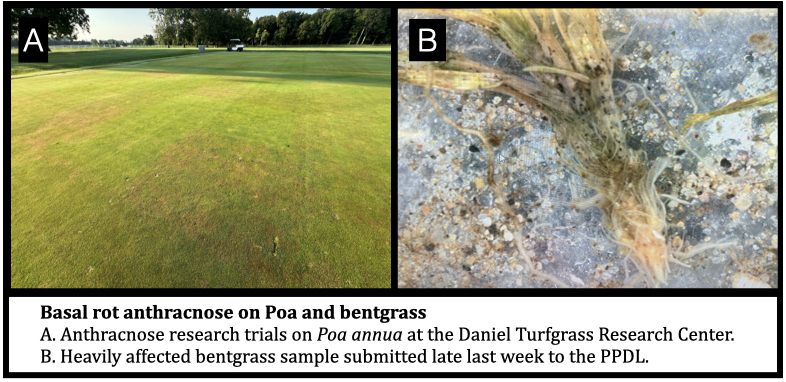
A sample of basal rot anthracnose from a bentgrass putting green was observed last week, and in our current trials on annual bluegrass, the disease is exceptionally severe. This disease, caused by Colletotrichum cereale, can take two forms – a chlorosis inducing foliar symptom and the now more damaging crown and basal rot. The latter of the two is in full force now and should continue into early fall.
In my experience, basal rot anthracnose cases are often sparked in my experience by a sudden temperature drop after a high heat stress period, a scenario set to arrive. My theory for this influx of disease activity stems from anthracnose being a low nitrogen disease. The plant system is stressed from the environment, roots are not functioning at their prime, and yet the cooler temperatures spark it into growth mode. Nitrogen may not be available because of low spoon feeding rates and the plant presumably can’t take it up effectively even if it is. Anthracnose takes advantage and dives into the crown.
Suggested curative fungicides center on QoI plus “cool DMI” combinations including Navicon, Ascernity and Briskway with Velista and Densicor also having good activity. Also as a note of warning, don’t go crazy with agronomic practices such as intense verticutting during this transient temperature reprieve. This disease along with a myriad of other problems can result from pushing the plant too far when in this weakened state.
Lawns – Brown patch and dollar spot still on the rampage
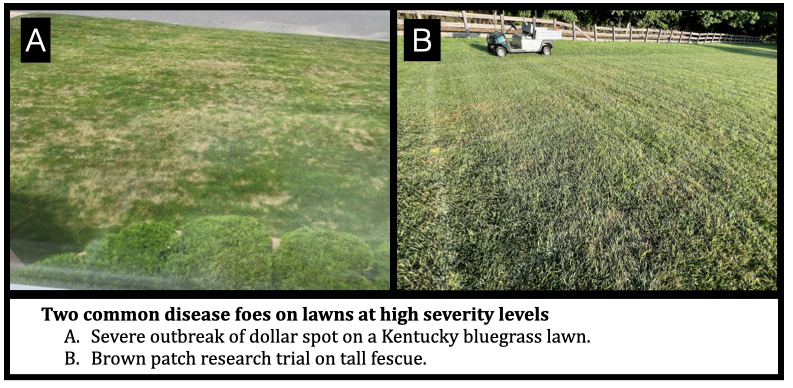
As noted in the last report, dollar spot on Kentucky bluegrass and brown patch on tall fescue have been frequent visitors to the diagnostic lab, and are raging through lawns, golf course roughs, commercial properties, etc. Identifying these two diseases is made easier by identifying the host. I have never observed dollar spot on tall fescue and brown patch occurs on a rare few varieties of Kentucky bluegrass (‘HGT’, however, being one of them). Getting the identification of these diseases right is important, as the strobilurins (i.e. azoxystrobin and pyraclostrobin) are not effective for dollar spot control and many of the fungicides effective for dollar spot control do a poor job controlling brown patch.
Timing of fungicides can reduce the number of needed applications if done correctly. At this past field day, we presented a demonstration plot with a standard application scheme, preventive timing and curative timing for azoxystrobin applications targeting brown patch control. We will discuss these observations and more at the Lawn Care Diagnostic Training event noted below.
Lawn Care Diagnostic Training – August 14
Join Drs. Patton, Bigelow, Powlen and myself for this year’s iteration of the Lawn Care Diagnostic Training. The morning program will have traditional presentations with the afternoon session being rotating field demonstrations concerning irrigation, weed control and disease control. Each participant will get print copies of both the updated Professional Weed Control for Turfgrass Managers and the Common Diseases on Cool-Season Lawns guides.
For more information and to register for this event, click here.

The very next week Purdue will be hosting a unique event focusing solely on zoysiagrass genetics and maintenance on August 19 at the Daniel Turfgrass Center. This field day will feature various university scientists discussing the current and future status of zoysiagrass use here, throughout the country and world. Presenters include the Purdue team, Drs. Ambika Chandra from Texas A&M University, Susana Milla-Lewis from North Carolina State University, Brian Schwartz from University of Georgia and more!
For more information and to register for this event, click here.
Extension Turfgrass Pathologist – Purdue University
Follow on Twitter: @purdueturfpath
July 9, 2025: Rhizattackin’
Heat & high ET = droughty lawns; brown patch prevalent on irrigated lawns; dollar spot hitting bentgrass fairways with force & lurking on Kentucky bluegrass; 2025 field day in the books; brief pause in turfgrass diagnostic services
* Turfgrass diagnostics will be taking a necessary hiatus from July 10-21. We will be attending the Olympics of Turfgrass Research (International Turfgrass Research Conference) in Karuizawa, Japan, and sharing information with a large group of colleagues from around the globe. Samples sent during this time will be kept in the fridge but may require resubmission. *
Weather
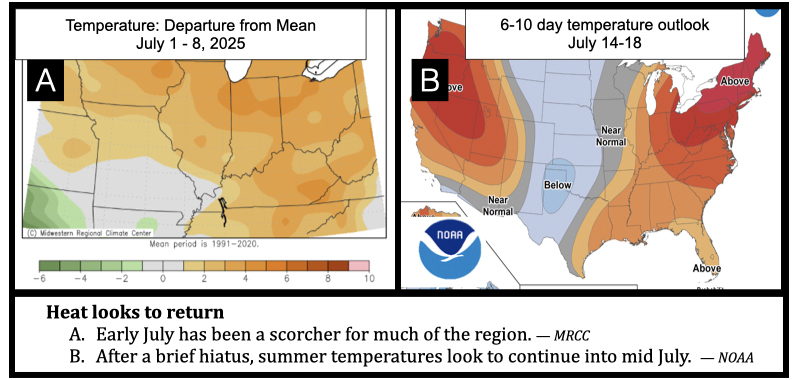
Summer didn’t waste much time after its solstice to deliver a solid heat dome to the region in late June. High humidity was also invited to the party, as muggy days with 60-70 degree + dew points sent “real-feel” temperatures soaring into the 100s. Recorded temperatures eclipsed 90 degrees for 8 days straight from June 21-28, followed by 4 straight days during July 3-6. Since 1990, Indianapolis averages around 20 days of ≥ 90 F, with the last real zingers being 2010 (37 days), 2011 (42 days), and 2012 (51 days). While cool season grasses struggle in high daily temperatures, they most often crumble with the corresponding high-low daily temperatures. During this late July period, low temperatures remained in the mid to high 70s, meaning cool season grasses did not get a needed break at night.
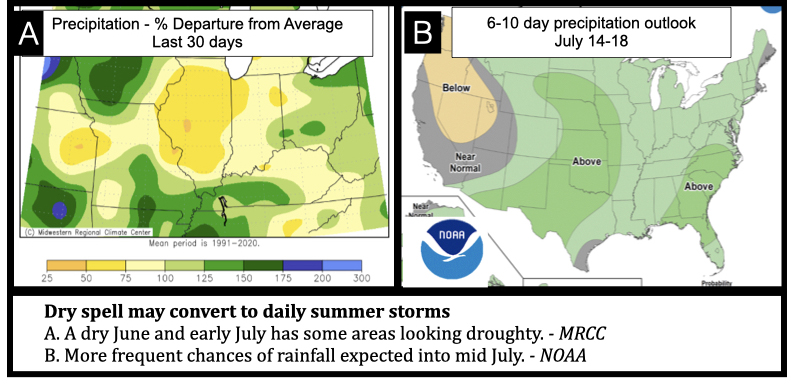
While rainfall didn’t completely vanish, its comparative absence compared to this past spring (particularly in southern IN) was a blessing. Seasoned turfgrass managers will often look back at summers with high rainfall combined with high temperatures as the worst, since as noted in the previous report, when water in the soil profile gets hot, it stays hot. Controlling the water and using irrigation wisely is key to maintaining in this heat, whether it be putting greens mowed to a tenth of an inch daily or tall fescue mowed to 3-4 inches once a week. Rainfall chances are expected to return for at least the middle of the state, and 6-14 day forecasts slant towards above normal precipitation chances through mid-July.
Drought Dormancy on Lawns
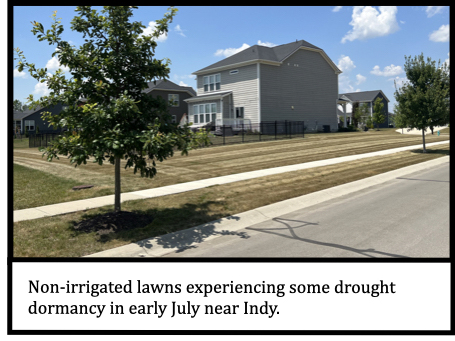
A visit to northern Indy to witness fireworks with friends also revealed some of the quick drought dormancy occurring on some lawns in the area. In a recent post from Midwest Regional Climate Center Director Dr. Beth Hall, approximately 1.5” of water could be expected lost from July 3-10, which will likely far exceed the precipitation. This could mean the abnormally dry and moderate drought still present in the northwest portion of the state could extend to other areas, and is showing its teeth in lawns as in the photo above. On the flip side, brown patch and other diseases aren’t noticed in this yard, and if the drought is indeed short-term a good likelihood exists that the lawn will green right back up. As a note, a lawn that appears this drought affected should not be mowed. Mowing grass that isn’t growing isn’t just a waste of time, but the traffic and warm mower tires can impart stress that is conspicuous much longer than minor drought dormancy.
Brown Patch Hitting Tall Fescue Lawns Hard
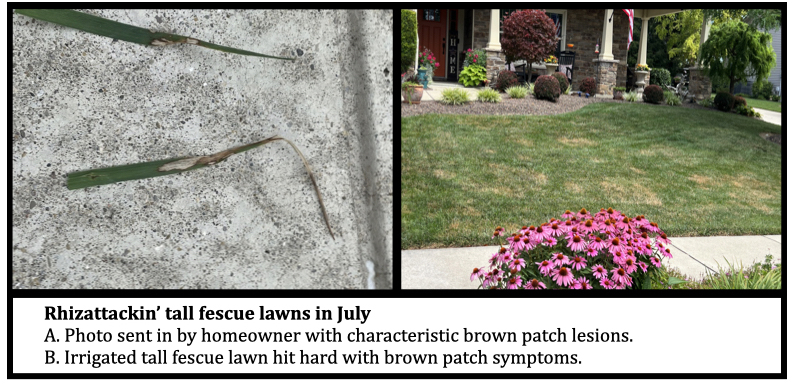
Brown patch went from mildly lurking, to donning a sequin lined leather jacket and grabbing the microphone in early July. Irrigated tall fescue lawns were hit hardest, with light brown patches mottling and thinning the sward. Remember, that brown patch is the Achilles heel of tall fescue, but also can work in cahoots with Pythium blight during periods with combined high heat and extreme rainfall and/or excessive irrigation. As detailed at field day, diagnosing this disease is relatively easy if the host is identified correctly, since the characteristic leaf lesions (dark brown outer margin and tan to white interior) are easily observed. Controlling brown doesn’t require starting a robust preventive fungicide schedule in March or April for much of Indiana (which is way too early) but instead on fungicide choice. DIY homeowners and lawn care operations struggle with this disease when attempting to control it with applications of propiconazole, myclobutanil or thiophanate-methyl . Research done by myself and colleagues show these products, which may be effective on shorter cut turfgrasses, do not work well on tall fescue lawns. Instead more phytomobile strobilurins, such as azoxystrobin, work more effectively for control. In most cases, these chemistries work so well that a preventive 4-5 application strategy during the summer is unnecessary, and the first application can be more adequately timed as an early curative after scouting and diagnosing the disease.
Dollar Spot Extremely Active on Creeping Bentgrass Fairways
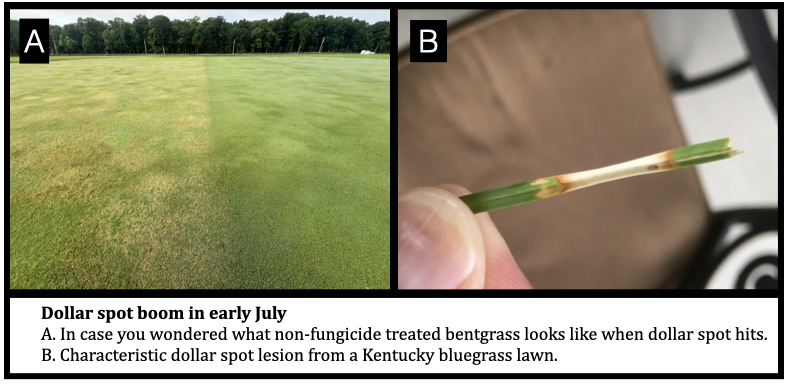
High humidity also led to an explosion in dollar spot, particularly on creeping bentgrass fairways, since the last report in mid-June. Examining the Smith-Kerns model in our Turf Disease Prediction Tool, this severe outbreak corresponds to a period from June 18 to present with state-wide dollar spot probability above 40% and into the mid 50% range. Kentucky bluegrass lawns and roughs are also starting to show some dollar spot activity, which gradually accumulates and really swings the hammer towards noticeable decline in August and September.
During this time, golf superintendents have reported the need for strict adherence to their fungicide application intervals, and as one put it “right now 14 days, really means 14 days”. As we move forward, please report any unusual dollar spot outbreaks to us that seem to buck your efforts at control. An upcoming research project will be investigating fungicide resistance and we’d like to build a current survey of the region.
2025 Turfgrass & Landscape Field Day in the Books
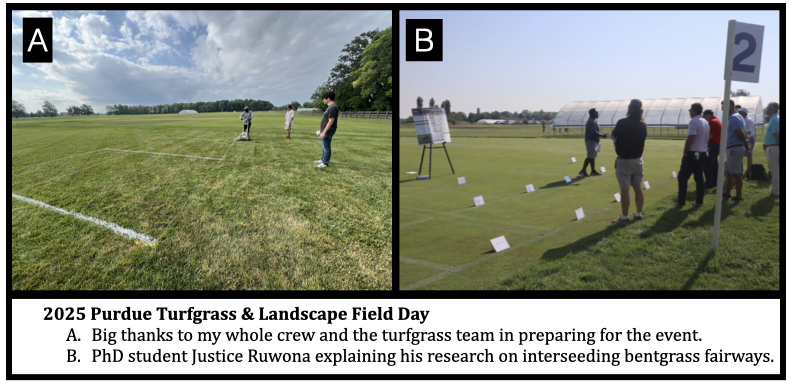
Another field day event has come and gone, and again on my 4th iteration here at Purdue I come away impressed by the quality of the content from my colleagues along with the support and enthusiasm from the industry. Thank you to all who came out and participated despite the short turnaround from the holiday weekend, as your commitment makes the hard work of the faculty, students and staff (kudos to DTC manager Glenn Hardebeck and assistant Ben Royal) worthwhile and rewarding.
As usual, our response is next… and our next education event will be the Lawn Care Diagnostic Training to be held on August 14. For more information on this event, click here.
Additionally, Dr. Doug Richmond has created an online module course Understanding Turfgrass Insecticides to allow you to earn CCH education credits (with six additional states also given approval) from the comfort of your favorite recliner. This online education format, spearheaded by Dr. Richmond, will be developed into more offerings to include weed (Patton and disease (Miller) control. The format is unique, interactive and quite frankly the most innovative modern designs of online learning that I have seen. I’m excited to be a part of this collective effort and in the development phases of my courses and think you will enjoy this new method of learning about IPM and responsible pesticide usage.
Extension Turfgrass Pathologist – Purdue University
Follow on Twitter: @purdueturfpath
June 19, 2025: Storms before the Storm
Early summer storms; preparation for impending heat wave; brown patch and leaf spot arrival; zoysia/bermudagrass winterkill and disease activity
Weather
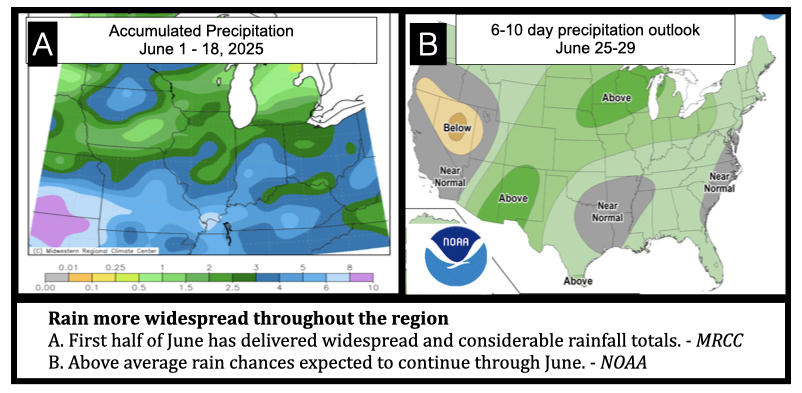
Yesterday’s storms produced a wallop in the region, with extreme winds felling trees and lodging corn. A wet first half of June followed a May with extreme rainfall in the south (Lexington, KY – 4th wettest May on record; Evansville, IN – 6th wettest) and much lower precipitation in the north (Fort Wayne – 11th driest; Chicago – 12th driest May on record). Quite the division of naturally delivered water from north to south. June rainfall has been a bit more widespread, with areas nearer to Lake Michigan still running in a bit of a deficit, especially compared to the swimming pool south towards the Ohio River.
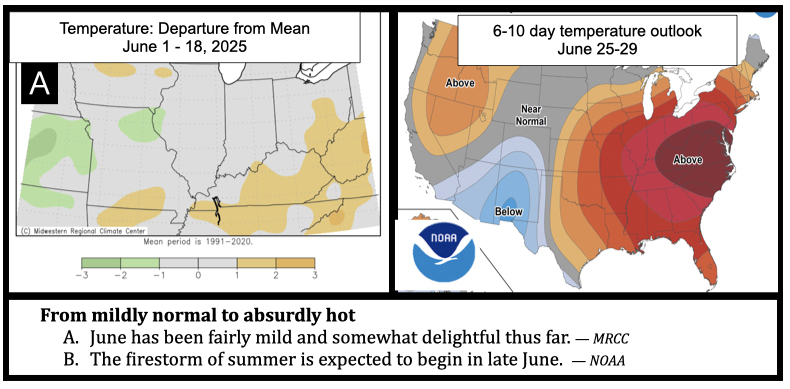
Temperature has been exceedingly normal in much of the region for the first half of June. May temperatures were also at or below normal for much of the region, with no large flamboyant jumps in high temperatures. This is set to dramatically change as Mother Nature is breaking out the feathered boa and will be delivering intense heat over the weekend and into the rest of June. This stress will be a stressful shock to our cool season turfgrasses and perhaps give a reprieve to those in the south attempting to encourage warm season grasses back to life.
Impending Heat Wave Preparation – Cool Season Turfgrasses
In a conversation with a golf superintendent earlier this week, he relayed an impending feeling of doom that this was the last real week of spring. Conditions will be “flipping the switch” towards summer stress and the need for both sweat and skill in turfgrass maintenance. The balancing season of keeping grass healthy is definitely upon us, but preparations conducted during spring (i.e. mindful fertilization, restrictive irrigation adaptive to rainfall, clipping management, golf – root disease prevention, etc) discussed in earlier reports hopefully has widened the tightrope with healthy turfgrass having a developed root system.
Water – Use Irrigation Wisely
Prior to next week’s heat, locations nearer to Lake Michigan have a distinct advantage, other than their more prized latitude. These areas have been drier, meaning root systems have not been constantly saturated and limited by a lack of oxygen, and should therefore be more extensive. The experienced manager understands that having some control over the amount of water delivered to turfgrass under their purview is perhaps the most important aspect of reducing leaf aches and headaches. Adequate drainage and water management is essential for fast, high quality golf putting greens and sports fields, which are maintained at the highest maintenance levels of perhaps any plant on this planet
Don’t misunderstand, rainfall is the most effective form of irrigation. If we could get 0.5 – 0.75 inches a week measured out in steady measured doses, it would indeed be perfect. However, like anything else the dose makes the poison. Heavy, flooding rains deliver inches at a time, and turfgrasses (particularly on heavier soils) are provided little favor. Overirrigating in the spring creates a false sense of security, since a lawn with a compromised root system can stay lush in these times of optimal temperatures. When the bottom drops out, meaning the temperatures rise towards demanding, the underdeveloped root system can’t cash the check because it doesn’t have the savings.
Water has a higher thermal conductivity and thermal specific heat capacity than air. This means when water gets hot, it stays hot and makes that environment hot. Overirrigating on a poorly draining soil or a plant with a poorly functioning root system to remove the water, can raise soil temperatures and keep them there, particularly at night when air temperatures finally grant a reprieve from the long summer’s day. At this point, be mindful of irrigation practices past and present and how they are impacting your managed areas.
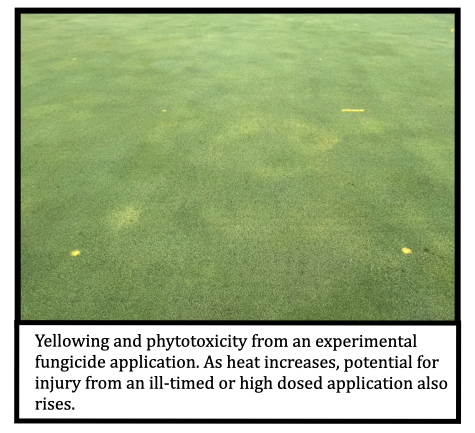
Phytotoxicity
This week we had our first occurrence of phytotoxicity from one of our experimental fungicide treatments on our research putting green. These plots had been sprayed twice this season, and we are unsure of the compound or mechanism that added the stress. The symptoms appear very much like suspected bacterial decline with an obvious chlorosis and some mild etiolation prior to mowing. Also, some segregates of ‘Pennlinks’ could be taking it on the chin more than others within the plot.
This is a great reminder that we can be our own worst enemy. Herbicides with stated heat restrictions are an obvious threat and knowing the label prior to an application is a must. My experience is we simply try to do too much to stressed turfgrass. One more biostimulant, one more fungicide, one more wetting agent, one more micronutrient, one more this and one more that. Something will surely make that grass run faster during the seventh hill of the marathon. Within a blink, there are 5, 7, 8, 10, 14 (my observed record) products in the same tank.
In our research plot, we sprayed ONE active twice and got a reaction under relatively mild temperatures. How does a high number of products react in the tank, on the plant and in the plant when temperatures eclipse 90 F? Experiments with all of the different tank-mix permutations in a high stress environment have not been done. The logistics are simply impossible with the substantial number of products and possibilities on the market. On lawns with lesser inputs, this shouldn’t be as much of an issue, but on golf putting greens I find it ot be
My advice is that taking products out of the spray tank during heat stress is often more beneficial than putting more in. Importantly, also monitor the amount of sulfur on putting greens in the products in the tank. High sulfur inputs can spark black layer and turf loss in hot, saturated soil conditions very quickly.
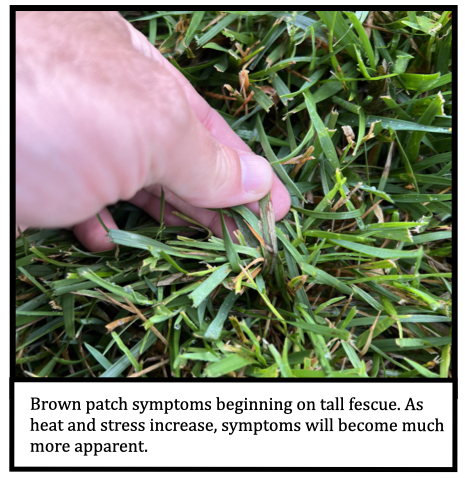
Diseases – Symptoms Getting More Obvious
Brown patch on tall fescue has been lurking for the last few weeks and is becoming more and more obvious on our plots. Disease symptoms on home lawns will become much more conspicuous in the next few weeks. On home lawns, fungicide applications can often be made curatively, particularly if plant health is good going in.
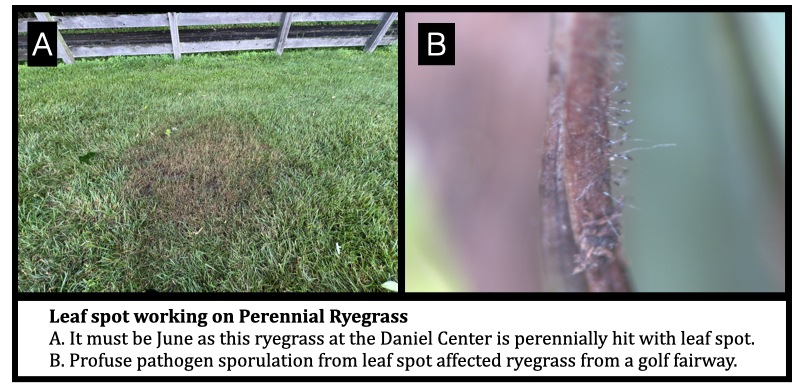
Along with brown patch on tall fescue, leaf spot on perennial ryegrass was found on a patch of fairway height grass in southern IN and in our normal spot along the fence at the Daniel Turfgrass Center. This observation is not gray leaf spot but instead caused by the older termed Helminthosporium (Bipolaris or Drechslera) pathogens with the common disease name of leaf spot/melting out diseases. These pathogens can also damage Kentucky bluegrasses and caused severe symptoms last year (click here to view the previous report). The time is here to scout lawns and all turfgrass areas intensely. At our upcoming field day, we will concentrate on identifying these lawn diseases and how to manage them.
Zoysiagrass/Bermudagrass Winterkill & Disease Activity
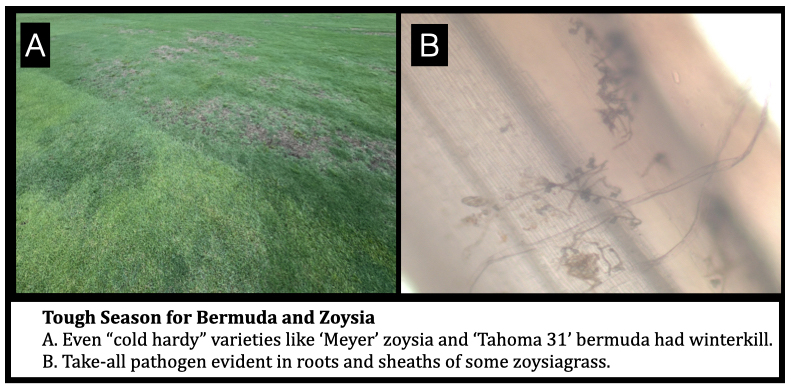
The unfortunate story of this past winter and spring is the poor state of warm-season turfgrasses. On many courses, both zoysiagrass and bermudagrass took it on the chin and is struggling. Low temperatures during the winter are primarily blamed on these kills, but the corresponding high spring rainfall events in areas with considerable loss also point towards saturation during greenup as playing a role. Even cultivars such as ‘Meyer’ zoysiagrass and ‘Tahoma 31’ bermudagrass incurred significant damage on some courses along the Ohio River valley. While this report offers little in the way of solution, know that if you are dealing with this that you are not alone.
On the disease side, large patch on zoysiagrass (and probably bermudagrass) is still being observed in the region. Superintendents have reported making two tebuconazole applications last fall, an additional two applications this wet spring, and still have activity in mid Junr. In a visit this past week, quite a bit of take-all root rot was observed in chlorotic and still declining samples taken from low lying zoysia areas. The pathogen (Gaeummanomyces spp.) wasn’t limited to the roots in these samples but was also very predominant on the leaf sheaths. Tebuconazole is the most often reached for fungicide in controlling large patch, but take all root rot on zoysiagrass, which is not as well studied, may require a strobilurin fungicide addition. A final disease of note on zoysiagrass is yellow tuft or downy mildew, which is also not well studied.
On the good news front, the temperature hike will be welcome and hopefully allow for quick recovery from rhizomes and stolons. Dr. Aaron Patton at Purdue is a principal member of a multi-university team studying zoysiagrass adaptability and use. If you have experienced winterkill, please consider filling out this quick 5-minute survey to let this research team learn more about the situation this year.
2025 Bermudagrass/Zoysiagrass Winterkill Survey
Additionally, this large team recently wrote an extensive review of bermudagrass winterkill with the current knowledge of the condition and its management strategies. To access this free article, click below.
2025 Purdue Turfgrass & Landscape Field Day
Last but not least, registration for the field day is open! Join us for a ton of education packed into a single day, outside, with all of your likeminded friends. On the pathology side, we’ll discuss lawn diseases, interseeding of golf fairways, and disease scouting on golf putting greens. Other learning opportunities regarding turfgrass fertility (Drs. Cale Bigelow and Jada Powlen), weed control (Dr. Aaron Patton) and insect control (Dr. Richmond) will be presented, along with valuable information regarding trees, ornamentals and other landscape items. Hope to see y’all there.
Purdue Turfgrass and Landscape Field Day – Tuesday, July 8th
Lee Miller
Extension Turfgrass Pathologist – Purdue University
Follow on Twitter: @purdueturfpath
May 21, 2025: Engines Running
Dollar spot off and racing; Irrigation = Ascochyta blight; Seedheads draining lawn health; Mind mowing decks and blades to reduce clipping issues.
Weather
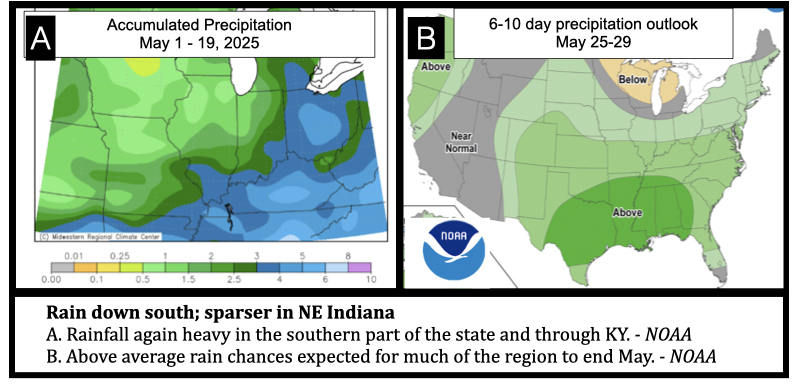
In April 2025, Indiana as a whole had the 30th warmest temperature and 10th most precipitation on record over 131 years of weather data. Indianapolis was 2.5 F above average, and the 3rd wettest on record with 8.02 inches of rainfall to follow up last year’s 6th wettest April (7.77 inches). Indy averages 4.34 inches of rain in April, so we’ve gotten our fair share of both April warmth and showers to fuel May flowers in 2024 and 2025. This pales in comparison, however, to our southern neighbors. Evansville and much of Kentucky finished with 21+inches of rain in April (top 10 on record for much of the region)! Conversely, the northeast portion of Indiana can use more precipitation, showing that we are on the dividing line between the have nots and have too much.
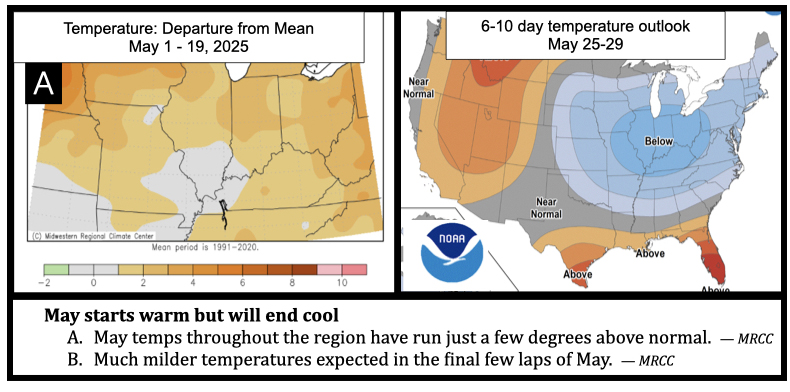
With the approach of Carb Day, temperatures are expected to remain very mild in the final laps of May. Temperatures over the last 30 days in the region have run 3-5 degrees above normal, and this break should be advantageous for turfgrass growth before the doldrums of summer stress hit.
Golf – Dollar Spot Racing on Bentgrass in mid-May
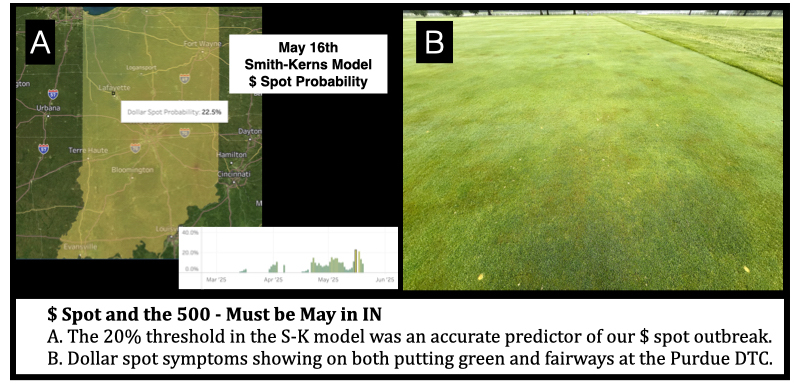
The first outbreaks of dollar spot hit the gas and were noticed last Friday at the research farm. Fairway symptoms were first noticed Friday and summarily noted again on Monday. Impressively, the Smith-Kerns dollar spot model nailed this first outbreak again with calculated probabilities > 20% on May 16-18, which corresponded perfectly to our first outbreak. As a research site with a long history of dollar spot research, the Daniel Center has quite the buildup of inoculum (artificially introduced and natural) and our fertility levels are quite low. All of our outbreaks are on known susceptible bentgrass cultivars and annual bluegrass.
Recent studies demonstrate differences in needed dollar spot control with newer resistant bentgrass varieties. Hempfling et al reported higher Smith Kerns model probabilities (above 20%) could be used with resistant (or less susceptible) cultivars in timing preventive fungicide applications. Zhang et al found that reacting to dollar spot outbreaks on resistant varieties with curative applications greatly reduced the overall fungicide inputs needed over the course of the season and lowered the risk of severe disease outbreaks.
If you have an older cultivar (particularly on greens), preventive applications may be necessary. If you haven’t made this application yet, now is the time. Our recent research indicates preventive applications of mefentrifluconazole, pydiflumetofen and fluxapyroxad may provide noticeable reductions (but not zero) in dollar spot severity through the season, especially if watered in to also target soilborne diseases on putting greens.
Wet Spring Irrigation = Ascochyta Blight on Lawns
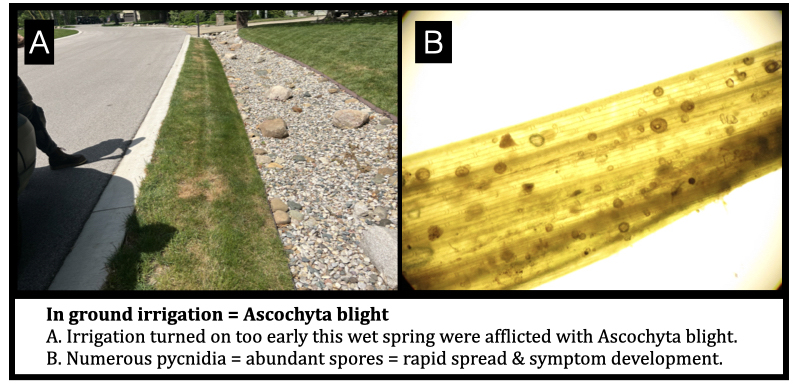
A rash of Ascochyta blight outbreaks on tall fescue and Kentucky bluegrass lawns in Indianapolis and the Lafayette area occurred in early May. Foliar decline spread along mower tracks and was segregated to various areas of the lawn. One of the lawn care operators noted the outbreaks all occurred along one particular route, which makes sense since this disease is caused by a pathogen that sporulates profusely and could easily be carried on water or debris lodged in a mower from one site to the next. All of these lawns also had their in-ground irrigation turned on by a typical late April schedule and running. As noted above, rainfall has been more than adequate in April and May and this increased leaf wetness from irrigation likely spurred the epidemic further. Somewhat frustratingly, lower maintained and non-irrigated lawns right next to those affected are often left unharmed.
The good news is Ascochyta blight is solely foliar, and when the leaves get dry for a minute and temperatures warm, the disease normally fades and the lawn recovers. Very little if any information is available regarding fungicide control and use is not recommended. Obviously, turning off irrigation is a necessary first step. Moderate fertilization (see below) is not known to spur the disease. Importantly, identify these diseased lawns and mow them last in the day. The leaf blades on these lawns will hopefully be drier later in the day and this reduces the likelihood of moving the disease to a new property.
Excessive Clippings and Seedheads Impact Lawn Health
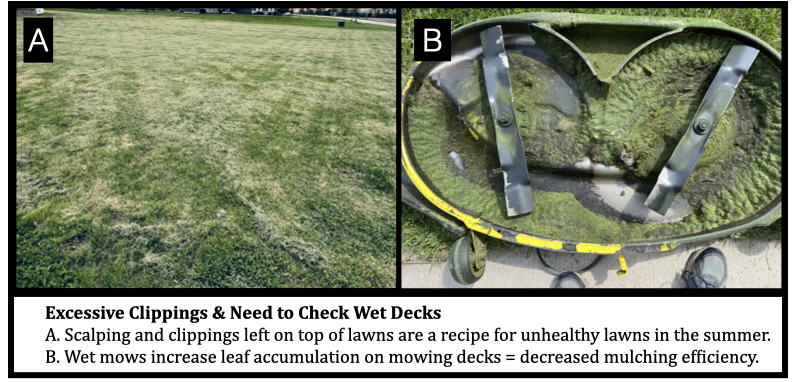
We’ve received some reports of thinning or sickly looking lawns in the last two weeks. Symptoms don’t appear disease related and no pathogens are apparent in the scope. These lawns are likely being afflicted by one or both of the following common spring issues.
Clippings – Noted in the last report, excessive clippings have been observed left after mowing on many lawns. This is a common occurrence in wet springs like this one, since scheduling mowing events at the frequency needed to keep up with growth is darn near impossible. Also, most of are depending on mulching decks to reduce or eliminate clippings; a great idea to return some nutrition and organic matter back into a normally substandard home lawn soil. However, when mowing wet leaves, they tend to accumulate in the deck and reduce or eliminate the needed the mulching effect.
Seedheads – As part of their natural life cycle, cool season grasses are seeding heavily now. Kentucky bluegrass and tall fescue will seed in the spring with the idea of spreading themselves and allowing for germination in open areas (same thing the weeds are doing). This process, however, comes at a fitness cost which can sometimes lead to more rapid leaf senescence. Remember that a turfgrass leaf typically is formed and dies in 30-45 days (also a natural process). These seedhead stalks are often coarser and more difficult to mow, which can also result in a rougher, or even rustic, look to a lawn.
For both of these issues, pay attention to fertility and mowing. Waiting until seeding or just after for an initial or second spring fertilization can help boost turfgrass past the fitness cost caused by seedhead formation. Of course, fertilization will lead to more growth and therefore maintaining mowing frequency will be necessary. Second, make sure to inspect and clean the mowing deck at the end of the day. Acccumulation of clippings on the deck will restrict the mulching power of the blades and leave behind more cut leaves. Third, make sure the mow blades are not dull, which won’t give the mulching option a chance. Last but not least, break out the blower after every mow and walk the lawn, dispersing as many clumps of clippings as possible. If big clumps are left, rain pounds them down into a patty, and the result will nearly always be a disappointing bare spot in the lawn.
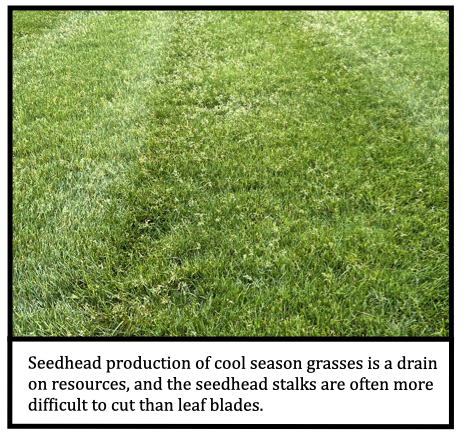
The Departure of Matt Carpenter

Our main compatriot, Matt Carpenter is leaving the program to head back to his home state of Tennessee. Matt has been our research technician and director of the field research program since I arrived at Purdue, and has been instrumental in the success of the Purdue turfgrass pathology program since he got here in 2022. His dedication and can-do attitude have been treasured assets, and I’ve been blessed in my career to have worked with him and my previous technician at Mizzou, Daniel Earlywine. As a final lasting hurrah, the three of us just published an expansive study conducted at both Missouri and Purdue assessing dollar spot efficacy of 18 different fungicides after watering them in to target soilborne diseases.
Thank you for all of your considerable efforts and accomplishments Matt, and know you have been crucial factor to the success of our program. I appreciate you. Best of fortunes and see you again soon my friend.
SAVE THE DATE: Purdue Turfgrass and Landscape Field Day – Tuesday, July 8th
Extension Turfgrass Pathologist – Purdue University
Follow on Twitter: @purdueturfpath
April 16, 2025: Muddy Waters
Excessive and in some cases, abusive rainfall amounts; keys to soggy turfgrass management; winter injury potential causes and recovery, red thread, spring golf disease prevention
Weather
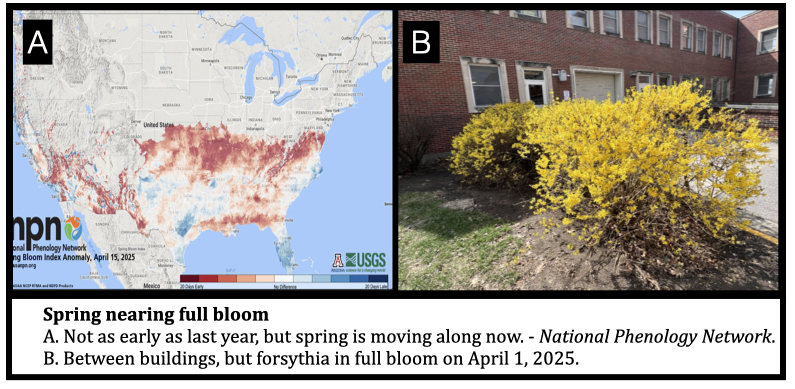
Spring, which officially started on March 20, is rolling along, and into mid-April temperatures in the region are ahead of statistical normal, but lagging somewhat behind last year. I appreciate and highly recommend the Growing Degree Day Tracker hosted by Michigan State University as a barometer for the progress of spring, and importantly the status of growing degree accumulation vs. the previous year. Flowering in the Lafayette area of the early bloomers has occurred, with forsythia leading the way and now dandelion flowers popping in yards throughout the area.
The winter of 2024-25 had near normal regional temperatures in the north and slightly below normal temperatures in the south. December was above normal, but with the new year came a marked shift in below normal temperatures in January and February. Importantly for us turfgrass managers, these frigid Arctic blasts were not accompanied by precipitation and snow cover. As noted below, we are getting reports and a few samples of winter injury on home lawns in northern IN as a result of this unprotected blast of cold air.
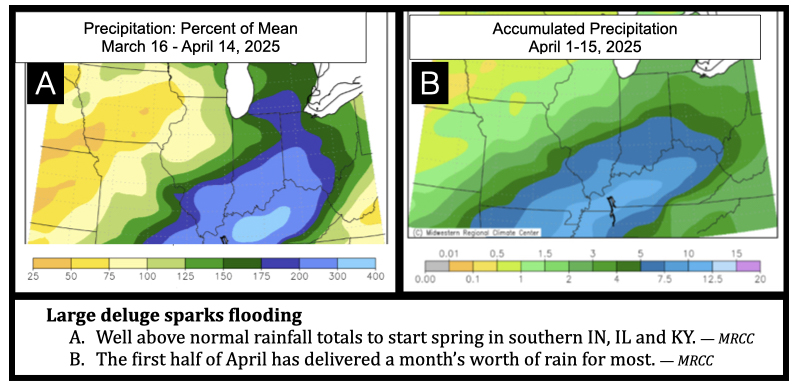
The story again this April has been extreme rainfall events and above average precipitation, particularly for southern Indiana, Kentucky and Ohio. Rainfall totals along the Ohio River Valley ranged from 7 – 15” in consistent storms starting on April 5th, resulting in severe flooding in the region. This adds on to a significant flooding event in Kentucky in mid-February. Fortunately, reports indicate the impact on turfgrass health has been manageable thus far, but not without considerable and noble efforts by golf superintendents, their crews and other turfgrass managers in the region.
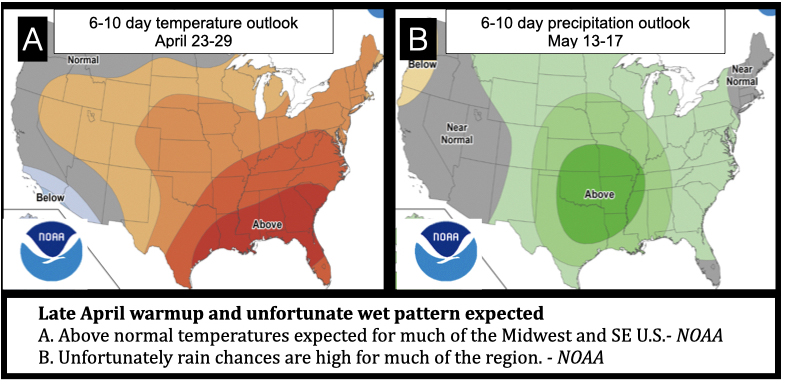
Forecasts indicate a rise in temperature through the end of the April and unfortunately, above normal expectations for rainfall throughout the region. As we enter this crucial management period for cool season turfgrasses, water, and its impact on turfgrass health later in the season, should be at the forefront of turfgrass managers’ minds.
Water
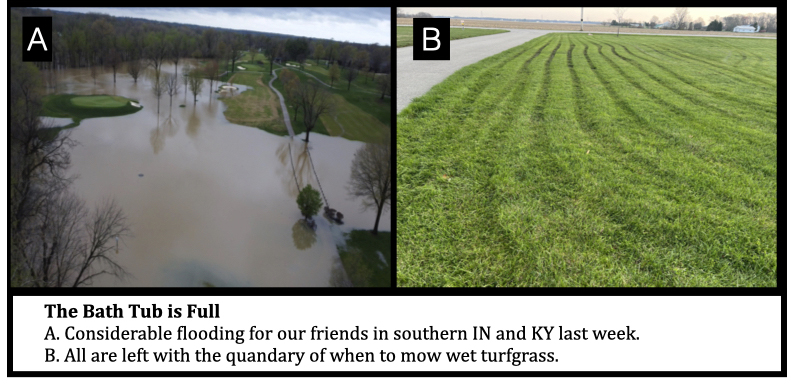
The region almost certainly won’t be in an excess rainfall scenario for the whole season and supplemental irrigation will likely be needed to keep turfgrass lush and green. Now, however, too much water can have negative consequences that last well into future months as cool season turfgrasses need to put down spring root growth to enter the marathon of summer. Below are a few thoughts on managing turfgrass in the current spring deluge.
Tolerance & Survival – A recent study done at Purdue by Drs. Braun and Patton investigated growth responses of cool season grasses to waterlogging stress (click here to view). They found many of the cool season turfgrasses we use in this region (Kentucky bluegrass, tall fescue and fortunately creeping bentgrass) have the highest waterlogging stress tolerance compared to other cool season species. The fine fescues, such as creeping red, Chewings and hard, had poor tolerance with our weeds annual and roughstalk bluegrass having fair tolerance to waterlogging. For warm season turfgrasses, Fry (1991) showed good submersion tolerance of bermudagrass and zoysiagrass in controlled studies. In field observations during flood events, bermudagrass performs considerably better than zoysiagrass.
Injury increases with depth of water and is higher under stagnant vs. moving water. If silt deposition occurs, removing it as quickly as possible with raking, hosing, power washing, etc. is extremely important for recovery. Lastly, water temperature was fortunately in our favor, as lower temperatures allow for much longer survival than water at higher summer temperatures. More information can be found about dealing with flood damage here – Reicher & Bigelow.
Mowing – Grass has been growing, which has necessitated mowing. In much of the region, at least one and more likely 2-3 mowings of lawns and roughs have occurred with many more likely on cool season greens, tees and fairways.
Timing of mowing around rain events is tough and a balancing act. Mow frequently enough to avoid scalping and baling hay, while also avoiding trafficking wet, saturated soils and creating muddy mower tracks. Trying to navigate this quandary while coordinating the maintenance of several, if not many, different properties under the purview of a landscape company can be near impossible. Inform your operators to avoid wet areas when they can, and if they do mow a wet area to map it for corrective aerification in the soil. Raise the decks as high as they will go. If mowing on wet soil, the machine will sink and equate to a lower mowing height. If an area needs to be skipped, manage the clippings in the subsequent mowing. Double cut to mulch, bag and remove, or simply blow and disperse clumps of clippings so they don’t smother turfgrass underneath and provide a perfect disease causing environment.
Manage the Water: This should be obvious, but lawn irrigation should not be running. I had a silent, but severe conniption upon witnessing a home lawn irrigation system running last week. Soil systems broadly throughout the region need to dry out. Most neighborhood lawns are built on substandard clay soils that dry slowly and are hard enough for roots to subsist in anyway. Roots need air to grow. This time frame is particularly important to allow deeper soil penetration by roots to manage the impending fickleness of summer precipitation. Let them have it.
One of the most important factors in disease development is free leaf moisture and high humidity. Most of the diseased lawn samples submitted to the Purdue Plant and Pest Diagnostic Lab are from areas with in-ground irrigation systems (IGS). Flash drought and collapse of plants caused by shortened, over-watered roots occur most often on irrigated lawns. The correlation is consistent and definitive. Use IGS sparingly and when needed. This isn’t the time.
Winter Injury on Lawns
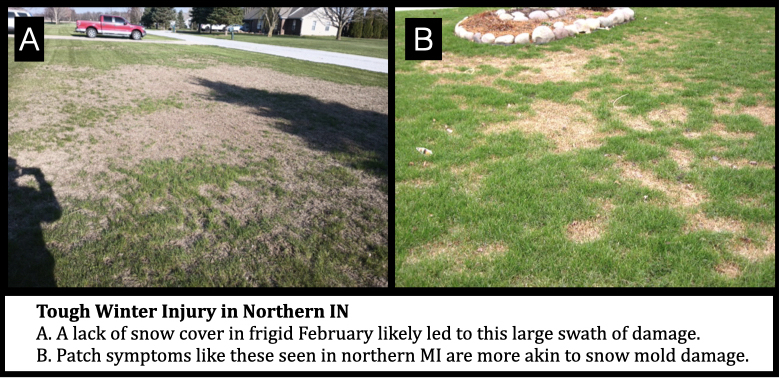
A few instances of winterkill on lawn grasses in northern Indiana have been reported and submitted to the lab. Winterkill isn’t an every season occurrence and deriving an exact reason for the damage after the fact is often difficult. I surmise this damage came in February when arctic temperatures combined with no snow cover for protection plunged soil temperatures to sub-freezing levels for 14+ days straight. Low temperature kill is most severe in perennial ryegrass, annual bluegrass and tall fescue. Farther up into Michigan with longer periods of persistent snow cover, snow mold diseases are more common. If Kentucky bluegrass is present, an option is to allow regrowth from rhizomes. If not, rake matted areas to assess damage and reseed as soon as possible. Two great articles regarding winterkill causes and recovery can be found from Purdue here and Michigan State here.
Red Thread/Pink Patch
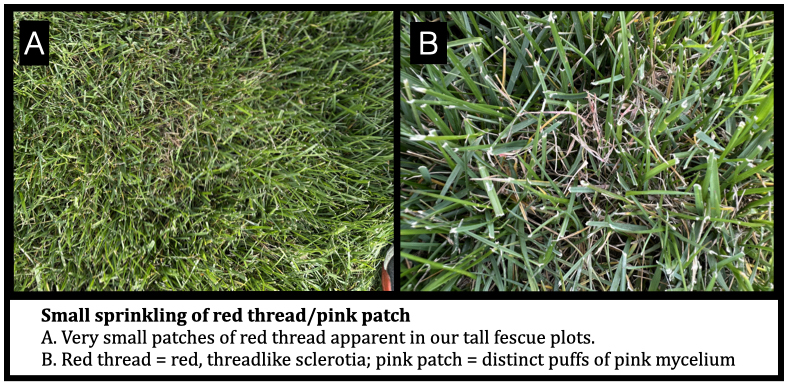
Upon scouting our tall fescue plots last week, we found small beginnings of the disease most commonly known as red thread. The disease is often associated with two pathogens: red thread caused by Laetisaria fuciformis which has the distinct red sclerotia threads, and pink patch caused by Limonomyces roseipellis which produces fluffy pink tufts of mycelia on leaf blades. Tall fescue, fine fescues, Kentucky bluegrass and perennial ryegrass are most commonly affected. In most cases, fungicides for red thread control aren’t warranted. Red thread occurrence is a sign that nitrogen from the previous year has run out and another dose is needed. Recent studies have shown good curative recovery from an application of 1 lb N/1000 sq ft. If the disease is extremely severe, azoxystrobin has also demonstrated good curative performance. For more information on this and other lawn diseases, see BP-218-W.
*Note – On lawns, preventive fungicide applications are too early and should not be initiated at this time.*
Golf Only: Disease Prevention – Large Patch & Soilborne Diseases on Putting Greens
All of this precipitation and warmer spring weather should turn our attention to root health of putting greens and protection from soilborne diseases. Now is a great time to identify deficiencies in drainage. Two-inch soil temperatures are nearing the 55 degree mark in southern IN and if the warmup forecast holds will be soon reached in Indianapolis. Consider firing up your fairy ring/patch targeted fungicide applications in the next two weeks, and with all of this rain don’t hold off too much longer on Pythium root rot prevention. Remember all of these applications targeting soilborne diseases will need to be irrigated in with at least 1/8 inch and preferably closer to 0.2 or ¼ inch of post-application irrigation to drive the fungicide down to the target zone.
Last but not least, zoysiagrass golf fairways (and lawns) with a history of large patch may require a spring preventive or early curative fungicide, particularly with the perfect environment caused by several, very imperfect spring storm systems.
SAVE THE DATE: Purdue Turfgrass and Landscape Field Day – Tuesday, July 8th
Extension Turfgrass Pathologist – Purdue University
Follow on Twitter: @purdueturfpath
Turfgrass Pathology Program Impact Survey

Follow this link or scan QR code above to access the survey.
October 2, 2024: Functions of Fall
Snow mold prevention on putting greens; reduced cool season turfgrass disease activity in fall; warm season disease prevention.
Weather
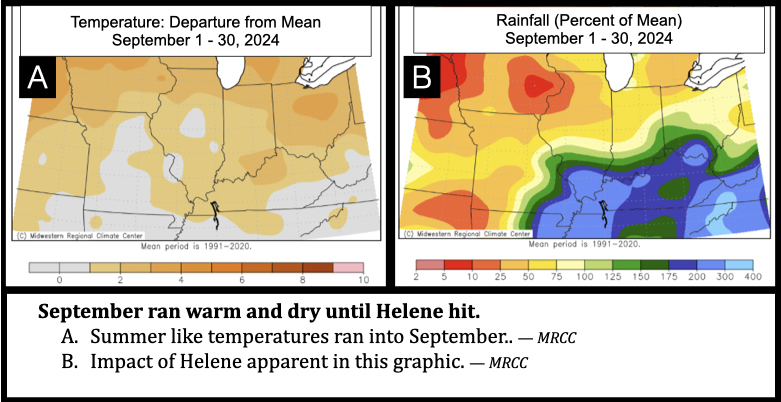
After a cool start, September turned on the burners and ended 3-5 degrees above normal in the region. Since 1943, September 1 marks on average the last 90-degree daily high temperature recorded in Indianapolis. This hasn’t held true in the last six years, however (see table below). This year, above normal temperatures occurred in Indy from 9/10 through the end of the month, with a spike of three days in the 90s from the 19th – 21st.
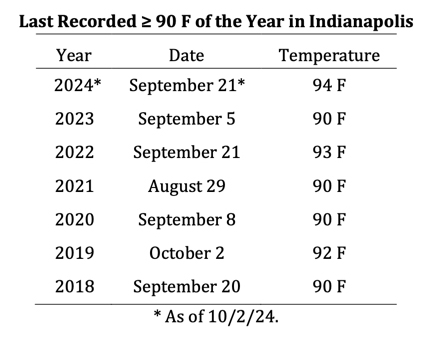
Rainfall was scarce throughout the region in September until the remnants of Hurricane Helene staggered through. Indianapolis, central IN, northern IN and particularly east into the Ohio Valley were in the moderate, extreme and exceptional drought categories, with much of Indiana having less than half of the normal rainfall in September. Evansville and southern IN/KY were also in a similar deficit but received much more rainfall (3+ inches) in late September from Helene. Thoughts and prayers go to the unfortunate in western NC, TN and throughout the Southeast who bore the brunt of this terrible storm.
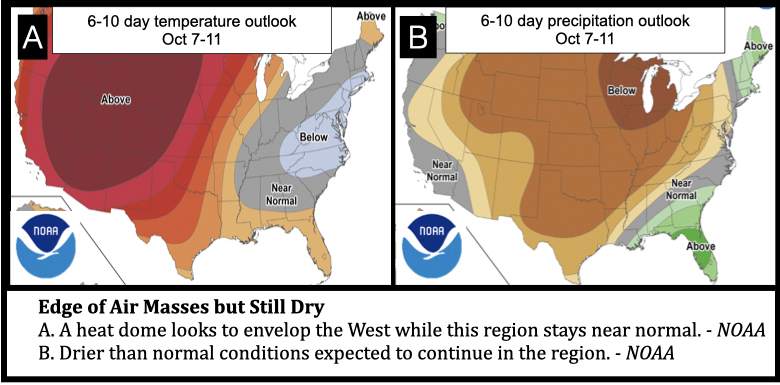
Forecasts indicate no real chance to get back into the 90s with some cool mornings and prime cool season turfgrass growth ahead. Newly planted landscape plants and turfgrass seedlings will likely need supplemental irrigation as rainfall chances through early October remain low, despite our area being wedged between air masses of vastly different temperatures.
Snow Mold Prevention Needed?
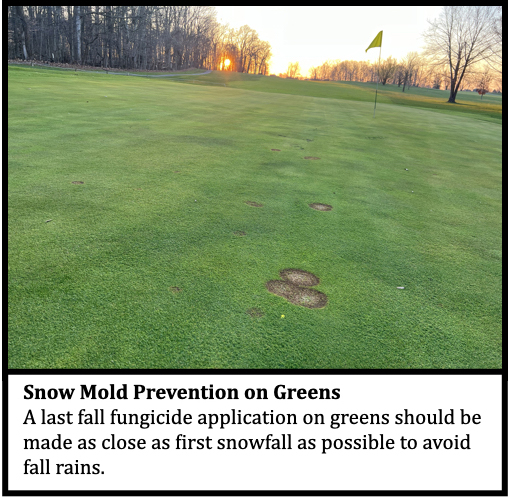
Fall woolly bear sightings have been occurring frequently around my house the last few days which are much more welcome than fall armyworms as detailed in this recent article by Dr. Richmond. As myth and legend have it, if these caterpillars of the Isabella Tiger Moth have longer black bands and shorter middle brown bands, a long, cold and snowy winter lies ahead. The ones crawling around my abode have been mostly black, which would be foreboding and interesting fodder for conversation in the Woolly Bear Festival held in Vermilion OH, but hold little meteorological merit. To read more about woolly bears, see this NOAA article.
Their arrival does make fall snow mold prevention a timely topic. Although gray snow mold can occur closer to the Michigan border, pink snow mold caused by Microdochium nivale is the most often observed culprit. On lawns, fungicide prevention is not suggested. On higher cut turfgrasses, damage is often short-lived and is often recovered from quickly. Careful attention to the final fungicide application prior to putting the putting green to bed for the winter is much more important. To avoid removing protection from fall rains and changing weather, make the final fungicide application the last operation, as close as possible to significant snowfall and not at the first sign of a cold snap. In most cases, this means eyeing Thanksgiving or even Christmas, and not Halloween. Since pink snow mold is the major contributor south of Michigan, fungicides such as fludioxonil, iprodione, or the strobilurins should be utilized. Under heavy disease pressure, combination products or mixtures of fungicides will provide more long-lasting control. Dr. Paul Koch at U of Wisconsin runs the largest snow mold fungicide testing program in the country (perhaps the world). View these results here.
September Heat but Less Disease Activity = Functioning Fall
Despite the heat, September was fairly quiet on the disease front in the region. Dollar spot flared at the end of the month when some humidity returned but the span from 9/3 – 9/15 experienced a sharp decrease in disease severity (see Smith-Kerns model of IN here). The same holds true for brown patch on tall fescue and leaf spot/melting out on Kentucky bluegrass, which after a summer of torment, finally took a break. September marks the end of 100 days of H-E-double hockey sticks for golf superintendents and turfgrass managers, and along with October is the best time of year for cool-season turfgrass.
After suggesting an overseed instead of fungicide application early in September, a homeowner responded with the question, “Don’t my young seedlings also need fungicide protection?”. The short, political answer was maybe, but in reality the answer this September, and for most home lawn situations is no. While using the calendar month to boldly define the weather is painting with a broad brush, (especially for southern IN/KY), September holds some key weather advantages for cool-season turfgrass recovery. From start to end of month, daily high temperatures decrease by 10 degrees from 81 F to 71 F. September rainfall in Indianapolis averages sub 3 inches, and humidity drops precipitously unless the tropics flare up. Most importantly, day length decreases rapidly in September, with photoperiod decreasing by 1 h 15 minutes from month’s start to end. Ninety+ degree heat therefore doesn’t hit the same in September, with a duration several hours shorter than the height of summer. For all of these reasons, September is prime time for turfgrass growth and recovery, and the month when diagnostic calls slow to a trickle.
Warm Season Turfgrass Disease Prevention
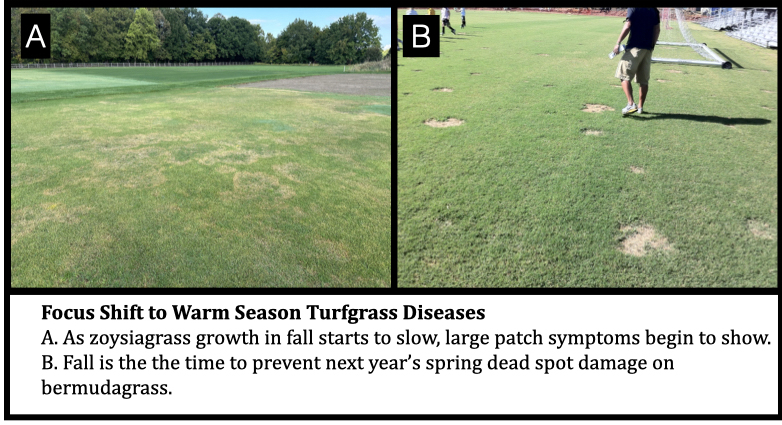
Soil temperatures have been in the range (70-75 F) for those in the southern portion of the state or those managing bermudagrass sports fields in Indiana to turn their attention towards prevention of warm season diseases. Large patch on zoysiagrass is starting to show symptoms on our zoysiagrass at the Daniel Center, which is slowing growth and rapidly turning towards dormancy. On bermudagrass fields, spring dead spot prevention is the target, as the pathogen infects now but doesn’t show its deeds until next season’s spring greenup.
Two fall applications are usually suggested to maximize control of these two diseases. If making the first application now, I suggest watching the weather, and perhaps adapting to make the second one 21 days later instead of 28 depending on the forecast. For both diseases, applying in higher water carrier volumes (although difficult over large acreages) may maximize control. The recommendation is still to water in applications targeting spring dead spot since it’s a soilborne disease, but research varies on how much that factor contributes to overall efficacy. Unless treating for water repellancy over the winter in susceptible soils, addition of a wetting agent to the tank is not necessary and hasn’t been shown definitively to add to control of either of these diseases.
Speaking Events
It’s nearing winter conference season! A few of the events I’ll be presenting at include:
- Area IV Turf and Lawn Clinic (11/15),
- Heart of America GCS Education Conference (11/18),
- Purdue Turf & Landscape Seminar (11/20-11/21),
- Rocky Mountain Turfgrass Conference (12/3-4),
- GCSAA Conference & Trade Show (2/3-2/6),
- Indiana Green Expo (2/10 – 2/12).
For information on these and several other Indiana education events, see the MRTF events page. I’d also like to thank the MRTF, Hoosier, Indiana and Michiana chapters for operating research fundraiser tournaments this summer and fall to further all of our research efforts.
Hope to see and meet you there!
Extension Turfgrass Pathologist – Purdue University
Follow on Twitter: @purdueturfpath
September 12, 2024: Fall Armyworms, Again?
In 2021, the entire Midwest experienced one the worst fall armyworm (Fig. 1A and B) outbreaks in decades, and for turfgrass professionals and enthusiasts it seems like we may be on the verge of another late-season outbreak. These seasonal, but sporadic insects started showing up at the end of August, and adults and egg masses are being reported across the region. The main difference between this year and 2021 is that movement of these insects into the Midwest in large numbers is occurring a little later than it did 3 years ago. Both the likelihood and severity of turf damage hinges on the short and mid-term forecast.
Cooler temperatures have likely slowed development over the last week, but the medium-range forecast is calling for warm, dry conditions over the next week meaning that development of fall armyworm eggs and caterpillars is likely to progress at a steady pace. The notable lack of rainfall in the forecast can set up conditions favorable for damage and slow recovery.
As their name implies, fall armyworms usually show up in the late summer and fall in this part of the country. These insects remain in subtropical climates for most of the year, but hurricanes, tropical storms, and weather fronts sweeping northward this time of year can carry enormous numbers of adults into the interior of the continent, sometimes raining fall armyworms over the entire Midwest and Northeast. Once they fall out of the sky, those adults lay eggs in masses on vertical objects including, signage, light posts, the sides of structures and even the flags marking golf holes (Fig. 2). When enough egg masses are laid in close proximity to one another, the resulting larvae (Fig. 3) can be so numerous that they eventually overwhelm surrounding turf, chewing it to the ground (Fig. 4).
Turf that was treated with Acelepryn for grub control during June or July is likely to be protected from fall armyworm assuming that applications were made at the higher end of the rate spectrum. Our data show at least 14 weeks of protection against fall armyworm at application rates 8.0 fl.oz./acre, and greater than 18 weeks of protection at 16 fl.oz./acre. You can do the math based on application timing. If you used imidacloprid or almost any other white grub insecticide for grub control, additional steps will be necessary to protect turf from fall armyworm.
Fortunately, these insects are relatively easy to manage and there are a number of insecticide active ingredients that will keep them in check (Table 1). Liquid applications are almost always preferable to granules since liquids provide better coverage and work more quickly. However, granular formulations will work as long as they are followed immediately with rainfall or irrigation to release the active ingredient. Mowing just prior to application can increase penetration of the insecticide through the canopy and into the spaces where fall armyworms are active and feeding. No post-application irrigation is necessary for liquid applications and these applications should be left in place for at least 24 hours before irrigating.
If damage does occur, giving turfgrass the best opportunity to recover should be a top priority. While soil temperatures remain high, disturbing plant crowns should be avoided, so raking out dead material, core cultivating and slit seeding should be put on hold if possible. Instead, consider irrigating the turf if the soil is dry. Irrigation can help reduce soil temperatures and stimulate plant re-growth. If the turf is not fertilized, a very light fertilization (<0.5 lbs. of N per 1000 ft2) may be in order, but keep in mind that well-maintained turf will generally not require additional nitrogen. If the turf isn’t growing, don’t mow it. In other words, do everything you can to protect the plant crowns as these will produce the new tillers and leaves that mark recovery.
Given the late starting date of this outbreak, we are unlikely to see another generation of fall armyworm larvae, but turf mangers in the southernmost areas of the state should be vigilant through early October. That means scouting for egg clusters and soap flushing for larvae are the best ways to identify potential infestations before they cause serious damage. If we get lucky, temperatures will moderate and put the brakes on fall armyworm development, but weather will be the key. The last half of September and first half of October could be interesting.
Focus on detection, prevention and turfgrass recovery and regrowth, and be alert to egg masses and developing larval infestations. If another generation of fall armyworms unfolds, its potential impact on turfgrass winter-hardiness and spring green-up could be a significant concern.
Doug Richmond
Professor and Turfgrass Entomology Extension Specialist
Purdue University
| Figure 1. | Figure 2. |
 a) fall armyworm caterpillar with characteristic stripes and inverted, light-colored Y-shape on the head (John Obermeyer Photo). b) fall armyworm adult (Nate Fair Photo) |
 a) A mass of fall armyworm eggs deposited on a) the side of a house (John Obermeyer Photo) and b) a golf flag (Cale Bigelow Photo) |
| Figure 3. | Figure 4. |
 A group of newly hatched (neonate) fall armyworm larvae hatching from a cluster of eggs. |
 A stand of turfgrass damaged by fall armyworm larvae at the end of August in West Lafayette, IN 2021 (Jim Scott Photo). |
Table 1. Insecticide active ingredients registered for use against fall armyworms in turfgrass.

*Always consult label directions for specific timing and application recommendations.
aFor use on golf courses and commercial sod farms only.
August 28,2024: Last Spark of Summer
Plan for recovery when the heat passes. Brown patch on tall fescue rages on. Silent summer patch pathogen infection roars to life. Complicated leaf spot pathogens one of the stories of the season.
Weather

The last occurrence of seven days in a row of 90+ degree highs in Indianapolis was in July 2020, and if the forecast holds, this current span will duplicate this dubious feat. August is a crucial time for cool-season turfgrasses since they’ve run the marathon of heat stress in June and July and are at their weakest of the season. Fortunately, photoperiod (or daylength), is nearly two hours shorter now than it was in late June, so the overall length of the daily heat stress event is lower now than during the tempest of summer. In addition, this hot flash follows two five-day spans of below normal temperatures in mid-August which should have allowed some recovery. Therefore, despite this hot flash, the overall detrimental plant health effects of August temperaturehave been fairly standard. Humidity and rainfall have also been low for much of the month, reducing pressure from foliar diseases, particularly in mid-August. The return of tropical air with higher dewpoints has brought that pressure back, and several diseases have rebounded in the current conditions.

Forecasts indicate a nice break of relief and cooler temperatures to start September, along with a continuation of drier air and low rainfall chances. Next week’s conditions should again naturally pump the brakes on this stress/disease bump and provide a nice start to fall. For this reason, fungicide applications on lawns and other higher cut, lower amenity turfgrass areas may best be put on hold in favor of investment in cultural practices such as fertilization, aerification and overseeding. A hot take on this late summer flash of heat.
New Disease Guide for Lawns

A new extension publication is available at the Purdue Extension Education Store and on the Purdue turf website detailing the identification and control of the ten most common diseases found on cool-season lawns in Indiana and throughout the region. The article concentrates on disease management of tall fescue and Kentucky bluegrass and the critical differences in disease occurrence between the two species. The publication is currently free to download with print options available soon.
Brown patch ship keeps sailing

While brown patch on our creeping bentgrass surfaces faded away in mid-August, the disease on tall fescue stalled for a minute and then refired its engines quickly this past week. Tall fescue is a bunch type grass, so severe brown patch infections take longer to recover than spreading species. Despite this, tall fescue will survive most infections unless especially severe, but the long-term lack of density often results in weed encroachment. For this reason, fungicide applications for brown patch prevention or recovery are not suggested this late in the season. Instead, as noted above, place a focus on regaining density of affected areas with a fall overseeding program incorporating fertilizer and practices to ensure good seed to soil contact. In other words, the brown patch ship has sailed and now it’s time to bring your lawn back to shore.
Summer patch on Drought Stressed Kentucky Bluegrass

A few samples of Kentucky bluegrass afflicted with the soilborne disease summer patch were submitted to the diagnostic lab over the past few weeks. Summer patch is especially difficult to control because the pathogen silently chomps on roots and rhizomes for weeks or months while aboveground the plant looks to be in fine shape. Late summer stress straws, which can be drought, high temperatures and/or compaction, breaks the back of the plant. Resulting symptoms occur in patches, (sometimes with distinct “frog eyes”), where the pathogen has impaired root function. The disease mostly affects the bluegrasses and may be the reason the shallow rooted weed Poa trivialis so conspicuously fails in the summer. Creeping bentgrass putting greens also can succumb to this disease.
On heavily infected Kentucky bluegrass lawns, the damage has been done and recovery should be encouraged. When temperatures moderate, consider applying ammonium sulfate as the main fertilizer source in September and October. Ammonium sulfate causes the rhizosphere to briefly turn acidic, disrupting the ability of the pathogen to further infect. Hollow tine aerification (not solid) can help alleviate compaction and also encourage recovery. Fungicides in the QoI class (e.g. azoxystrobin and pyraclostrobin) and the DMIs (e.g. propiconazole) are commonly used for prevention starting in late spring, but they must be effectively watered into the soil to be effective, a significant problem on non-irrigated lawns. Several summer patch resistant varieties of Kentucky bluegrass are available and should be considered when overseeding damaged areas this fall.
The Many Complications of Leaf Spot Diseases
Note: Gray leaf spot is a different disease than the leaf spot/melting out disease discussed in this section. To date, we have not yet observed gray leaf spot caused by Pyricularia oryzae affecting tall fescue or perennial ryegrass samples submitted to the diagnostic lab.

Leaf spot/melting out diseases on Kentucky bluegrass, fescues and especially perennial ryegrass have been a persistent issue through this whole season. A suite of different pathogen species in the Bipolaris, Exserohilium and Pyrenophoragenera (formerly the Helminthosporium group of species) have been implicated in causing these leaf spot diseases, and in many cases several can be observed at once in a single sample. The picture gets even more cloudy when other common pathogens such as Leptosphaerulina, Ascochyta, and Fusarium are also in the fold on untreated lawns. Further complicating matters, we are not discussing the different disease gray leaf spot (as noted above).
The growth habit of turfgrasses involves a natural rise of young leaves and senescence and death of older leaves, normally in a 30-60 day span. This habitat naturally fosters a suite of fungal saprophytes that can turn into an angry mob when environmental conditions are prime and/or turfgrass health is compromised. Unravelling which of these pathogen species are the true driver of the disease is difficult, since turfgrass decline may depend on several of them acting together as accomplices. Future research in this complex pathosystem is necessary.
In ground irrigation is a common denominator in many of these samples submitted from lawns. One homeowner commented that on May 1 of every year he sets his irrigation controller to water for 30 minutes three times a week and just forgets about it. Particularly this past spring, lawn irrigation was unnecessary due to persistent and oftentimes heavy rainfall. As a reminder, April in many areas had nearly twice normal rainfall and May an inch above normal. Analogous in the Indiana agronomy sector, 2024 will be remembered as the earliest and heaviest occurrence of tar spot, an important disease on corn. Most corn is non-irrigated and environmental conditions alone drove the epidemic. On lawns, overwatering further provided ample leaf wetness, high humidity and even better conditions for development of severe leaf spot epidemics that resulted in leaf blight and total plant collapse (melting out form of the disease).
Along with more prudent irrigation practices, renovating with improved disease resistant species or cultivars should be regarded as the sustainable, long-term option. If fungicide intervention is warranted, fungicides in the QoI class (e.g. azoxystrobin and pyraclostrobin) and SDHI class (e.g. fluxapyroxad and penthiopyrad) can provide good control.
Lee Miller
Extension Turfgrass Pathologist – Purdue University
Follow on Twitter: @purdueturfpath
August 7, 2024: Peak of the Season
2024 Disease Season reaches its height; recovering from abiotic stresses; perennial ryegrass declines quickly; dollar spot on Kentucky bluegrass intensifies; brown patch looking neither brown nor patchy; algae explosion on putting greens.
Thank you to all those that attended the 2024 Purdue Turf & Landscape Field Day. Although the tent and infrastructure were marred by weather, luckily the weather held off for the actual event, with exemplary attendance (over 400), great conversation and education. Special thanks to our fantastic MRTF board members who jumped in and got the show back on the road. To read more about the event, click here.

Weather

The start of August and last 10+ days of July has been a brutal stretch for turfgrass health. The last week has been blazingly hot and disgustingly humid throughout the region. Temperatures 6+ degrees above average were common, with “low” temperatures not getting out of the 70s. Soil temperatures have responded with average 2” soil temperatures in the mid 80s throughout much of the state. Dewpoints also hovered in the high 60s, making the air thick, uncomfortable, and a breeding ground for disease activity. Rainfall has also been in excess over the last month, with heavy downpours hitting the region in late July, resulting in above average precipitation recorded for July in Indianapolis (+1.5 – 2”), the western part of IN, and central Illinois on into St. Louis. Health of cool season grasses is at its lowest point of the season, with the sustained environment of high heat, high humidity, and high soil temperatures over the past two months resulting in a weakened plant predisposed to abiotic disorders and diseases. Come on September…

The forecast starting mid-week and over the next seven days appears to offer needed relief and recovery. Below average temperatures are expected to last into the middle of the month along with drier weather, fueled in part by a strong cool front staving off the remnants of Debby. Longer range forecasts for the latter half of August indicate a return to higher temperatures so let the turfgrass and us enjoy the summer reprieve while we can.
Negating the Abiotic Stresses
A few thoughts about the next week of cooler temperatures and potential action items to help make it to the fall.
Fertilizer
Lawns – If they haven’t been fertilized since spring, lawns may be a bit nitrogen deficient after a full season of mowing and heavy rainfall. This is especially true of younger lawns. Our tall fescue plot seeded last fall is demonstrating pronounced nutrient deficiency and disease symptoms compared to a 20-year-old tall fescue area right next door. Applying 0.25 – 0.5 lb N/1000 sq ft this week shouldn’t spike disease and may in reality reduce it.
Golf – Similarly on golf putting greens, a slight uptick in the spoonfeeding rate (i.e. 0.1 up to 0.125 lb N/1000 sq ft) may help stave off anthracnose and algae. Switching to ammonium sulfate now on greens is not recommended and analyze your fertilizer program to reduce the amount of sulfur application. This close to the finish line, we don’t want to spark black layer when the heat, humidity and rainfall do return.
Water
If humidity drops and the air goes dry, the expectation should be that turfgrass will go brown into drought dormancy fairly quick. Roots are extremely short now due to waterlogged, hot soils and 90 F+ heat. Lawns with heavier clay soils will be especially susceptible to “flash drought” symptoms, as the grass will want to start growing with the cooler temperatures but not have the roots or water supply to sustain it. To keep it green, the irrigation system may need to come back on, but remember that lawns can go drought dormant for a time and still come back.
Cultivation/Aerification
Lawns – Too early.
Golf – On golf greens, solid tining or venting would be of great value during this cool period. Keep on topdressing. Pump the brakes, however, before considering slapping on the verticutting units or grooved rollers just yet. A week of relief doesn’t mean the diapers can be taken off quite yet.
Perennial Ryegrass – Bearer of All Diseases

Perennial ryegrass that is unprotected by fungicides is taking a beating this summer. On home lawns, I commonly refer to this species as the “Quick and the Dead”, germinating in seven days but dying in two during the summer. The quick germination time of the ryegrasses are very appealing, particularly in a contractor’s mix or similar where the idea is to get some green growth as fast as possible either to repair an area or to establish a new lawn. For a pathologist, perennial ryegrass is a bearer of a multitude of gifts, with susceptibility to a wondrous variety of diseases.
We have received several samples over the last few weeks with a mixed lawn of several species including perennial ryegrass, some of which were seeded last fall or this recent spring. Invariably, the perennial ryegrass is decimated with diseases such as brown patch, leaf spot (no gray leaf spot observed yet), Pythium and other maladies. Breeding efforts at other universities are focusing on enhancing the disease resistance of perennial ryegrass, so in the future the following recommendation may change. For now, however, perennial ryegrass used as the principal component of a home lawn or higher cut area is not a sustainable, fiscally viable option in the intense heat of an Indiana summer.
Brown Patch on Tall Fescue – The Impressionist

Rhizoctonia spp. causing brown patch have turned into Frank Caliendo, giving stark impressions of other disease symptoms in tall fescue. While the textbook smoke-ring symptoms are present in some cases, we have also observed symptoms more reminiscent of other diseases. Round, white to tan patches only 4-6 inches wide were noticed last week on our fall seeded tall fescue along with distinct tufts of mycelium. These were similar to symptoms of dollar spot, which I’ve never observed on turf-type tall fescue. In addition, many of the leaf lesions were not scalloped, but instead appeared similar to the circular and oval spots indicating potential infection by the gray leaf spot pathogen. Gray leaf spot has just been reported by OSU colleagues in Ohio a few days ago and by NCSU colleagues in NC in late July). Upon inspection under the microscope, these symptoms ended up still being the constant plague of good ole’ brown patch, which evidently is so excited by the weather that it is going against the textbook and producing a bevy of symptom types. This being said, we are still actively scouting and monitoring for gray leaf spot on tall fescue and perennial ryegrass in the state, which would start to develop symptoms when the calendar flips to August.
Dollar Spot Taking Hold of Kentucky Bluegrass

The battle with dollar spot is a constant one across most of the season, but the pressure has hit a high note in early August. The Smith-Kerns model reached its highest statewide probability index since late August of last year, and Kentucky bluegrass, which may have been mildly affected before, is now getting hammered. Reports and samples from lawn care companies and homeowners have been frequent in the last two weeks. Curative fungicides effective for this disease on residential lawns include fluxapyroxad (Xzemplar) and the DMI fungicides. Granular fungicides do not work as effectively as sprayable for curative dollar spot control, and in curative situations spraying at higher water carrier volumes (at least 1 gallon/1000 sq ft) is suggested to enhance recovery. Dollar spot is also a low nitrogen disease and an indication that a nitrogen application is needed. On dollar spot affected lawns, an application of 0.5 – 0.75 lb N/1000 sq ft can enhance recovery and in some cases reduce or eliminate the need for fungicide application.
Algae on Putting Greens

Along with soggy hot root syndrome, algae infestation has been a constant presence in putting green samples coming into the lab over the past few weeks. Unlike last year, we are not observing the ‘yellow spot’ or distinct chlorosis associated with algae infestation but the presence of Oscillatoria, Phormidium and even Nostoc spp. on greens has been prevalent enough to be a drag on bentgrass health. Some of these algae (aka cyanobacteria) have been shown to produce a phytotoxic secondary metabolite to gain a competitive advantage and are concerning when in high abundance wrapped around leaf sheaths and throughout the thatch layer. Treatment with the phosphites, chlorothalonil, mancozeb and/or thiram should aid in control, along with attempting to dry down the surface layer through routine venting.

Lee Miller
Extension Turfgrass Pathologist – Purdue University
Follow on Twitter: @purdueturfpath
July 12, 2024: Beryl Brings Post 4th Fireworks
Beryl sparks disease activity; Brown patch/Pythium combo on tall fescue; Anthracnose pressure intensifies; Waitea/Rhizoctonia patches form on Poa; Field day next week.
Purdue Turfgrass and Landscape Field Day – Next Tuesday, July 16th!
The Purdue Turf and Landscape Field Day is next week on Tuesday. We will have a large number of topics ranging from cultural practices, pest management, drone use, the impact of legislation changes, and landscape issues. See the agenda below and click the link above for more information. Advance registration and payment are closed, so if not pre-registered walk on in and register on site. Hope to see you there.
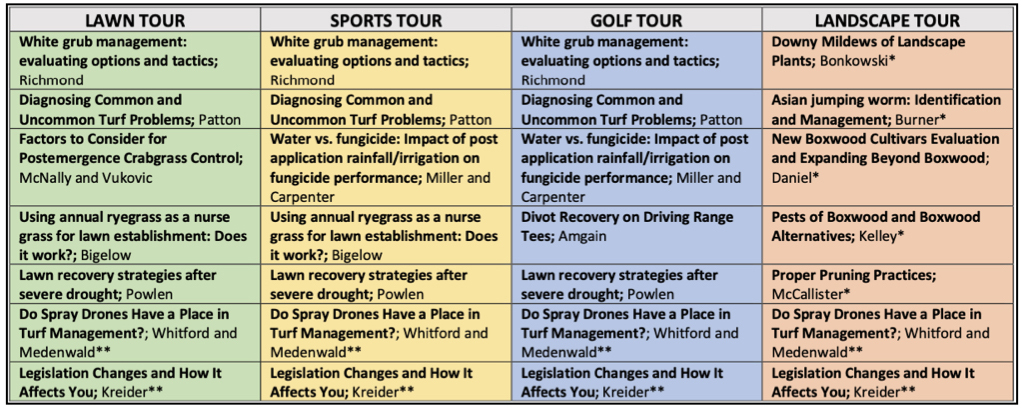
Weather
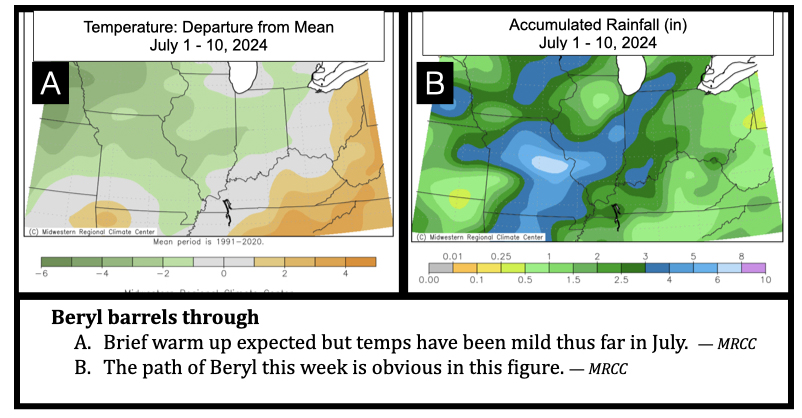
The major weather news story of early July was Hurricane Beryl, whose tropical storm remnants blew through and rained on much of the western part of the state along with central Illinois and Missouri. The Daniel Turfgrass Research Center received a little above 3 inches of rain from the event, and many areas went from drought parched to saturated and flooded quickly. Storm clouds depressed early July temperatures and kept them mild, but nonetheless the strong kick of moisture has jump started a high period of disease pressure throughout the region. Lawns that were experiencing drought symptoms previously have experienced some measure of relief, but the heavy disturbed, clay soil left in most lawn situations likely won’t hold much water in reserve. In addition, root systems are still compromised from the wet spring, so unless steady rains ensue its likely drought symptoms will recur quickly.
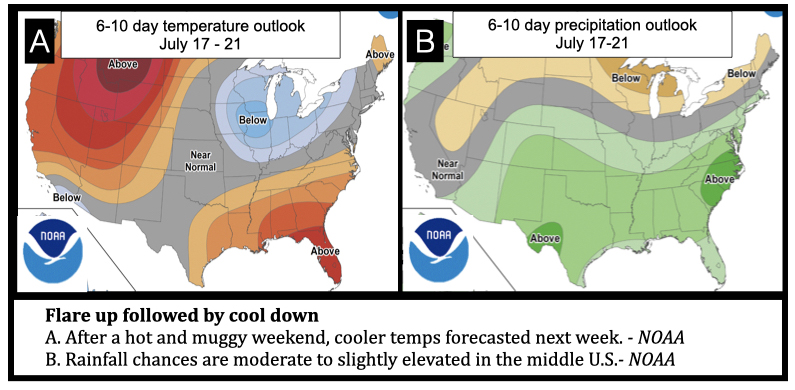
After a weekend and early week kick of high heat and humidity, forecasts indicate a marked cool down starting mid next week. This cool down will likely temper disease activity driven by Beryl and the snap in high temperatures, but the fuse has likely been lit from here through the rest of the summer season. Rainfall chances are slightly above normal for the southern portion of IN through Missouri, with typical low summer confidence on when and if pop up storms occur.
Beryl’s Potential Impact
Former hurricane Beryl was a record breaker. It was the third earliest Atlantic major hurricane, the earliest to reach Category 4 and 5, and the easternmost hurricane to form in June in the Atlantic. Beryl was also the strongest hurricane by wind speed in both June and July, the only storm to spend 4.5 days as a major hurricane, and the first tropical storm to intensify in the Atlantic Basin in June. While the U.S. midsection didn’t feel the unfortunate brunt of the hurricane like coastal Texas, the storm’s long history contributes to understanding how the tropical storm effects carried well into the middle of the country and even into Vermont and Maine.
At the Daniel Center, we have seen a strong uptick in disease activity this week since Beryl, and if you were in the path of the storm, the infusion of rain and prolonged tropical humidity is likely to have lasting effects the rest of this season. As noted below, Pythium blight is now very active on tall fescue and Kentucky bluegrass and has no problems shaking hands with brown patch. Pythium root rot on high organic matter or poorly draining greens may also be expected if prevention isn’t in place. Black layer on putting greens and perhaps even sports fields, should be prevented by restricting sulfur applications and switching away from ammonium sulfate as a nitrogen source during the summer. Last but not least, scouting for gray leaf spot on perennial ryegrass and tall fescue should occur earlier, with more intent and farther north this year than previous, as tropical storm winds could have supplanted southern borne spores farther into the country’s interior.
Brown Patch + Pythium Tag Team Tall Fescue
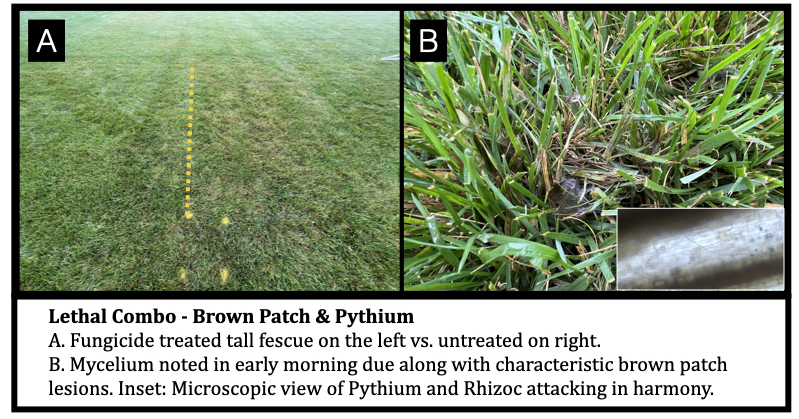
Brown patch was already active, but the infusion of rain and humidity unleashed a spark for Pythium blight to joint the party on turf type tall fescue this past week. Both diseases have been observed in the same leaf section, and it’s clear they are acting as a one-two punch towards decline. In ground irrigation systems should obviously not be running now in the hopes of reducing leaf wetness duration and predisposition to these two diseases. Applications of a strobilurin fungicide are recommended to mitigate brown patch, and this chemistry which includes azoxystrobin (i.e. Heritage), pyraclostrobin (i.e. Insignia) and fluoxastrobin (i.e. Fame) also has some preventive effects on Pythium blight. If tall fescue is declining rapidly, apply these fungicides curatively and if they don’t result in control a follow up with a Pythium specific fungicide such as picarbutrazox (i.e. Serata), cyazofamid (i.e. Segway), mefenoxam (i.e. Subdue) or similar. If Kentucky bluegrass is the main species, Pythium, dollar spot or summer patch is more likely to be the major contributor to disease than brown patch.
Waitea Patch on Poa annua putting greens
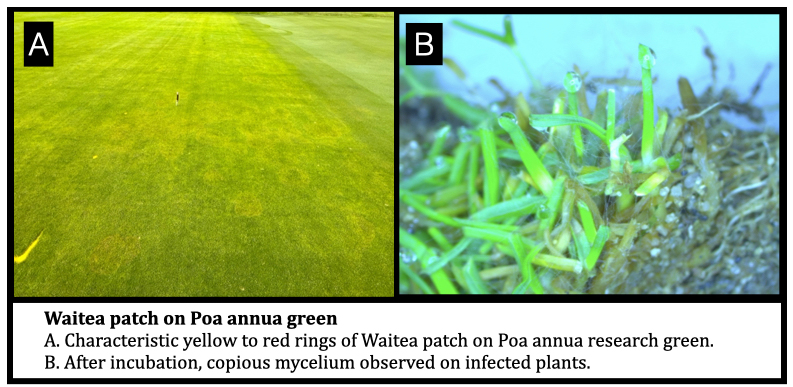
A new patch disease on our Poa annua research green and from a putting green sample submission just south of Indy popped up in time for the 4th of July fireworks. All signs at this point indicate the disease is Waitea or brown ring patch, which is closely related to diseases such as brown patch caused by other Rhizoctonia spp. Apart from yellow patch, brown patch and other similar diseases, rings often appear scalloped at their edges instead of a uniform patch. The disease is enhanced by low fertility, so a slight bump in nitrogen is suggested for this disease along with anthracnose noted below. Some of the same fungicides effective for brown patch are also effective for Waitea patch, including azoxystrobin, fludioxonil, flutolanil and others, but the disease is not controlled by thiophanate-methyl. Waitea patch can occur, but is more rare on creeping bentgrass greens.
Anthracnose Pressure Dives Deep
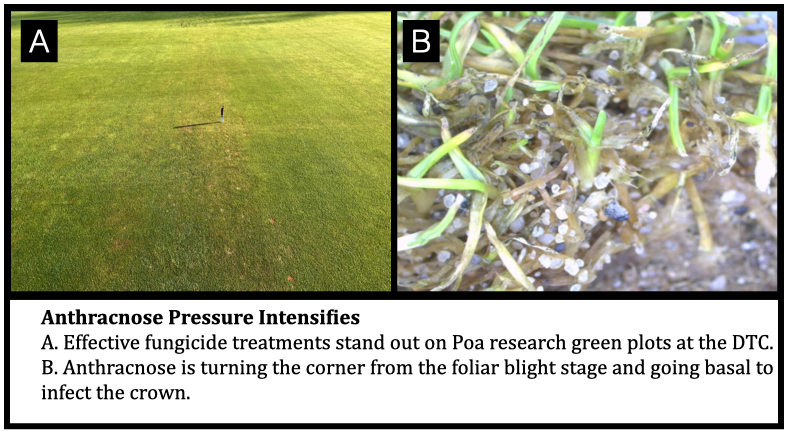
An uptick in anthracnose severity on Poa annua and also sporadically on creeping bentgrass has also been observed in the past week. Anthracnose symptoms are characterized by splotchy, irregular yellow, brown or rust colored areas of decline. The pathogen (Colletotrichum cereale) is ubiquitous and a constant feeder on senescing leaves and thatch material normal in the life cycle of any turfgrass plant. This disease is closely tied to stress, and can be mitigated by raising mowing heights, increasing nitrogen levels and protecting the crown with routine topdressing. Anthracnose is also commonly found on dead and decaying leaves from higher mowed turfgrass, but is never the real cause of decline in higher cut turf. On greens, however, where the stress level is maxed at 11 out of 10, anthracnose can cause decline quickly, particularly if it moves from foliage down into the crown of the plant, in a form known as basal rot.
Considering the close tie of anthracnose with low nitrogen, next week’s cool down may be best greeted with a small uptick in nitrogen fertility at sites that have had a history of the disease. Fungicide control should be focused on prevention, which is much more effective than curative control. Due to resistance issues, do not rely on the strobilurin, QoI, or benzimidazole fungicides for control. Newly developed “cool” DMI fungicides such as difenconazole (Briskway) mefentrifluconazole (Maxtima), and prothioconazole (Densicor) are effective, good rotational partners and can be applied during the summer without the risk of excess plant growth regulation and phytotoxicity from older DMI chemistries.
Turfgrass Pathology Program Impact Survey
Follow this link or scan QR code above to access the survey.
Lee Miller
Extension Turfgrass Pathologist – Purdue University
Follow on Twitter: @purdueturfpath
June 25, 2024: Litmus Test
Summer stress temperatures arrive; Drought symptoms arrive in a flash; Leaf spot diseases prevalent in lawns this season;
Patch diseases and the role of rhizosphere pH in their suppression.
Weather
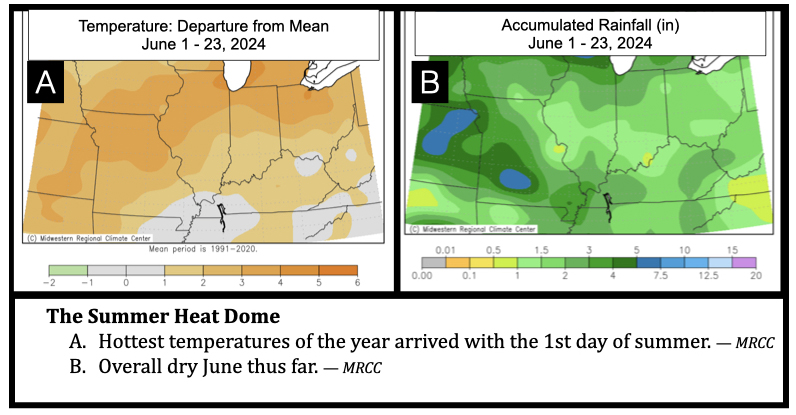
There summer blows! Like a sudden whale burst from the sea, the heat dome last week pushed summer into overdrive with the hottest temperatures of the season thus far in the region. After a mild start to June, high temperatures were 8 – 10+ degrees F over average for the span from 6/17 – 6/22 in Indianapolis. Highs in the 90s raise alarm bells for cool-season turfgrasses but lows in the mid 70s are the real kicker, not allowing soil temperatures (particularly in sand-based putting greens) to dip below the mid 80s. In addition, the water spigot turned off suddenly as only an inch or less of precipitation has fallen in middle to southern Indiana in June. Much of Indiana now rests in the abnormally dry category of the US drought monitor (https://droughtmonitor.unl.edu) extending into both eastern Illinois and much of Ohio. Many non-irrigated lawns have incurred a “flash drought” as noted below.
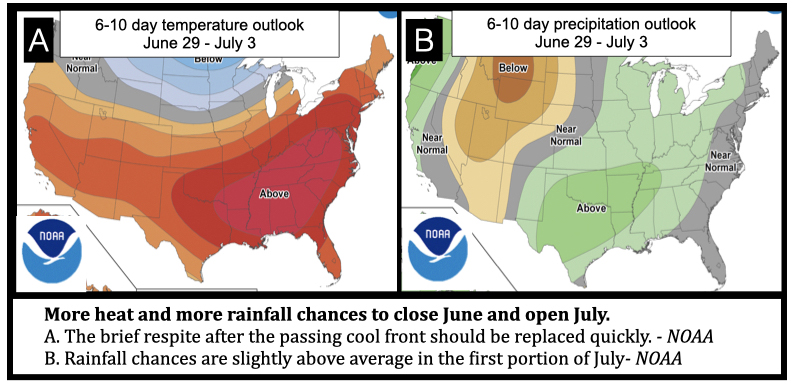
The bright side, or less bright side, is that the summer solstice has come and gone, and day length and summer turfgrass stress should start getting incremently shortly. Also fortunately, forecasts indicate a reprieve from the drought and the return of some fairly significant rainfall chances mid-week and scattered opportunities into the July 4 holiday. Indiana should also get a brief temperature dip for a few days in late June with a return to the 90s next week. I wish we could remove a few degrees and a lot of humidity today in St. Louis, which unfortunately are slated to endure 100+. Break out the iced towels my friends; survive and advance.
Lawns: Flash Drought
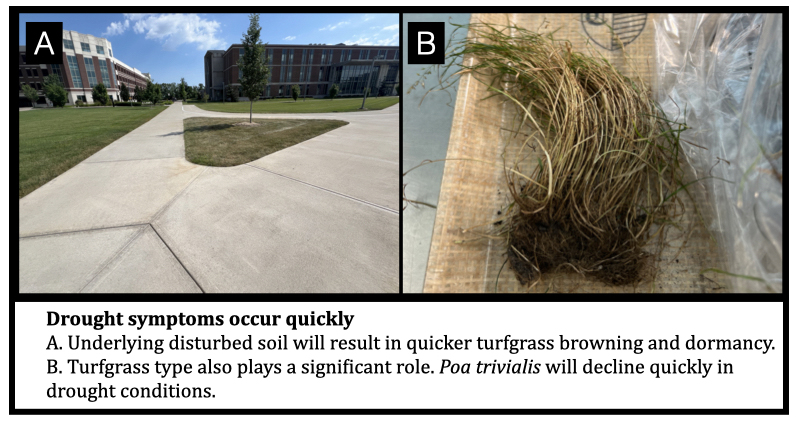
The sudden decrease of precipitation, which was sometimes excessively granted in the wetter than normal months of April and May, has caused a flash drought throughout much of the region. A number of factors play a role in flash drought development, including abnormally high temperatures such as last week’s heat dome, high winds and the longer photoperiod and more intense radiation in the summer months.
Another important aspect of flash drought development and survival is the plant, as a combination of species composition and the impact of growing conditions. Rough bluegrass (Poa trivialis) infestation is a conspicuous indicator of drought conditions, since its shallow rooted, stoloniferous growth habit results in rapid decline and frequent submissions to the diagnostic lab (several in the last two weeks). Conversely, turf type tall fescue survives drought with the most extensive and deep root system of cool-season turfgrasses. While maligned because it doesn’t stay as green for as long as tall fescue, Kentucky bluegrass also employs drought tolerance by turning brown and going truly drought dormant to protect the crown and recover when water returns. The age of the turfgrass stand matters, particularly if sodded, as newly sodded tall fescue can survive and withstand drought stress more than Kentucky bluegrass (see here for research). Species and cultivar composition also matter, as tall fescue and tall fescue:Kentucky bluegrass mixtures reduce irrigation needs along with using more improved drought resistant varieties. In this Purdue led research by Powlen et al, irrigating on a 70% green coverage threshold, using tall fescue alone or in combination with Kentucky bluegrass and planting improved drought resistant cultivars resulted in significant reduction in irrigation needs and provided good turfgrass quality compared to a routine weekly irrigation schedule. This study, as well as others, demonstrate allowing the lawn to go a little brown can conserve water without long lasting effects on lawn health.
Last but not least, total lawn health is confined to the soil underneath it. Heavy clay soils left behind after home construction have very little pore space, so will waterlog readily during spring rains and not allow roots to extend properly. When these soils do dry, they dry quickly and leave no water for the shallower roots to exploit and use for growth. Remember these lawns later this fall and target them with aerification and perhaps addition of quality topsoil or compost to reduce this underlying stress in the future.
Lawns: Thatch Accumulation
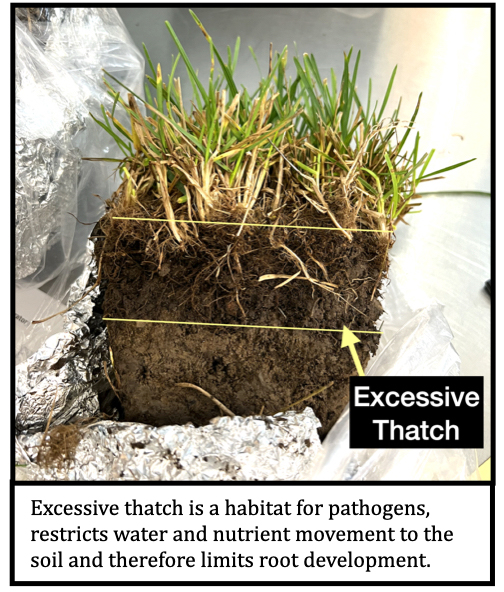
A few samples of Kentucky bluegrass lawns with considerable thatch accumulation have been submitted to the diagnostic lab in the last few weeks. Some of these lawns are also afflicted with summer patch (as noted below) but the long-term health fix lies in dethatching and getting rid of some of this organic matter. Since Kentucky bluegrass is rhizomatous, thatch accumulates more rapidly than a pure tall fescue, restricting water and nutrient passage to the soil and restricting deeper root penetration and establishment. In addition, thatch provides a great nest for aspiring pathogens. A verticut (i.e. dethatcher or “power-rake”) and/or core aerification on heavily thatched lawns is suggested in the fall.
See Spot Run
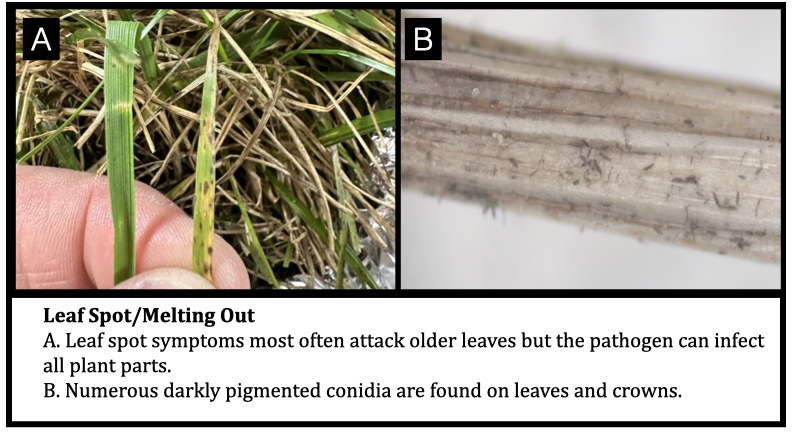
Various leaf spot diseases have been observed on both Kentucky bluegrass and tall fescue in the last two weeks with symptom severity ranging from taking advantage of older senescing leaves to completely melting out areas of the stand. These diseases are caused by the traditionally termed Helminthosporium pathogens, which have now been broken up into Bipolaris, Exserohilum, Curvularia, and Pyrenophora (or Drechslera) spp. Observations of severe damage due to this suite of diseases is normally on Kentucky bluegrass, particularly those mowed too low. This season we are also observing the disease on tall fescue mowed at 3 – 4 inches, which may be a testament to our very wet spring and quick snap into hot summer temperatures. Coincidentally, tar spot, the newly emerging disease that has caused problems in corn production, has also been observed earlier this year than in any previous.
This disease traditionally hasn’t warranted directed treatment. The most severe disease occurred right after the lawns went to seed, a time of metabolic stress with resources spent creating the seedhead. An application of either a slow release fertilizer at higher N rate or a small amount (0.25 lb N/1000 sq ft) of a fast release t like urea may encourage recovery. If a chemical application is needed, the QoI fungicides such as azoxystrobin and pyraclostrobin are effective and may double for control of brown patch on tall fescue.
Litmus Test – Patch Diseases & Stress
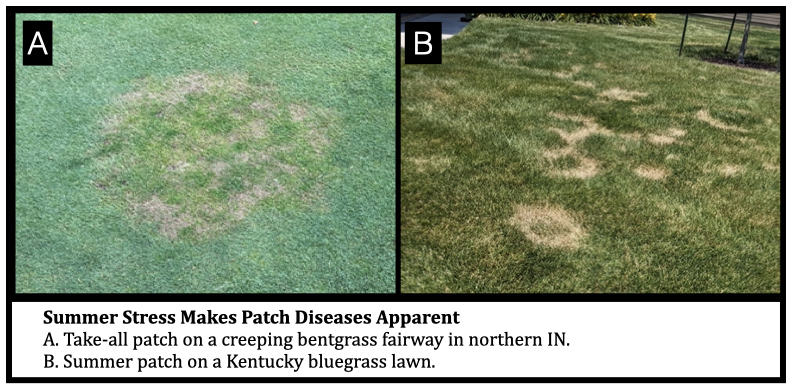
The first round of stressful summer temperatures provides the first litmus test for true spring development and health of cool-season turfgrasses. Drainage, localized dry spot and other soil problems on golf putting greens reveal themselves quickly. Also, the steady spring gnawing of soilborne pathogens such as take-all on creeping bentgrass fairways and summer patch on Kentucky bluegrass sports fields, roughs and lawns show their true colors and patterns when the heat and humidity ratchet up.
If prevention of these patch diseases is no longer an option, curative control relies on watering in a fungicide to stop the pathogen and adding a bit of nitrogen to encourage recovery. On native soils, adding a small amount of ammonium sulfate fertilizer (0.25 lb N/1000 sq ft) aids not only plant growth but also plays a role in further pathogen suppression. When ammonium is acquired by the roots, they kick out a hydrogen ion and in doing so change the rhizosphere pH acidic. In this more acidic environment, the plant is better able to acquire nutrients needed for plant defense and reduces the ability of patch disease pathogens to infect.
On the flip side, application of ammonium sulfate on golf putting greens during the summer is not recommended. In this system on a sand-base soil profile designed for quick drainage, the effect on rhizosphere pH from ammonium sulfate is likely more short-lived than on natural soils. Additionally, application of sulfur-based fertilizers can result in black layer formation caused by anaerobic sulfur reducing cyanobacteria. Therefore, ammonium sulfate on golf greens should be primarily applied in the spring and fall.
Purdue Turfgrass and Landscape Field Day – Tuesday, July 16th
The Purdue Turf and Landscape Field Day is an annual one-day event with the objective of providing professional turf and landscape managers exposure and educational opportunities with the latest research and technical resources. Field Day features research tours, talks on current topics, and a tradeshow with over 40 exhibitors displaying equipment, turf, and landscape products.
Lee Miller
Extension Turfgrass Pathologist – Purdue University
Follow on Twitter: @purdueturfpath
May 28, 2024: The Engines have Started
Diseases push on the throttle; 1st observation of brown patch on tall fescue; annual bluegrass weevil damage on bentgrass surrounds; foliar anthracnose and localized dry spot on putting greens.
* I need a moment to recognize the passing of David Riedman, superintendent at Woodland Country Club in Carmel, IN. David was a great colleague and cooperator, and one of the very first to contact and invite me to his course after moving to Purdue. In a very short time, he became a valued mentor. Thank you David, and rest in peace my friend.*
Weather
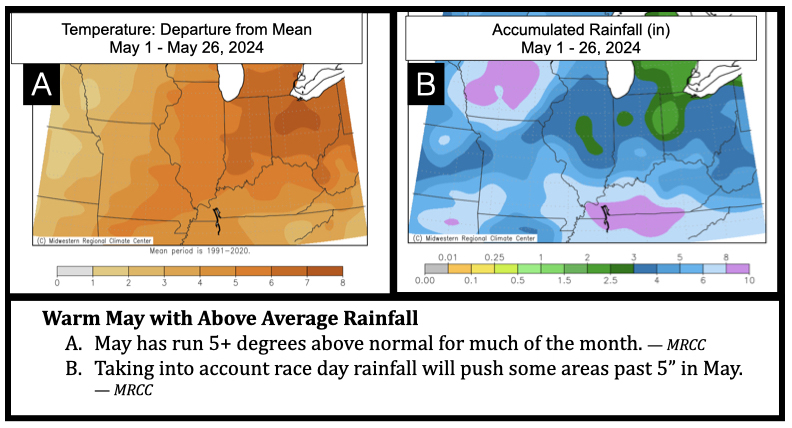
Current morning jacket weather shouldn’t disguise the overall warm May that has jump started plants and pathogens alike this late spring. By all accounts, the region is still running 2-3 weeks ahead of normal. Here in W. Lafayette, GDD50 accumulation is 200+ above our standing this time last year (MSU GDD Tracker website), and most areas are 5+ degrees above normal average temperature for the month. Keeping an eye specifically on the minimum temperature is also useful concerning disease activity, and the region is also 5 – 8 degrees above average in this measure.
Rainfall hasn’t been quite as pervasive in May as in April, but race day’s large rainfall event (1.5” + in areas) will likely push many above average for the month. Indy officially sits at 5.24”, about an inch above average, with points south receiving even higher amounts. Fort Wayne and northern IN have escaped the brunt of most storms and are right about on average.
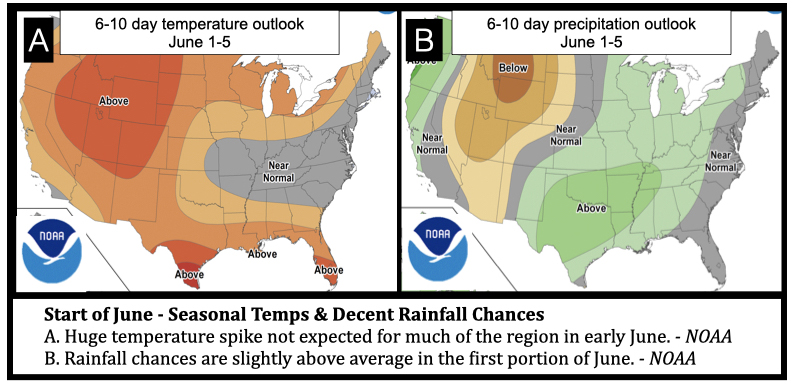
Forecasts indicate a jet stream dip this week resulting in cooler conditions for the region to close out May with a return to warmer temperatures in the first week of June. The rest of May also is expected to be drier, with a return to widespread chances for rainfall to start June. Disease pressure will likely follow this same pattern, with a quick wane this week followed by an early summer ramp up.
Lawns: Brown Patch on Tall Fescue Arrives
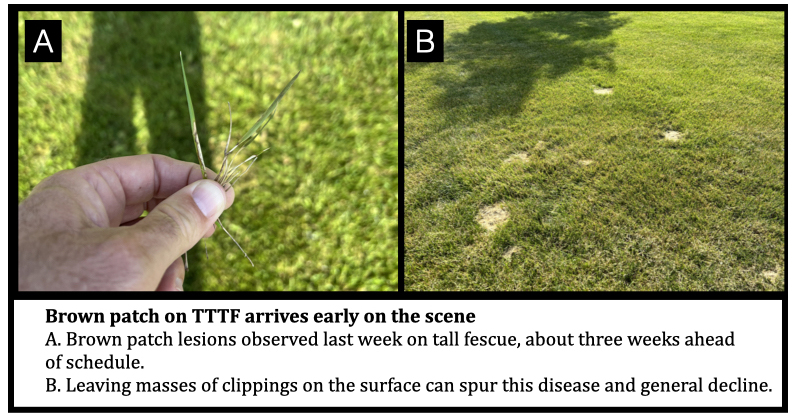
Higher than normal nighttime temperatures resulted in characteristic brown patch lesions observed last week on our tall fescue research plots at the Daniel Turfgrass Research Center. These lesions are associated with some marginal thinning in patches and appear as a beige to bleached interior with a dark brown margin scalloped across the leaf blade. Brown patch caused by Rhizoctonia solani is perhaps the Achilles heel pest problem that affects turf type tall fescue perennially and causes the most grief on home lawns. In our testing, Ascernity fungicide has been extremely effective in controlling this disease, however, use is limited to golf courses and the product can’t be applied in residential areas or sports fields. On home lawns, azoxystrobin (Heritage, Scotts Disease EX) and pyraclostrobin (Insignia, Pillar) are commonly suggested fungicides.
Our knowledge in mitigating this disease without fungicides has changed considerably in the last decade. Gone should be the notion that any nitrogen during the summer will spur ferocious brown patch outbreaks. Thanks to work by Dr. Jim Kerns, and Purdue’s team of Drs. Jada Powlen and Cale Bigelow, nitrogen applications have been shown to perhaps reduce brown patch in hungry tall fescue rather than spark this disease. Regarding tall fescue and most turfgrasses, it’s important to realize that nitrogen is often limiting. Nitrogen is mobile and moves to the youngest leaf which we habitually prune or mow off. While mulching type mowers may help to recycle this nitrogen, the process still takes time which an actively growing lawn might not have. All of this to say that a low dose of nitrogen (0.25-0.5 lb N/1000 sq ft) once or twice during the summer applied with care and intention will do more good than harm to a lawn.
As is the case for most foliar diseases, shade, dew, wet leaf blades and high humidity are the allies of a strong brown patch epidemic. Brown patch will form more readily in a tree-filled space or around structures that block the morning sun. For most, lawn irrigation shouldn’t have be running yet, but when needed, irrigating at dusk is a sure-fire way to get the leaf wetness and disease party started. Another oft overlooked issue is with grass clippings. If left in clumps over the lawn canopy, they act as a plastic bag over the turfgrass, keeping humidity and moisture in. The brown patch pathogen will take this opportunity to infect and cause severe disease on a plant that is already hamstrung with a lack of light. To mitigate this, mow as often as possible to reduce clumping and be mindful by simply using a blower to disperse and spread large clumps.
Last but not least, establishing a resistant cultivar from the outset or through overseeding is the best, most long-term control strategy. For more information on brown patch control in tall fescue, see this recent article in the USGA Green Section Record.
Pythium root rot and summer patch prevention
Throughout the state, two-inch soil temperatures are well in the range for preventive fungicide applications for summer patch and Pythium root rot (for current soil temperature information for Indiana, click here.) Summer patch should be prevented in high value Kentucky bluegrass sports fields and lawns that have had a history of the disease. On sports fields, fertilization with ammonium sulfate and/or manganese sulfate is recommended to supplement control. Summer patch has also been observed frequently attacking samples of bentgrass and Poa annua putting greens. A watered in application of a strobilurin, DMI fungicide or combination product may also be warranted, and must be watered in with at least 0.2 – 0.25” of post application irrigation or rainfall to be effective. On poorly draining putting greens, restricting AMS or manganese sulfate use may be best to not spur black layer formation.
Speaking of poorly draining, the time is also past due to apply preventive applications for Pythium root diseases on golf putting greens. Picarbutrazox (Serata) and cyazofamid (Segway) are suggested as the two heaviest hitters and should be the backbone for Pythium root disease control (both root rot (various spp.) and root dysfunction (mostly caused by Pythium volutum)). As with all fungicides targeting soilborne diseases, applications should be watered in with at least 0.125” and preferably closer to 0.2 – 0.25” of post application irrigation.
Golf: Annual Bluegrass Weevil Damage & Need for Scouting
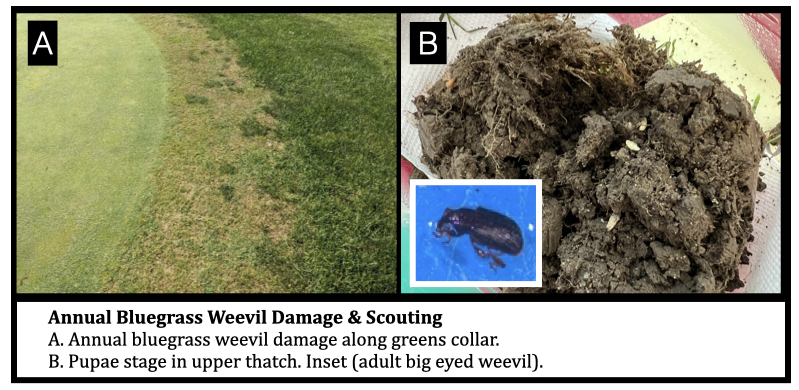
A sample from a bentgrass/Poa collar with considerable damage from annual bluegrass weevil was submitted from south central IN to the Purdue Plant & Pest Diagnostic Lab last week. The superintendent stated these areas had struggled for the last few years and surmised this could’ve been the underlying issue. Our resident turfgrass entomologist, Dr. Doug Richmond, took over the case and recommended treatment options based on the stage(s) of insect development. To learn more about this increasingly important pest problem, see this recent article in the USGA Green Section Record.
Localized Dry Spot on Putting Greens & Fairways
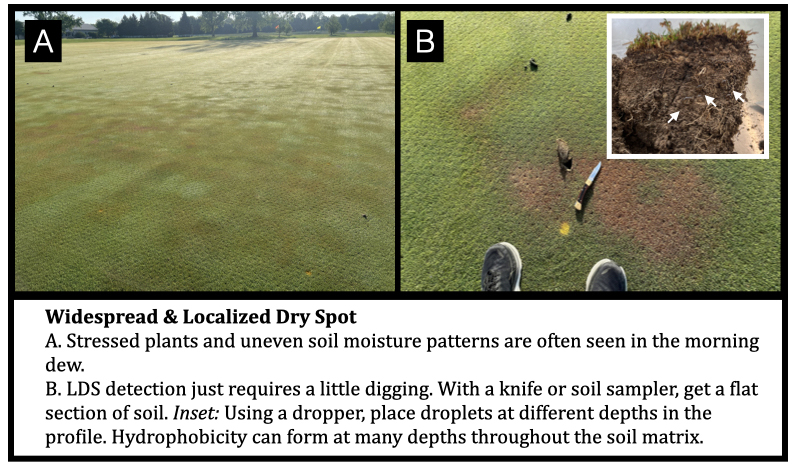
The first instances of localized dry spot have taken hold at the research farm and in two submitted samples last week. Localized dry spot (LDS) is caused by the exudates and by products of microorganisms breaking down thatch and organic matter. These hydrophobic organic acids coat soil particles and repel water, creating preferential flow patterns in the soil matrix and robbing affected plants of needed moisture. To diagnose this issue, a TDR can be employed for evidence, but using a soil sampler (preferably a soil profiler) or large knife to excise an affected portion of turf and soil can provide the real proof. Use a squeeze bulb dropper or carefully managed straw to place water droplets along the soil matrix at different depths. Droplets will not enter the soil where hydrophobicity has set up, with one of my records being five days with no infiltration in a fairy ring/LDS affected soil. A myriad of soil surfactants (aka wetting agents) are on the market targeting LDS control.
Foliar anthracnose damage on bentgrass and annual bluegrass
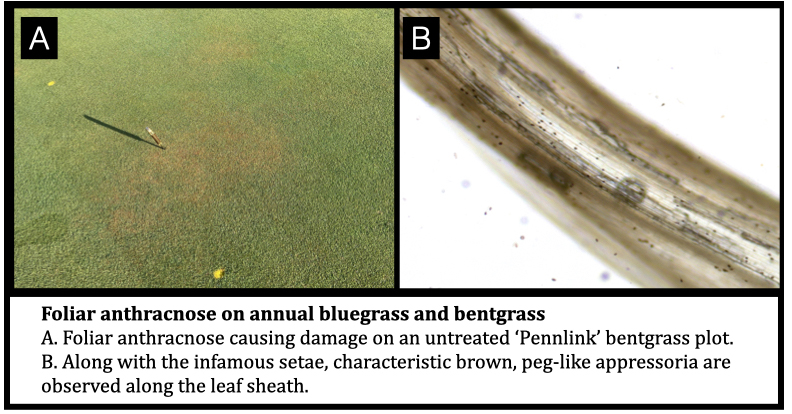
Last but not least, anthracnose season arrived early last week with foliar anthracnose on untreated plots on our research green and several samples arriving at the PPDL. Anthracnose caused by Colletotrichum cereale can take two forms, foliar and as a basal rot. The foliar form being observed now is characterized by a bronze leaf appearance, with the disease mostly attacking older leaf blades and leaving the youngest leaf and crown intact. Characteristic hair-like setae accompany spore producing acervuli on the leaf surface with numerous club or peg-shaped appressoria dotting the leaf sheath. Foliar symptoms often precede the darker, whole plant affecting basal rot disease form. The pathogen dives down past the leaf sheath and rots the crown or base of the plant, turning it a dark brown to black color.
Turfgrass leaves have a short life cycle, being produced and dying within a 1-2 month span. This provides ample nutrition and habitat for pathogens like anthracnose that can survive as both saprophytes (living on dead or decaying organic matter) and pathogens. This also serves as a reason for anthracnose to be so closely related to plant stress, since as the leaves more rapidly decay and degrade the pathogen population and inoculum level summarily increases with the added food source. The larger pathogen population soon switches gears to overwhelm and attack living plant tissues. As mentioned previously, low nitrogen levels also play a crucial role in anthracnose development as nitrogen moved to the younger leaf tissue leaves the older leaves more susceptible to infection.
A sample from a bentgrass fairway late last week was the first time I have observed considerable foliar anthracnose infection on higher cut turfgrass. These fairways had extremely low nitrogen applied this season, high use rates of plant growth regulators, harsher pre-emergent herbicide application on an older bentgrass variety and were mowed below 0.5”. All of these practices aimed to produce a faster and firmer playing surface, whether on fairways or greens, play right into the hands of creating an anthracnose epidemic. In these ripe conditions, fungicide use would be needed and may not last the expected application interval.
Due to its biology and aptitude for spore production, fungicide resistance development in anthracnose pathogen populations can occur quickly. Resistance to the benzimidazole fungicide class (thiophanate-methyl) is commonplace and several populations are also resistant to the QoI (strobilurin) and/or DMI fungicide classes. Resistance management by rotating fungicide mode of action and tank-mixing a contact fungicide (i.e. chlorothalonil or fluazinam) with a systemic in curative applications is suggested to mitigate fungicide resistance development. A list of best management practices for anthracnose control on annual bluegrass has been developed through research at Rutgers University.
Purdue Turfgrass and Landscape Field Day – Tuesday, July 16th
The Purdue Turf and Landscape Field Day is an annual one-day event with the objective of providing professional turf and landscape managers exposure and educational opportunities with the latest research and technical resources. Field Day features research tours, talks on current topics, and a tradeshow with over 40 exhibitors displaying equipment, turf, and landscape products.
Turfgrass Pathology Program Impact Survey

Follow this link or scan QR code above to access the survey.
Lee Miller
Extension Turfgrass Pathologist – Purdue University
Follow on Twitter: @purdueturfpath