White Clover
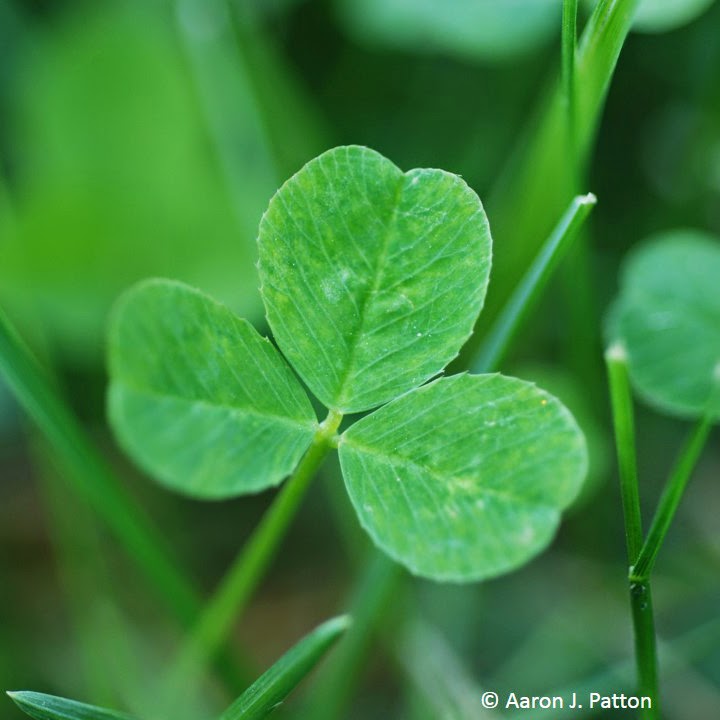
White Clover
Biology: White clover (Trifolium repens) is a perennial broadleaf weed that can be found throughout the United States. Seeds can germinate in moist-cool conditions in spring, early summer, or early fall. Because it tolerates close mowing, can grow in multiple soil types, and has the ability to fix its own nitrogen, it competes with the surrounding turf. As a result, white clover is a common occurrence in lawns and other high-maintenance turf throughout the state of Indiana.
Some view white clover as a weed – hence it’s appearance in this weed of the month series – while others view white clover as an important component of the turf which provides beneficial nitrogen contributions to the soil. Current research efforts at Purdue led by Dr. Cale Bigelow and his graduate student Gabe Macke are focused on learning more about the potential benefits of grass-clover systems and the challenges in maintaining these mixed swards. More information about white clover management (both control and culture) will continue to be provided as we learn more.
|
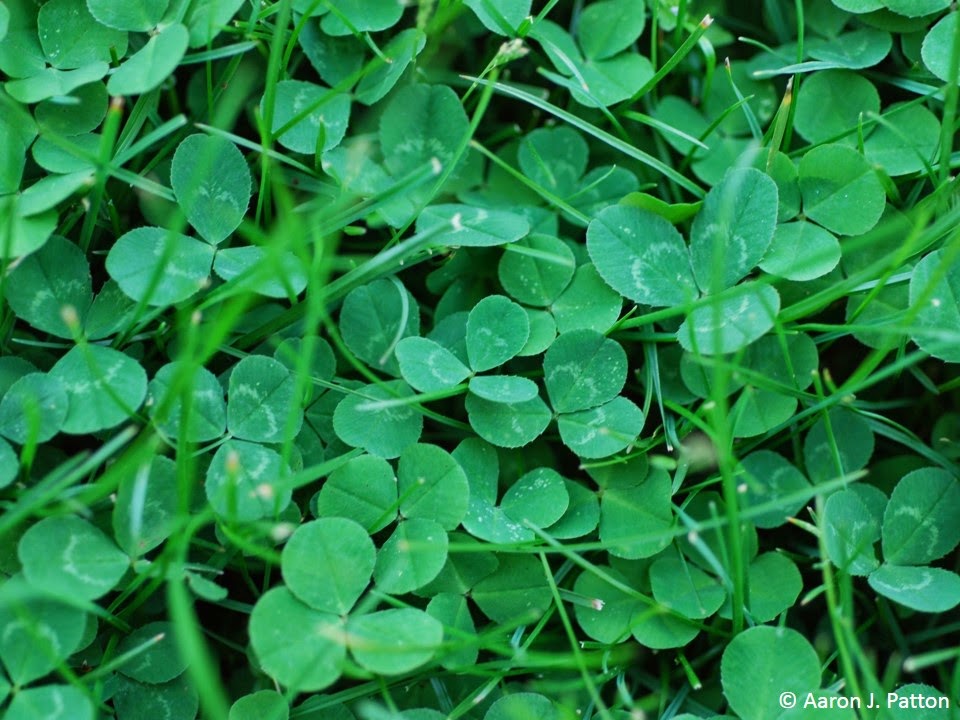 |
| White clover in cool-season turf. |
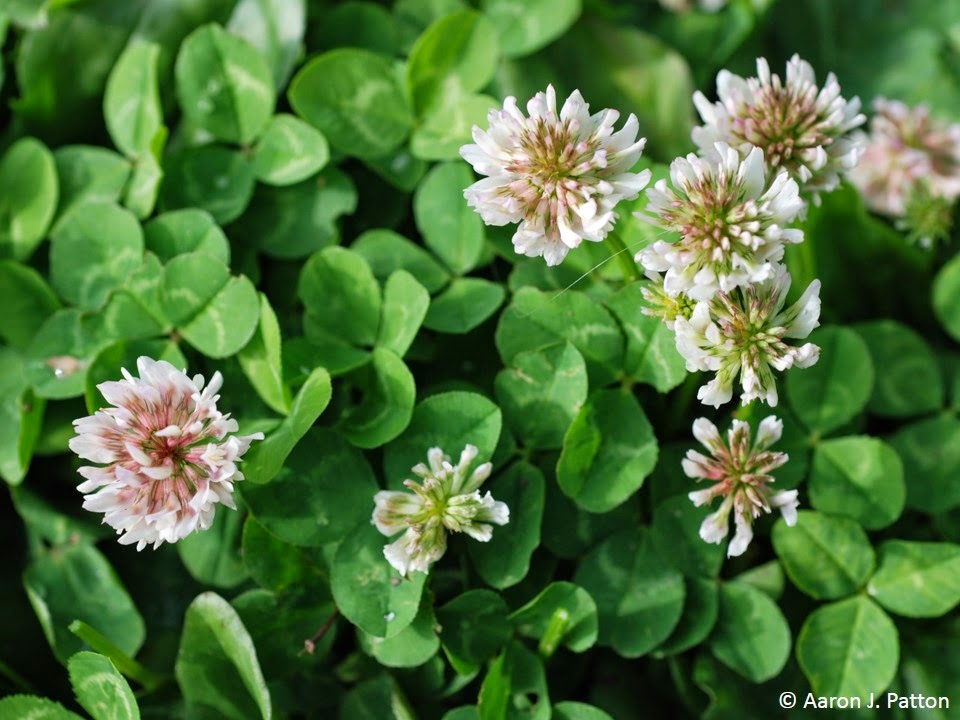 |
| Rounded flower clusters can hole up to 85 flowers. |
 |
| Pink tinge at the base of white flower petals. |
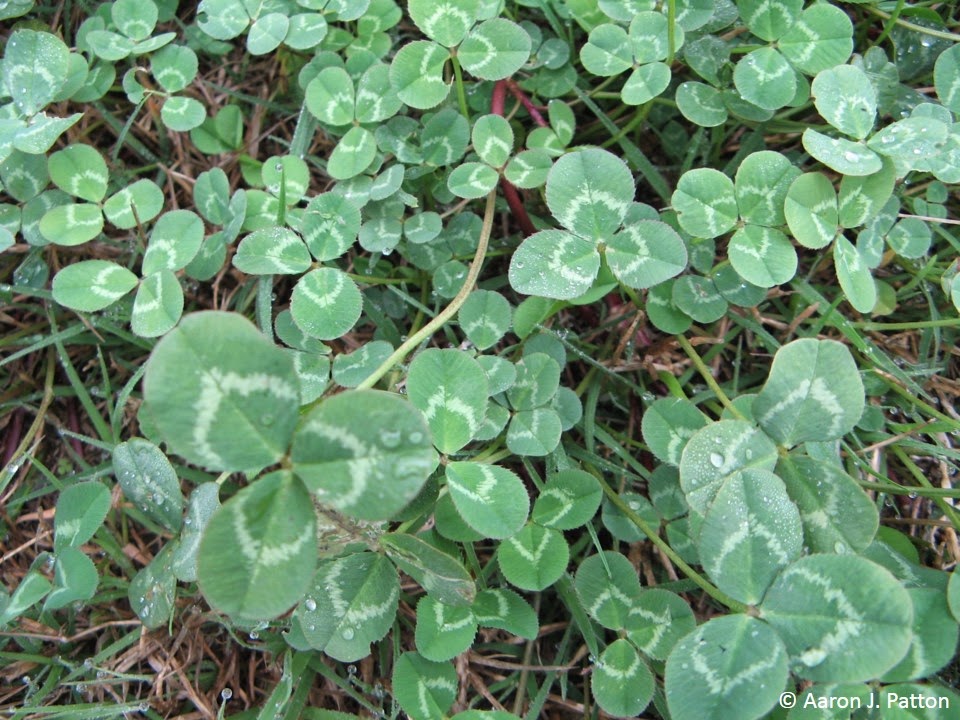 |
| Trifoliate (3-leaf) arrangement with distinctive watermark. |
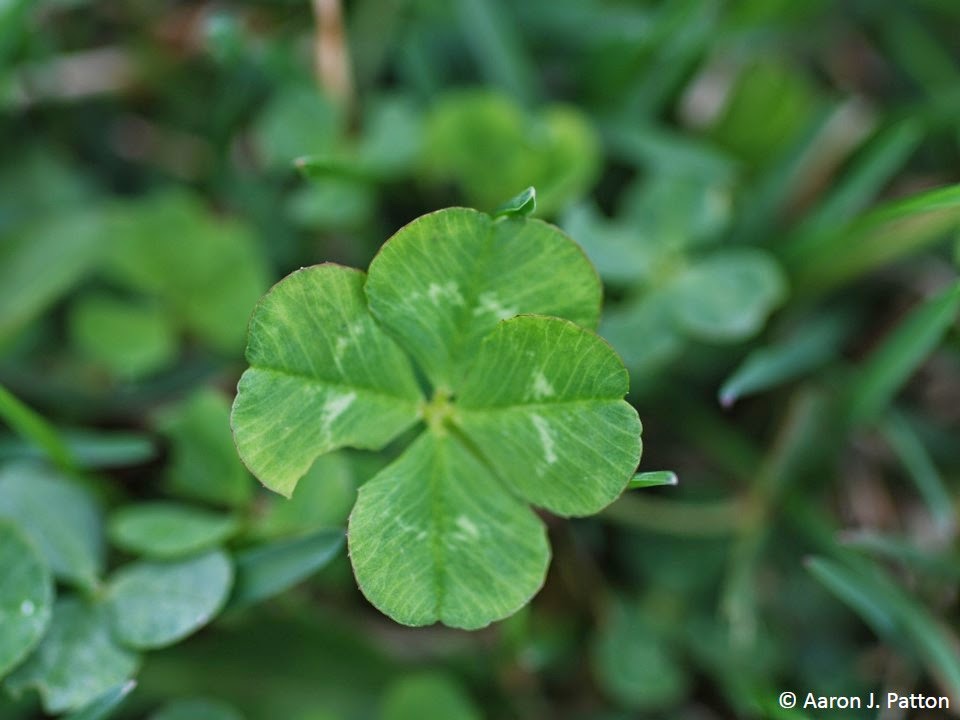 |
| Appearance of 4 leaves produce a ‘shamrock’ or ‘4-leaf clover’ appearance. |
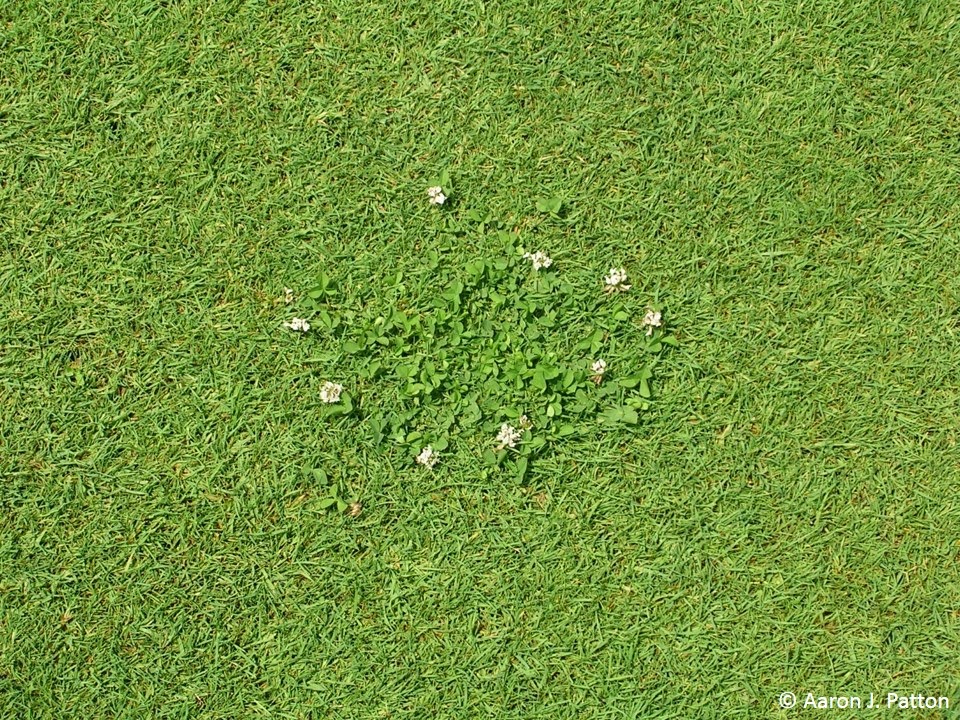 |
| White clover in closely mown turf. |
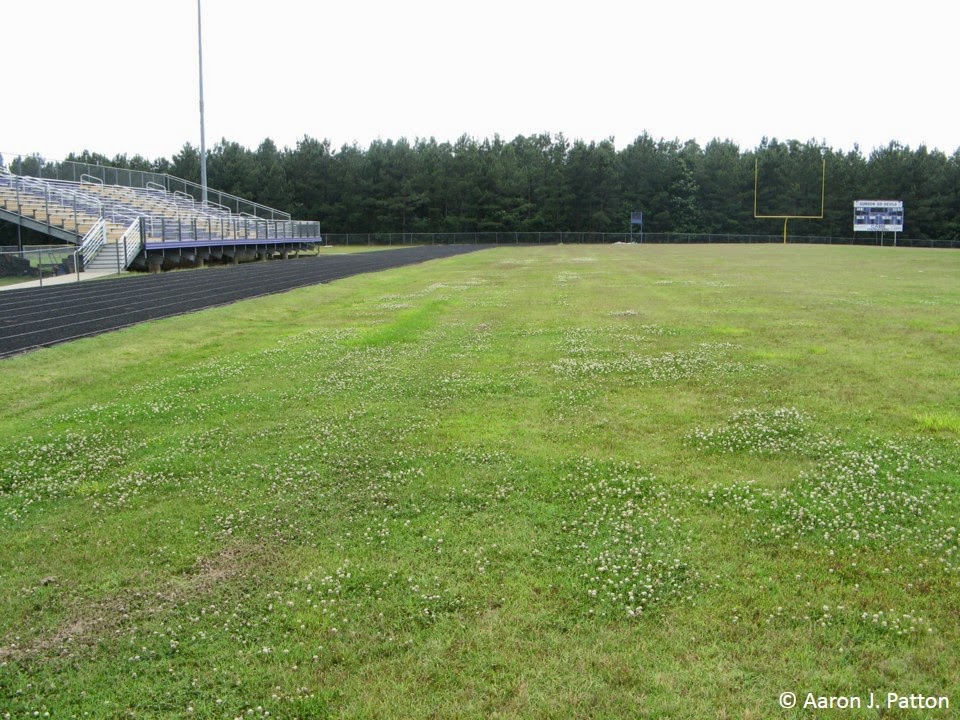 |
| Presence of white clover may be an indication of low nitrogen fertility. |
 |
| Large patches of white clover in dormant bermudgrass turf. |
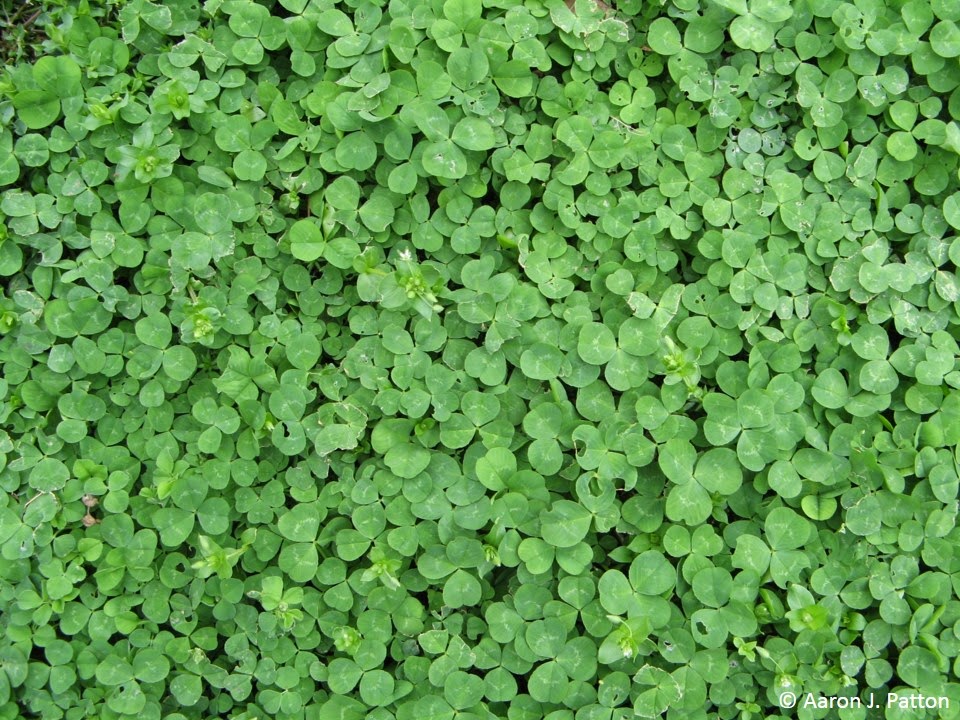 |
| Large patch of dense, mat-like growth. |
Many new organic products contain essential micronutrients, such as iron HEDTA (FeHEDTA) as the active ingredient. Though multiple applications of these products are required, turf injury is generally decreased (can actually make the turf darker); however, their ability to provide long-term weed control is not well-documented.
For archives of past weed of the month postings, visit our Weed of the Month Archive.