Author: Cale Bigelow

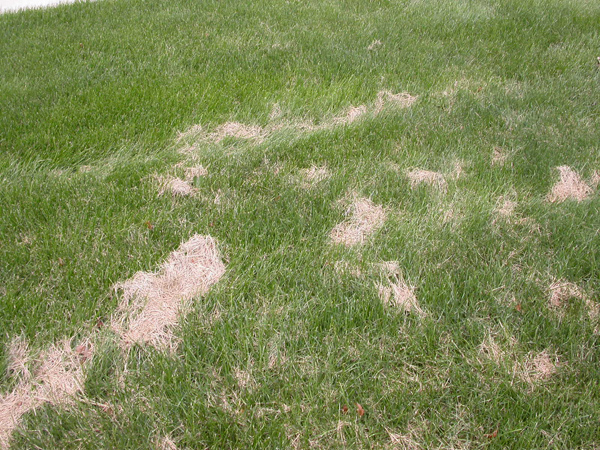
Animal Urine Damage in Turf

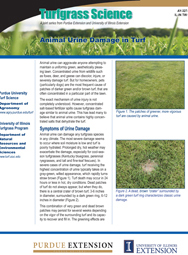
Animal urine can aggravate anyone attempting to maintain a uniformly green, aesthetically pleasing lawn. For homeowners, pets (particularly dogs) are the most frequent cause of patches of darker green and/or brown turf, that are often concentrated in a particular part of the lawn. This publication describes symptoms of animal urine damage in turf and provides some management solutions.

(AY-327-W)


PDF

PDF version of Animal Urine Damage in Turf

Read More

7 Simple Steps to a Better Homelawn

Maintaining the most attractive homelawn in the neighborhood takes time and effort. However, if your goal is a good-looking, healthy lawn with a minimal amount of effort, it can be accomplished using some simple steps. The following is a brief description of those steps in order of importance, with emphasis on minimizing the amount of time and input dedicated to your lawn. test

(AY-32-W)


PDF

PDF version of 7 Simple Steps to a Better Homelawn

Read More

Facts About Phosphorus and Lawns

This publication for both professionals and homeowners examines the role that phosphorus plays in turfgrass growth, explains how to determine the needs of specific turf stands, and provides suggestions for proper application to reduce the risk of contaminating surface waters.

(AY-334-W)


PDF

PDF version of Facts About Phosphorus and Lawns

Read More

Fertilizing Established Lawns

Fertilizing established lawns keeps the lawn looking good and reduces how much you have to water and control weed, insect, and disease pests — that saves you money and is environmentally responsible. This publication answers questions about fertilizing cool-season lawns and provides tips for creating your own fertilization program.

(AY-22-W)


PDF

PDF version of Fertilizing Established Lawns

Read More

Establishing Lawn Areas From Seed

This provides guidelines for establishng lawns from seed rather than from sod. It includes information on variety selection, seedbed preparation, watering, and weed control for newly established turfgrass areas.

(AY-3-W)


PDF

PDF version of Establishing Lawn Areas From Seed

Read More

Bermudagrass Winterkill Again?

Some are suffering through another year of bermudagrass winterkill in Indiana. Much different than last year where winterkill was widespread and there were many different causes (too cold, too wet, too shaded, etc.), the primary cause for winterkill in 2014-2015...
Read More

Rounds 4 Research

Rounds 4 Research is an innovative program aimed at generating resources to fund research and help ensure golf’s future. The premise is simple: Golf facilities can support the effort by donating rounds of golf for two or four or “stay...
Read More

New Lawn Recovery Guide

The Purdue Turf Program has put out a new publication to help homeowners and professional answer some of the questions asked about drought stress. Lawns and the Summer 2012 Drought/Heat Crisis: Now What? | PDF  
Read More

Purdue Annual Turfgrass Research Report

As the green industry continues to have a large impact on Indiana and the nation, Purdue University has assembled an outstanding team of researchers, extension personnel, and educators that are dedicated to solving problems and helping meet the needs of...
Read More

Record drought and heat are making seedling establishment a serious challenge

After the extremely stressful summer conditions of 2010 many thin areas in cool-season lawns have been reseeded to restore turf density and improve appearance.  Regardless of environmental conditions, establishing a turf from seed is a challenge and the process is...
Read More

Lawn Cultivation: Is now the time?

Lawns are cultivated (sometimes referred to as aerfication) primarily to relieve soil compaction and manage thatch (organic) layers. Other reasons may be to open the turf canopy and create a seedbed in order to facilitate interseeding or overseeding, or move...
Read More

Time to make the donuts… or better yet, time to cultivate!

A shallow root system in putting green bentgrass, this plant may not tolerate deep cultivation very well Surface following solid-tine cultivation procedure, notice the rootzone mixture on the surface, the point, be careful and be gentle! A Late-Summer Cultivation Checklist:...
Read More

Warm Weather and Spring Mowing Woe’s

For those that are managing cool-season lawns like Kentucky bluegrass, the ryegrasses or fescues the unseasonably early warm spring weather has resulted in quite a bit of shoot tissue (leaf clippings) being produced. For many that think they want their...
Read More

Spring Mowing Tips

Last week’s warm temperatures really made the grass green-up and begin growing which means many people are starting to think about seasonal mowing. Probably one of the biggest mistakes homeowners make is not starting to mow their lawns soon enough....
Read More