Author: Zac Reicher

Quicksilver Receives 24C Registration for Moss on Greens in Indiana

As promised, Indiana’s 24C label for QuickSilver T&O is available. label.pdf You must have a copy of this label in your possession in order to apply QuickSilver to greens.
Read More
Quicksilver Receives 24C Registration for Moss on Greens in Indiana

FMC’s QuickSilver T&O herbicide has just received special local 24(c) registration for control of silvery thread moss in putting greens in Indiana. Though Quicksilver (carfentrazone) is used widely as a quick knockdown contact broadleaf herbicide, it has good efficacy on...
Read More

Midwest Regional Turf Field Day on July 26

Gear up for the Midwest Regional Turf Field Day that will be held on July 26 at the W.H. Daniel Turfgrass Research and Diagnostic Center in West Lafayette. This is a great opportunity for turf professionals to view the latest...
Read More

Early Dollar Spot Applications Make Sense

Dollar spot has arrived on golf courses. The standard mid- to late May fertilization of 0.75-1.0 lb N/1000 sq. ft. with primarily slow release N should have helped minimize some dollar spot. On golf courses with a long history of...
Read More

Maximizing Lawn Performance Under Drought

As low moisture conditions continue in Indiana and Indianapolis is already requesting volunteer reductions in water use, it is time to start preparing for a potentially serious drought. Generally, turf can survive 5 to 8 weeks of dry conditions without...
Read More

Fertilizing Sports Turf

Fertilizing sports turf is critical in order to maintain turf vigor in spite of intense wear and tear. However, too little fertilizer or poorly timed fertilizer are common mistakes on sports complexes. Following are our recommendations for sports field fertilization:...
Read More

Fundraiser Golf Tournament for Don LaPierre

A good friend of the Indiana turf industry, Don LaPierre, has recently been diagnosed with cancer. A fundraiser golf tournament for Don and his family will be held on June 21st at Greenfield Country Club in Greenfield, followed by a...
Read More

Phosphorus Fertilization in Turf

Phosphorus (P) fertilization of turf is being questioned nationally for two reasons. Phosphorus fertilization almost never induces a visual turfgrass response and deficiency symptoms are rarely seen, thus calling into question the need for P fertilization. Secondly, higher levels of...
Read More

Late May is Good Time to Fertilize Lawns

The annual phase of rapid cool-season shoot growth of cool-season grasses is nearly complete, though it was diminished this year because of the dry and cool weather. It's now time to consider fertilizing your lawn because fertilizer now will not...
Read More

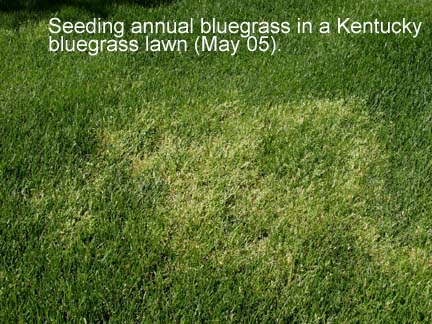
Annual bluegrass (Poa annua) in Full Bloom in Lawns and Athletic Fields

Annual bluegrass is now very common in lawns and athletic fields, though it has been a problem on golf courses for years. Annual bluegrass is a lighter green than Kentucky bluegrass and perennial ryegrass, and will thin and die during...
Read More

Don’t Trust the Tonics You Hear on TV

There’s a number of “tonics” recently extolled on local and national television that include ingredients like shampoo, ammonia, cola (not diet of course), beer (not light beer), hydrogen peroxide, and dish soap among others. Though you may think you see...
Read More

Time is Running Out for Preemergence Control of Crabgrass

The below average temperatures the last few days has delayed crabgrass germination and thus premergence annual grass herbicides should still be effective if applied this week in the northern half to 2/3rds of the state. Most of the preemergence herbicides...
Read More

Watch for Breakthrough from Early Preemergence Herbicide Applications

The extremely dry spring may reduce the effectiveness of preemergence herbicides. The products must be watered-in or rained-in to move them below the canopy and down to the soil where they will be effective. Herbicides not watered-in may also photodegrade...
Read More

Slowly Greening Lawns

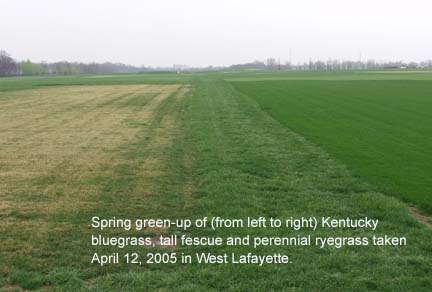
Many lawns are slow to green-up this year and it is mostly due to the presence of Kentucky bluegrass. Even though Kentucky bluegrass is the best lawn grass for the Midwest, it is much slower than perennial ryegrass and tall...
Read More

Spring Dandelion Control for Professionals

Many turf areas did not get treated for broadleaf weeds last fall because of the dry weather. Though fall applications are most effective for controlling broadleaf weeds, spring applications are warranted for new lawns or areas that did not get...
Read More

Tan Patches in an Otherwise Green Lawn

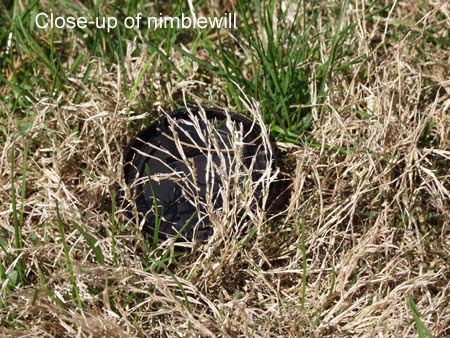
Tan patches in an otherwise green lawn at this time of the year are likely due to either slow-greening warm-season grasses or snow mold. The most common tan patch right now is warm-season grasses like nimblewill or zoysia (photos). Time,...
Read More

Dark Green Patches in Otherwise Lighter Green Lawn

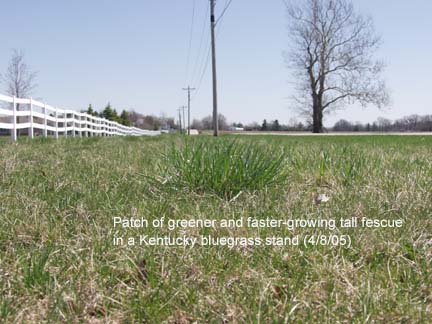
Patches of tall fescue or perennial ryegrass are currently much greener than Kentucky bluegrass (photos). Patches of these two grasses are prominent right now as the bluegrass is just starting to green up. Give it another week and the bluegrass...
Read More

Star of Bethlehem, Spring Beauty Emerging in Shaded Areas

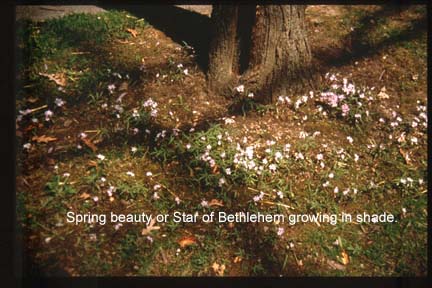
Star of Bethlehem and Spring Beauty are currently emerging and flowering in shaded areas. Both plants have pretty white flowers with the Star of Bethlehem having six petals while Spring Beauty has only five petals . The Star of Bethlehem...
Read More

Dandelions: Friend or Foe?

The annual bloom of dandelions is already here in southern Indiana and just around the corner in the rest of the state. Though some find dandelions attractive and some may actually eat them in salads or wine, others consider dandelions...
Read More

Herbicide Delays after Seeding

Almost all herbicides will affect turfgrass seedlings and application delays are usually needed following seeding. Following is information gleaned from available labels of most herbicides or herbicide types that would be used in Indiana . This is intended to provide...
Read More