Author: Zac Reicher

Bermudagrass Winter Survival and Cultivar Selection

With the bermudagrass damage in southern IN and Kentucky , we are fielding many questions on cultivar survival. Following is our winterkill data from 2003 of bermudagrass grown in West Lafayette under fairway conditions. Combining this data and other data...
Read More
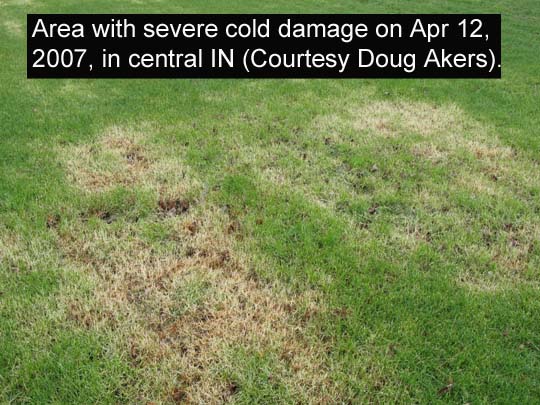
Winter damage on bermudagrass

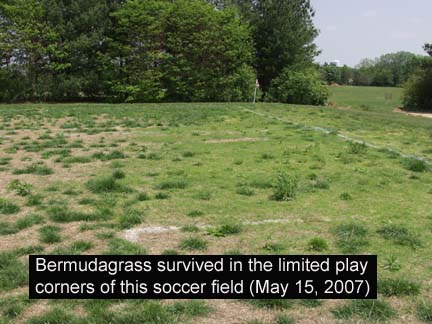
As bermudagrass begins to green up in southern IN and Kentucky , it is apparent that moderate to severe winter damage has occurred. Though we may be a little premature because full green-up and growth is still a week or...
Read More

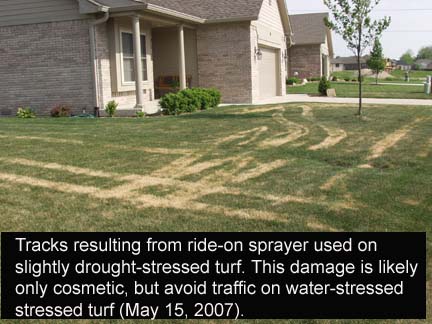
Brown Tracks in Lawn

With the mild drought stress over the last week, lawns are extremely susceptible to cosmetic damage from mowers, spreaders, and human traffic (photos). Drought stress may not have been easily visible before mowing. Turf likely was at the drought stressed...
Read More

Late May is Good Time to Fertilize Lawns

The annual phase of rapid cool-season shoot growth of cool-season grasses is nearly complete, though it was diminished this year because of the dry and cool weather. It's now time to consider fertilizing your lawn because fertilizer now will not...
Read More

Seedheads Make for Tough Mowing

With the bizarre weather this spring, growth patterns of our cool-season grasses are inconsistent across the state. Kentucky bluegrass, tall fescue, and perennial ryegrass are either producing or soon will be producing seedheads. This natural phenomenon is induced primarily by...
Read More

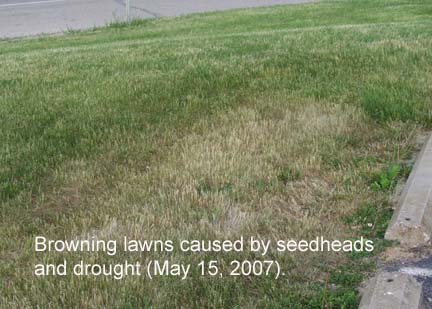
Lawns turning brown overnight?

We have received a number of calls, email, and electronic photos inquiring about brown patches to entire lawns turning brown apparently overnight (see photos). Following are the three most likely culprits: •  Seedheads – Especially on perennial ryegrass lawns, seed...
Read More

Spring Dandelion Control for Professionals

Though fall applications are most effective for controlling broadleaf weeds, spring applications are warranted for many turf areas. Now that dandelions are blooming or in the puffball stage throughout IN, applications should be effective. It does not take much wind...
Read More

Time to Switch Crabgrass Control Strategies

Crabgrass is starting to germinate throughout much of the state and thus preemergence herbicides will be of limited effectiveness. Though some will report burn-back of very small crabgrass with a strictly preemergence application, combining a preemergence with a postemergence herbicide...
Read More

Cold Weather Yellowing or Bleaching Newly Mowed Turf

Noticing yellow to white patches in areas that were freshly mowed just prior to last week's cold? Judging from what I've seen as well as the emails, you're not alone. Taking a closer look at these areas, the leaf tips...
Read More

Turf Field Day

Mark your calendar for the 2007 Turf Field Day at the W.H. Daniel Center in West Lafayette on July 17, 2007. Come see the most up-to-date research that the Purdue Turf Program is doing and don't forget to pre-register to get...
Read More

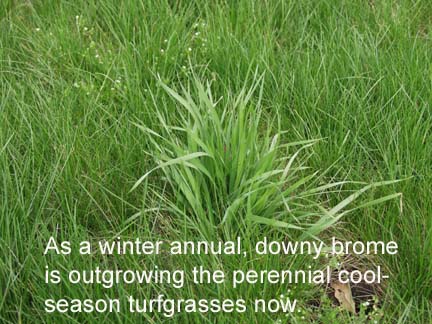
Downy brome growing fast and furious in turf stands

The winter annual downy brome is growing aggressively in turf stands currently, almost twice as fast as the desired Kentucky bluegrass or tall fescue (photo). Downey brome is fairly easily identified at this time of the year by its hairy...
Read More

Purdue Turfgrass Research Report Available On-Line

The summary of our turfgrass research in the year 2006 is now available at http://www.agry.purdue.edu/turf/report/2006/index.htm. The overall goal of our research program is to minimize inputs while maintaining turf quality, minimizing costs, and further protecting our environment. Our research summary contains...
Read More

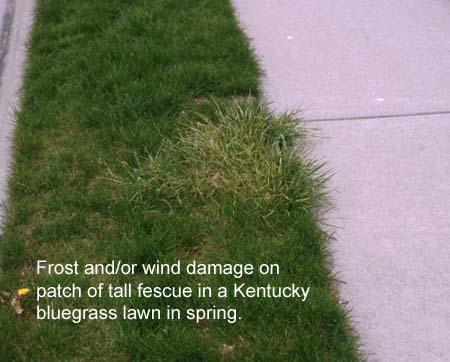
Effect of cold snap on turf?

The recent cold snap should have little long term effect on the turf portion of the landscape. Our cool-season grasses are more than capable of withstanding weather like this, though newly emerged seedlings may suffer some damage from the cold...
Read More

Controlling Wild Onion or Wild Garlic

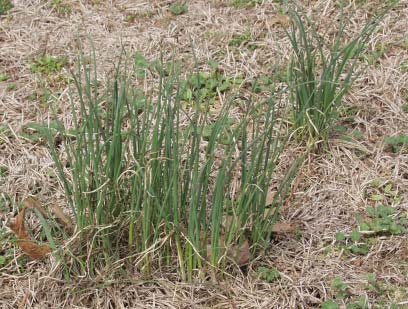
Wild onion and wild garlic are now fully emerged throughout the state of Indiana and these are two of the more difficult to control weeds. Like the garden varieties, these plants are edible and similar looking, except the stems of...
Read More

Do-It-Yourselfer: Is it Crabgrass or Tall Fescue?

We have received a number of calls this year about trying to control the crabgrass running rampant in lawns. It's a much more coarse bladed and lighter green than the rest of the grass, so it must be crabgrass? It's...
Read More

Star of Bethlehem , Spring Beauty Emerging in Shaded Areas

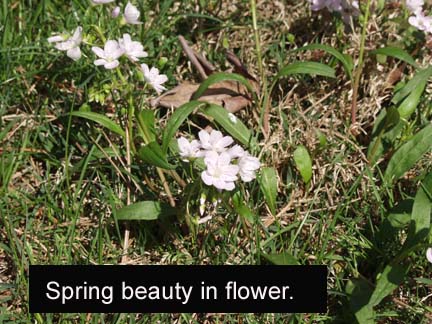
    Star of Bethlehem and Spring Beauty are currently emerging and flowering in shaded areas in southern and central Indiana . Both plants have pretty white flowers with the Star of Bethlehem having six petals while Spring Beauty has...
Read More

If You Must Seed, Do it Now

Late summer (August) is easily the best time to seed cool-season grasses, but sometimes turf must be seeded in the spring. The following points should help improve the success of spring seeding: 1. Seed as soon as possible (now is...
Read More

Timing of Preemergence Herbicides: Part 2

With the above average temperatures over the last few weeks, many questions have arisen again about when to apply the preemergence herbicide for crabgrass. As mentioned in the February 20 edition of Turf Tips, it is much better to apply...
Read More

Knotweed germinating next to sidewalks and other hotspots

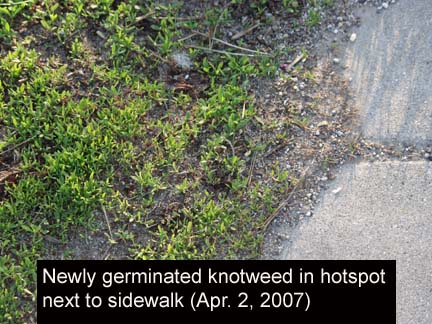
Prostrate knotweed is currently germinating in thin areas next to sidewalks, cart paths, driveways and other hotspots. Knotweed is often confused with crabgrass at this early stage. Knotweed leaves have rounded leaf tips whereas crabgrass has leaf tips that come...
Read More

GCSAA’s Nutrient Use Survey

GCSAA's nutrient use survey is now available and may have already arrived on GCSAA members desks. This survey will help document changes in cultural practices over time as well as help direct GCSAA research, and allow the GCSAA to respond...
Read More