Category: Athletic Fields

What’s it really cost to maintain an athletic field?

Whether you are maintaining a professional, university field or a local soccer field because your daughter is on the team, it is difficult to get an accurate estimate of the costs to maintain an athletic field. From my experience, we...
Read More
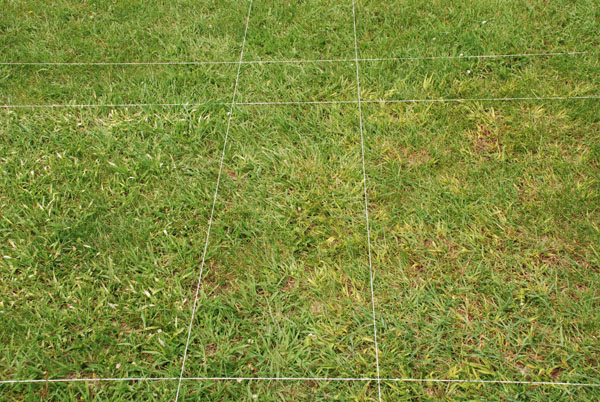
Regenerating Fall Use Athletic Fields

The end is near for Fall-use athletic fields, either literally or figuratively. With the recent wet weather, football and soccer fields have taken a beating.  Don’t give up on these fields yet, because after the last game or practice is...
Read More

Tall fescue for Indiana lawns but not most sports fields

Tall fescue is a great turf for lawns throughout most of Indiana. It requires about ½ the nitrogen and far less irrigation than Kentucky bluegrass when managed for the same aesthetic appearance. Because of its deeper rooting and access to...
Read More

Poa annua, Poa trivialis, and/or creeping bentgrass in lawns and sports fields

Poa annua (annual bluegrass), Poa trivialis (rough bluegrass) and creeping bentgrass are becoming common weeds in athletic fields and lawns. These weeds are important to distinguish because they require different controls. Poa annua: a winter annual that is lighter, more apple green than other...
Read More

Dallisgrass healthy in southern IN

Dallisgrass has reemerged and is very healthy with the rain and warming temperatures. Dallisgrass is often mistaken for crabgrass but typical preemergence or post emergence crabgrass herbicides do not work on dallisgrass. MSMA is currently the standard control but that...
Read More

White Clover in Golf Courses, Sports Turf, and Lawns

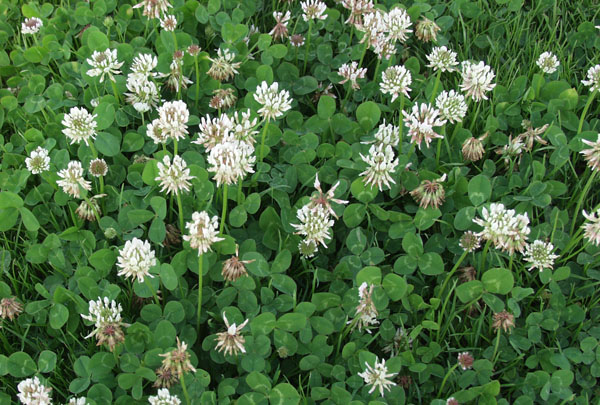
The small white flowers of white clover are very visible right now and it may appear that clover is taking over, especially under-fertilized turf areas. Clover is a legume and is very competitive under low N conditions, so increasing annual...
Read More

Mowing height does not affect speed of athletes

We often hear the comment by coaches to change the mowing height of an athletic field when a particularly “fast” or “slow” team is coming to play.  In a comprehensive article by Kevin Trotta in a June 16, 2004, “Turf...
Read More

Seeded bermudagrass or zoysiagrass is an option for some IN turf areas

In the southern third to of Indiana, seeded zoysia is a viable option for golf course fairway and tees, whereas seeded bermudagrass is an option for golf course fairways and athletic fields. A tremendous amount of recent research has been...
Read More

Ball mark Recovery: Does the Repair Tool Matter?

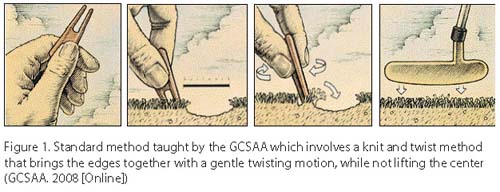
Putting green surface smoothness and uniformity is often disrupted by unrepaired ballmarks. These marks can disrupt surface smoothness and increase the potential for weed (e.g. annual bluegrass) encroachment. The traditional method for repairing ballmarks normally employs a metal pronged tool...
Read More

Regenerating Fall Use Athletic Fields

With the fairly wet weather last fall, football and soccer fields have taken a beating.  The fields that were aggressively aerified, fertilized, and dormant-seeded last fall should improve dramatically by mid-May. Though improvement won’t be as efficient done now compared...
Read More

White Clover in Golf Courses, Sports Turf, and Lawns

The small white flowers of white clover are very visible right now and it may appear that clover is taking over, especially under-fertilized turf areas. Clover is a legume and is very competitive under low N conditions, so increasing annual...
Read More

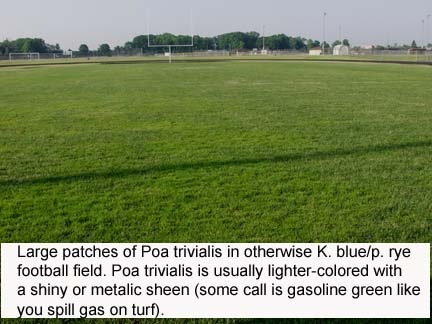
Controlling Poa trivialis in sports fields

Poa trivialis is now common in sports fields, possibly due to as little as one contaminated seed source from the many overseedings done on sports fields. Once germinated, Poa trivialis spreads via stolons which may be further spread during every hollow tine aerification. Poa...
Read More

Managing Surface Organic Matter in Bentgrass Putting Greens

As you begin planning for spring core cultivation, consider the following as some food for thought. Turf research has shown that excessive organic matter, and/or thatch (> ½ inch), in the upper (1-2 inches) rootzone profile can lead to rapid...
Read More

Considering seeded zoysia for fairways?

The development of seeded zoysia will enable many more southern Indiana golf courses to enjoy the benefits of zoysia at reduced establishment costs. Benefits of zoysia include great playability during all four seasons, good winter tolerance, and low fertilization, irrigation,...
Read More

Little Time to Improve Athletic Turf This Year

Though weather this summer and fall wasn’t as bad as last year, we’ve still had our share of thin turf and fall events are taking their toll on the cool-season grasses. The perennial cause is the naturally shallow rooting of...
Read More

Helping Fall-use Athletic Fields

Fall use athletic fields are taking a beating right now. To help those fields, fertilizing aggressively with 1.0 lb N in September and again in October will help. Fertilizing is the most inexpensive but effective way to improve any sports...
Read More

New Era begins for Ross-Ade stadium turf

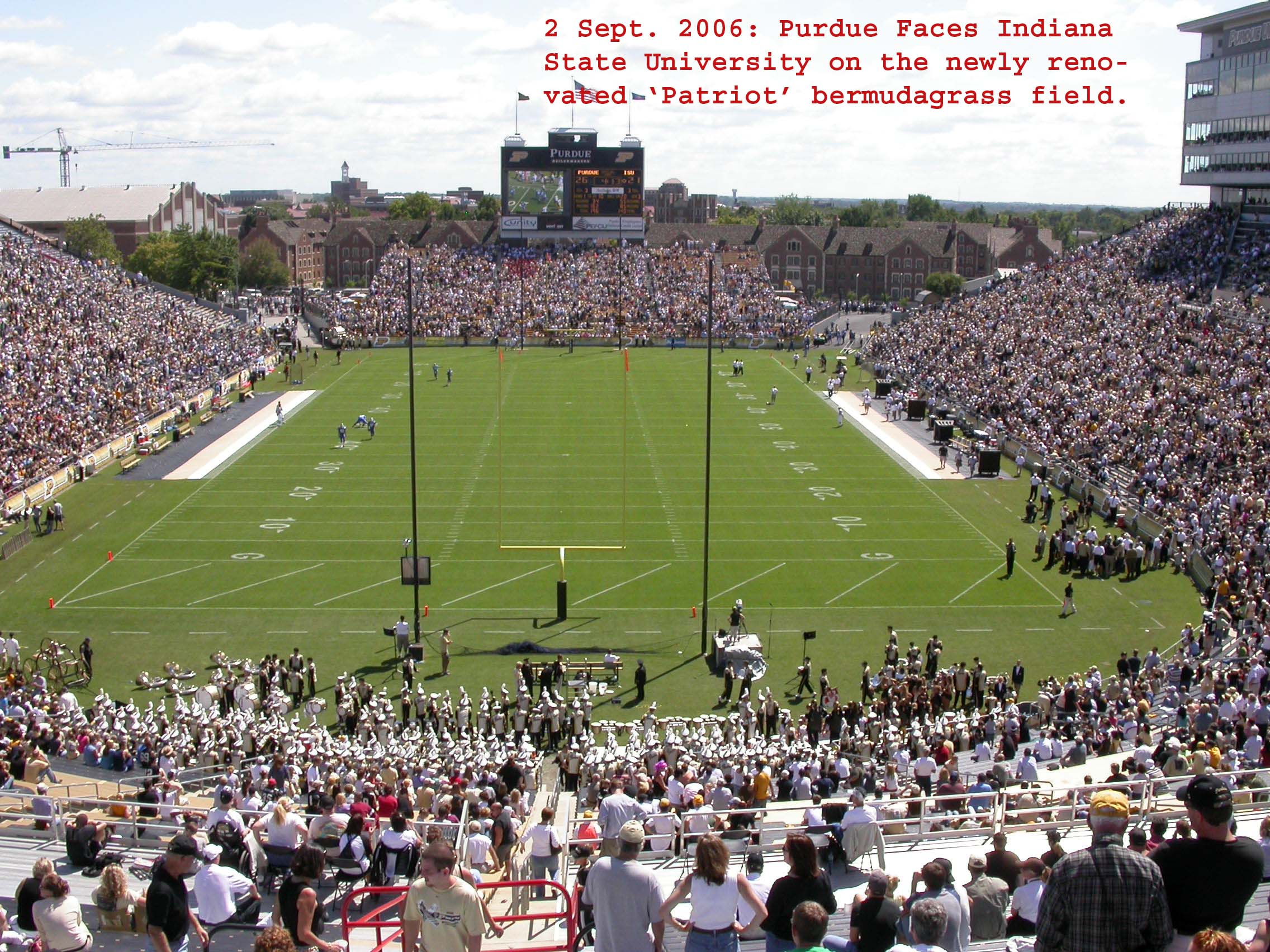
The Purdue Boilermaker’s 60-35 win this past Saturday was not only the first test for the football program but also the first real test and a historic milestone for Purdue’s newly renovated field. The beginning of this season marks a...
Read More

Summer stress of Poa annua, Poa trivialis on Golf Courses

Persistent air tempertatures of 90F and soil temperatures greater than 80F combine with high humidity and adequate rainfall (in some areas) is doing in the Poa annua (annual bluegrass)and Poa trivialis (rough bluegrass)on golf courses. After a week or two...
Read More

Summer stress of Poa annua and Poa trivialis in Lawns and Sports Fields

Persistent air temperatures of 90F and soil temperatures greater than 80F combine with high humidity and adequate rainfall (in some areas) is also doing in the Poa annua (annual bluegrass) and Poa trivialis (rough bluegrass)on lawns and athletic fields. Patches...
Read More

Bermudagrass Takes Root in Ross-Ade and the South Football Practice Field

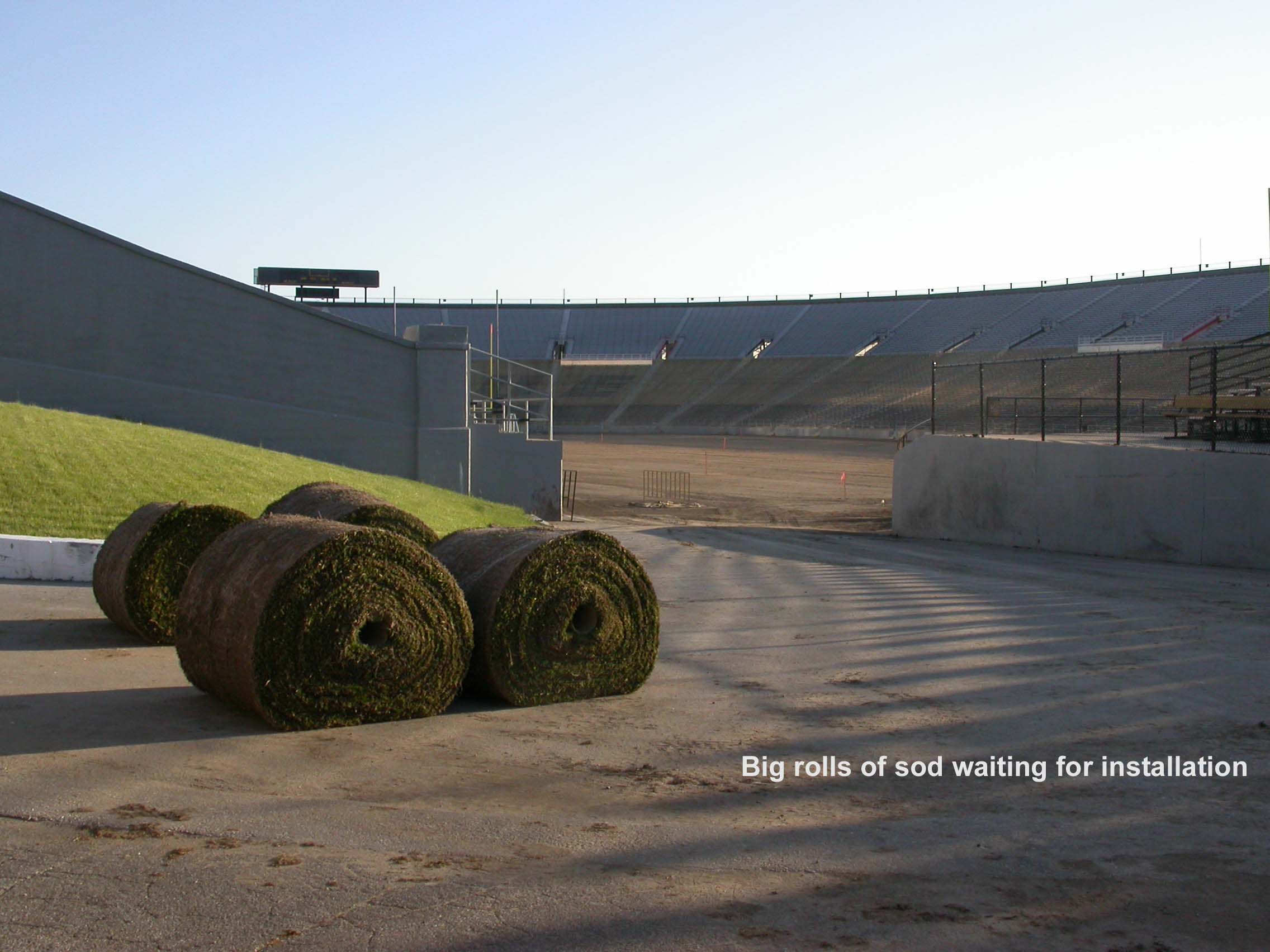
It is in some ways difficult to believe that it has been just over one month since the first “Big Rolls” of ‘Patriot’ bermudagrass were installed in Ross-Ade stadium on 6 June, 2006. The sod 42” wide rolls arrived on...
Read More