Category: Athletic Fields

Football Renovations Continue (Part 2)

Tremendous progress has occurred since our last update, 17 May, on the projects to enhance the football practice and game fields at Purdue University. These have been exciting times for all those associated with the Turf program as we have been able to witness three different turf renovation projects all occurring simultaneously. It has truly…Read more about Football Renovations Continue (Part 2)[Read More]

 Categories:

Ross-Ade and South Football Practice Field Renovations – Update 17 May 2006

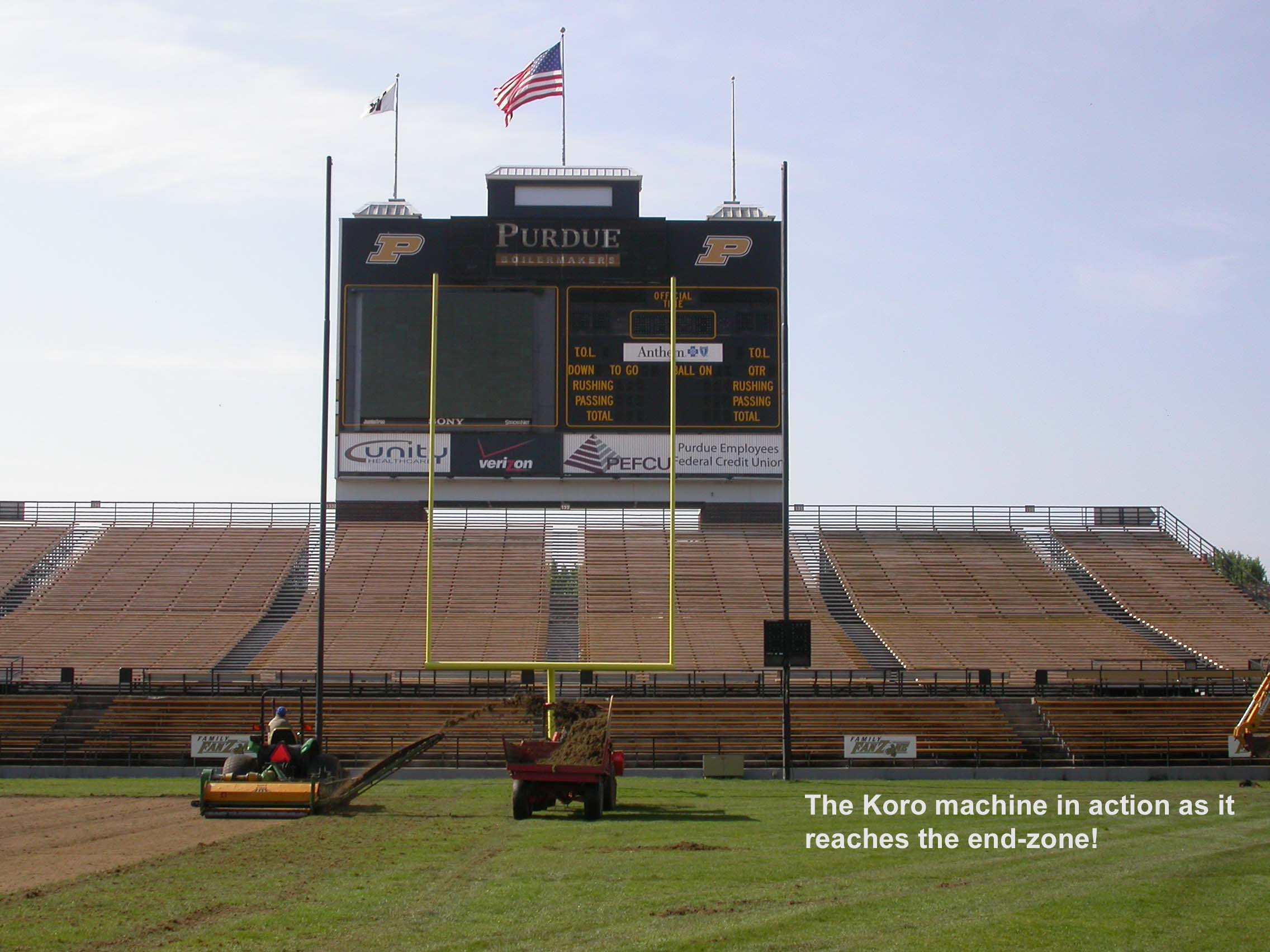
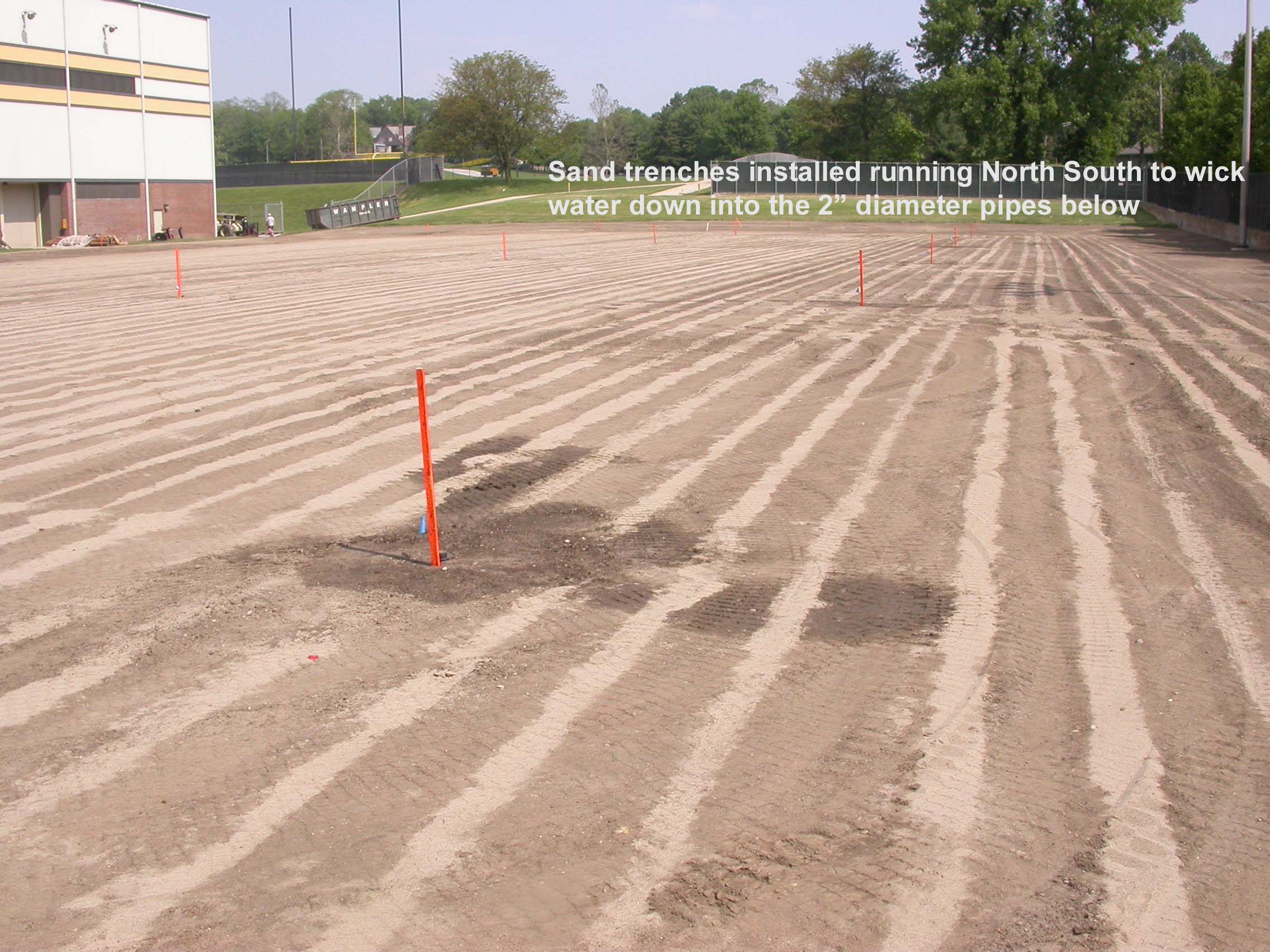
After nearly a week of steady rain in West Lafayette and across the region, work was finally able to continue on the Ross-Ade stadium and South football practice field renovations. The existing Kentucky bluegrass/perennial ryegrass turf in Ross-Ade was removed today with a “Koro” machine. The machine is essentially analogous to a milling machine used…Read more about Ross-Ade and South Football Practice Field Renovations – Update 17 May 2006[Read More]


Nematode Damage in Golf Greens

We are suspecting more and more instances of actual nematode damage or at least secondary effects of nematodes in golf greens. Effects of nematode feeding would include yellowing, thinning, enhanced drought stress, and other symptoms reflective of a poor root system. Unfortunately, symptom expression may be enhanced or complicated by poor rooting from summer weather,…Read more about Nematode Damage in Golf Greens[Read More]


Considering Artificial Turf For Sports Fields?

Tremendous improvement in the artificial turfs has renewed interest in these turfs for sports fields. The decision to use artificial turf is difficult because these fields are a huge investment to install, maintain, and eventually replace. This technology is relatively new and still evolving, and thus questions abound on performance, safety, injury, maintenance costs, lifespan,…Read more about Considering Artificial Turf For Sports Fields?[Read More]


Hot August and September = Poor Rooting = Bad Footing for Sports Fields

For anyone who watched major college football in the Midwest this fall, you’ve noticed that the fields are tearing up with divots and blow outs. Some major universities have even resodded their fields after the opening few games in hopes of improving traction. In a nutshell, this is why fields are tearing up:  Root…Read more about Hot August and September = Poor Rooting = Bad Footing for Sports Fields[Read More]


Tough Year for Turf in Indiana

The summer’s heat and humidity have taken an unusually high toll on turf in lawns, athletic fields, and golf courses. Most of the decline can be attributed to poor root growth weakening cool-season grasses and starting an avalanche of secondary factors leading to further decline. Root growth of cool-season grasses reaches a peak in mid-spring…Read more about Tough Year for Turf in Indiana[Read More]


Summer stress of Poa annua, Poa trivialis on Golf Courses

Persistent air temperatures of 90F and soil temperatures greater than 80F combine with high humidity and adequate rainfall (in some areas) is doing in the Poa annua (annual bluegrass)and Poa trivialis (rough bluegrass)on golf courses. After a week or two of these conditions, Poa annua greens and fairways will start to thin and die in…Read more about Summer stress of Poa annua, Poa trivialis on Golf Courses[Read More]


Summer stress of Poa annua and Poa trivialis in Lawns and Sports Fields

Persistent air temperatures of 90F and soil temperatures greater than 80F combine with high humidity and adequate rainfall (in some areas) is also doing in the Poa annua (annual bluegrass)and Poa trivialis (rough bluegrass)on lawns and athletic fields. Patches of these fine-bladed grasses seemingly die overnight with even a minimum of drought stress. Though these…Read more about Summer stress of Poa annua and Poa trivialis in Lawns and Sports Fields[Read More]


Early Dollar Spot Applications Make Sense

Dollar spot has arrived on golf courses. The standard mid- to late May fertilization of 0.75-1.0 lb N/1000 sq. ft. with primarily slow release N should have helped minimize some dollar spot. On golf courses with a long history of dollar spot, first and foremost review the fertilization practices and increase the annual N if…Read more about Early Dollar Spot Applications Make Sense[Read More]


Fertilizing Sports Turf

Fertilizing sports turf is critical in order to maintain turf vigor in spite of intense wear and tear. However, too little fertilizer or poorly timed fertilizer are common mistakes on sports complexes. Following are our recommendations for sports field fertilization:  Apply fertilizer just prior to the season to insure aggressive growth  Apply60% or…Read more about Fertilizing Sports Turf[Read More]


Regenerating Fall Use Athletic Fields

The end is near for Fall-use athletic fields, either literally or figuratively. With the recent wet weather, football and soccer fields have taken a beating. Don’t give up on these fields yet, because after the last game or practice is when you should work hardest to improve the field. Aggressive hollow-tine aerification, pulling 20 –…Read more about Regenerating Fall Use Athletic Fields[Read More]

 Categories:

Summer stress of Poa annua and Poa trivialis in Lawns and Sports Fields

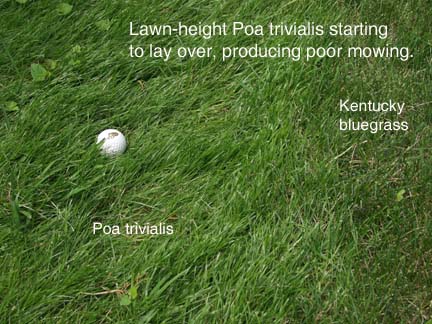
Poa annua (annual bluegrass) and Poa trivialis (rough bluegrass) in athletic fields and lawns are starting to show signs of stress. The signs of stress include laying over (poor mow-ability), yellowing, and thinning. Patches of these fine-bladed grasses seemingly die overnight with even a minimum of drought stress. Though these grasses may have blended in with the desired turf…Read more about Summer stress of Poa annua and Poa trivialis in Lawns and Sports Fields[Read More]


White Clover in Golf Courses, Sports Turf, and Lawns

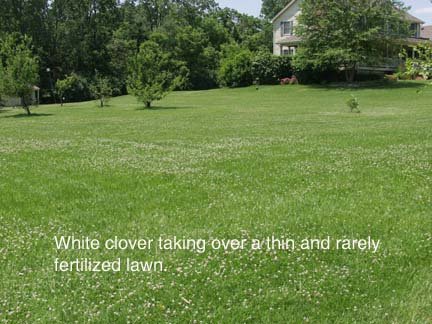
The small white flowers of white clover are very visible right now and it may appear that clover is taking over, especially under-fertilized turf areas. Clover is a legume and is very competitive under low N conditions, so increasing annual N is best method for long-term control. The temptation is to apply a herbicide now…Read more about White Clover in Golf Courses, Sports Turf, and Lawns[Read More]


Early Dollar Spot on Golf Courses This Year

If you’re lucky enough to be in the areas of Indiana that have received ample rainfall, you are unfortunately starting to see dollar spot. The excess rain in parts of the state triggered rapid plant growth and infrequent mowing, which in turn forced clipping removal and removal of N from the system. The N in…Read more about Early Dollar Spot on Golf Courses This Year[Read More]


Poa trivialis in Athletic Fields

As a follow up to last week’s Turf Tip, Poa trivialis control in athletic fields is far more complicated than in lawns. Poa trivialis is a weed because it will go dormant in July or August (perfect timing before the football season), but will regrow from stolons with a vengeance in September. It is also shallow rooted, so it…Read more about Poa trivialis in Athletic Fields[Read More]


Kentucky bluegrass for fairways?

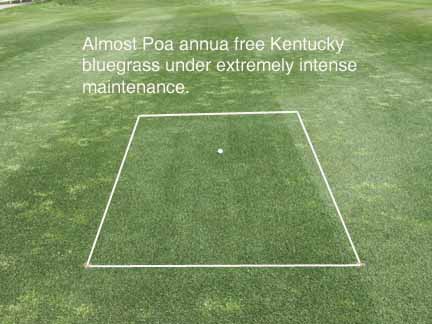
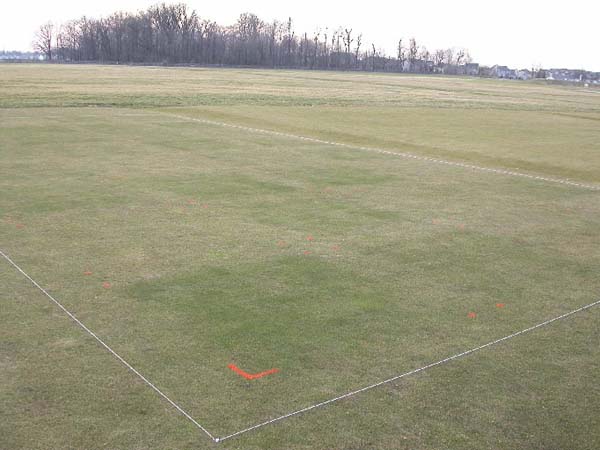
There’s been some interest in the new low-mow varieties of Kentucky bluegrass for fairways in IN. In response to this, we initiated a research study in August of 2002 where we established a blend of top-performing low-mow Kentucky bluegrasses on Purdue’s Ackerman Course and at our Daniel Research Center. Our objective was two-fold: to see…Read more about Kentucky bluegrass for fairways?[Read More]


Poa annua, Poa trivialis in Lawns and Athletic Fields

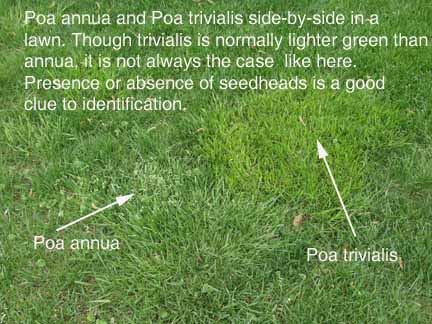
Annual bluegrass (Poa annua) and rough bluegrass (Poa trivialis) are becoming common weeds in lawns and athletic fields, though they have been a problem on golf courses for a long time. Both of these grasses are very visible right now because they are lighter-colored than Kentucky bluegrass and perennial ryegrass. Both weeds tend to thin…Read more about Poa annua, Poa trivialis in Lawns and Athletic Fields[Read More]


Bermudagrass for Southern IN Soccer and Football Fields

As stated in last year’s Turf Tips on 4/14/03, seeded Bermudagass is a great grass for southern IN athletic fields. We now have a brand new extension publication on our web page entitled AY-325-W: Bermudagrass for Southern Indiana Athletic Fields. It includes all of the latest research on seeding and post-seeding care and it can…Read more about Bermudagrass for Southern IN Soccer and Football Fields[Read More]


Follow-up to State Chemist Office BMP’s for Golf Courses

The Best Management Practices for Golf Course that was in an earlier version of Turf Tips provided ideas for using pesticides safely on golf courses. Though it wasn’t clearly stated, the BMP’s listed assumed that all pesticides must be used per label instructions as is the law. Also, one of the BMP’s included selecting pesticides…Read more about Follow-up to State Chemist Office BMP’s for Golf Courses[Read More]


Page last modified: June 12, 2019

Turfgrass Science at Purdue University - Horticulture & Landscape Architecture, 625 Agriculture Mall, West Lafayette, IN 47907

© 2026 Purdue UniversityAn equal access/equal opportunity universityCopyright ComplaintsMaintained by Turfgrass Science at Purdue University

If you have trouble accessing this page because of a disability, please contact Turfgrass Science at Purdue University at kkalbaug@purdue.eduAccessibility Resources