Tag: Homeowner

Overseeding creeping bentgrass into thinning Poa annua

Dry and hot conditions may unfortunately favor early exit of Poa annua from golf turf. However, there is a silver lining to this. Rutgers reported that overseeding creeping bentgrass directly into a Poa stand in summer is effective for gradual...
Read More
Velocity for Poa annua control….Potential and Precautions

Velocity (byspribac) was registered for Poa annua control in creeping bentgrass last November, so this is the first summer of potential widespread use. As with all new pesticides, we’ll learn more of the finer details as we use it. We...
Read More

Facts and Advice on Turf Survival in Drought

There are many questions about turf survival in drought with the on-going drought in most parts of the state. Though we understand many of the mechanisms of turf survival in drought, it’s hard to duplicate all of the potential situations...
Read More

Quicksilver Receives 24C Registration for Moss on Greens in Indiana

As promised, Indiana’s 24C label for QuickSilver T&O is available. label.pdf You must have a copy of this label in your possession in order to apply QuickSilver to greens.
Read More

Quicksilver Receives 24C Registration for Moss on Greens in Indiana

FMC’s QuickSilver T&O herbicide has just received special local 24(c) registration for control of silvery thread moss in putting greens in Indiana. Though Quicksilver (carfentrazone) is used widely as a quick knockdown contact broadleaf herbicide, it has good efficacy on...
Read More

Purdue Urban Landscape Study

Curious about your lawn and landscape? We need your help! We’re looking for volunteers from Tippecanoe and adjacent counties to participate in our landscape study. Scientists from Purdue University will: • Survey your lawn and landscape for insects, weeds, and...
Read More

Early Dollar Spot Applications Make Sense

Dollar spot has arrived on golf courses. The standard mid- to late May fertilization of 0.75-1.0 lb N/1000 sq. ft. with primarily slow release N should have helped minimize some dollar spot. On golf courses with a long history of...
Read More

Update on Black Cutworm

Significant weather events from the south usually are responsible for the movement of the black cutworm moths into our area each spring beginning as early as March. Black light traps stationed throughout the state have failed to catch many black...
Read More

Maximizing Lawn Performance Under Drought

As low moisture conditions continue in Indiana and Indianapolis is already requesting volunteer reductions in water use, it is time to start preparing for a potentially serious drought. Generally, turf can survive 5 to 8 weeks of dry conditions without...
Read More

Interactive Turfgrass Identification Tool now available

After about 9 months of development a concept of mine has finally borne fruit.  This week we rolled out the interactive, self-guided, online turfgrass identification tool, located at: http://www.agry.purdue.edu/turf/tool/index.html. Now you can probably identify the mystery grass in your lawn from...
Read More

Phosphorus Fertilization in Turf

Phosphorus (P) fertilization of turf is being questioned nationally for two reasons. Phosphorus fertilization almost never induces a visual turfgrass response and deficiency symptoms are rarely seen, thus calling into question the need for P fertilization. Secondly, higher levels of...
Read More

Late May is Good Time to Fertilize Lawns

The annual phase of rapid cool-season shoot growth of cool-season grasses is nearly complete, though it was diminished this year because of the dry and cool weather. It's now time to consider fertilizing your lawn because fertilizer now will not...
Read More

Which is it, Annual Bluegrass or Kentucky Bluegrass?

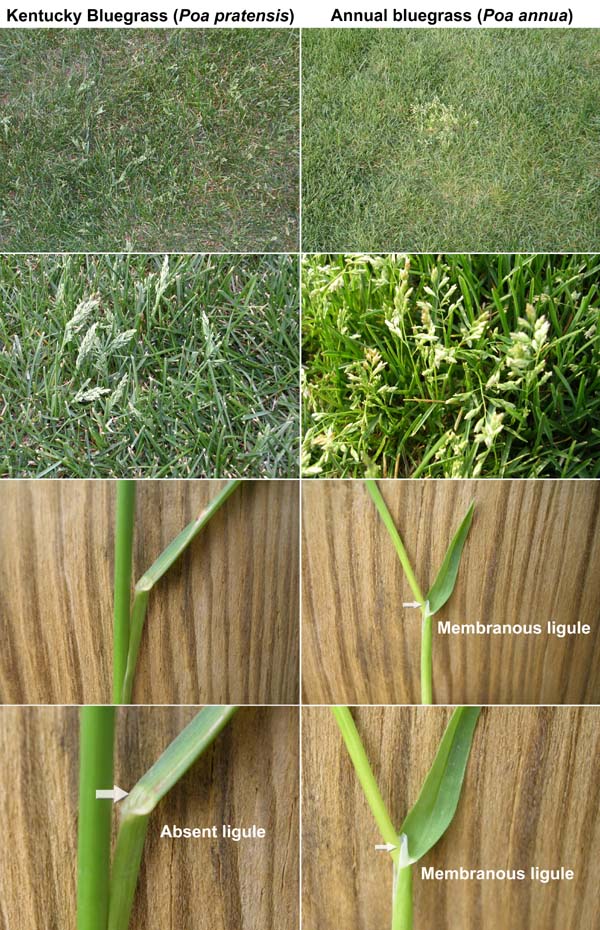
Kentucky bluegrass is currently producing seedheads that are difficult to mow and create an uneven appearance. However, annual bluegrass (Poa annua) is also producing similar looking seedheads. It’s important to distinguish the two because Kentucky bluegrass is highly desirable in...
Read More

Don’t Trust the Tonics You Hear on TV

There’s a number of “tonics” recently extolled on local and national television that include ingredients like shampoo, ammonia, cola (not diet of course), beer (not light beer), hydrogen peroxide, and dish soap among others. Though you may think you see...
Read More

Season-long Grub Control from May Applications???

Grub control products are currently being displayed in the center aisles of retail department and discount stores and are advertised on the radio as providing season-long grub control when applied in early May. Certain insecticides, including imidacloprid (Merit) and halofenozide...
Read More

Time is Running Out for Preemergence Control of Crabgrass

The below average temperatures the last few days has delayed crabgrass germination and thus premergence annual grass herbicides should still be effective if applied this week in the northern half to 2/3rds of the state. Most of the preemergence herbicides...
Read More

Watch for Breakthrough from Early Preemergence Herbicide Applications

The extremely dry spring may reduce the effectiveness of preemergence herbicides. The products must be watered-in or rained-in to move them below the canopy and down to the soil where they will be effective. Herbicides not watered-in may also photodegrade...
Read More

Rhizoctonia Large Patch (Zoysia Patch)

As our zoysiagrass fairways and tees are greening up this spring, we will soon begin to see the symptoms of Rhizoctonia Large Patch (zoysia patch). Rhizoctonia Large Patch (RLP) is the only major disease of zoysiagrass in Indiana. The pathogen...
Read More

Slowly Greening Lawns

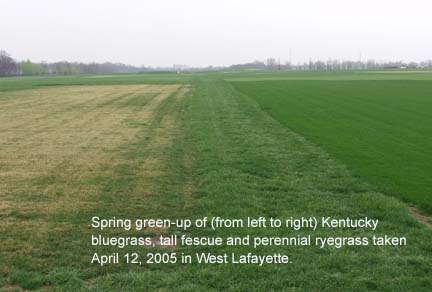
Many lawns are slow to green-up this year and it is mostly due to the presence of Kentucky bluegrass. Even though Kentucky bluegrass is the best lawn grass for the Midwest, it is much slower than perennial ryegrass and tall...
Read More

Tan Patches in an Otherwise Green Lawn

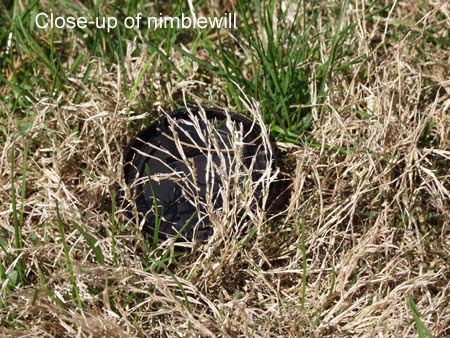
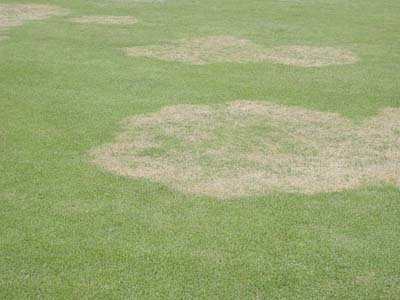
Tan patches in an otherwise green lawn at this time of the year are likely due to either slow-greening warm-season grasses or snow mold. The most common tan patch right now is warm-season grasses like nimblewill or zoysia (photos). Time,...
Read More