Tag: Homeowner

Rust Revival!

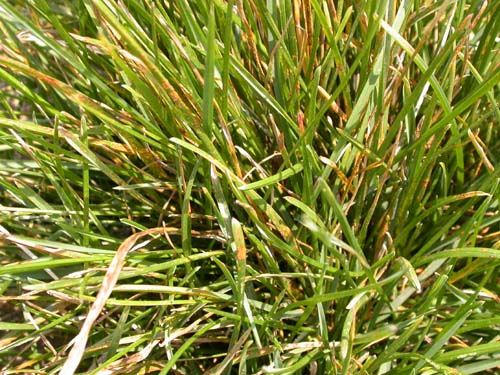
Well it must be September and it must finally be dry because I have seen some serious outbreaks of rust on many perennial ryegrass lawns throughout the area over the past week. Leaf rust has been most noticeable on lawns...
Read More
Turf 101: Why does September Fertilization of Cool-Season Grasses Work?

Normal growth patterns of cool season grass produce most leaf growth in the spring. Therefore fertilization in spring tends to stimulate even more leaf growth which may in turn decrease long-term stress tolerance in the summer months. On the other...
Read More

September is a Crucial Time to Fertilize All Cool-Season Turfs

Early to mid-September is the most important time to fertilize cool-season turfgrasses like creeping bentgrass, Kentucky bluegrass, perennial ryegrass, and tall or fine fescue. September fertilization is crucial on all turf areas regardless if it is a lawn, athletic field,...
Read More

Seed Now!

We’re still in the middle of the optimum seeding window for cool-season turfgrasses. The optimum time to seed cool-season turfgrasses is between Aug. 15 and Sept. 15 in central IN, a week earlier in northern IN, and a week or...
Read More

Rust in Turf

The rain and temperatures this year have favored excellent turfgrass growth, and the N applied this spring is being depleted, thus favoring rust in even regularly fertilized turf areas. Rust symptoms are reddish-orange lesions or spots on the leaf blades...
Read More

Turf Field Day Held July 27

Thanks to everyone who attended and helped make the 2004 Midwest Regional Turf Field Day a success on Tuesday, July 27. A clear day with temperatures in the 70’s was almost perfect for the nearly 700 attendees. Attendees had the...
Read More

Thinning Turf Around Lawn Perimeter from zero-turning radius mowers

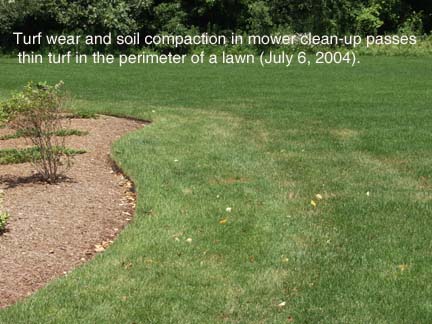
The popularity of the new zero-turning radius mowers is well-justified in terms of time and energy saving devices. However, these mowers are much heavier and faster than walk-behind mowers and thus increase compaction and turf wear. This is especially important...
Read More

Brown Tracks in Lawn

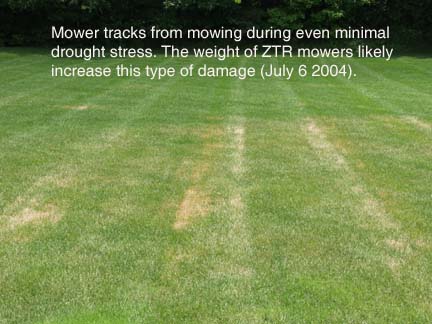
I’ve seen lawns and heard this week about brown streaks that are about the width of the mower (photo). In the vast majority of the cases, these tracks are caused by the weight of a mower traversing across a portion...
Read More

News about Japanese beetles is mostly bad!

Japanese beetles are back! They appeared 10 days to 2 weeks earlier than normal this year and indications are pointing to a very heavy population in many parts of the state. Last years weather conditions kept soils moist which apparently...
Read More

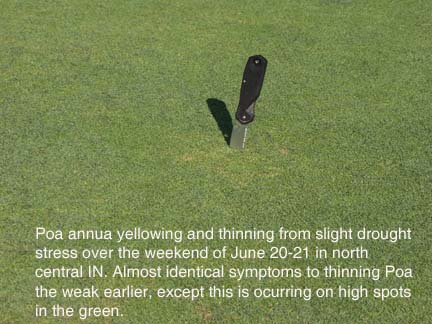
Finicky Poa annua Yellowing and Thinning on Greens

In spite of the cool and dry weather, Poa annua continues to yellow and sometimes thin on golf greens. Last week Poa annua was thinning and dieing in low areas from too much water, heat, and humidity (photo). However, the cool dry weather over...
Read More

Time to consider a change…?

We are finally getting near the end of the spring growth flush for our major cool-season lawngrass species like Kentucky bluegrass, ryegrass and tall fescue. With a little help from mother-nature, hopefully mowing will be more manageable from here on...
Read More

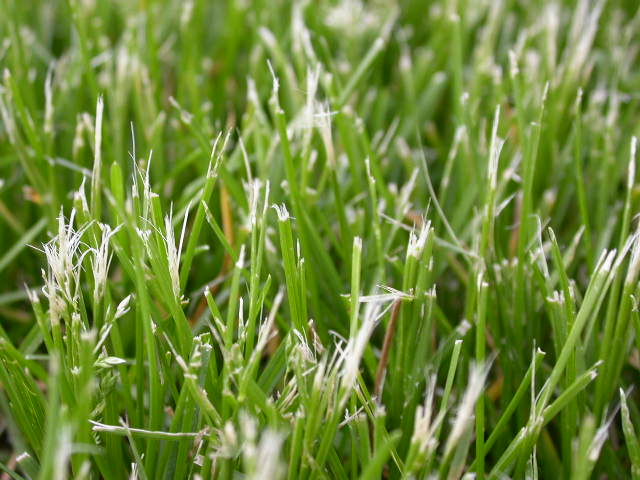
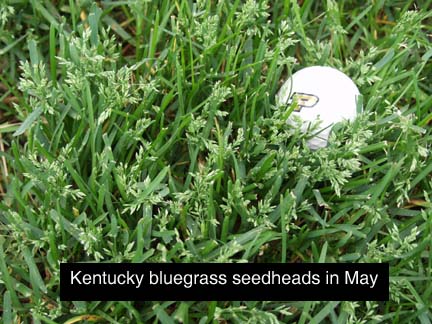
Bumper Crop of Seedheads This Year

Cool-season turfgrasses such as Kentucky bluegrass and perennial ryegrass are now producing seedheads. This natural phenomenon is induced by daylength, but the intensity of seedhead production is affected primarily by temperature and is likely the cause of the above average...
Read More

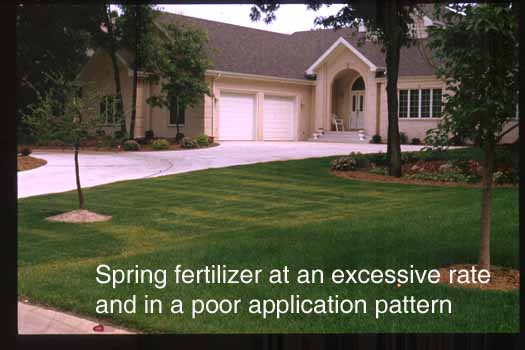
May Fertilizer

As turfgrass growth is beginning to slow, it's time to consider fertilizing your lawn. Applying fertilizer now should not increase vertical growth dramatically as long as moderate rates of nitrogen are used and will help your lawn retain it’s color...
Read More

Prevention of Dog Urine Spots

We have received a ton of questions on dog urine spots this year, probably because it has been a very dry April. Dog urine will burn leaf blades because the high concentration of salts in the urine will pull water...
Read More

Seeding Lawns Around New Construction

Have you just moved into a new house with no lawn? Resist the urge to grade and quickly seed or sod this spring. The reason for this is that the soil must settle or be compacted after grading. Each foot...
Read More

If You Must Seed, Do it Now

Late summer is the best time to seed, but sometimes turf must be seeded in the spring. The following points should help improve the success of spring seedings: Seed as soon as possible (now is not too early) so the...
Read More

Bumpy Lawn?

Lawn seem bumpier this spring when you first mowed it? Bumpy, difficult-to-mow lawns can be caused by either above-ground factors or below-ground soil factors. If the bumpiness is due to patches of incompatible species of coarse, bunch grasses like tall...
Read More

Calculating the pounds of fertilizer to apply

There are literally thousands of fertilizers and fertilizer/pesticide combinations available to homeowners and professionals. Therefore, we can't recommend how many pounds of fertilizer to apply, but rather we must recommend fertilization rates in pounds of nitrogen per thousand square feet...
Read More

Why we don’t recommend specific fertilizer/herbicide combinations for homeowners

We’ve received a number of emails asking for specific product recommendations for XYZ town in IN or IL, or even as far away as NY. Its very difficult, OK impossible, for us to recommend specific fertilizer/herbicide combinations because there is...
Read More

Spring N: Do-It-Yourselfers vs Professional Recommendations

We recommend waiting until mid-May to fertilize for the vast majority of do-it-yourselfers, while professional lawn care operators often apply fertilizer early in the spring with the preemergence herbicide. These two seem to contradict each other. We know that a...
Read More