April 13, 2026: Spring Marching into Madness
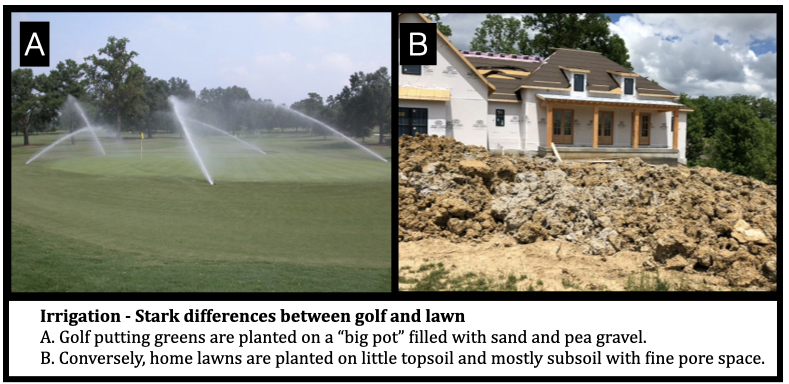
Spring well ahead of schedule; the madness of spring irrigation on lawns; soilborne diseases on putting greens over winter; status of dollar spot and soilborne disease prevention on golf greens.
Weather
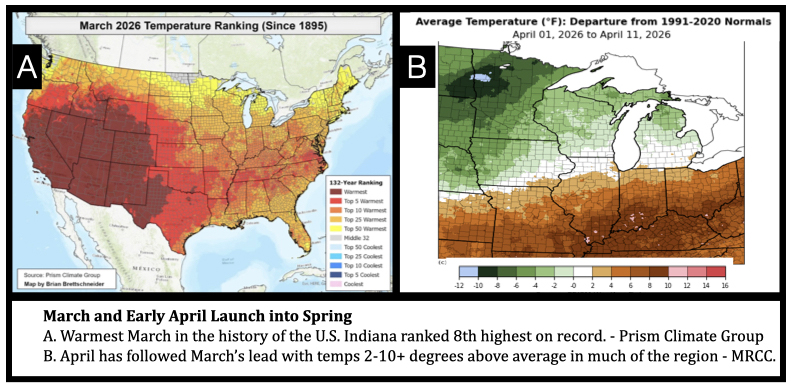
Spring 2026 got out of bed very early and proved Punxsutawney Phil wrong. March temperatures in the U.S. were the highest in recorded weather history, with Indiana having the 9th warmest March on record. Most areas in Indiana recorded 9-10 degrees above normal temperatures sparking the early arrival of forsythia, dandelions and other spring bloomers, the launch of turfgrass growth and the whirring of March mowing. The timing for crabgrass preemergent application has already passed for much of the state and as noted below the time is now in the Indianapolis area for soilborne disease prevention on golf putting greens. Comparing 2026 to last year in Indy, the Growing Degree Day Tracker hosted by Michigan State University shows 280 and 118 more base 32 and base 50 degree days this season, respectively.
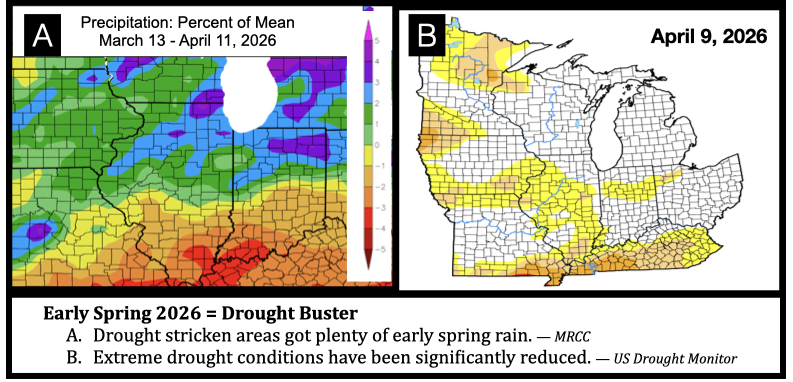
Rainfall this spring has been frequent and although heavy at times, occurring in areas where needed. Interstate 70 draws a fairly good dividing line between areas of rainfall occurrence over the last 30 days, with areas north receiving 2-4+ inches above normal with those south having 2-4 inches less than normal. Central Illinois through north central Indiana had been in a severe drought designation to start the year stemming from late summer/fall 2025. These areas have received enough spring rainfall to alleviate the drought. Conversely, spring rainfall amounts thus far through the Ohio River Valley are in stark contrast to the excesses of last year, which is also welcome to most. These drier conditions in that region may also be aiding warm season turfgrasses coming out of dormancy this spring.
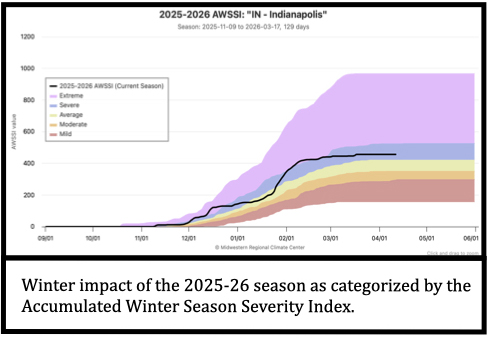
According to the Accumulated Winter Season Severity Index (AWSSI), winter was categorized as severe or extreme for much of Indiana and the region. The index is an accumulated daily score given to locations based on temperature and snowfall and depth. The score is then compared to scores from 1950-51 to current and the winter season given a category description (i.e. mild, average, extreme) based on what percentile the score lands in. Although not directly correlated to turfgrass health since snowfall is oftentimes beneficial as an insulator, this index may not be directly correlated to turfgrass health. The 1/22 – 2/9 date range came with temperatures 20+ degrees below average with highs on many days not making it out of the single digits. Fortunately, this event was preceded by a major snowfall event of 10-12 inches even in southern IN which moderated soil temperatures during the period. We have not yet heard reports of large-scale winterkill on zoysiagrass and bermudagrass as was experienced last year along the Ohio River Valley.
From the near past to far future weather potential, scientists recently predicted a super El Niño, (much warmer than normal tropical Pacific ocean surface temperatures), beginning in the next few months. The last strong El Niño occurred in 2015-16, which resulted in global temperature records for both years, so the expectation is for temperatures to continue to rise. The news isn’t all bad, however, as the Southern Plains of the U.S. including states like Arizona and Texas mired in drought, may get more rainfall from the strong El Niño pattern. Unfortunately, southern Indiana may also be included in those rainfall chances over the next few years raising the potential for localized flooding. For more information, see this article.
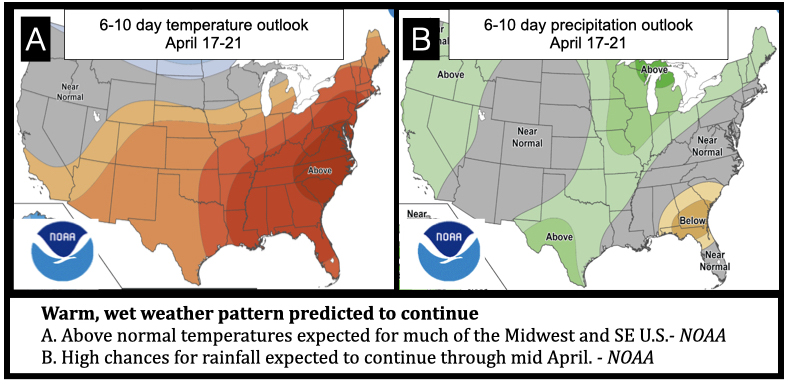
Looking forward over the next few weeks, warmer temperatures are expected to continue spring’s surge throughout the region. Bluegrasses and perhaps tall fescue should be expected to produce seedheads soon. Rainfall chances are also expected to remain high next week through mid-April, setting up a similar recipe with fast cool-season turfgrass growth. As we enter this crucial management period for cool season turfgrasses, water, and its impact on turfgrass health later in the season, should be at the forefront of turfgrass managers’ minds.
LAWN: Irrigation on Home Lawns vs. Golf
At the time of writing, the Masters golf tournament is underway and for golfers everywhere this is a true, first sign of spring. The iconic blooming azaleas and birds chirping on the broadcast give golfers a much-needed lift after a long winter. Astute viewers may have also noticed broadcasters this year commenting on the amount of water was being applied to the course, particularly the greens, and how that was affecting the difficult firm and fast playing conditions.
All are tempted to look at Augusta National and think “my lawn should look like that”. But almost nothing about how a golf course is managed translates to a home lawn, and chasing those conditions can cause damage in place of pristine. Aside from the desire to mow at lower heights, the biggest trap is irrigating the way a golf course does, particularly on putting greens.
The average golfer probably doesn’t know golf greens are established on a 16+ inch deep sand-filled pot with 12 inches of a predominant sand mixture overlying 4 inches of pea gravel (with drainage pipe). Modern sports fields fall under the same construction guidelines with an extremely coarse profile that allows for fast drainage of rain and irrigation water.
Most home lawns, particularly here in Indiana, are the opposite. During construction, topsoil is typically stripped away, leaving dense, compacted clay subsoil behind. Clay particles are fine and tightly packed, leaving little room for water to move through. The result is a lawn soil profile that saturates quickly, with stagnant water that pushes out the air that grass roots need to survive and grow.
Building a strong root system in the spring is the most important investment in having a healthy lawn throughout the difficult summer season. Heavier spring storms have become more common, delivering inches of precipitation at a time. Between these rain events resist the madness of firing up the irrigation system often in the spring, even if you see a bit of drought stress. Let the soil dry out and recharge with the air needed for root respiration and growth. Additionally, we need the soil to dry out for mowing with less potential for excess clippings and soil compaction. A lawn that heads into summer with deep roots and well-aerated soil will outperform one that was kept constantly saturated and will be far less prone to diseases.
GOLF: Diseases on newly seeded and/or covered greens
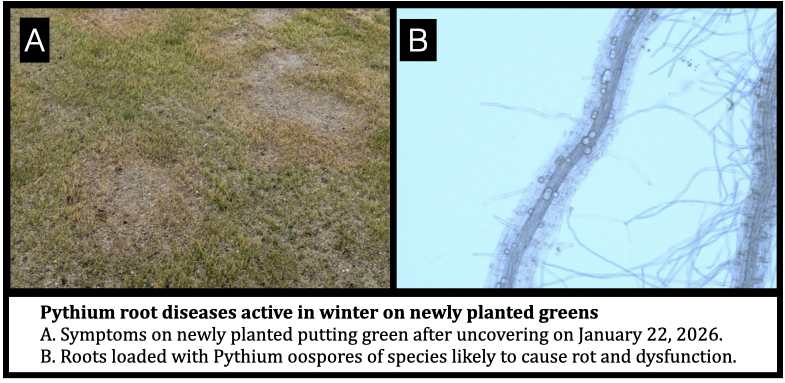
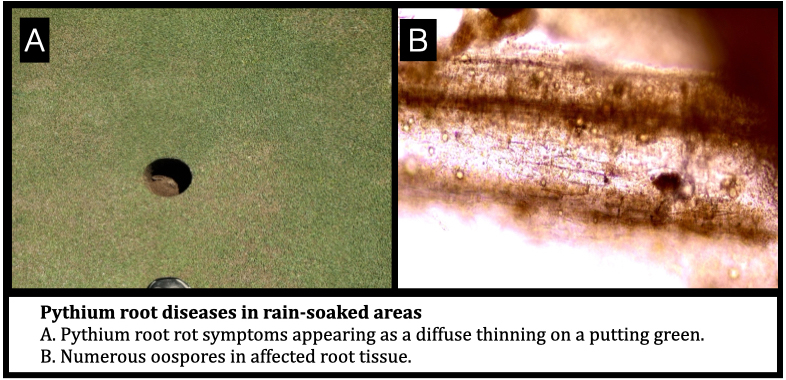
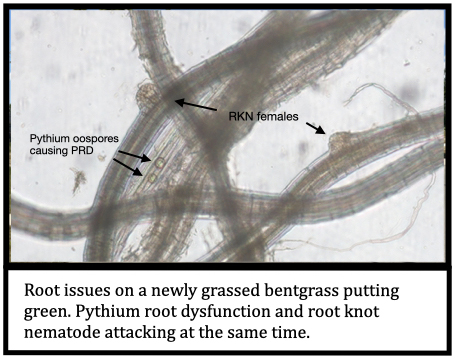
A January diagnostic call is surprising, but especially so when it carries along a surprising result. Bentgrass greens seeded the previous October were showing symptoms that initially looked like Microdochium patch (pink snow mold), but microscopic examination told a different story, as roots were heavily laden with Pythium oospores.
The most severely affected green was the youngest one with cover freshly removed. Theslightly warmer and more humid conditions allowed more Pythium infection. A similar outbreak had been documented in Missouri, where Pythium caused visible symptoms on young bentgrass greens in early February. This case, however, had an added wrinkle with multiple oospore types were present, both single and bisporous forms, pointing to several Pythium species collaborating to drive the decline. Also, the infected roots as shown above, still have root hairs. Root hairs are typically absent when Pythium volutum (a pathogen causing Pythium root dysfunction) is involved, so their presence in this case may suggest a more complex disease picture.
In mid-March, a bermudagrass green sample from Kentucky arrived at the diagnostic lab with a different soilborne disease: take-all root rot. The pathogen, Gaeumannomyces spp., had spent the winter spreading dense infection networks across crowns, roots, stolons, and rhizomes, all aided by the warm, humid environment created beneath the winter cover.
Both cases indicate a similar lesson. As with spring fungicide applications on golf putting greens, watering in fungicides prior to placing winter covers on greens may also be warranted to target soilborne pathogens. Newly seeded bentgrass putting greens are especially susceptible to Pythium root diseases so watering in cyazofamid, picarbutrazox or similar late in the fall prior to their first winter may be a good measure to avoid unexpected Pythium root disease outbreaks.
GOLF: Soilborne disease prevention on greens; dollar spot may be close at hand
*Note – On lawns, preventive fungicide applications are too early and should not be initiated at this time.*
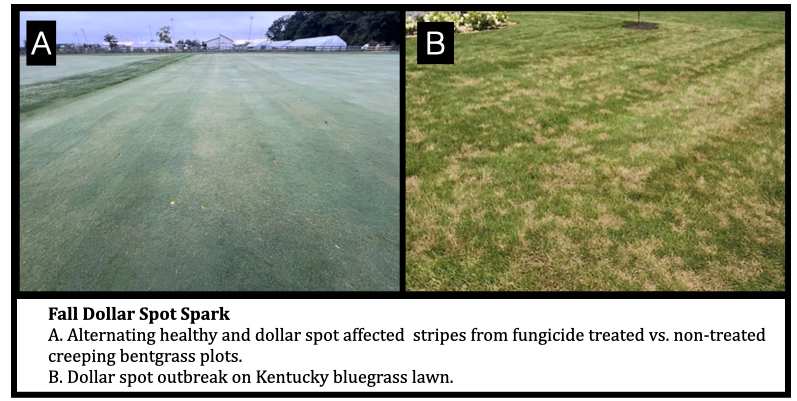
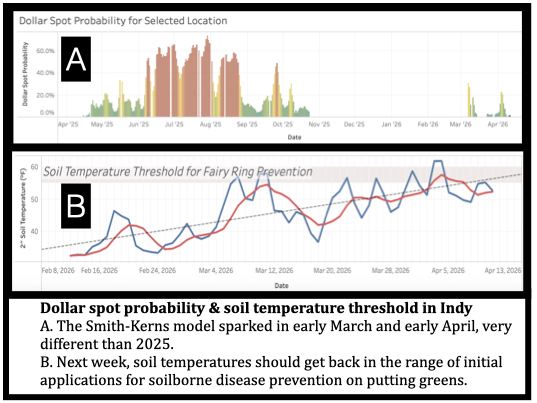
The early spring also pushed our key prediction model and soil temperature thresholds well ahead of schedule. The 55°F soil temperature threshold, the trigger for fairy ring and soilborne disease prevention on putting greens, arrived 19 days earlier than last year in Indianapolis (April 4 vs. April 23). The Smith-Kerns dollar spot model crossed the 20% risk threshold earlier than I’ve seen here: March 7–8 this year compared to May 4–5 last year. To view these two predictors for locations in Indiana, click here.
Southern Indiana should already have a preventive fungicide application down. For the rest of the state, both indicators dipped back down after those early spikes, so being behind on an application hasn’t been a major concern, until now.
Temperatures are forecast to climb into the 80s to start the week, with overnight lows staying above 50°F along with frequent rain chances, some potentially heavy. That combination creates ideal conditions for dollar spot to hit the foliage and soilborne pathogens begin infection in earnet.
Fortunately, a fungicide application targeting soilborne diseases can also provide some protection against the foliar disease dollar spot. Therefore, a fungicide application with at least 1/8” but more appropriately 0.2” – 0.25” of post application irrigation should be able to hit both birds. Suggested fungicides typically include the DMIs (i.e. Maxtima, Torque, Densicor) the newer SDHIs (i.e. Posterity, Velista) or combination products (i.e. Navicon, Tartan).
Turfgrass IPM Module – Understanding Turfgrass Fungicides
Over the winter, I created this online module course to allow you to earn CCH education credits (with six additional states also given approval) from the comfort of your favorite recliner on a rainy day. This education is delivered in a creative, modern format and covers the basics in understanding the form and function of turfgrass fungicides and how they should be considered when implementing into a program.
SAVE THE DATE: Purdue Turfgrass and Landscape Field Day – Tuesday, July 21st
Lee Miller
Extension Turfgrass Pathologist – Purdue University
Follow on Twitter: @purdueturfpath
Follow on LinkedIn: @purdueturfpath