Author: Richard Latin

Summer Stress

Summer Stress With a warm and wet summer, we are experiencing decline in some of our turf around the state due to temperatures, disease, insects, and weeds. In response, we are publishing a four part series on this topic to...
Read More
Gray Leaf Spot 2010

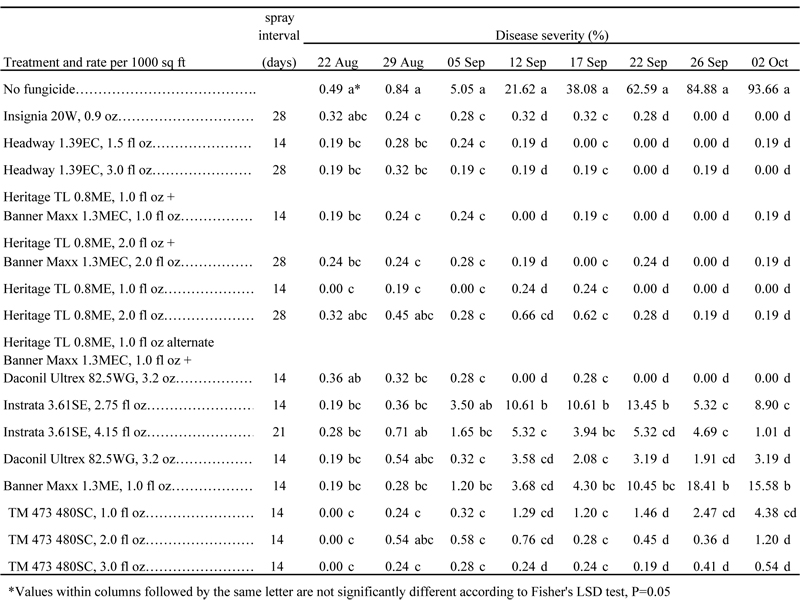
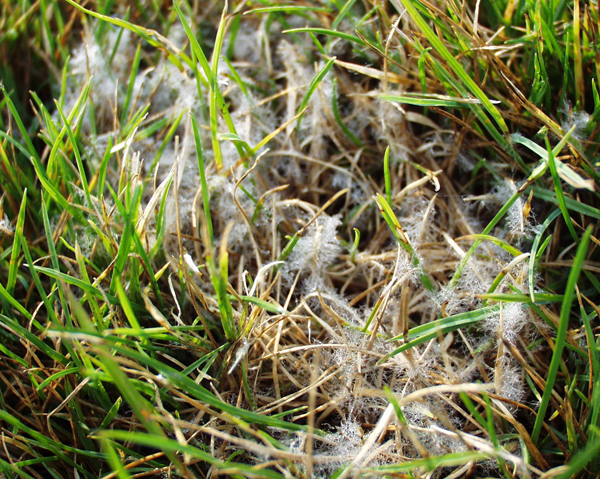
Gray leaf spot has been identified on perennial ryegrass fairways in northern Kentucky.  It is likely that outbreaks will occur in southern Indiana with the next rainstorm (or it may already be established).  If the turf that you manage has...
Read More

Call Before Sending Samples to PPDL!

Our Plant and Pest Diagnostic Lab (PPDL) will be a little light on help over the next two weeks (June 19 – July 5).  Remember that the lab processes samples from all plants and crops—and even though we try to...
Read More

Turf Disease Watch

The near term forecast indicates an early arrival of summer, when temperature and moisture conditions favor diseases that can cause serious damage to turf on golf courses, athletic fields and residential landscapes.  Two of the more important diseases are discussed...
Read More

Snow mold damage

Melting snows revealed some significant snow mold damage.  As you know there are two types of snow mold diseases, gray snow mold (aka Typhula blight) and pink snow mold (Microdochium patch).  Although they create similar symptoms (circular patches of tan turf—sometimes with orange/brown...
Read More

Damping off diseases in new seedlings

Although the cool weather tends to limit disease in new seedlings, a spike in the temperatures could trigger outbreaks in juvenile turf yet this year. Late summer is clearly the best time of the year to seed for a variety...
Read More

Dollar Spot

Dollar spot is caused by a fungal pathogen, Sclerotinia homoeocarpa, that blights leaf tissues but does not affect turfgrass roots or crowns. The disease is a common concern on golf course turf, especially creeping bentgrass and annual bluegrass greens, tees, and...
Read More

Rust Diseases

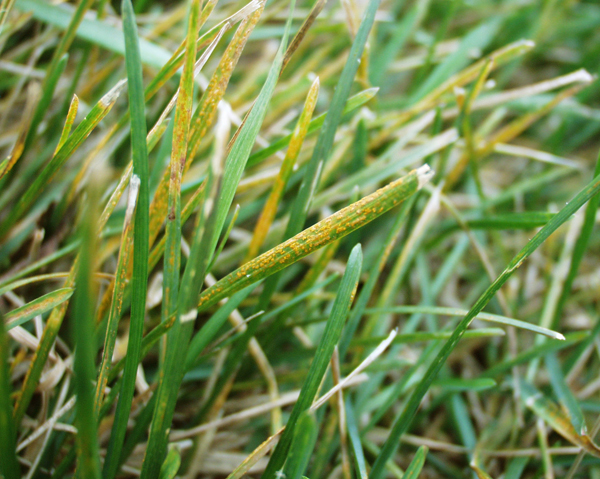
Rust is a disease of taller mown turf. Outbreaks are most common on residential lawns, low budget athletic fields, and, occasionally, on golf course roughs. A variety of related fungi cause rust. Ccommon names include leaf rust, crown rust, and...
Read More

Patch Disease Symptoms Starting to Show in Dry Kentucky Bluegrass Lawns

Summer patch and necrotic ring spot are root-infecting diseases in Kentucky bluegrass lawns.  Their symptoms are some of the most difficult to manage, much less control the disease. Although these diseases differ slightly in when they attack the roots, the...
Read More

Rhizoctonia Spring Patches

Brown Ring Patch Brown ring patch is a disease of annual bluegrass on putting greens.  Damage is largely cosmetic, although in some areas smoothness and uniformity of putting surfaces are disturbed, warranting chemical control.  The duration of symptom expression usually...
Read More

Effects of wet spring on turf

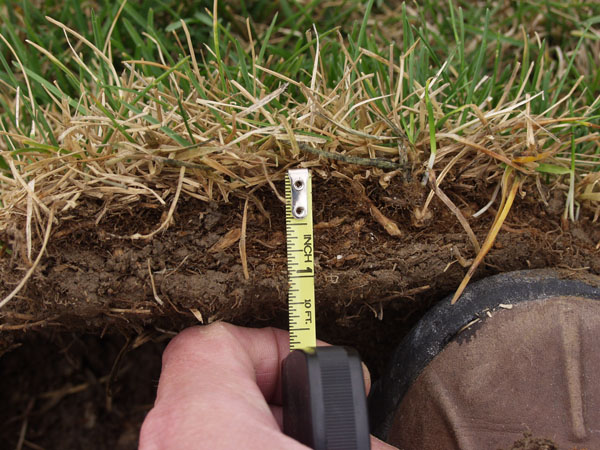
With the well-above average rainfall this spring, questions are starting to arise about the short and long term effects on lawn, golf, and sports turf: Rooting-Though no official records are kept, rooting tends to be shallow and limited on water-logged...
Read More

Yellow Patch Is Active!

Yellow patch, also referred to as cool season brown patch, is caused by Rhizoctonia cerealis, a fungus closely related to the pathogens that cause brown patch and the Rhizoctonia large patch of zoysia grass. Although symptoms can be striking, yellow patch...
Read More

Calculating the pounds of fertilizer to apply

There are literally thousands of fertilizers and fertilizer/pesticide combinations available to homeowners and professionals. Therefore, we can’t recommend how many pounds of a specific fertilizer to apply, but rather we must recommend fertilization rates in pounds of nitrogen per thousand...
Read More

Gray Leaf Spot Update

We have just documented the first case of gray leaf spot this year from a golf course in Bloomington . We have learned that the disease will develop over a broad range of environmental conditions (not just hot and wet)...
Read More

Brown Ring Patch / Waitea Patch

There are sporadic reports of brown ring patch (formerly called Waitea patch) from across the Midwest . Interestingly, the disease currently is causing concern in southern California as well. The risk of structural damage (a.k.a. dying turf) is greater on...
Read More

Funny Colors in Your Turf?

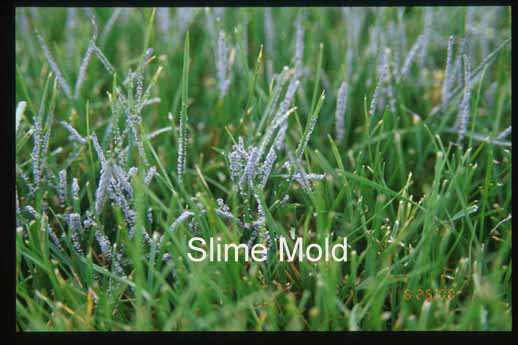
From the parts of the state with adequate rainfall, we have received reports of turf with white, black, gray, red, orange, purple, and or rust-colored powder (see photo). This is slime mold, a fungus-like organism that often occurs during prolonged...
Read More

Gray Leaf Spot Update

There have been several reports of gray leaf spot outbreaks throughout Indiana and the lower Midwest during the past two weeks. The disease will develop over a broad range of environmental conditions (not just hot and wet). Our research results...
Read More

Red thread, pink patch, and dollar spot in lawns and roughs

Red thread and its close relative pink patch, are now appearing on home lawns (and golf course roughs) in the central and southern parts of Indiana. Red thread first appears as small (quarter to golf ball size) gray – tan...
Read More

Gray Leaf Spot Update

There have been numerous reports of gray leaf spot outbreaks throughout Indiana and the lower Midwest during the past three weeks. We generally expect that hot humid conditions will favor gray leaf spot development. However, you may recall that outbreaks...
Read More

Early Dollar Spot Applications Make Sense

Dollar spot has arrived on golf courses. The standard mid- to late May fertilization of 0.75-1.0 lb N/1000 sq. ft. with primarily slow release N should have helped minimize some dollar spot. On golf courses with a long history of...
Read More