Author: Richard Latin

Turfgrass Disease Profiles: Smut diseases

Smut diseases, caused by several closely related and highly specialized pathogenic fungi, tend to occur on higher cut turf, so they are often found on residential turf, athletic fields, and golf course roughs. This publication describes the symptoms of smut diseases and provides management strategies.

(BP-119-W)


PDF

PDF version of Turfgrass Disease Profiles: Smut diseases
Read More

Turfgrass Disease Profiles: Necrotic Ring Spot

Necrotic ring spot infects the roots of Kentucky bluegrass on golf courses, sports turf, professional landscapes, and home lawns. It is seldom a devastating disease, but outbreaks can disturb the appearance of the turf stand and affect playing surfaces. This publication examines the causes of this disease and presents management strategies.

(BP-116-W)


PDF

PDF version of Turfgrass Disease Profiles: Necrotic Ring Spot

Read More

Turfgrass Disease Profiles: Summer Patch

Summer patch affects Kentucky bluegrass and annual bluegrass on all kinds of turf venues, including golf courses, athletic fields, professional landscapes, and residential lawns. This publication describes summer patch symptoms and discusses a variety of management options.

(BP-115-W)


PDF

PDF version of Turfgrass Disease Profiles: Summer Patch

Read More

Turfgrass Disease Profiles: Slime Molds

Despite their threatening appearance, slime molds are not infectious and will not result in anything more than temporary cosmetic damage. This publication describes the symptoms and signs of slime molds and control methods.

(BP-112-W)


PDF

PDF version of Turfgrass Disease Profiles: Slime Molds

Read More

Turfgrass Disease Profiles: Powdery Mildew

Powdery mildew is a foliar disease of Kentucky bluegrass and some fescues. The disease is rarely responsible for any lasting damage to turf, so its effects are primarily aesthetic. This publication describes the symptoms of powdery mildew and offers control options.

(BP-111-W)


PDF

PDF version of Turfgrass Disease Profiles: Powdery Mildew

Read More

Turfgrass Disease Profiles: Rust Diseases

Leaf rust outbreaks are most common on residential lawns and low budget athletic fields. It is largely a cosmetic disease, but its orange spores can be a greater nuisance. This publication describes the symptoms and development of this disease, and provides management options.

(BP-110-W)


PDF

PDF version of Turfgrass Disease Profiles: Rust Diseases

Read More

Turfgrass Disease Profiles: Anthracnose

Anthracnose is caused by a fungus that survives and thrives on dead and decaying organic matter, and is primarily a disease of intensively managed annual bluegrass and creeping bentgrass used on golf courses. This publication discusses how to identify anthracnose, and examines options for controlling the disease.

(BP-108-W)


PDF

PDF version of Turfgrass Disease Profiles: Anthracnose

Read More

Turfgrass Disease Profiles: Gray Leaf Spot

Gray leaf spot is a foliar disease that affects perennial ryegrass and tall fescue. Moderate outbreaks of gray leaf spot result in clusters of thin, off-colored turf. Severe outbreaks, however, will result in the death and decay of extensive areas and ruin the entire turf stand. This publication describes the symptoms and development of this disease, and provides management options.

(BP-107-W)


PDF

PDF version of Turfgrass Disease Profiles: Gray Leaf Spot

Read More

Turfgrass Disease Profiles: Brown Patch

Brown patch is caused by a fungal pathogen that affects all cool-season turfgrass species. Moderate to severe outbreaks on high-maintenance creeping bentgrass and annual bluegrass can result in thin, poor quality turf that may be predisposed to algae and moss infestation. This publication describes the symptoms and development of this disease, and provides management options.

(BP-106-W)


PDF

PDF version of Turfgrass Disease Profiles: Brown Patch

Read More

Turfgrass Disease Profiles: Dollar Spot

Dollar spot is caused by a fungal pathogen and is a common concern on golf course turf, especially creeping bentgrass and annual bluegrass greens, tees, and fairways, where it can result in poor turf quality and appearance. This publication describes the symptoms and development of this disease, and provides management options.

(BP-105-W)


PDF

PDF version of Turfgrass Disease Profiles: Dollar Spot

Read More

Turfgrass Disease Profiles: Red Thread

Read More

Turfgrass Disease Profiles: Leaf Spot/Melting Out

Leaf spot and melting out are different diseases with similar symptoms and pathogen characteristics. They both attack Kentucky bluegrass, perennial ryegrass, and tall fescue, and appear to cause the most damage to golf course roughs, sports turf, and residential lawns. This publication describes the symptoms and development of this disease, and provides management options.

(BP-103-W)


PDF

PDF version of Turfgrass Disease Profiles: Leaf Spot/Melting Out

Read More

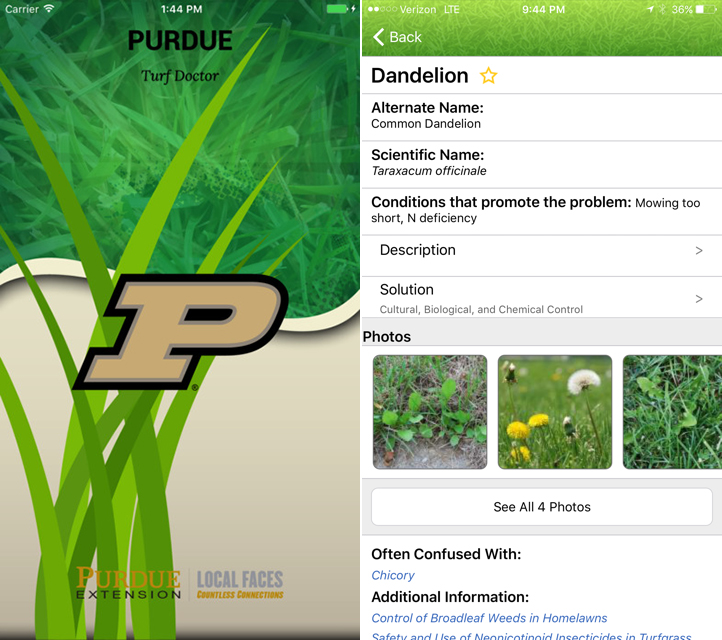
Purdue Launches Turf Diagnostic Mobile App

The Purdue Turf Doctor app, a collaborative effort among Drs. Doug Richmond, Aaron Patton and Rick Latin, is the latest modern turfgrass management tool produced by the Purdue Turfgrass Science team. The app is designed to help homeowners and land...
Read More