Category: Weed Control

Spring Dandelion Control for Professionals

Many turf areas did not get treated for broadleaf weeds last fall because of the dry weather. Though fall applications are most effective for controlling broadleaf weeds, spring applications are warranted for new lawns or areas that did not get...
Read More
Star of Bethlehem, Spring Beauty Emerging in Shaded Areas

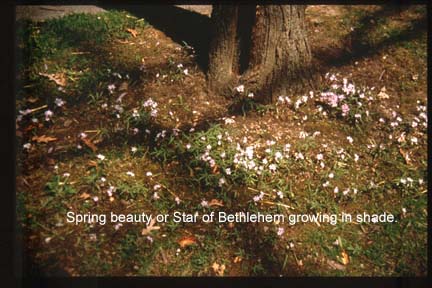
Star of Bethlehem and Spring Beauty are currently emerging and flowering in shaded areas. Both plants have pretty white flowers with the Star of Bethlehem having six petals while Spring Beauty has only five petals . The Star of Bethlehem...
Read More

Dandelions: Friend or Foe?

The annual bloom of dandelions is already here in southern Indiana and just around the corner in the rest of the state. Though some find dandelions attractive and some may actually eat them in salads or wine, others consider dandelions...
Read More

Buyer Beware: Annual Ryegrass is Not a Persistent Turfgrass Species for Indiana Homelawns

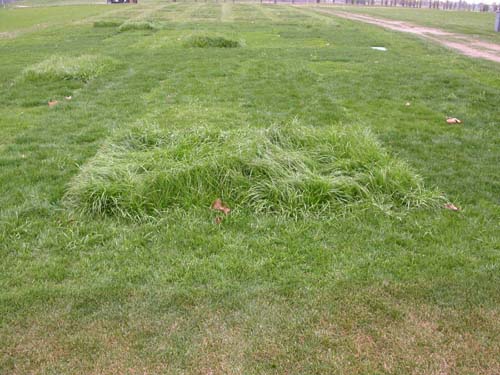
There are many cool-season turfgrasses suitable and adapted to home-lawns in Indiana. They include; Kentucky bluegrass, turf-type tall fescue, fineleaf fescue and to a certain extent even “perennial” ryegrass. Many new lawns are established using seed because it is much...
Read More

Herbicide Delays after Seeding

Almost all herbicides will affect turfgrass seedlings and application delays are usually needed following seeding. Following is information gleaned from available labels of most herbicides or herbicide types that would be used in Indiana . This is intended to provide...
Read More

Spring Weed Control or Seeding?

With last year’s late summer and fall drought, many areas are in need of reseeding. The question comes up about seeding and weed control: should the weeds be controlled first or should the seeding be done first? This seems like...
Read More

Timing of Preemergence Herbicides

If a preemergence herbicide is justified on a turf area, the timing of application is important. In theory, applying too early will expose the herbicide to soil microbes and processes in the soil that may break it down, allowing crabgrass...
Read More

Controlling Wild Onion or Wild Garlic in Lawns

Wild onion and wild garlic emerging in the southern two-thirds of Indiana and these are difficult-to-control weeds. These weeds look very similar to the garden variety onion except the stems of the wild type are much thinner and do not...
Read More

Controlling broadleaf weeds after the drought

Now that the lawn and weeds have greened-up from the recent rains, broadleaf herbicides should be effective yet this fall. Though these herbicides work faster when the plants are actively growing, these herbicides will still work as long as the...
Read More

Coping with Late Season Drought in Turf

(Adapted from the Midwest Regional Turf Foundation Factsheet, Oct 1, 2004) After an extremely wet summer, turf drought stress has come out of nowhere almost throughout the state after a dry August and September. Though September and October are prime...
Read More

Attempting Ground Ivy Control

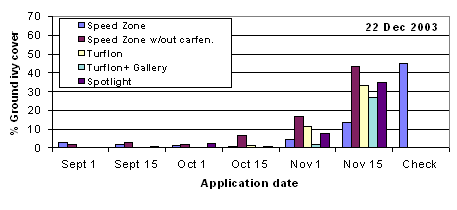
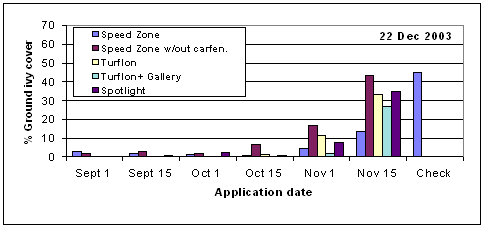
I’ve received a number of calls recently on ground ivy control. Here’s a rerun on an August Turf Tip on controlling ground ivy. Background Ground ivy is difficult to control and it is a problem in 31% of lawns maintained...
Read More

More Evidence for Effectiveness of Fall Applications of Broadleaves

It’s been fairly well established that fall applications of herbicides are more effective than spring applications for broadleaf control. Recent work in Nebraska reported that applications of 2,4-D and/or dicamba were far more effective in controlling dandelions and Canada thistle...
Read More

Wait to Control Broadleaf Weeds

Though many broadleaf weeds like ground ivy, clover, and plantain are currently thriving in turf areas, resist the urge to spray them now. Following is a summary of a study that we discussed at Field Day that can help professionals...
Read More

Summer stress of Poa annua and Poa trivialis in Lawns and Sports Fields

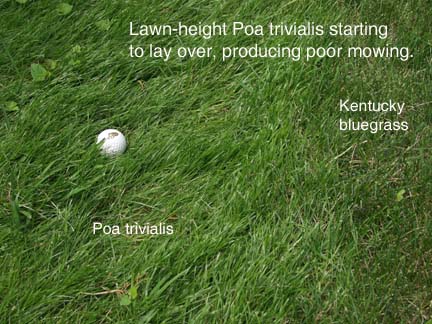
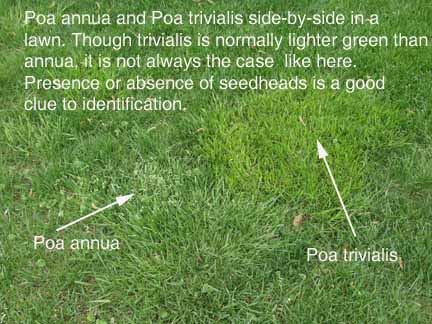
Poa annua (annual bluegrass) and Poa trivialis (rough bluegrass) in athletic fields and lawns are starting to show signs of stress. The signs of stress include laying over (poor mow-ability), yellowing, and thinning. Patches of these fine-bladed grasses seemingly die overnight with even a...
Read More

White Clover in Golf Courses, Sports Turf, and Lawns

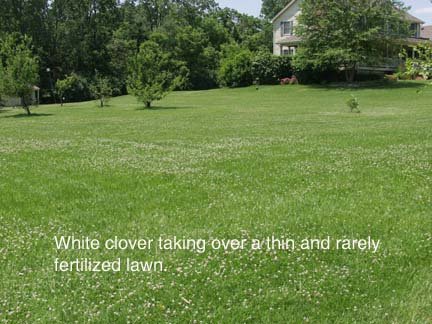
The small white flowers of white clover are very visible right now and it may appear that clover is taking over, especially under-fertilized turf areas. Clover is a legume and is very competitive under low N conditions, so increasing annual...
Read More

June Checklist

With the constant rains in May and now June, many turf management practices have been delayed and many practices have to be modified as a result of the rain:  Fertilization: With all extended growth period using up much of the soil...
Read More

Dallisgrass

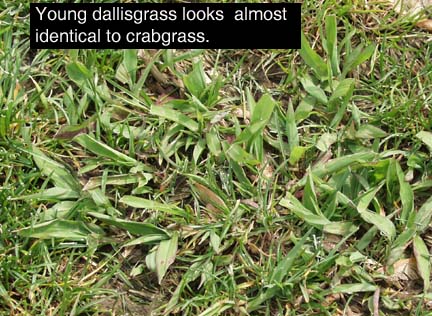
Dallisgrass is currently emerging in southern Indiana. This perennial grassy weed is almost identical in appearance to crabgrass and can be problematic in the southern half of Indiana. Dallisgrass is often mistaken for crabgrass but it has slightly less hairy...
Read More

Poa trivialis in Athletic Fields

As a follow up to last week’s Turf Tip, Poa trivialis control in athletic fields is far more complicated than in lawns. Poa trivialis is a weed because it will go dormant in July or August (perfect timing before the football season), but will...
Read More

Time to Switch Crabgrass Control Strategies

Crabgrass is starting to germinate throughout much of the state and thus preemergence herbicides will be of limited effectiveness. Instead, combinations of preemergence plus postemergence herbicides will be most effective for the next month or so. The postemergence herbicide will...
Read More

Poa annua, Poa trivialis in Lawns and Athletic Fields

Annual bluegrass (Poa annua) and rough bluegrass (Poa trivialis) are becoming common weeds in lawns and athletic fields, though they have been a problem on golf courses for a long time. Both of these grasses are very visible right now...
Read More