September 1, 2026: Mending the Muck

Summer heat meets early fall; pervasive algae = difficult situation on putting greens; decisions on lawn disease management and recovery.
Weather
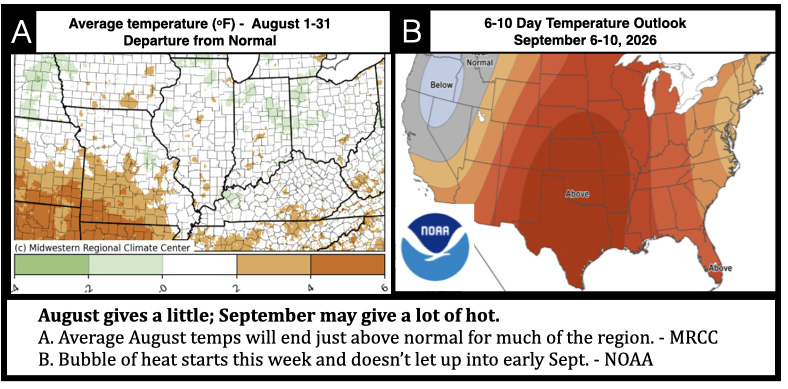
As August comes to a close, September is supposed to reveal the full glory of fall. Or does it? August 2026 was fairly average temperature-wise across much of the region, with Indianapolis lows generally in the mid to upper 60s and daily temperatures averaging only about half a degree above normal. Wasn’t the 57°F low on August 24 in Indy a welcome break?
Early September, however, will not bring much in the way of cool fall breezes. Overnight lows will remain in the mid-70s, beginning yesterday and continuing through the week. These summer-like temperatures, ~ 14–17°F above average, will create significant late-season heat stress for cool-season grasses. On a positive note, the photoperiod in early September is only about 13 hours and continues to shorten, roughly two hours less than in late June and early July. Unfortunately, however, plants are at their weakest after enduring a long summer. As a result, heat stress this late in the season can have a much greater impact than it would at the end of spring.
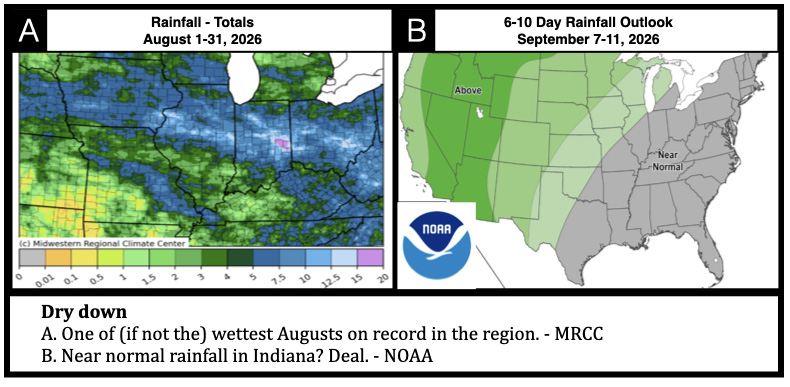
The intense rainfall of August may compound the problem. The official August 2026 rainfall tally in Indy was 7.33 inches more than doubling the average of 3.2. The rainfall record was 8.34 inches, set in 1980. Based on the rainfall chart above and the severe rainfall intensity east of the city, August 2026 will likely rank as the wettest August statewide on record. Fortunately, the region dried out somewhat in the last half of August, and an intersection of this current/forecasted heat didn’t directly abut the flooding. When the heat thankfully breaks, the region should get some rainfall but as a whole, near normal rainfall into mid-September will be very welcome to help soggy soils recuperate.
Algae Issues on Putting Greens
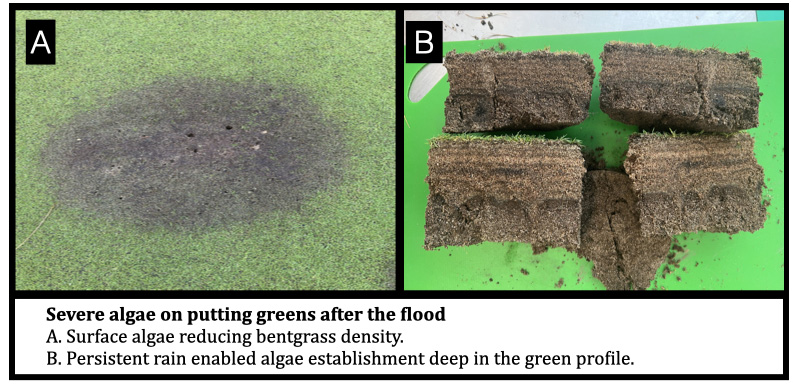
Over the last 7-10 days, several samples and reports have been received of putting greens succumbing to substantial algae (or cyanobacteria) infestations. Algae on the surface after significant rainfall or overirrigation is normally associated with a lack of turfgrass density, potentially in conjunction with other stressors. In surface infestations, algae are found within the leaf sheath, and these organisms can produce secondary toxins that limit turfgrass growth and help their cause. Chlorotic yellow spot symptoms associated with Oscillatoria or Phormidium spp. are an obvious flare up of algae toxin effects on plant growth.
Conversely, black layer in the soil profile can also be associated with cyanobacteria and sulfur-reducing bacteria that invade in saturated soil conditions. Poor drainage through the profile leaves soil pore spaces full of water and devoid of oxygen, leading to a shift to anaerobic soil conditions and giving these bacteria a quick advantage over plants. These bacteria reduce sulfur to hydrogen sulfide, or the rotten egg “smell of death”, that causes root decline from the bottom up.
What happens when both occur at the same time in a large flooding event? How does the superintendent encourage recovery? This is the situation of several courses in the area after the floods receded. As shown in this video, the entire thatch/mat layer is infested with algae, trapping water and perpetuating the poor condition. Rarely does algae penetrate this far down into the soil profile to produce these significant symptoms, and not much information is available to remedy it.
Out of the spray nozzle, chlorothalonil is the gold standard suggestion for yellow spot and surface algae control. Mancozeb and Junction is also highly considered along with a routine phosphite program. Thiram used to be part of this regimen for many superintendents, but has been removed from the market over toxicity concerns. The catch is that much of the research conducted on algae control has assessed preventive applications, rather than curative use. New products including AlgaeZyme, based on fermented barley extracts, are showing promise in some trials, particularly when combined with chlorothalonil. Oils including thyme and cinnamon have also shown efficacy in removing algae. I have been asked my opinion of newer products including Zerotol 2.0 and Jet-Ag which contains sterilization type ingredients of hydrogen peroxide and peroxyacetic acid. To my knowledge, these products haven’t been researched for this purpose on golf putting greens.
My advice in these situations is to take a breath. Read the label. Some of the products above come with fairly significant cautionary statements regarding phytotoxicity risk. The heat we are currently experiencing, adds to this risk. Adhere to label statements, such as those on the oils, regarding safe temperature ranges for application. If the label states to test the application on a small area to assess phytotoxicity risk, and you haven’t already done it, now is not the time to add the untested into your program. Late August/early September is the weakest time for your putting greens. Let’s not throw the baby out with the bathwater, although the water does need to go.
My three-step suggestion for this persistent deep algae infestation is (in order) to vent the affected greens, apply chlorothalonil or chlorothalonil + mancozeb or Junction and apply a slightly heavier topdressing than normal. Solid tine venting should aid in drying the soil profile out, and spot core aeration with core removal should be considered. Chlorothalonil and mancozeb are known as effective algaecides, and with caution a product like Junction with mancozeb + copper hydroxide (which can accumulate to toxic levels with repeated use) could also be considered. Last, topdressing with fresh sand should aid in the drying process, protect the crown somewhat from further algae invasion and, like the organic matter, dilute the algae.
Disease Control vs. Planning for Lawn Recovery
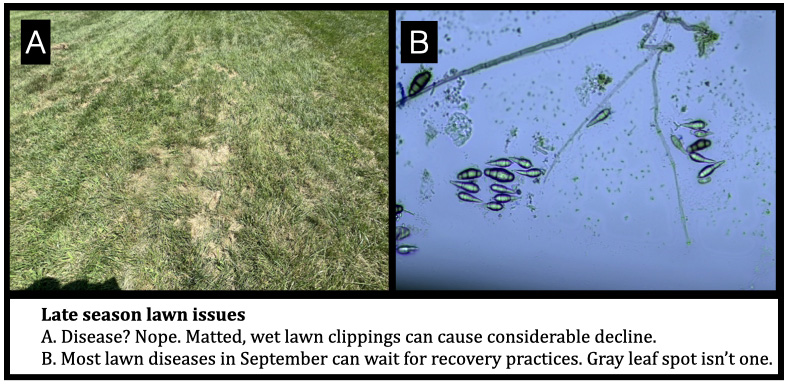
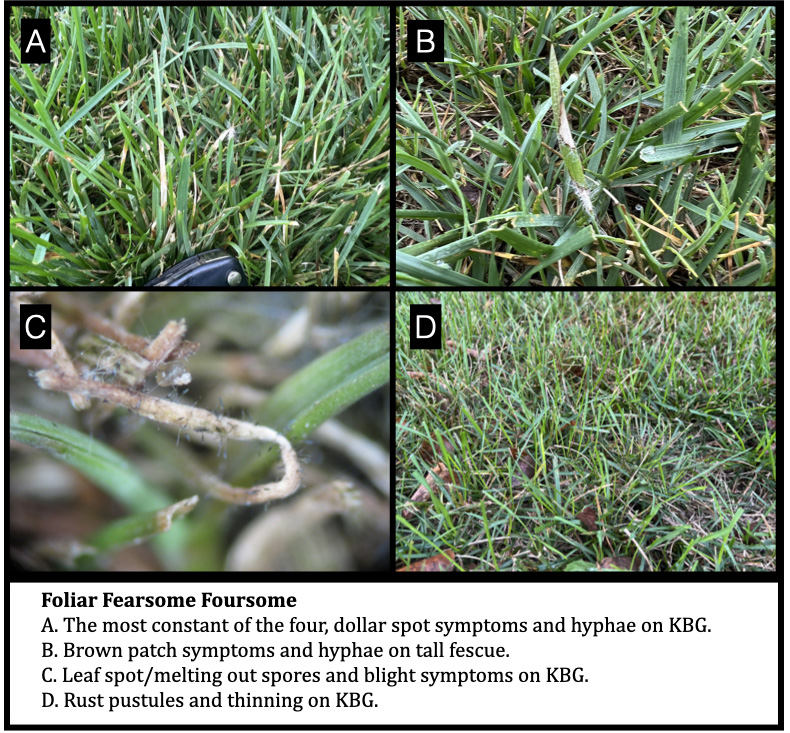
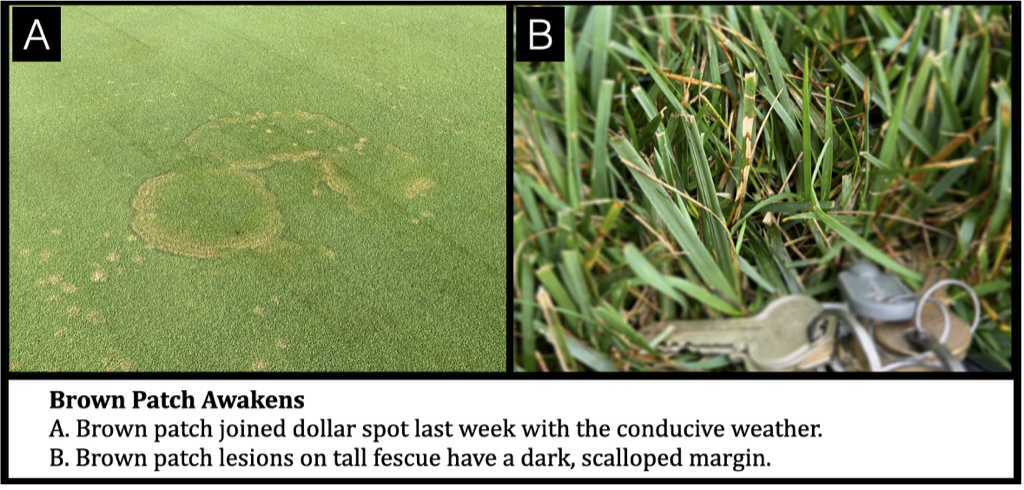
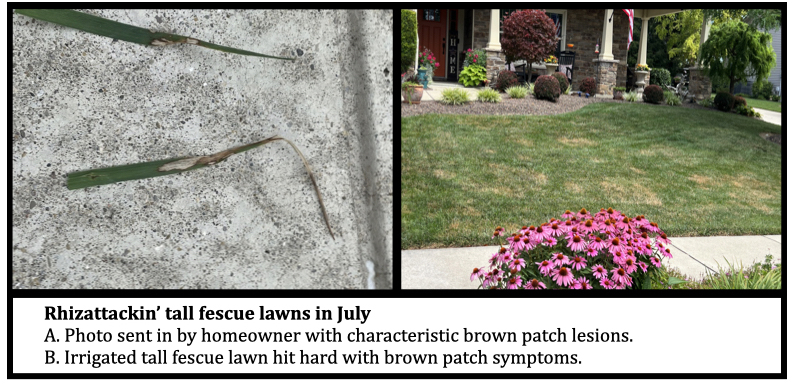
A slate of issues has been observed in the diagnostic lab over the last two weeks on lawns, ranging from more brown patch on tall fescue, decline of weedy grasses such as Poa trivialis and creeping bentgrass, to some lingering dollar spot and leaf spot on Kentucky bluegrass. Grass clippings, however, remain one of the bigger, yet often disregarded factors involved in lawn decline. Frequent and heavy rainfall events make it difficult to maintain mowing frequency, which can cause obvious clipping accumulation. Mowing when the turf is too wet not only causes compaction damage but also additional damage when wet mats of clippings are compressed on the grass by mower tires. In the above photo, only bare soil remains under the clippings after a week without removal. If a lawn is bumpy or uneven, wet, matted leaf clippings may be the true issue rather than disease.
When a true disease is present on lawns in late August/early September, my advice is usually to wait and save the focus for turfgrass recovery rather than fungicide application. Yesterday, an exception to this rule came into the lab… gray leaf spot on tall fescue was diagnosed from a declining lawn in Terre Haute. This disease spreads very quickly via spores and can cause severe damage in a short amount of time. Additionally, gray leaf spot affects seedlings, so stopping disease progression now is also important for reseeding efforts.
A tank mix of thiophanate methyl plus azoxystrobin is suggested for curative control. The QoI fungicides, such as azoxystrobin, are the standard choice for brown patch control, but alone don’t provide adequate curative control of gray leaf spot or preventive control in heavy epidemics. Conversely, thiophanate methyl doesn’t effectively control brown patch on tall fescue, but does provide a good boost for controlling gray leaf spot. The two combined, however, are effective for gray leaf spot management.
Fall/Winter Events – Mark Your Calendars
REGISTRATION OPEN: October 12, 2026 – MRTF Golf Day Fundraiser: The Sagamore Club
November 17-18, 2026 – Turf & Landscape Seminar: Daniel Turfgrass Research Center
December 10, 2026 – Turf Herbicide Workshop: Daniel Turfgrass Research Center
February 8 – 10, 2027 – 2027 Indiana Green Expo: Indiana Convention Center
Lee Miller
Extension Turfgrass Pathologist – Purdue University
Follow on Twitter: @purdueturfpath
Follow on LinkedIn: @purdueturfpath