Tag: Homeowner

Control of Quackgrass in Turf

I have received a number of calls recently about controlling quackgrass in turf. Quack is difficult to control because it spreads by deep rhizomes and herbicides do not translocate well through the rhizomes. The current best method is with 3-4...
Read More
Choose Preemergence herbicides with as Little N as Possible

If a preemergence herbicide is justified on your lawn to control crabgrass now, most of those are available combined with fertilizer and you are forced to apply a fertilizer now. Look for a product with low nitrogen and be sure...
Read More

Earthworms Activity in Lawns

Earthworm activity is on the rise as soils warm up, but their mounds will be highly visible until grass starts growing in late March and April. Earthworms are highly beneficial because they create channels for air and water penetration, reduce...
Read More

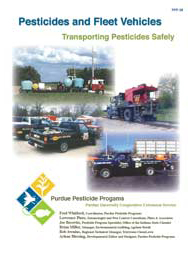
Pesticides and Container Management

Proper management of pesticide containers generally is a straightforward procedure, but it requires careful thought and a proper attitude. Appropriate transportation and storage of pesticides help protect the environment, assure worker safety, save money, and avoid legal problems.

(PPP-21)


PDF

PDF version of Pesticides and Container Management

Read More

Choosing a Preemergence Herbicide

There are many, many formulations and combinations of preemergence herbicides available for the professional. Following are some suggestions for purchasing and using preemergence herbicides. Control from every preemergence herbicide can vary from year to year, or location to location. Therefore,...
Read More

Calculating the pounds of fertilizer to apply

There are literally thousands of fertilizers and fertilizer/pesticide combinations available to homeowners and professionals. Therefore, we can’t recommend how many pounds of a specific fertilizer to apply, but rather we must recommend fertilization rates in pounds of nitrogen per thousand...
Read More

Timing of Preemergence Herbicides

If a preemergence herbicide is justified on a turf area, the timing of application is important. In theory, applying too early will expose the herbicide to soil microbes and processes in the soil that may break it down, allowing crabgrass...
Read More

Thanks to Everyone who Attended Indiana Green Expo

On behalf of the Turf Program, Midwest Regional Turf Foundation (MRTF), Indiana Nursery and Landscape Association (INLA), and Indiana Parks and Recreation Association (IPRA), I’d like to thank everyone who helped with and/or attended the 2007 Indiana Green Expo on...
Read More

Indiana Green Expo Next Week in Indianapolis

The Indiana Green Expo will be held Jan 10-12 at the Indiana Convention Center in Indianapolis. The green Expo is a joint conference sponsored by the Midwest Regional Turf Foundation, the Indiana Nursery and Landscape Association as well as the...
Read More

How much perennial ryegrass Kentucky bluegrass in a mix?

Perennial ryegrass germinates quickly and provides quick cover and soil stabilization when used in a blend. However, too much perennial ryegrass leads to long-term problems from dollar spot, brown patch, red thread, and other diseases. Kentucky bluegrass has better disease,...
Read More

Pesticide IQ: Every pesticide may have slightly different requirements for personal protective equipment (PPE)

As mentioned in last months Turf Tip, the Office of the Indiana State Chemist has increased inspections of IN lawn care companies and golf courses. During 2004 through 2006, 31 golf courses were either warned or fined for violations in...
Read More

Upcoming Education: Basic Training Turfgrass Management

This is a one-day workshop that’s perfect for new-comers to the industry as well as more experienced professionals who want a refresher course on turf management. This is a perfect training opportunity for you or your staff from lawn care...
Read More

Update on Office of State Chemist Enforcement on Golf Courses

Since a discharge of golf course insecticide into the White River in August of 2003, the Office of the Indiana State Chemist has increased inspections of IN golf courses. During 2004 through 2006, 31 golf courses were either warned or...
Read More

How Late is Too Late to Control Dandelions and Other Weeds?

With the incessant rain and high winds, most applications of broadleaf herbicides have been delayed. The good news is its not too late to apply. Nebraska research reported in 2002 showed 2,4-D and/or dicamba were far more effective in controlling...
Read More

Indiana Green Expo on January 10-12

The MRTF will be joining forces with the Indiana Nursery and Landscape Association as well as the Indiana Parks and Recreation Association to present the Indiana Green Expo on Jan 10-12 at the Indiana Convention Center. Joining forces tremendously expands...
Read More

Summary of Nematode Survey on Indiana Greens: 2006

We are finishing up our nematode survey for 2006 and following is a summary of the results: • We processed a total of 163 samples from 26 golf courses across Indiana, Illinois, and northern Kentucky. • Ring nematodes were most...
Read More

Considering seeded zoysia for fairways?

The development of seeded zoysia will enable many more southern Indiana golf courses to enjoy the benefits of zoysia at reduced establishment costs. Benefits of zoysia include great playability during all four seasons, good winter tolerance, and low fertilization, irrigation,...
Read More

Indiana Green Expo on January 10-12

The MRTF will be joining forces with the Indiana Nursery and Landscape Association as well as the Indiana Parks and Recreation Association to present the Indiana Green Expo on Jan 10-12 at the Indiana Convention Center. Joining forces tremendously expands...
Read More

Keep mowing and don’t set the mower down

Many people ask how long to continue mowing into the fall. The answer is to keep mowing as long as the grass continues to grow which is normally into late October or early November. Frequency of mowing can decrease but...
Read More