Summer Stress
With a warm and wet summer, we are experiencing decline in some of our turf around the state due to temperatures, disease, insects, and weeds. In response, we are publishing a four part series on this topic to help turfgrass managers respond. Look forward to the following topics over the next two weeks.
Part I: Too hot: Why some turfgrass species look poor in summer.
Part II: Summer diseases in residential turf.
Part III: Summer weeds: Common summer weeds and their control.
Part IV: Summer insects: Monitoring for summer pests and preparing for fall.
Part III: Summer weeds: Common summer weeds and their control.
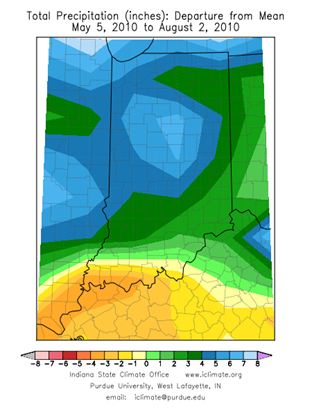
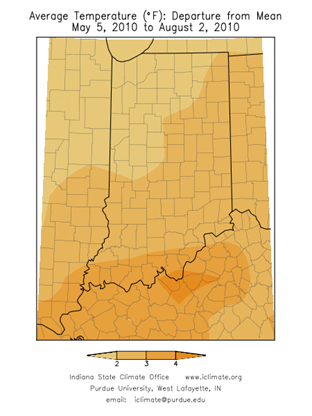
With the exception of southern Indiana, most Indiana locations are receiving more than normal rainfall over the last 90-days coupled with warmer than normal temperatures over the same period. With adequate rain and warm temperatures, many weeds are thriving this summer.
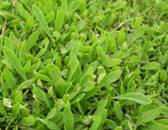
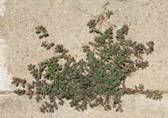
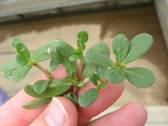
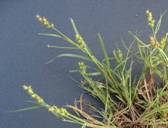
Several summer annuals or perennials are rearing their heads in turf right now. Summer annual weeds are visible because of their lifecycle (germinating in spring and setting seed and dying in the fall) and their tolerance to summer temperatures. Other perennial weeds may be more visible in the summer if they thrive on warm temperatures like yellow nutsedge making them more visible during periods of slow turf growth. Pictured below are some common summer weeds and information on their control. This is not an exhaustive list but mentions weeds that are commonly problematic in summer. Keep in mind that most herbicides should be applied to cool-season grasses when temperatures are below 85 °F, so keep the sprayer in the building on hot days.
| Weed | Weed image | Lifecycle and weed type | Control options (professional)* |
|---|---|---|---|
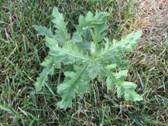
| Canada thistle |
|
Perennial broadleaf |
For post-emergence control many broadleaf herbicides are effective. |
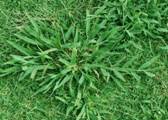
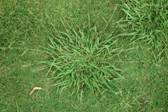
| Crabgrass, large |
|
Summer annual grass |
Preemergent herbicides work best. For post emergence control use Tenacity (mesotrione), Acclaim Extra (fenoxaprop), MSMA, Drive (quinclorac), Q4 Plus (quinclorac + sulfentrazone + 2,4-D + dicamba), or Solitare (quinclorac + sulfentrazone). |
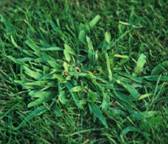
| Crabgrass, smooth |
|
Summer annual grass |
Preemergent herbicides work best. For post emergence control use Tenacity (mesotrione), Acclaim Extra (fenoxaprop), MSMA, Drive (quinclorac), Q4 Plus (quinclorac + sulfentrazone + 2,4-D + dicamba), or Solitare (quinclorac + sulfentrazone). |
| Dallisgrass |
|
Perennial grass |
Multiple (2 or more) applications of MSMA spaced 10-14 days apart will provide >75% control of dallisgrass. Start applications in early summer for better results. MSMA can be purchased until Dec. 31, 2010 and used as long as supplies remain. |
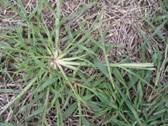
| Goosegrass |
|
Summer annual grass |
Preemergent herbicides work best. For post emergence control use Tenacity (mesotrione), Acclaim Extra (fenoxaprop), MSMA, or products containing Dismiss (sulfentrazone) such as Echelon, Solitaire, Q4, or T-Zone. Large plants are more difficult to control. |
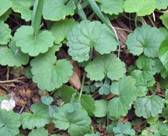
| Ground Ivy |
|
Perennial broadleaf |
For post emergence control use 2,4-D (3 pints), Escalade2, Chaser, Momentum FX2, Turflon Ultra Ester, T-Zone, or Imprelis for best results. |
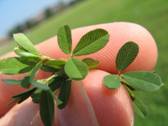
| Lespedeza |
|
Summer annual broadleaf |
This weed is an indicator of low nitrogen. Increased fertility should reduce lespedeza pressure. For post-emergence control use Escalade2, Chaser, Momentum FX2, or Turflon Ultra Ester, T-Zone, or Confront for best results. |
| Prostrate knotweed |
|
Summer annual broadleaf |
This weed is an indicator of compacted or flooded soils. Aerification should reduce knotweed pressure. For post-emergence control many broadleaf herbicides are effective. |
| Prostrate spurge |
|
Summer annual broadleaf |
This weed is an indicator of compacted or disturbed sites. For post-emergence control many broadleaf herbicides are effective. |
| Purslane |
|
Summer annual broadleaf |
This weed is common in thin turf or newly seeded areas. It also grows well near sidewalks and in sidewalk cracks. For post-emergence control many broadleaf herbicides are effective. |
| Sandbur |
|
Summer annual grass |
Preemergent herbicides work best. For post emergence control use Acclaim Extra (fenoxaprop) or MSMA. |
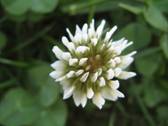
| White clover |
|
Perennial broadleaf |
This weed is an indicator of low nitrogen. Increased fertility should reduce clover pressure. For post-emergence control use Millennium Ultra, Speedzone, Powerzone, Mecomec, Drive (quinclorac), Onetime, Q4 Plus, Solitare, Surge, or Confront for best results. Trimec and other three-way mixtures are also effective. |
| Yellow nutsedge |
|
Perennial sedge |
Yellow nutsedge is usually an indicator of poorly drained soils. Improving drainage should decrease nutsedge. Basagran, Dismiss, SedgeHammer (formerly Manage), Mesotrione, and Certainty provide good control. Certainty should only be used on creeping bentgrass, Kentucky bluegrass, or mixtures where Kentucky bluegrass is the primary turf. Products with sulfentrazone such as Dismiss (sulfentrazone), Solitare (sulfentrazone + quinclorac), and Echelon (sulfentrazone + prodiamine) will also provide preemergence suppression of yellow nutsedge. |
* Not all of the recommended herbicides are commercially available to homeowners.