Author: Zac Reicher

Professionals only: Rust/dollar spot thriving in lawns

The diseases rust and dollar spot are thriving in Indiana lawns right now, which is fairly typical for this time of the year. These are both low nitrogen diseases, so are almost inevitable as we try to keep lawns on...
Read More
Reminder: New golf course pesticide rule went into effect August 1, 2009

The Indiana State Chemists Office's (ISCO) new pesticide rule went into effect Aug. 1 and includes: Any person applying any pesticide to a golf course must have a commercial pesticide applicator license or be under the direct supervision of a...
Read More

Goosegrass control is difficult in sports and golf turf

Goosegrass is a warm-season annual very similar to crabgrass, but germinates later than crabgrass and is tougher to control with both pre- and postemergence herbicides. It is most common in compacted, heavily used, poorly drained, and/or thinned turf, so cultural...
Read More

New web registration now available for the Midwest Regional Turf Field Day on July 21

We have just unveiled our new web registration for all MRTF functions, just time for Field Day on July 21.  Registration for all events is at http://mrtf.org/php/education.php and registration for Field Day specifically is at http://mrtf.org/php/education.php#FieldDay. Some of the features of this year’s...
Read More

For professionals only: Solitare herbicide now labeled for Indiana

FMC’s Solitare 75WG received its federal and state label for Indiana in June and is should be available from your professional product distributors. Solitare is a combination of sulfentrazone (Dismiss) and quinclorac (Drive and others) and should provide control of...
Read More

Controlling ground ivy and/or violets

As lawns start to thin from summer heat, ground ivy and violets begin to overtake the turf especially insahded areas.  These two weeds remain tough to control in Indiana. Even though applications now can produce visible damage, long-term control does...
Read More

The somewhat random world of herbicide burn injury on turf

With weather drying out and heating up, the risk of herbicide burn is increasing. In most cases, herbicide burn is similar to fertilizer burn in that the concentration of the herbicide spray residue on the leaf literally sucks the water...
Read More

White Grub Biology and Control in Espanol

In response to requests from our industry, we will be teaching a workshop in Spanish at Field Day on July 21. “White Grub Biology and Control” will be taught by Victoria Caceres from the Department of Entomology. This is a...
Read More

Patch Disease Symptoms Starting to Show in Dry Kentucky Bluegrass Lawns

Summer patch and necrotic ring spot are root-infecting diseases in Kentucky bluegrass lawns.  Their symptoms are some of the most difficult to manage, much less control the disease. Although these diseases differ slightly in when they attack the roots, the...
Read More

Moss in greens

I’ve gotten a number of questions about moss lately. Moss is becoming more common in greens as we decrease mowing heights and nitrogen fertility in pursuit of faster green speeds. Moss becomes more competitive as creeping bentgrass becomes less competitive....
Read More

Reicher to join University of Nebraska in March

After 21 years at Purdue, 17 of which as the Extension Specialist, I will be leaving Purdue University. Kim and I will be moving to the University of Nebraska-Lincoln where Kim will become the Director of Landscape Architecture and Regional...
Read More

Poa annua, Poa trivialis, and/or creeping bentgrass in lawns and sports fields

Poa annua (annual bluegrass), Poa trivialis (rough bluegrass) and creeping bentgrass are becoming common weeds in athletic fields and lawns. These weeds are important to distinguish because they require different controls. Poa annua: a winter annual that is lighter, more apple green than other...
Read More

New topics and tours at the Turf Field Day on July 21

The Midwest Regional Turf Field Day that will be held on Tuesday, July 21 at the W.H. Daniel Turfgrass Research and Diagnostic Center in West Lafayette. A number of additions should make this one of the best field days yet....
Read More

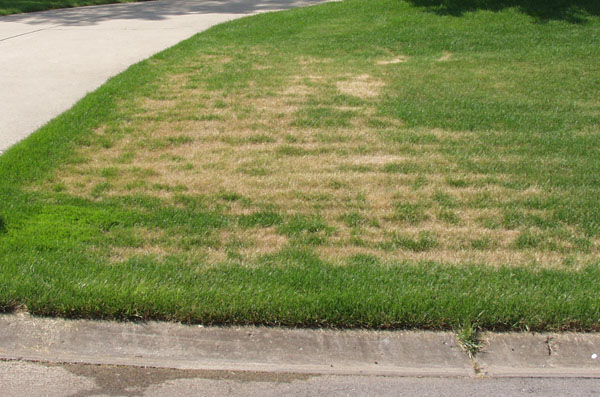
Believe it or not, drought symptoms appearing in turf

With no rain in Indiana last week (5/17-23) followed by extremely erratic and spotty rain this week (5/24-30), drought symptoms are starting to show up near sidewalks and driveways and in other hotspots like south-facing slopes, compacted soils, and fairly...
Read More

Southern IN: Controlling common lespedeza (Lespedeza striata)

A common concern in southern Indiana lawns is common lespedeza, which is a summer annual spreading by wiry stems from a single taproot forming almost a mat in thin turf or next to sidewalk. The most common broadleaf herbicide is...
Read More

Dallisgrass healthy in southern IN

Dallisgrass has reemerged and is very healthy with the rain and warming temperatures. Dallisgrass is often mistaken for crabgrass but typical preemergence or post emergence crabgrass herbicides do not work on dallisgrass. MSMA is currently the standard control but that...
Read More

Effects of wet spring on turf

With the well-above average rainfall this spring, questions are starting to arise about the short and long term effects on lawn, golf, and sports turf: Rooting-Though no official records are kept, rooting tends to be shallow and limited on water-logged...
Read More

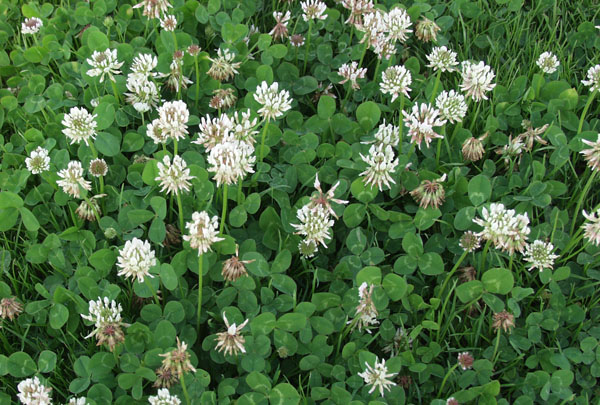
White Clover in Golf Courses, Sports Turf, and Lawns

The small white flowers of white clover are very visible right now and it may appear that clover is taking over, especially under-fertilized turf areas. Clover is a legume and is very competitive under low N conditions, so increasing annual...
Read More

Changing soil pH under turf

Soil testing is important in turf to help determine the soil pH and fertilization needs, especially for potassium and phosphorus. Acceptable soil pH for turf is between 6.0 and 7.5, but often soil tests show pH levels higher or lower...
Read More

Responsible fertilization of home lawns

A properly fertilized turf has fewer weeds, is more resistant to insects and disease, and decreases water runoff compared to malnourished turf. Concern over the negative effects of nutrient enrichment on water quality is a growing public concern and has...
Read More