Category: Weed Control

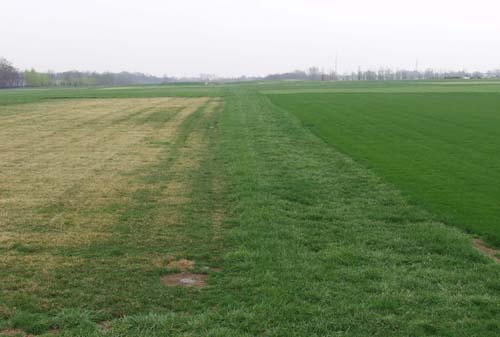
The somewhat random world of herbicide burn injury on turf

With weather drying out and heating up, the risk of herbicide burn is increasing. In most cases, herbicide burn is similar to fertilizer burn in that the concentration of the herbicide spray residue on the leaf literally sucks the water...
Read More

Moss in greens

I’ve gotten a number of questions about moss lately. Moss is becoming more common in greens as we decrease mowing heights and nitrogen fertility in pursuit of faster green speeds. Moss becomes more competitive as creeping bentgrass becomes less competitive....
Read More

Poa annua, Poa trivialis, and/or creeping bentgrass in lawns and sports fields

Poa annua (annual bluegrass), Poa trivialis (rough bluegrass) and creeping bentgrass are becoming common weeds in athletic fields and lawns. These weeds are important to distinguish because they require different controls. Poa annua: a winter annual that is lighter, more apple green than other...
Read More

Southern IN: Controlling common lespedeza (Lespedeza striata)

A common concern in southern Indiana lawns is common lespedeza, which is a summer annual spreading by wiry stems from a single taproot forming almost a mat in thin turf or next to sidewalk. The most common broadleaf herbicide is...
Read More

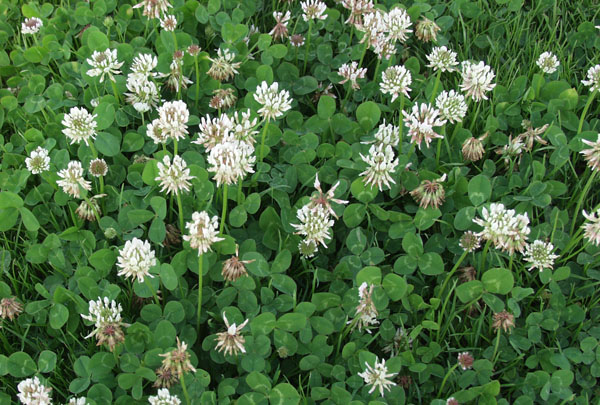
White Clover in Golf Courses, Sports Turf, and Lawns

The small white flowers of white clover are very visible right now and it may appear that clover is taking over, especially under-fertilized turf areas. Clover is a legume and is very competitive under low N conditions, so increasing annual...
Read More

Volunteer tree seedlings in lawns?

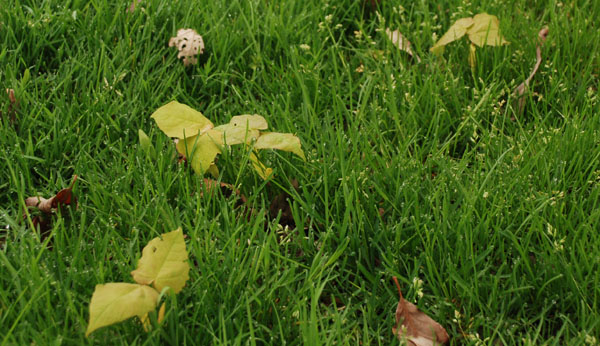
I’ve gotten a number of calls asking about volunteer maple and other tree seedlings growing in lawns. These are direct descendents of a neighborhood tree whose seed pods released last spring/summer. You can either stake a couple of these small...
Read More

Seeding into areas where preemergence herbicide was applied this spring

A fairly typical question now is, ”Can I seed into an area where preemergence herbicide was applied earlier this spring”. The answer is a very simple “No”. These herbicides are active in the soil for up to 120 days and...
Read More

Professionals Only: Spring Dandelion Control

Though fall applications are most effective for controlling broadleaf weeds, spring applications are warranted for new customers or areas that did not get treated last fall. Spring applications will be most effective if you wait until dandelions are at or...
Read More

Dandelions: Friend or Foe?

The annual bloom of dandelions is already here in southern Indiana and just around the corner in the rest of the state. Though some find dandelions attractive and some may actually eat them in salads or wine, others consider dandelions...
Read More

Knotweed germinating next to sidewalks and other hotspots

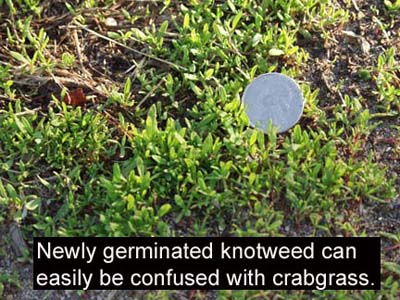
Prostrate knotweed is currently germinating in thin areas next to sidewalks, cart paths, driveways and other hotspots. Knotweed is often confused with crabgrass at this early stage. Knotweed leaves have rounded leaf tips whereas crabgrass has leaf tips that come...
Read More

For professionals only: Poa annua seedheads

Poa annua seedheads are just around the corner in most of Indiana and it’s high time to apply Embark or Proxy/Primo for seedhead reduction on golf courses. The seedhead models on our GDD Tracker at http://www.gddtracker.net indicate most of Indiana should be applying...
Read More

Lots of Colors in Spring Lawns

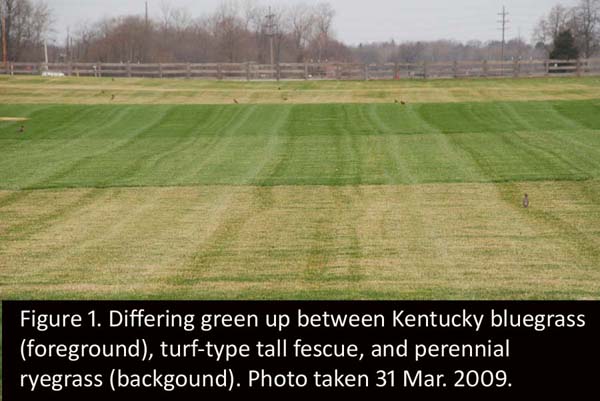
During spring green-up, lawns may reveal many variations in color, growth rate, and leaf width. This variation can be due to some of the following reasons: Species and cultivars:  Perennial ryegrass is always the first of the desired cool-season grasses to...
Read More

Seed now to get a jump on crabgrass germination

Though spring is not our favorite time to seed, it’s important to seed as soon as possible to allow the cool-season grasses to germinate prior to crabgrass. Crabgrass germinations can occur at soil surface temperatures as low as 50F, but...
Read More

Professionals Only: Premergence herbicide strategies

As spring is closing in, we are fielding a number of questions; four major questions right now: Which preemergnce herbide to use? That one is pretty easy. We have only three active ingredients relatively easily available and they are dithiopyr,...
Read More

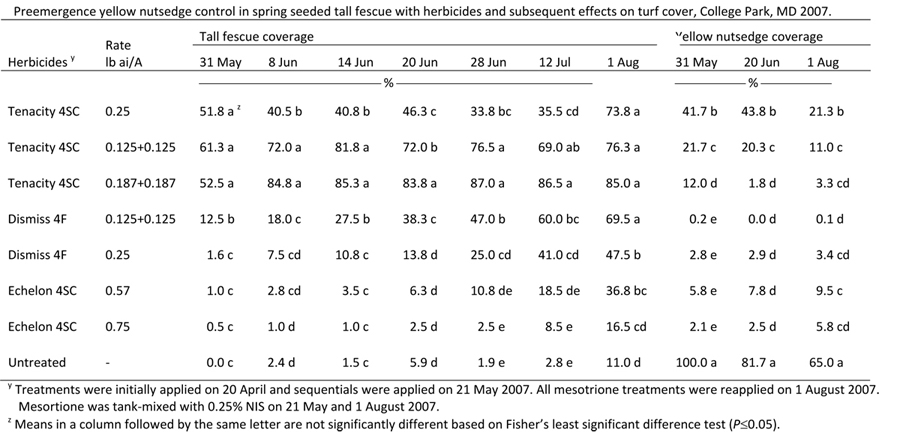
Preemergence Yellow Nutsedge Control In Spring Seeded Tall Fescue With Tenacity, Dismiss and Echelon, 2007

Summary: This study showed that Dismiss and Echelon provided excellent preemergence yellow nutsedge control, but these herbicides should not be used in a tall fescue seedbed. Tenacity applied twice at 0.1 87 lb/A provided a level of yellow nutsedge control...
Read More

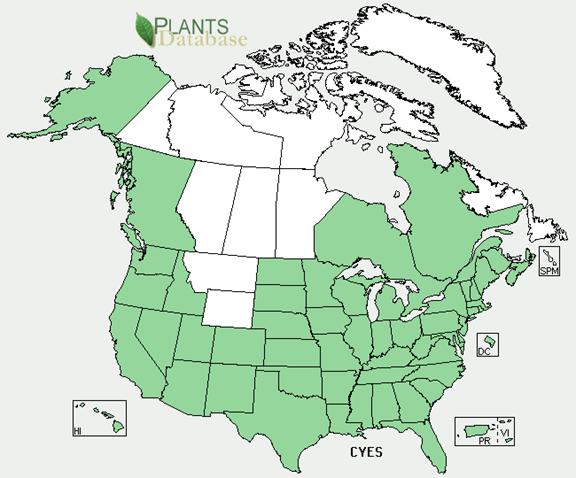
Yellow Nutsedge, The Scourge of Lawns and Landscapes in Nebraska

Yellow nutsedge (Cyperus esculentus) is a common, persistent and troublesome weed in lawns and landscapes in Nebraska. This is especially true from Kearney east into Iowa. Yellow nutsedge thrives in waterlogged soil and their presence often indicates that drainage is...
Read More

Yellow nutsedge may be far off concern, but spring applications show promise

Yellow nutsedge is now one of the most common weeds in lawns, athletic fields and golf turf. Even though all textbooks say it thrives in wet areas, we see some of our worst yellow nutsedge infestations in dry years. Cultural...
Read More

Choosing a Preemergence Herbicide

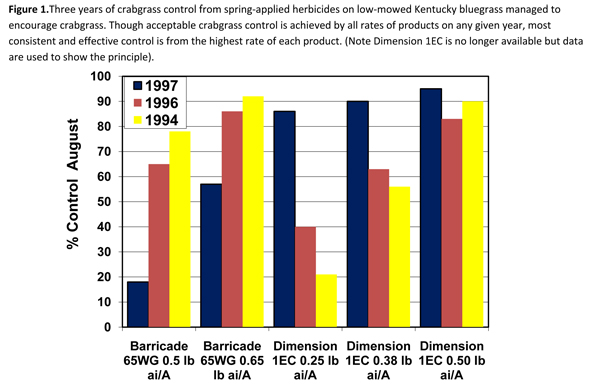
There are many, many formulations and combinations of preemergence herbicides available for the professional. Following are some suggestions for purchasing and using preemergence herbicides. Control from every preemergence herbicide can vary from year to year, or location to location. Therefore,...
Read More

How Late is Too Late to Control Dandelions and Other Weeds?

Even though the drought has limited some broadleaf weed applications this month, we are now in the prime season for broadleaf weed control. Actually there is plenty of time left for good control. Nebraska research reported in 2002 showed 2,4-D...
Read More

Color Variation in Residential and Commercial Lawns

During spring green-up, home lawns may reveal many variations in color, growth rate, and leaf width. This variation can be due to some of the following reasons: Species and cultivars:  Perennial ryegrass is always the first of the desired cool-season...
Read More