Homeowner


Using clover for lawns?????

Recently I was contacted by a major newspaper reporter who was writing an article about more sustainable lawn systems, or lawns that would required fewer inputs, and was inquiring about the feasibility of  using clover as a lawn turf. After a brief head-scratching and a few questions about his intent we had a nice conversation…Read more about Using clover for lawns?????[Read More]


Summer Mowing and Fertilization

By the time you read these words the longest day of the year has approached and the official calendar “Summer” season will have begun. Just as the weather changes as we transition between seasons from late-Spring to Summer the turfgrass plant changes too. First, both air and soil temperatures rise beyond what is optimal for…Read more about Summer Mowing and Fertilization[Read More]


Moss in greens

I’ve gotten a number of questions about moss lately. Moss is becoming more common in greens as we decrease mowing heights and nitrogen fertility in pursuit of faster green speeds. Moss becomes more competitive as creeping bentgrass becomes less competitive. Though the herbicide QuickSilver has become the industry standard when applied at 6.7 oz/A, a…Read more about Moss in greens[Read More]

 Categories:

Reicher to join University of Nebraska in March

After 21 years at Purdue, 17 of which as the Extension Specialist, I will be leaving Purdue University. Kim and I will be moving to the University of Nebraska-Lincoln where Kim will become the Director of Landscape Architecture and Regional Planning in the School of Architecture in mid-August. I am what’s considered a “spousal hire”…Read more about Reicher to join University of Nebraska in March[Read More]

 Categories:

Believe it or not, drought symptoms appearing in turf

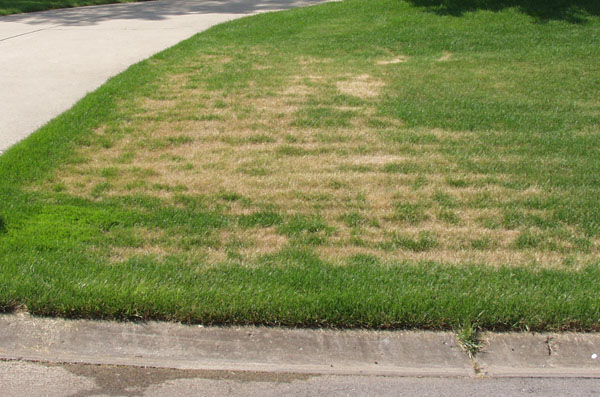
With no rain in Indiana last week (5/17-23) followed by extremely erratic and spotty rain this week (5/24-30), drought symptoms are starting to show up near sidewalks and driveways and in other hotspots like south-facing slopes, compacted soils, and fairly new sod laid over compacted soils. Symptoms are typical drought stress starting out with a…Read more about Believe it or not, drought symptoms appearing in turf[Read More]

 Categories:

Rhizoctonia Spring Patches

Brown Ring Patch Brown ring patch is a disease of annual bluegrass on putting greens.  Damage is largely cosmetic, although in some areas smoothness and uniformity of putting surfaces are disturbed, warranting chemical control.  The duration of symptom expression usually is brief (one or two weeks), and coincides with mild weather with ample moisture.  Despite…Read more about Rhizoctonia Spring Patches[Read More]


Southern IN: Controlling common lespedeza (Lespedeza striata)

A common concern in southern Indiana lawns is common lespedeza, which is a summer annual spreading by wiry stems from a single taproot forming almost a mat in thin turf or next to sidewalk. The most common broadleaf herbicide is 2,4-D, but this is completely ineffective against lespedeza. A recent report from John Boyd at…Read more about Southern IN: Controlling common lespedeza (Lespedeza striata)[Read More]

 Categories:

Dallisgrass healthy in southern IN

Dallisgrass has reemerged and is very healthy with the rain and warming temperatures. Dallisgrass is often mistaken for crabgrass but typical preemergence or post emergence crabgrass herbicides do not work on dallisgrass. MSMA is currently the standard control but that herbicide will not be available after 2010. Our current research is focusing on Syngenta’s Tenacity…Read more about Dallisgrass healthy in southern IN[Read More]


Effects of wet spring on turf

With the well-above average rainfall this spring, questions are starting to arise about the short and long term effects on lawn, golf, and sports turf: Rooting-Though no official records are kept, rooting tends to be shallow and limited on water-logged soils because of a lack of oxygen. Effects of a wet spring like this spring…Read more about Effects of wet spring on turf[Read More]


White Clover in Golf Courses, Sports Turf, and Lawns

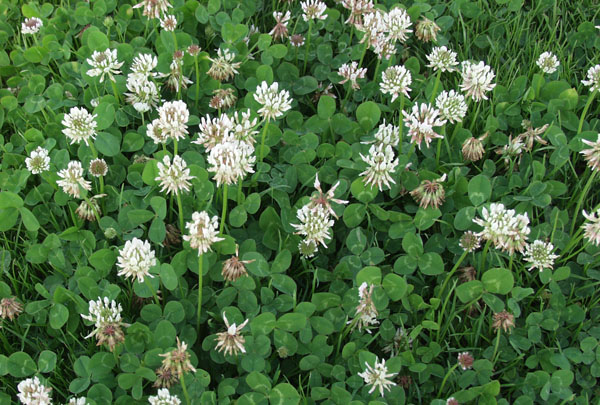
The small white flowers of white clover are very visible right now and it may appear that clover is taking over, especially under-fertilized turf areas. Clover is a legume and is very competitive under low N conditions, so increasing annual N is best method to help exclude this weed. However, its spreading stolons make it…Read more about White Clover in Golf Courses, Sports Turf, and Lawns[Read More]


Changing soil pH under turf

Soil testing is important in turf to help determine the soil pH and fertilization needs, especially for potassium and phosphorus. Acceptable soil pH for turf is between 6.0 and 7.5, but often soil tests show pH levels higher or lower than this. pH higher than 7.5: Some firms will recommend applying sulfur to reduce the…Read more about Changing soil pH under turf[Read More]


Responsible fertilization of home lawns

A properly fertilized turf has fewer weeds, is more resistant to insects and disease, and decreases water runoff compared to malnourished turf. Concern over the negative effects of nutrient enrichment on water quality is a growing public concern and has led many to start to question turfgrass fertilization practices. Although both nitrogen and phosphorus may…Read more about Responsible fertilization of home lawns[Read More]


Volunteer tree seedlings in lawns?

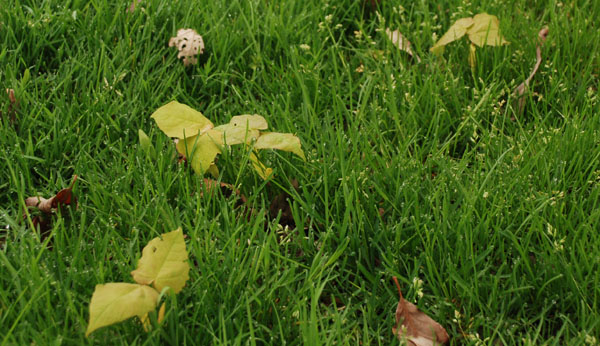
I’ve gotten a number of calls asking about volunteer maple and other tree seedlings growing in lawns. These are direct descendents of a neighborhood tree whose seed pods released last spring/summer. You can either stake a couple of these small trees and nurture them over time to become a formidable maples, or you can control…Read more about Volunteer tree seedlings in lawns?[Read More]


Yellow Patch Is Active!

Yellow patch, also referred to as cool season brown patch, is caused by Rhizoctonia cerealis, a fungus closely related to the pathogens that cause brown patch and the Rhizoctonia large patch of zoysia grass. Although symptoms can be striking, yellow patch causes only cosmetic damage and does not affect playability. It occurs most often on creeping…Read more about Yellow Patch Is Active![Read More]


Spring Lawn Aerification

Aerification, sometimes called core cultivation is a supplementary lawn cultural practice primarily used to relieve soil compaction and remove thatch (the spongy layer of undecomposed stems at the soil surface). This practices is not necessarily essential to maintaining a lawn, however, it can be very beneficial to most turf areas. In addition, to the aforementioned…Read more about Spring Lawn Aerification[Read More]


Gypsum as a soil amendment? Probably not

Garden centers often advertise applying gypsum to your lawn to “decompact” the soil by improving the structure of clay soil. This only works in soils common in the arid western US where there is much more sodium than calcium in the soil. This does not work in Indiana because the parent material for most of…Read more about Gypsum as a soil amendment? Probably not[Read More]


Seeding into areas where preemergence herbicide was applied this spring

A fairly typical question now is, ”Can I seed into an area where preemergence herbicide was applied earlier this spring”. The answer is a very simple “No”. These herbicides are active in the soil for up to 120 days and their nature is to be absorbed into the root of a germinating weed (or turfgrass…Read more about Seeding into areas where preemergence herbicide was applied this spring[Read More]


Season-long Grub Control Advertisements

Grub control products are currently being displayed in the center aisles of retail department and discount stores and are advertised on the radio as providing season-long grub control when applied in early May. What are the facts behind this recommendation? While certain grub control products do have a very long residual in the soil, they…Read more about Season-long Grub Control Advertisements[Read More]


Dandelions: Friend or Foe?

The annual bloom of dandelions is already here in southern Indiana and just around the corner in the rest of the state. Though some find dandelions attractive and some may actually eat them in salads or wine, others consider dandelions as weeds and try to control them in a lawn. The optimum time to control…Read more about Dandelions: Friend or Foe?[Read More]

 Categories:

Spacing between passes with a rotary spreader

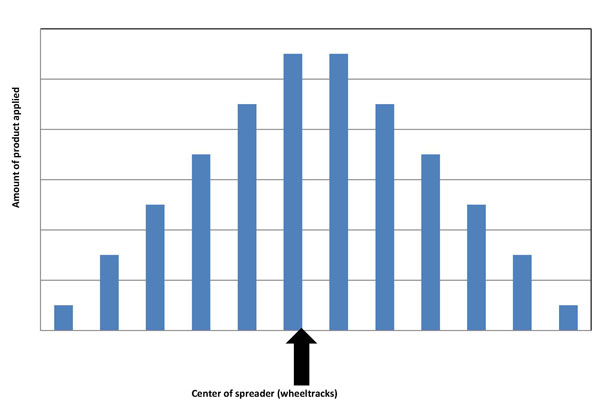
Rotary spreaders are widely used by homeowners and professionals for most applying fertilizers and pesticides. So to test your knowledge, here’s a question that I constantly ask of professionals and do-it-yourselfers when spreading fertilizer back and forth on a turf area: A. Your current pass should spread product so it just touches the edge of the…Read more about Spacing between passes with a rotary spreader[Read More]


Page last modified: February 5, 2020

Turfgrass Science at Purdue University - Horticulture & Landscape Architecture, 625 Agriculture Mall, West Lafayette, IN 47907

© 2026 Purdue UniversityAn equal access/equal opportunity universityCopyright ComplaintsMaintained by Turfgrass Science at Purdue University

If you have trouble accessing this page because of a disability, please contact Turfgrass Science at Purdue University at kkalbaug@purdue.eduAccessibility Resources