Homeowner


Keep mowing and don’t set the mower down

Many people ask how long to continue mowing into the fall. The answer is to keep mowing as long as the grass continues to grow which is normally into late October or early November. Frequency of mowing can decrease but continue to mow into the fall. Also avoid the urge to set the mower down…Read more about Keep mowing and don’t set the mower down[Read More]


Keep mowing to mulch those tree leaves!

The trees are dropping their leaves and it is important to prevent a heavy layer of leaves from building-up on your turf before winter.  Heavy layers of tree leaves will shade the grass can smother and kill grass yet this fall.  Plus tree leaf cover favors a damaging winter turf disease called snow mold.  The…Read more about Keep mowing to mulch those tree leaves![Read More]


 Publication Categories:

Openings still available for MRTF Golf Day on September 30

Openings are still available for the MRTF Golf Day at The Fort Golf Resort in Indianapolis on September 30. We also have the opportunity for you or your company to sponsor a tee sign. More information on sponsorship and a PDF registration form can be found at www.agry.purdue.edu/turf/events/golfday.html or register on-line at http://mrtf.org/php/education.php#Golf. If you have any questions…Read more about Openings still available for MRTF Golf Day on September 30[Read More]

 Categories:

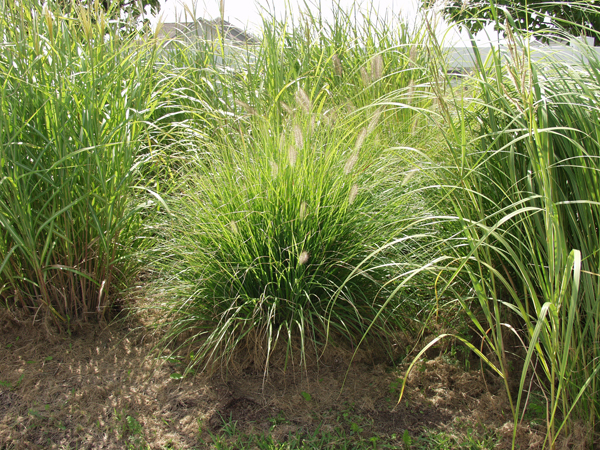
Controlling escaped fountaingrass in a lawn.

Fountain grass and other ornamental grasses have added tremendously to landscapes of homes, commercial sites, and golf courses. However, we are now seeing some of these grasses escape from the ornamental beds into the turf. One in particular is fountain grass (Pennisetum spp) because it produces viable seeds which blow into surrounding turf and may…Read more about Controlling escaped fountaingrass in a lawn.[Read More]

 Categories:

 Publication Categories:

Cool temperatures allow a jump on beneficial fall maintenance practices

The recent record or near record low temperatures combine with adequate soil moisture is advantageous for our cool-season turfgrasses, especially compared to the typical August-September heat and drought. Fall fertilization can begin anytime, especially with rain in the forecast to help water in the application. White grub damage will likely be minimal with overall health…Read more about Cool temperatures allow a jump on beneficial fall maintenance practices[Read More]


Damping off diseases in new seedlings

Although the cool weather tends to limit disease in new seedlings, a spike in the temperatures could trigger outbreaks in juvenile turf yet this year. Late summer is clearly the best time of the year to seed for a variety of reasons, but we must deal with two difficulties of seeding at this time: Our…Read more about Damping off diseases in new seedlings[Read More]

 Categories:

MRTF Golf Day at The Fort in Indianapolis on September 30

Openings are still available for the MRTF Golf Day at The Fort Golf Resort in Indianapolis on September 30. This annual event is held to promote turfgrasss research, raise awareness of the Purdue Turfgrass Science Program, and provide an enjoyable day of golf. With a centralized location and afternoon shotgun start we hope to draw…Read more about MRTF Golf Day at The Fort in Indianapolis on September 30[Read More]

 Categories:

Drought affects all turf areas differently

We are fielding a number of calls like “Why is my lawn is turning brown while my neighbors isn’t, even though neither of us irrigate?”. On any given turf area or in a neighborhood, we can see a wide variety of responses to the current drought. Following is a list of factors that will affect…Read more about Drought affects all turf areas differently[Read More]


Now is the Time to Start Improving Your Lawn

Tired of the way your lawn looks? If it hasn’t looked up to par this summer with the relatively good weather, it never will and reseeding your lawn is an option. Mid-August is the best time to seed a new lawn or overseed an existing lawn. If the lawn is just thin and needs a…Read more about Now is the Time to Start Improving Your Lawn[Read More]


Dollar Spot

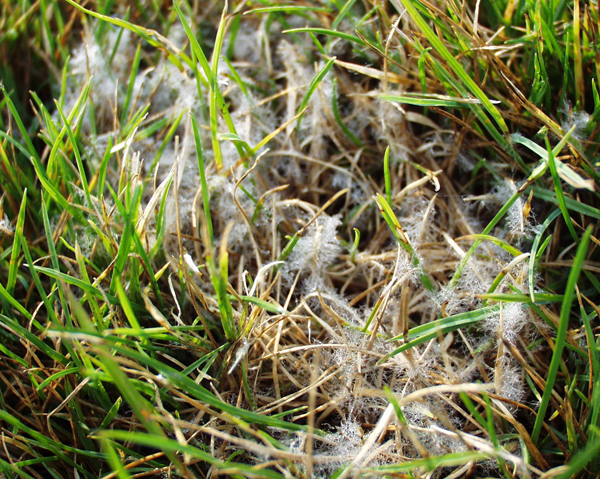
Dollar spot is caused by a fungal pathogen, Sclerotinia homoeocarpa, that blights leaf tissues but does not affect turfgrass roots or crowns. The disease is a common concern on golf course turf, especially creeping bentgrass and annual bluegrass greens, tees, and fairways, where it can result in poor turf quality and appearance. Dollar spot is one…Read more about Dollar Spot[Read More]


Rust Diseases

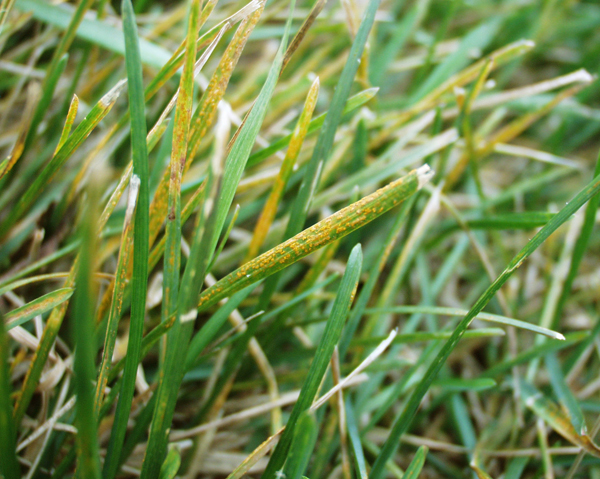
Rust is a disease of taller mown turf. Outbreaks are most common on residential lawns, low budget athletic fields, and, occasionally, on golf course roughs. A variety of related fungi cause rust. Ccommon names include leaf rust, crown rust, and stem rust, and the disease occurs almost exclusively on Kentucky bluegrass and perennial ryegrass. Rust…Read more about Rust Diseases[Read More]


Cicada killers: A Nuisance or a Danger?

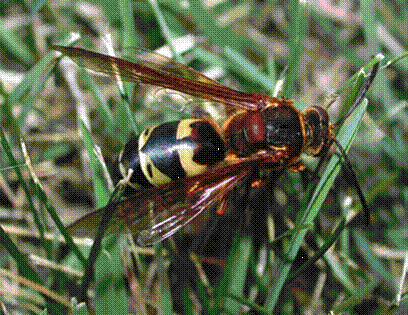
A number of solitary bees and wasps reside in turfgrass and landscapes. Because of their ability to harm humans, these insects often evoke a great deal of anxiety. However, in reality they very rarely sting. Education is the single best strategy to help people deal with cicada killers. Cicada killers are one of the largest…Read more about Cicada killers: A Nuisance or a Danger?[Read More]


Goosegrass control is difficult in sports and golf turf

Goosegrass is a warm-season annual very similar to crabgrass, but germinates later than crabgrass and is tougher to control with both pre- and postemergence herbicides. It is most common in compacted, heavily used, poorly drained, and/or thinned turf, so cultural practices to help alleviate these conditions are essential. With low populations, cutting goosegrass out with…Read more about Goosegrass control is difficult in sports and golf turf[Read More]

 Categories:

Controlling ground ivy and/or violets

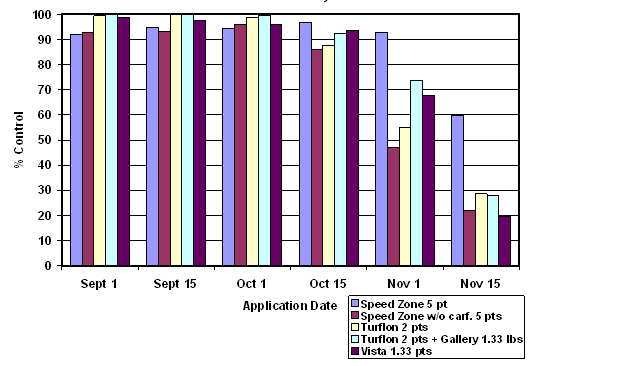
As lawns start to thin from summer heat, ground ivy and violets begin to overtake the turf especially insahded areas.  These two weeds remain tough to control in Indiana. Even though applications now can produce visible damage, long-term control does not compare to fall applications. We have been working on ground ivy for a number…Read more about Controlling ground ivy and/or violets[Read More]

 Categories:

The somewhat random world of herbicide burn injury on turf

With weather drying out and heating up, the risk of herbicide burn is increasing. In most cases, herbicide burn is similar to fertilizer burn in that the concentration of the herbicide spray residue on the leaf literally sucks the water out of the leaf, desiccating the leaf. This is similar to how urea fertilizer spilled…Read more about The somewhat random world of herbicide burn injury on turf[Read More]

 Categories:

White Grub Biology and Control in Espanol

In response to requests from our industry, we will be teaching a workshop in Spanish at Field Day on July 21. “White Grub Biology and Control” will be taught by Victoria Caceres from the Department of Entomology. This is a great opportunity for you or any of your staff who are comfortable learning in Spanish…Read more about White Grub Biology and Control in Espanol[Read More]


Patch Disease Symptoms Starting to Show in Dry Kentucky Bluegrass Lawns

Summer patch and necrotic ring spot are root-infecting diseases in Kentucky bluegrass lawns.  Their symptoms are some of the most difficult to manage, much less control the disease. Although these diseases differ slightly in when they attack the roots, the pathogens generally are active in the late spring to early summer.  Infection-impaired roots have a…Read more about Patch Disease Symptoms Starting to Show in Dry Kentucky Bluegrass Lawns[Read More]


Page last modified: May 23, 2019

Turfgrass Science at Purdue University - Horticulture & Landscape Architecture, 625 Agriculture Mall, West Lafayette, IN 47907

© 2026 Purdue UniversityAn equal access/equal opportunity universityCopyright ComplaintsMaintained by Turfgrass Science at Purdue University

If you have trouble accessing this page because of a disability, please contact Turfgrass Science at Purdue University at kkalbaug@purdue.eduAccessibility Resources