Category: Disease Identification

April 16, 2025: Muddy Waters

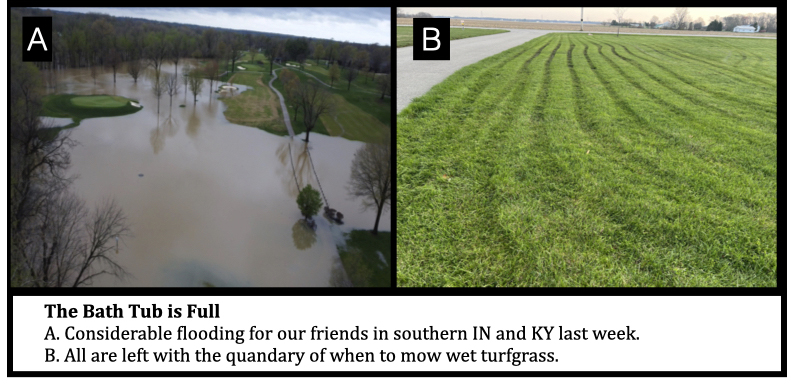
Excessive and in some cases, abusive rainfall amounts; keys to soggy turfgrass management; winter injury potential causes and recovery, red thread, spring golf disease prevention Weather Spring, which officially started on March 20, is rolling along, and into mid-April temperatures in the region are ahead of statistical normal, but lagging somewhat behind last year. I…Read more about April 16, 2025: Muddy Waters[Read More]


A Cold Mold that Craves the Shade

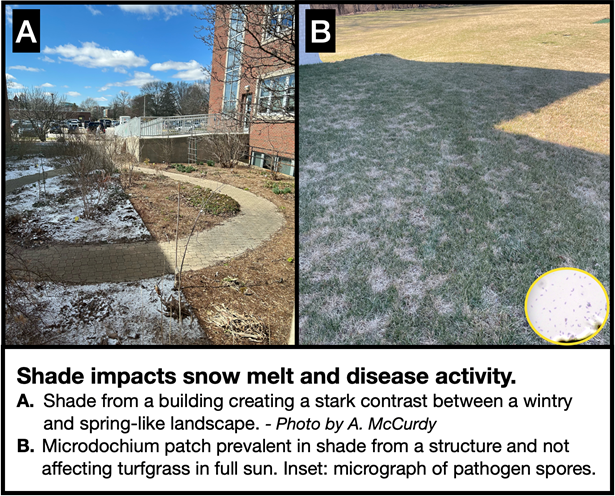
Pink snow mold is a disease caused by the fungal pathogen Microdochium nivale (syn. Monographella nivalis) that is being observed in middle and northern Indiana this late winter. The pathogen is termed psychrophilic, or cold loving, due to its propensity to grow and infect in colder temperatures. The disease can be particularly severe on unfrozen…Read more about A Cold Mold that Craves the Shade[Read More]


Lawn Diseases 2016

The summer of 2016 has been quite favorable for the development of an assortment of infectious diseases on residential turf.  The primary driver of all of this disease activity is the weather.  In the lower Midwest, the combination of elevated temperature and ample precipitation since the beginning August of has spawned outbreaks of brown patch,…Read more about Lawn Diseases 2016[Read More]


Rust Diseases

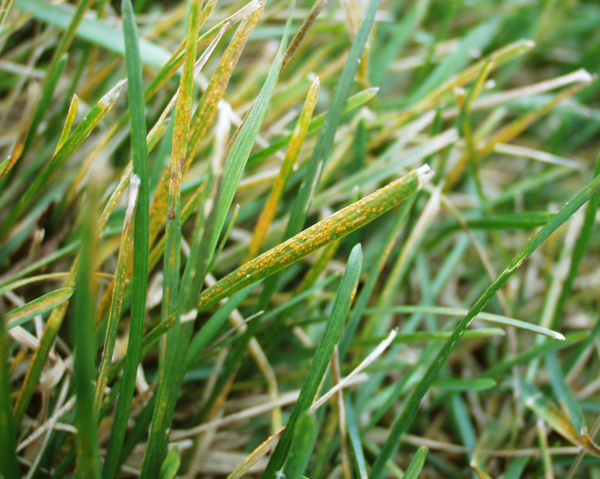
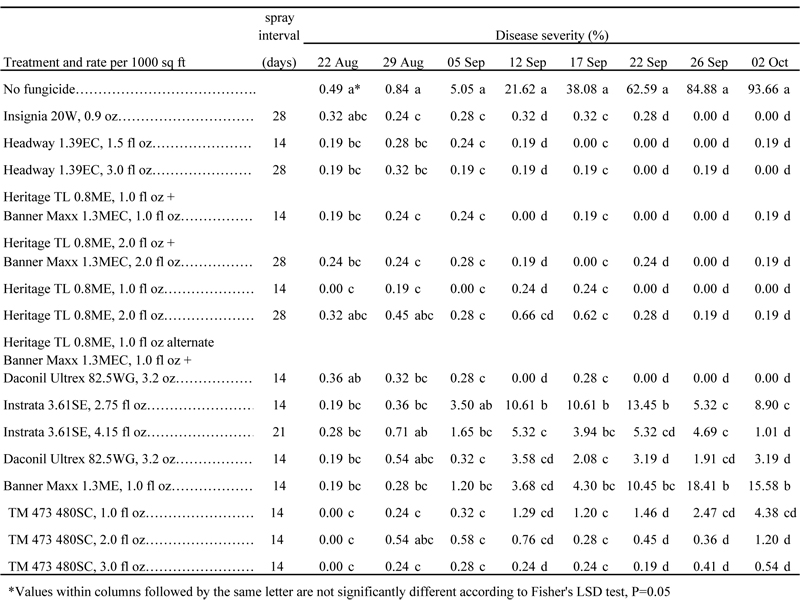
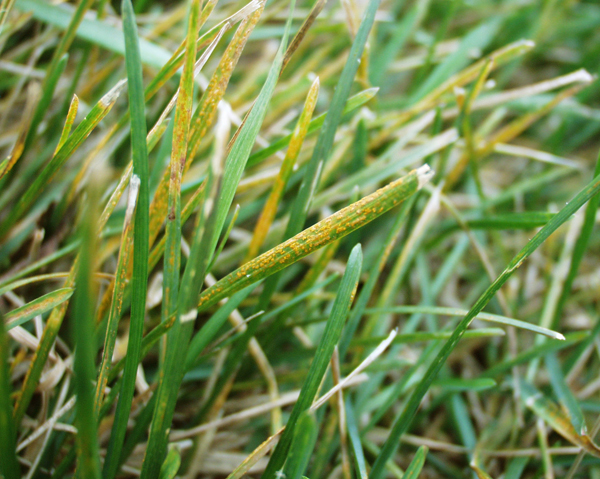
Rust is a disease of taller mown turf. Outbreaks are most common on residential lawns, low budget athletic fields, and, occasionally, on golf course roughs. A variety of related fungi cause rust. Ccommon names include leaf rust, crown rust, and stem rust, and the disease occurs almost exclusively on Kentucky bluegrass and perennial ryegrass. Rust…Read more about Rust Diseases[Read More]


Summer Stress

Summer Stress With a warm and wet summer, we are experiencing decline in some of our turf around the state due to temperatures, disease, insects, and weeds. In response, we are publishing a four part series on this topic to help turfgrass managers respond. Look forward to the following topics over the next two weeks….Read more about Summer Stress[Read More]


Gray Leaf Spot 2010

Gray leaf spot has been identified on perennial ryegrass fairways in northern Kentucky.  It is likely that outbreaks will occur in southern Indiana with the next rainstorm (or it may already be established).  If the turf that you manage has a history of the disease, this would be a good time to consider apply a…Read more about Gray Leaf Spot 2010[Read More]


Slime mold

Slime mold can occur on all turf grasses.  The disease does not infect the plant but instead grows on the outside of the leaves.  Yellowish, purplish, or grayish fruiting bodies may be observed during wet periods.  As the turf begins to dry, the structures become powdery.  Since the disease is only cosmetic in nature, chemical…Read more about Slime mold[Read More]


Turf Disease Watch

The near term forecast indicates an early arrival of summer, when temperature and moisture conditions favor diseases that can cause serious damage to turf on golf courses, athletic fields and residential landscapes.  Two of the more important diseases are discussed below. Brown Patch  Brown patch is a foliar disease that does not damage crowns or…Read more about Turf Disease Watch[Read More]


Snow mold damage

Melting snows revealed some significant snow mold damage.  As you know there are two types of snow mold diseases, gray snow mold (aka Typhula blight) and pink snow mold (Microdochium patch).  Although they create similar symptoms (circular patches of tan turf—sometimes with orange/brown margins) the pathogens are not closely related and they have different temperature requirements for infection. …Read more about Snow mold damage[Read More]


Dollar Spot

Dollar spot is caused by a fungal pathogen, Sclerotinia homoeocarpa, that blights leaf tissues but does not affect turfgrass roots or crowns. The disease is a common concern on golf course turf, especially creeping bentgrass and annual bluegrass greens, tees, and fairways, where it can result in poor turf quality and appearance. Dollar spot is one…Read more about Dollar Spot[Read More]


Rust Diseases

Rust is a disease of taller mown turf. Outbreaks are most common on residential lawns, low budget athletic fields, and, occasionally, on golf course roughs. A variety of related fungi cause rust. Ccommon names include leaf rust, crown rust, and stem rust, and the disease occurs almost exclusively on Kentucky bluegrass and perennial ryegrass. Rust…Read more about Rust Diseases[Read More]


Patch Disease Symptoms Starting to Show in Dry Kentucky Bluegrass Lawns

Summer patch and necrotic ring spot are root-infecting diseases in Kentucky bluegrass lawns.  Their symptoms are some of the most difficult to manage, much less control the disease. Although these diseases differ slightly in when they attack the roots, the pathogens generally are active in the late spring to early summer.  Infection-impaired roots have a…Read more about Patch Disease Symptoms Starting to Show in Dry Kentucky Bluegrass Lawns[Read More]


Rhizoctonia Spring Patches

Brown Ring Patch Brown ring patch is a disease of annual bluegrass on putting greens.  Damage is largely cosmetic, although in some areas smoothness and uniformity of putting surfaces are disturbed, warranting chemical control.  The duration of symptom expression usually is brief (one or two weeks), and coincides with mild weather with ample moisture.  Despite…Read more about Rhizoctonia Spring Patches[Read More]


Yellow Patch Is Active!

Yellow patch, also referred to as cool season brown patch, is caused by Rhizoctonia cerealis, a fungus closely related to the pathogens that cause brown patch and the Rhizoctonia large patch of zoysia grass. Although symptoms can be striking, yellow patch causes only cosmetic damage and does not affect playability. It occurs most often on creeping…Read more about Yellow Patch Is Active![Read More]


Something New in Golf Course Turf…Ghost Grass and Mad Tiller Disease???

Photo by: Steve McDonald of Turfgrass Disease Solutions located in Philadelphia Photo by: Cale Bigelow in West Lafayette Over the past week a relatively new turf malady has become prevalent on golf turf throughout the region. This new phenomenon has been referred to as “Mad Tiller Disease”, and “Ghost Grass” in the United Kingdom ,…Read more about Something New in Golf Course Turf…Ghost Grass and Mad Tiller Disease???[Read More]


Red thread, pink patch, and dollar spot in lawns and roughs

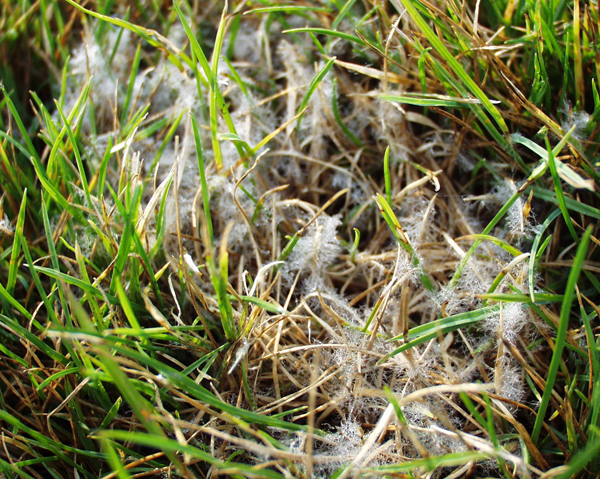
Red thread and its close relative pink patch, are now appearing on home lawns (and golf course roughs) in the central and southern parts of Indiana. Red thread first appears as small (quarter to golf ball size) gray – tan colored patches in the turf. After extended dew periods, white – pink mold may be…Read more about Red thread, pink patch, and dollar spot in lawns and roughs[Read More]


Turfgrass nematode damage? … Sample to be sure!

Random patches of wilted turfgrass that are unresponsive to irrigation, assume a gray/green appearance and then turn tan/brown just before dying MAY be suffering from nematodes. These symptoms are somewhat characteristic of several diseases, insect infestations and even environmental stresses, so when making a determination, all possible causes must be considered. The symptoms of nematode…Read more about Turfgrass nematode damage? … Sample to be sure![Read More]


Perennial Ryegrass Looking Exceptionally Bad Right Now

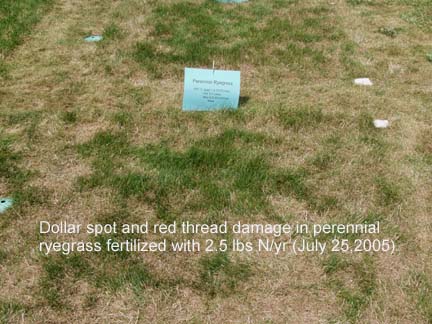
Dollar spot, pythium, brown patch, rust, and perhaps other diseases are ravaging perennial ryegrass lawns currently (See the attached (undoctored!) photos). Turf performance in July and August is the main reason I don’t recommend perennial ryegrass for lawns in Indiana. Perennial ryegrass requires more irrigation, more fertilizer, and more fungicide applications than my preferred grasses,…Read more about Perennial Ryegrass Looking Exceptionally Bad Right Now[Read More]


Rhizoctonia Large Patch (Zoysia Patch)

As our zoysiagrass fairways and tees are greening up this spring, we will soon begin to see the symptoms of Rhizoctonia Large Patch (zoysia patch). Rhizoctonia Large Patch (RLP) is the only major disease of zoysiagrass in Indiana. The pathogen is favored by moderate temperatures and long dew periods in the spring, fall and during…Read more about Rhizoctonia Large Patch (Zoysia Patch)[Read More]


Tan Patches in an Otherwise Green Lawn

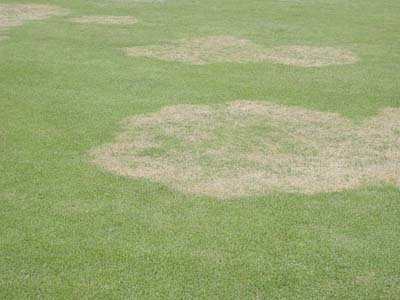
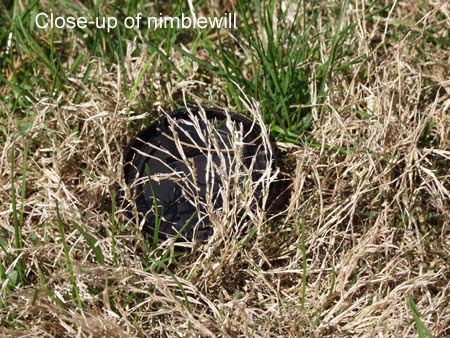
Tan patches in an otherwise green lawn at this time of the year are likely due to either slow-greening warm-season grasses or snow mold. The most common tan patch right now is warm-season grasses like nimblewill or zoysia (photos). Time, warming temperatures, and rainfall are the cures for most of these patches and they should…Read more about Tan Patches in an Otherwise Green Lawn[Read More]


Page last modified: June 10, 2019

Turfgrass Science at Purdue University - Horticulture & Landscape Architecture, 625 Agriculture Mall, West Lafayette, IN 47907

© 2026 Purdue UniversityAn equal access/equal opportunity universityCopyright ComplaintsMaintained by Turfgrass Science at Purdue University

If you have trouble accessing this page because of a disability, please contact Turfgrass Science at Purdue University at kkalbaug@purdue.eduAccessibility Resources