Category: Mowing

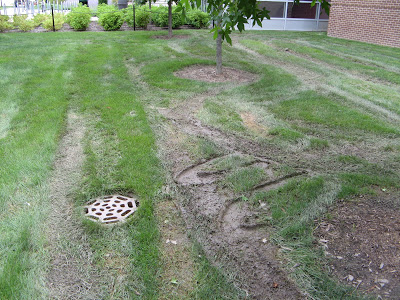
How to Mow Now That it has Stopped Raining

Tips for Mowing Wet Turf Sharpen your blades if you have not yet this spring. Mow in the afternoon when the leaf blades are dry if possible to reduce clumping of the grass blades. However, it is fine to mow...
Read More
Top Ten Turf Tips of 2010

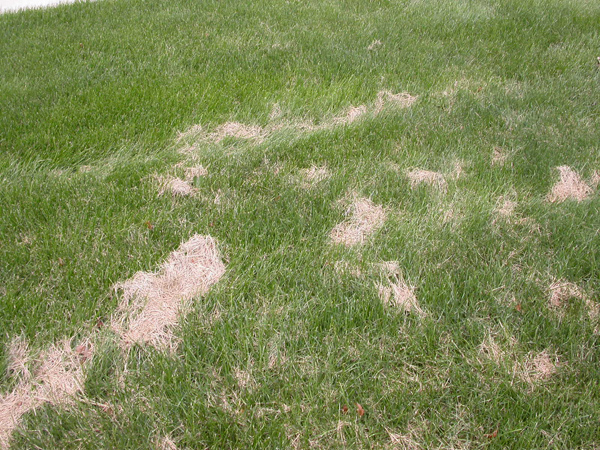
Part II: Summer diseases in Residential Turf Part III: Summer weeds: Common summer weeds and their control Part I: Too hot: Why some turfgrass species look poor in summer Color Variation in Residential and Commercial Lawns Crabgrass Control Now is...
Read More

What should I do with all these falling leaves?

There is a myth circulating that returning mulched tree leaves can be detrimental to turfgrass quality. The research shows just the opposite. It is true that heavy layers of tree leaves shading the grass can smother and kill grass. However,...
Read More

Wet and Flooded Turf

Wet Lawns Although July has been relatively dry thus far, June brought a great deal of rain and left many lawn soils saturated and wet. Here are a few tips concerning caring for your lawn during wet periods. Flooded Turf...
Read More

Sharpen Mower Blades

Due to the warm, wet weather we have been experiencing lately, homeowners are having to mow their lawns very frequently. Something to keep in mind throughout the summer is that the more often you mow your lawn, the more dull...
Read More

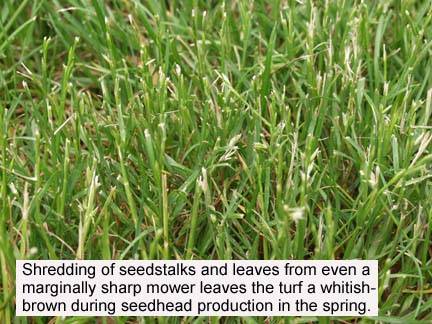
Managing Seedheads

Kentucky bluegrass, tall fescue and perennial ryegrass all produce seedheads that look unsightly in lawns. These seedheads are easily visible in maintained turfgrass because they grow faster and more unevenly than normal grass blades. Also, since the seedhead stalks are...
Read More

Warm Weather and Spring Mowing Woe’s

For those that are managing cool-season lawns like Kentucky bluegrass, the ryegrasses or fescues the unseasonably early warm spring weather has resulted in quite a bit of shoot tissue (leaf clippings) being produced. For many that think they want their...
Read More

Spring Mowing Tips

Last week’s warm temperatures really made the grass green-up and begin growing which means many people are starting to think about seasonal mowing. Probably one of the biggest mistakes homeowners make is not starting to mow their lawns soon enough....
Read More

Keep mowing and don’t set the mower down

Many people ask how long to continue mowing into the fall. The answer is to keep mowing as long as the grass continues to grow which is normally into late October or early November. Frequency of mowing can decrease but...
Read More

Keep mowing to mulch those tree leaves!

The trees are dropping their leaves and it is important to prevent a heavy layer of leaves from building-up on your turf before winter.  Heavy layers of tree leaves will shade the grass can smother and kill grass yet this...
Read More

Cool temperatures allow a jump on beneficial fall maintenance practices

The recent record or near record low temperatures combine with adequate soil moisture is advantageous for our cool-season turfgrasses, especially compared to the typical August-September heat and drought. Fall fertilization can begin anytime, especially with rain in the forecast to...
Read More

Summer Mowing and Fertilization

By the time you read these words the longest day of the year has approached and the official calendar “Summer” season will have begun. Just as the weather changes as we transition between seasons from late-Spring to Summer the turfgrass...
Read More

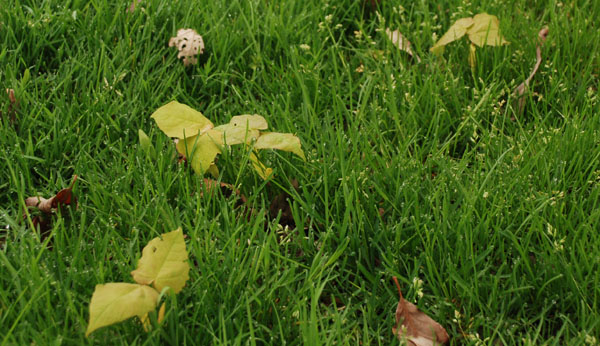
Volunteer tree seedlings in lawns?

I’ve gotten a number of calls asking about volunteer maple and other tree seedlings growing in lawns. These are direct descendents of a neighborhood tree whose seed pods released last spring/summer. You can either stake a couple of these small...
Read More

Turf 101: Spring Mowing

Though lawns in southern Indiana may have already been mowed a couple of times, mowing is just starting from Indianapolis north.  Mowing is the most expensive and laborious maintenance practice on turf, but it also has the largest effect on...
Read More

Searching for the no-mow” lawn grasses?

Most turfgrasses have leaves that only live for 30-60 days and thus constant growth is require to maintain ground cover, especially with any pets, children, or other traffic. The Holy Grail of “no-mow” turf is unlikely because the turf stand...
Read More

Keep Mowing to Mulch Those Tree Leaves!

The trees are dropping their leaves and it is important to prevent a heavy layer of leaves from building-up on your turf before winter.  Heavy layers of tree leaves will shade the grass can smother and kill grass yet this...
Read More

Don’t raise the mowing height during drought

Typical advice in the paper and TV is to raise the mowing height during drought to help the turf area stay green. However, this is very simplified advice which needs clarification. Here are some well-researched facts: • The higher you...
Read More

Seedheads Make for Tough Mowing

With the bizarre weather this spring, growth patterns of our cool-season grasses are inconsistent across the state. Kentucky bluegrass, tall fescue, and perennial ryegrass are either producing or soon will be producing seedheads. This natural phenomenon is induced primarily by...
Read More

Fire up the Mower!

Now's the time to get the mower out of the shed and start mowing (depending on where you live in the state). This normally happens well before most of us start mowing because we see mostly brown leaf blades and...
Read More

Keep mowing and don’t set the mower down

Many people ask how long to continue mowing into the fall. The answer is to keep mowing as long as the grass continues to grow which is normally into late October or early November. Frequency of mowing can decrease but...
Read More