Tag: Homeowner

James Rutledge Awarded The Musser Award of Excellence

The Musser International Turfgrass Foundation has selected James Rutledge of Purdue as the recipient of the 2010 Musser Award of Excellence. The award, which carries a stipend of $25,000, was announced earlier this year at the Golf Industry Show in...
Read More
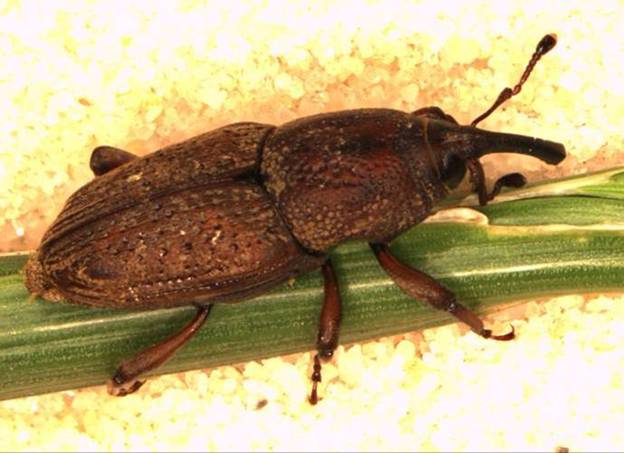
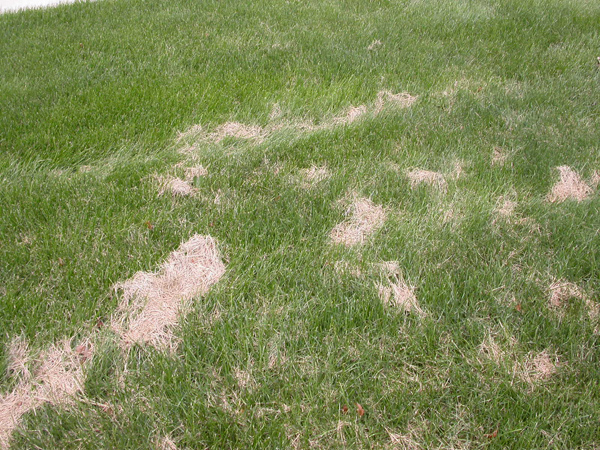
Hunting Billbugs in Zoysiagrass

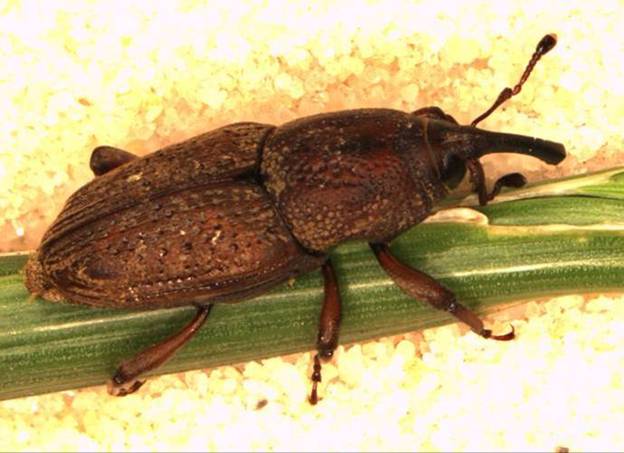
Hunting billbug is becoming a significant problem in parts of southern Indiana where zoysiagrass is grown.  These insects typically have two generations per year in this part of the Midwest with the larvae of both generations being capable of causing...
Read More

Warm Weather and Spring Mowing Woe’s

For those that are managing cool-season lawns like Kentucky bluegrass, the ryegrasses or fescues the unseasonably early warm spring weather has resulted in quite a bit of shoot tissue (leaf clippings) being produced. For many that think they want their...
Read More

Professionals: Multiple Targeting with Pesticides

As frequent users of pesticides, it is imperative that turfgrass professionals understand the terminology surrounding their formulation and use.  For example, when we talk about ‘multiple targeting’ we are referring to an attempt to control more than one pest with...
Read More

Spring seeding

Mid-August to mid-September is the best time to seed cool-season grasses. However, sometimes turf is damaged throughout the winter or the previous year and must be seeded in the spring. Spring seeding is difficult so there are a few helpful...
Read More

Crabgrass Control

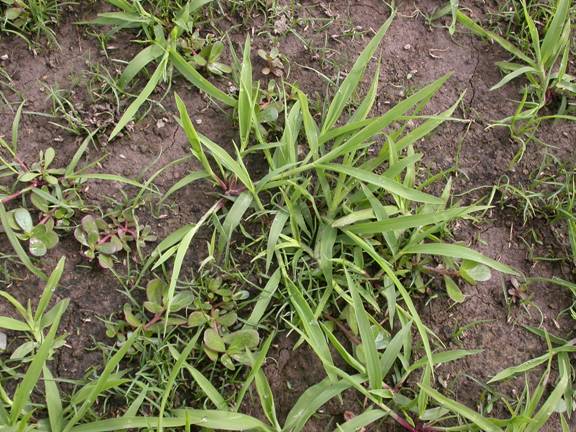
In a few weeks, it will be time to apply preemergence herbicides for controlling crabgrass. Crabgrass germination starts in early May, or when soil temperatures are approximately 50 to 55 degrees Fahrenheit. Once germination occurs, the weeds are difficult to...
Read More

Spring Mowing Tips

Last week’s warm temperatures really made the grass green-up and begin growing which means many people are starting to think about seasonal mowing. Probably one of the biggest mistakes homeowners make is not starting to mow their lawns soon enough....
Read More

Tiny Trails in Turfgrass

With the winter snows melting away many are often surprised to find a series of tiny trails on the surface of their lawns and turfgrass fields.  These are vole highways.   Voles are often called meadow mice or field mice. While...
Read More

Purdue Turfgrass Research Report Available On-Line

The summary of our turfgrass research in the year 2009 is now available at www.agry.purdue.edu/turf/report/2009/index.html. The overall goal of our research program is to minimize inputs while maintaining turf quality, minimizing costs, and further protecting our environment. Our research summary contains...
Read More

Snow mold damage

Melting snows revealed some significant snow mold damage.  As you know there are two types of snow mold diseases, gray snow mold (aka Typhula blight) and pink snow mold (Microdochium patch).  Although they create similar symptoms (circular patches of tan turf—sometimes with orange/brown...
Read More

Calculating the pounds of fertilizer to apply

There are literally thousands of fertilizers and fertilizer/pesticide combinations available to homeowners and professionals. Therefore, we can’t recommend how many pounds of a specific fertilizer to apply, but rather we must recommend fertilization rates in pounds of nitrogen per thousand...
Read More

Purdue Alumni and Friends Reception at the GCSAA in San Diego

For those making the trip to San Diego for the Golf Industry Show, the Purdue Alumni and Friends Reception will be held Wednesday, February 10, 6:00 to 8:00 pm in the Topaz room of the San Diego Westin, 400 West...
Read More

Recent cold temperatures should have little effect on winter survival of Bermuda, zoysiagrass, or cool-season turfgrasses.

The recent cold snap has raised a number of questions about survival of warm-season turfgrasses, especially given the relatively recent popularity of bermudagrass for fairways and athletic fields. Though winterkill is highly variable, all turfgrasses are most susceptible to cold...
Read More

Impact of Water Quality on Pesticide Performance

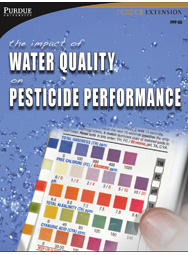
The quality of the water used to spray the product is one factor that doesn’t get much attention for effective pesticide applications . Research clearly shows that the quality of water used for spraying can affect how pesticides perform. This publication describes how to test your water quality for better performance of your pesticides.

(PPP-86)


PDF

PDF version of Impact of Water Quality on Pesticide Performance

Read More

It’s not too late to do a lot of good for your lawn

The fundamental principle for effective lawn pest control is to “Cultivate a dense, healthy turf”.  One way to promote turf density is to properly feed the plant at a time when it is most capable of utilizing these nutrients for...
Read More

Upcoming Education: Basic Training Turfgrass Management

This one-day workshop is perfect for new-comers to the industry as well as more experienced professionals who want a refresher course on turf management. This is a perfect training opportunity for you or your staff from lawn care operators, sports,...
Read More

Cold, rainy, windy conditions playing havoc on fall applications

The window for effective broadleaf weed control is closing fast and we normally see good control of difficult-to-control weeds like ground ivy until about the end of October. However, you may still get adequate control of easier-to-control weeds like dandelion...
Read More

Turf 101: Why does a November application of fertilizer work?

Nitrogen stimulates increased photosynthesis and the extra energy derived from this goes directly into growth, respiration to maintain the plant (similar to humans), or into storage. In early November, the temperature is still adequate for photosynthesis, but cool enough to...
Read More

Cool, damp weather hindering fall turf work

The almost constant rain/drizzle/wet conditions coupled with early unseasonably cool temperatures have hindered progress in fall maintenance. All is not lost though because warmer and drier weather is in the forecast. Seeding: It’s too late to seed throughout IN to...
Read More