Tag: Homeowner
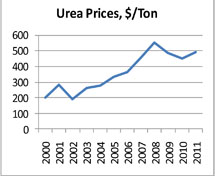
Fertilizer prices are on the upswing again, buoyed by the high prices of agricultural products that have stimulated increased demand. While the general U.S. economy struggles to recover from the financial crisis of 2008, the demand for agricultural products continues...
Read More
Top Ten Turf Tips of 2010
Part II: Summer diseases in Residential Turf Part III: Summer weeds: Common summer weeds and their control Part I: Too hot: Why some turfgrass species look poor in summer Color Variation in Residential and Commercial Lawns Crabgrass Control Now is...
Read More
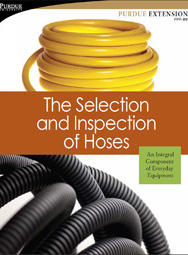
The Selection and Inspection of Hoses: An Integral Component of Everyday Equipment
When worn-out hoses fail or don’t work, it becomes very clear how important those inexpensive parts can be. This publication describes design characteristics to look for to correctly select a hose, and offers inspection guidelines to determine when a hose, clamp, or fitting should be replaced.
(PPP-89)
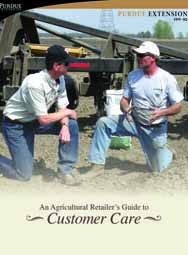
An Agricultural Retailer’s Guide to Customer Care
In today’s competitive atmosphere, the challenge for agricultural retailers is not simply to adapt to change, but to become exceptional retailers. This publication describes the things customers want from their retailers and offers strategies retailers can follow to improve customer loyalty.
(PPP-90)
PDF
PDF version of An Agricultural Retailer’s Guide to Customer Care
Purdue Turf Club Apparel
Dear Supporter of the Purdue Turf Science Program, The Purdue Turf Club would like to extend our greetings and future holiday wishes to you. As we enter the end of the growing season we begin to consider the upcoming industry...
Read More
Late Drought Causing Problems and Questions for Many
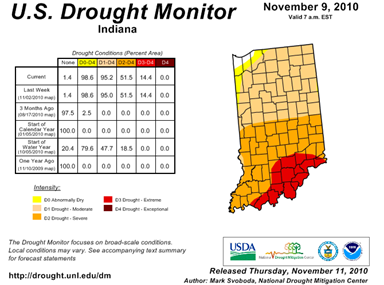
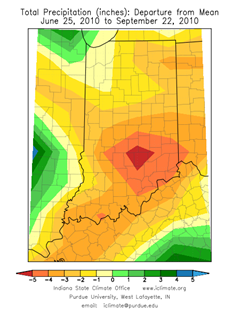
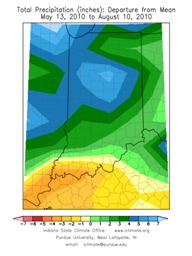
Earlier this fall we made recommendations on how to recuperate lawns after a drought; however, rain has not returned and now we must further adjust our maintenance practices in unirrigated turf areas. The map on the left shows the lack...
Read More
Late Fall fertilization
Cool-season turfgrass species should be fertilized mainly in the autumn. In addition to a fertilization in September, a fertilization with nitrogen in November will help produce a healthy turf. Lawns damaged during summer months as in 2010 and newly seeded...
Read More
Is it too late to seed? What should we do?
Recently, the question of whether or not it is too late to seed has been posed to me by many. The drought that we have experienced during our optimum seeding window has pushed back seeding dates for many. Now the...
Read More
How late is too late to control broadleaf weeds?
Due to the current drought conditions for many in Indiana we have recommended holding off on herbicide applications until rain returns to drought stressed turf. Herbicides are most effective on weeds that are not drought-stressed and herbicides can be damaging...
Read More
What should I do with all these falling leaves?
There is a myth circulating that returning mulched tree leaves can be detrimental to turfgrass quality. The research shows just the opposite. It is true that heavy layers of tree leaves shading the grass can smother and kill grass. However,...
Read More
Rick Latin on Sabbatical Leave
Rick Latin will be on sabbatical from October 1, 2010 through March 31, 2011. He will be conducting research on turf disease management and fungicide performance with Dr. Phil Harmon at the University of Florida in Gainesville, FL. Rick will...
Read More
Rust Diseases
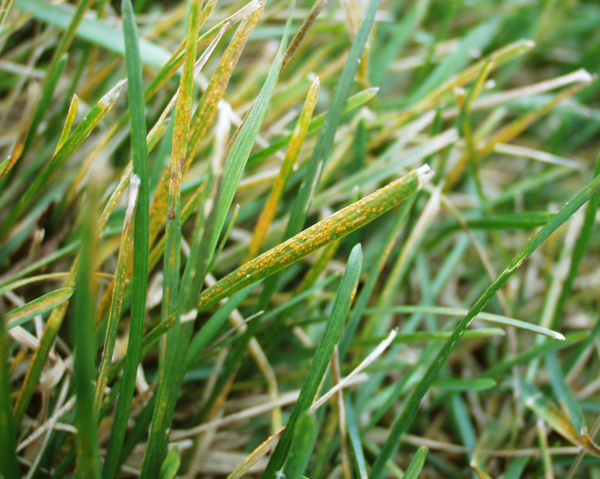
Rust is a disease of taller mown turf. Outbreaks are most common on residential lawns, low budget athletic fields, and, occasionally, on golf course roughs. A variety of related fungi cause rust. Ccommon names include leaf rust, crown rust, and...
Read More
Fall Time Mole Control
Moles are back in the limelight!. These small subterranean, tunnel-making pests are causing big frustrations for those managing turfgrass and landscapes. Mole damage is most common during the spring and fall. The only two methods of effectively controlling moles are...
Read More
Record drought and heat are making seedling establishment a serious challenge
After the extremely stressful summer conditions of 2010 many thin areas in cool-season lawns have been reseeded to restore turf density and improve appearance. Regardless of environmental conditions, establishing a turf from seed is a challenge and the process is...
Read More
What to do about deteriorated lawns
This year there were multiple causes for turf decline in home lawns. High temperatures and drought were the primary causes for a decline in turf and an increase in weed incidence. During warm weather (especially temperatures > 87 °F) cool-season...
Read More
Late Season Insects Found in Turfgrass
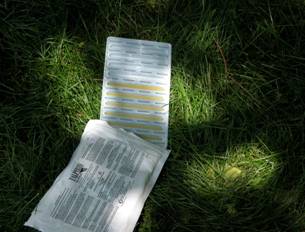
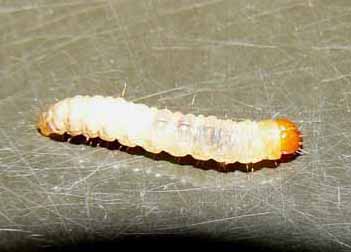
The following letter and pictures were sent to us for identification. There was a buzz of follow-up letters and communication afterward indicating that maybe this is not just an isolated occurrence. I have enclosed the initial letter, accompanying photographs and...
Read More
Predicting the Future and Documenting the Past
When weather patterns are not typical, as with this summer, it is useful to both look ahead and behind to help improve your maintenance practices and better time future applications. Documenting the Past One advantage to tough summers like this...
Read More
Fertilizer Recommendations
The amount of nitrogen fertilizer required by turf depends on various management and environmental/management factors (Table 1). A good rule to follow is to never apply more than 1.0 lb N/1000ft2 in any one application. Do not apply fertilizer more...
Read More
Lawn Cultivation: Is now the time?
Lawns are cultivated (sometimes referred to as aerfication) primarily to relieve soil compaction and manage thatch (organic) layers. Other reasons may be to open the turf canopy and create a seedbed in order to facilitate interseeding or overseeding, or move...
Read More
Now is the time to seed lawns and other turf areas
Timing The best time to seed a lawn is in the late summer to early fall. Adequate soil moisture, warm soil, and limited weed pressure allow for excellent seedling growth. Between August 15 and September 15 is optimum seeding time...
Read More