Tag: Homeowner

Time to make the donuts… or better yet, time to cultivate!

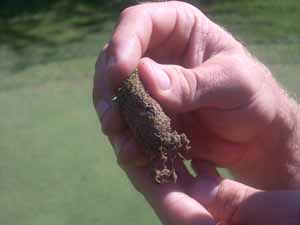
A shallow root system in putting green bentgrass, this plant may not tolerate deep cultivation very well Surface following solid-tine cultivation procedure, notice the rootzone mixture on the surface, the point, be careful and be gentle! A Late-Summer Cultivation Checklist:...
Read More
Summer Stress

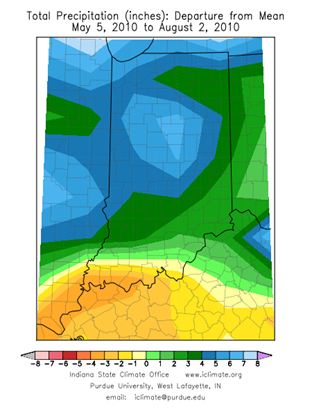
With a warm and wet summer, we are experiencing decline in some of our turf around the state due to temperatures, disease, insects, and weeds. In response, we are publishing a four part series on this topic to help turfgrass...
Read More

Crabgrass

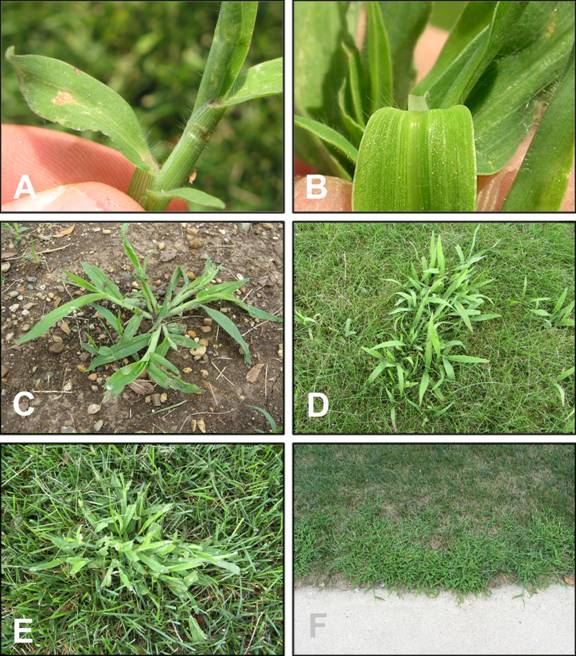
Crabgrass is running rampant this year as the hot summer and more than adequate rainfall has helped to push this beast of a weed along. Crabgrass is a warm-season annual grass meaning that it thrives under hot and moist conditions....
Read More

Grass Moths Everywhere

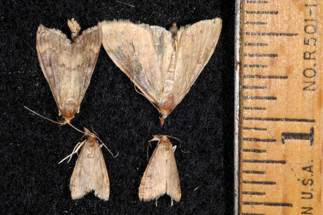
If you have walked out on your lawn recently you may have noticed hundreds of small, buff colored, moths flittering here or there as you approach.  These may be alarming for both farmers as well as turfgrass managers because they;...
Read More

Summer Stress

With a warm and wet summer, we are experiencing decline in some of our turf around the state due to temperatures, disease, insects, and weeds. In response, we are publishing a four part series on this topic to help turfgrass...
Read More

Summer Stress

Summer Stress With a warm and wet summer, we are experiencing decline in some of our turf around the state due to temperatures, disease, insects, and weeds. In response, we are publishing a four part series on this topic to...
Read More

August Is Grub Target Month

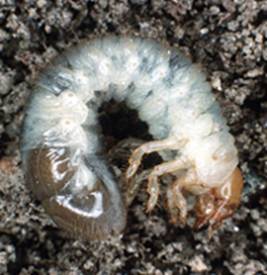
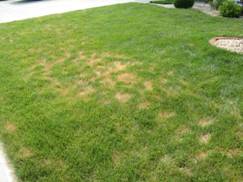
This is the time of year to target for grub control. Whether your grub control products were applied a month ago, last week or are to be applied next week, the time when they actually do their work is early...
Read More

Summer Stress

Part I: Too hot: Why some turfgrass species look poor in summer. There are multiple causes for turf decline in the summer. Cool-season turf areas can decline in the summer because of high temperatures, drought, pest damage (insects, diseases, weeds,...
Read More

Gray Leaf Spot 2010

Gray leaf spot has been identified on perennial ryegrass fairways in northern Kentucky.  It is likely that outbreaks will occur in southern Indiana with the next rainstorm (or it may already be established).  If the turf that you manage has...
Read More

Contact Information for Dr. Aaron Patton

Dr. Aaron Patton has joined the Turf Program as the Turf Extension Specialist. If you need to contact him, his contact infomation is Phone 765-494-9737 Fax 765-496-6335 email ajpatton@purdue.edu Department of Agronomy 915 W. State Street West Lafayette, IN 47907
Read More

Wet and Flooded Turf

Wet Lawns Although July has been relatively dry thus far, June brought a great deal of rain and left many lawn soils saturated and wet. Here are a few tips concerning caring for your lawn during wet periods. Flooded Turf...
Read More

Rain gardens and turf

There has recently been increased interest in the use of rain gardens to reduce water runoff in Indiana and nationally. A rain garden is a specially constructed area with a berm, planted with various plants, and designed to capture rain...
Read More

Call Before Sending Samples to PPDL!

Our Plant and Pest Diagnostic Lab (PPDL) will be a little light on help over the next two weeks (June 19 – July 5).  Remember that the lab processes samples from all plants and crops—and even though we try to...
Read More

Slime mold

Slime mold can occur on all turf grasses.  The disease does not infect the plant but instead grows on the outside of the leaves.  Yellowish, purplish, or grayish fruiting bodies may be observed during wet periods.  As the turf begins...
Read More

Goose Round-up – ‘Yee-Haw’

The Giant Canada goose (Anatidae: Branta canadensis maxima) recently has become one of the most serious pests of parks and golf courses in the Eastern half of the United States. These geese are probably the most adaptable of all waterfowl and, if...
Read More

Turf Disease Watch

The near term forecast indicates an early arrival of summer, when temperature and moisture conditions favor diseases that can cause serious damage to turf on golf courses, athletic fields and residential landscapes.  Two of the more important diseases are discussed...
Read More

Dr. Aaron Patton Joining Purdue as Turf Extension Specialist

When I was 15 years old, I started working at the Indiana University golf course in Bloomington where I cleaned golf carts, helped out on the driving range, and occasionally worked in the pro shop. While there I had the...
Read More

Sharpen Mower Blades

Due to the warm, wet weather we have been experiencing lately, homeowners are having to mow their lawns very frequently. Something to keep in mind throughout the summer is that the more often you mow your lawn, the more dull...
Read More

May Fertilization

Although it is generally preferable to fertilize home lawns in the fall, a late May fertilizer application can help the turf retain its color and vigor during the summer. If conservative nitrogen rates are used, fertilizer can be applied in...
Read More

Managing Seedheads

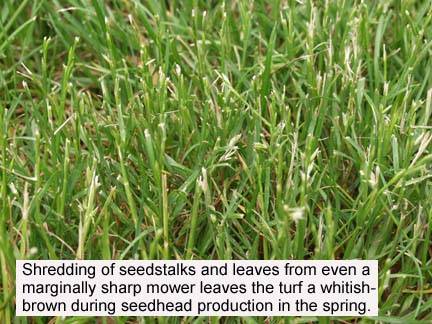
Kentucky bluegrass, tall fescue and perennial ryegrass all produce seedheads that look unsightly in lawns. These seedheads are easily visible in maintained turfgrass because they grow faster and more unevenly than normal grass blades. Also, since the seedhead stalks are...
Read More