Tag: Turf Professional

White Clover in Golf Courses, Sports Turf, and Lawns

The small white flowers of white clover are very visible right now and it may appear that clover is taking over, especially under-fertilized turf areas. Clover is a legume and is very competitive under low N conditions, so increasing annual...
Read More
Midwest Regional Turf Field Day on July 17

There's still time to register for the Midwest Regional Turf Field Day that will be held on Tuesday, July 17 at the W.H. Daniel Turfgrass Research and Diagnostic Center in West Lafayette . The variety and quality of research tours...
Read More

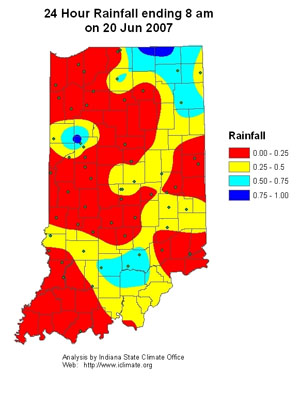
Misery loves company: Yesterday’s state rainfall map

Though West Lafayette was lucky enough to get significant rainfall yesterday, not many other places in the state were as lucky. Below is a state rainfall map, courtesy of the Indiana State Climate Office. This information and much more weather...
Read More

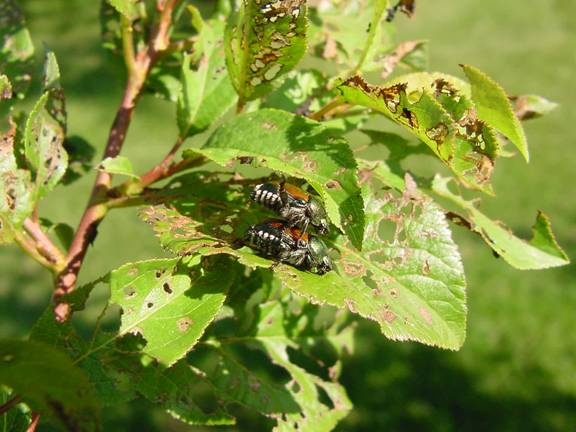
Early Japanese Beetles

It seems that the Japanese beetles have been arriving early for the last few years but this year is truly an exception. The first Japanese beetles of the year were observed in central Indiana on the 3rd of June. This...
Read More

Midwest Regional Turf Field Day on July 17

Don't forget to register for the Midwest Regional Turf Field Day that will be held on Tuesday, July 17 at the W.H. Daniel Turfgrass Research and Diagnostic Center in West Lafayette . This is a great opportunity for turf professionals...
Read More

Controlling Poa trivialis in sports fields

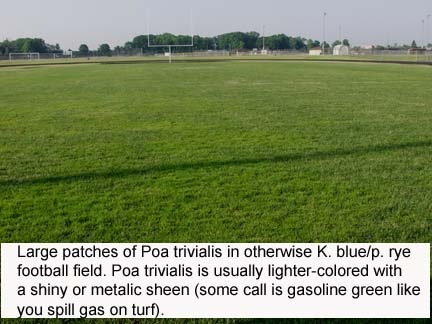
Poa trivialis is now common in sports fields, possibly due to as little as one contaminated seed source from the many overseedings done on sports fields. Once germinated, Poa trivialis spreads via stolons which may be further spread during every hollow tine aerification. Poa...
Read More

Controlling ground ivy and/or violets

Ground ivy and violets are currently flowering and at their peak of beauty, but these two weeds remain tough to control in Indiana . Like almost all broadleaf weeds, flowering indicates a point in their lifecycle where they are susceptible...
Read More

We need help tracking new white grub species

The presence of two potentially serious white grub pests of turfgrass and ornamental plants has recently been confirmed in three northern Indiana counties; Porter, St. Joseph and Allen. The European chafer and Asiatic garden beetle are similar in biology to...
Read More

Weed Control in Newly Seeded Bermudagrass

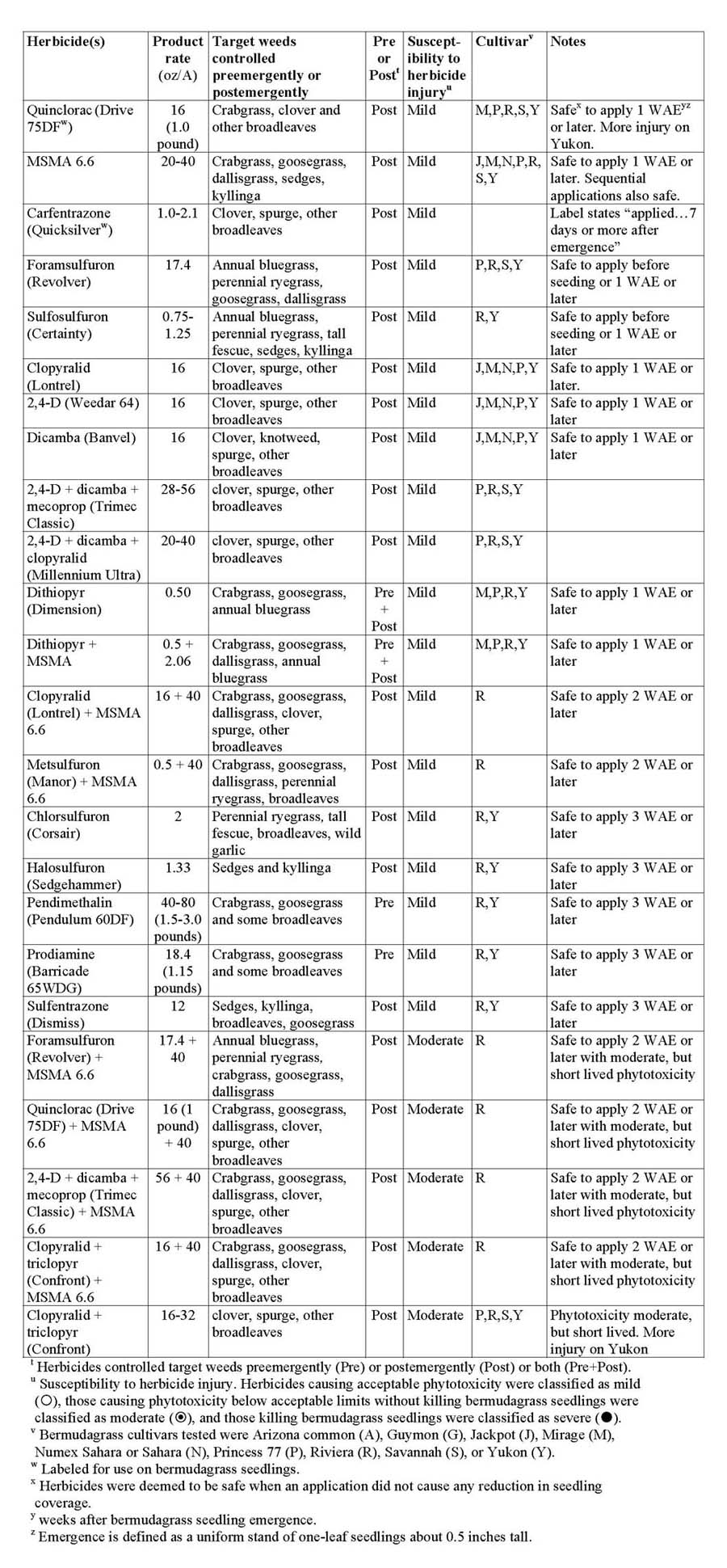
Bermudagrass seeded or sprigged into damaged areas will require weed control to maximize establishment. Most herbicides carry precautions on use in sprigged bermudagrass, but few carry recommendations on use in seeded bermudagrass because of the newness of seeded varieties. Following...
Read More

Bermudagrass Winter Survival and Cultivar Selection

With the bermudagrass damage in southern IN and Kentucky , we are fielding many questions on cultivar survival. Following is our winterkill data from 2003 of bermudagrass grown in West Lafayette under fairway conditions. Combining this data and other data...
Read More

Winter damage on bermudagrass

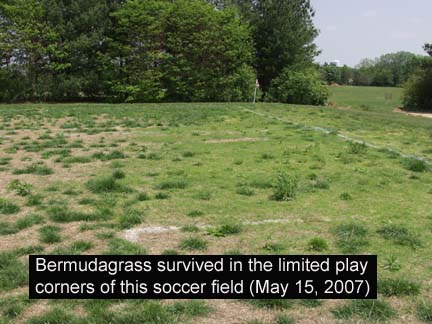
As bermudagrass begins to green up in southern IN and Kentucky , it is apparent that moderate to severe winter damage has occurred. Though we may be a little premature because full green-up and growth is still a week or...
Read More

Sand Topdressing Programs

There are many different sand topdressing programs used by superintendents. Budgets, experience, labor and equipment availability, and play schedule are just some of the factors affecting topdressing programs. Our research hopes to provide answers to many of the common topdressing...
Read More

Spring Dandelion Control for Professionals

Though fall applications are most effective for controlling broadleaf weeds, spring applications are warranted for many turf areas. Now that dandelions are blooming or in the puffball stage throughout IN, applications should be effective. It does not take much wind...
Read More

Managing Surface Organic Matter in Bentgrass Putting Greens

As you begin planning for spring core cultivation, consider the following as some food for thought. Turf research has shown that excessive organic matter, and/or thatch (> ½ inch), in the upper (1-2 inches) rootzone profile can lead to rapid...
Read More

Turf Field Day

Mark your calendar for the 2007 Turf Field Day at the W.H. Daniel Center in West Lafayette on July 17, 2007. Come see the most up-to-date research that the Purdue Turf Program is doing and don't forget to pre-register to get...
Read More

Purdue Turfgrass Research Report Available On-Line

The summary of our turfgrass research in the year 2006 is now available at http://www.agry.purdue.edu/turf/report/2006/index.htm. The overall goal of our research program is to minimize inputs while maintaining turf quality, minimizing costs, and further protecting our environment. Our research summary contains...
Read More

A New Threat to Indiana Turfgrass: Two Species of Invasive Scarab Beetles (White grubs) Found in Northern Indiana

It was just a matter of time. While invasive species such as the emerald ash borer have been garnering so much attention in the press, the Turfgrass Entomology and Applied Ecology Laboratory at Purdue University has been tracking the spread...
Read More

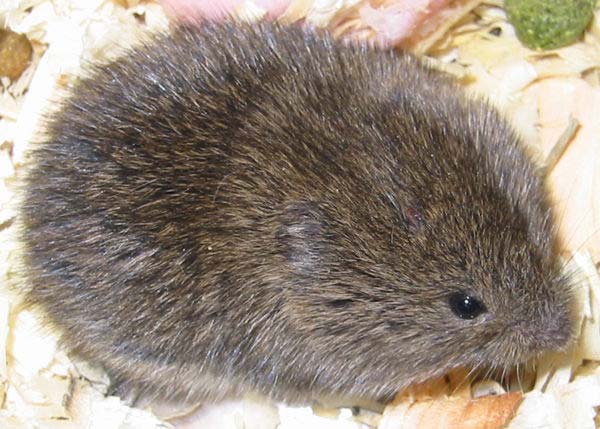
Voles (remember the V)

During late March and April we get many calls about voles and vole damage in turfgrass. Voles are among the most important vertebrate pests in turf areas. Unfortunately the name ‘vole' is very close to the name ‘mole' causing some...
Read More

GCSAA’s Nutrient Use Survey

GCSAA's nutrient use survey is now available and may have already arrived on GCSAA members desks. This survey will help document changes in cultural practices over time as well as help direct GCSAA research, and allow the GCSAA to respond...
Read More

Tracking Growing Degree Days

Many of our pest problems in turf can be at least partially predicted through growing degree day models ( Poa annua seedheads is one example). Most of the models use a base temperature of 50 (abbreviated as GDD 50 ) assuming 50...
Read More