Tag: Turf Professional

Still time left to sign up for Indiana Green Expo to be held Jan 12-14!

The registration deadline is fast-approaching for the Indiana Green Expo and forms must be postmarked by Dec. 31, 2008. The Indiana Green Expo is the largest turf, ornamental, nursery, and landscape conference in Indiana and is jointly sponsored by the...
Read More

How Late is Too Late to Control Dandelions and Other Weeds?

Even though the drought has limited some broadleaf weed applications this month, we are now in the prime season for broadleaf weed control. Actually there is plenty of time left for good control. Nebraska research reported in 2002 showed 2,4-D...
Read More

Billbugs a Pest in 2008? Keep Them in Mind for 2009

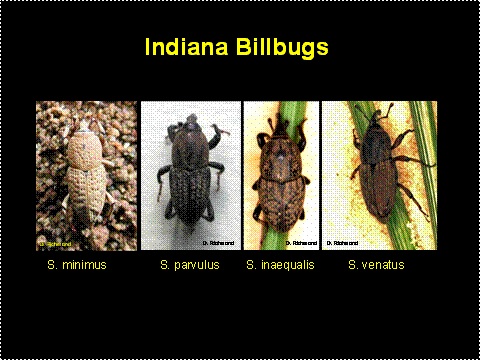
This summer saw some extensive billbug damage in many parts of Indiana.  Obvious damage to Kentucky bluegrass in the central and northern parts of the state are not uncommon and can usually be attributed to the bluegrass billbug.  However, reports...
Read More

MRTF Golf Day at The Fort in Indianapolis on September 29

Openings are still available for the MRTF Golf Day at The Fort Golf Resort in Indianapolis on September 29. This annual event is held to promote turfgrasss research, raise awareness of the Purdue Turfgrass Science Program, and provide an enjoyable...
Read More

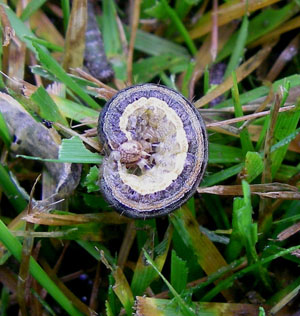
Armyworms Are Poised For Battle

We have been monitoring reports of very large infestations of armyworm moths flying into Kentucky this spring.  Armyworms move north with storms from the southern states each year and depending upon how and where the storms blow will dictate when...
Read More

New Options at Midwest Regional Turf Field Day on July 15

Even though the Midwest Regional Turf Field Day is one of the largest in the country, we’re always looking for new and improved ideas. The MRTF Board of Directors and the Purdue Staff have put their heads together and come...
Read More

Midwest Regional Turf Field Day on July 15

There's still time to register for the Midwest Regional Turf Field Day that will be held on Tuesday, July 15 at the W.H. Daniel Turfgrass Research and Diagnostic Center in West Lafayette . The variety and quality of research tours...
Read More

Mowing height does not affect speed of athletes

We often hear the comment by coaches to change the mowing height of an athletic field when a particularly “fast” or “slow” team is coming to play.  In a comprehensive article by Kevin Trotta in a June 16, 2004, “Turf...
Read More

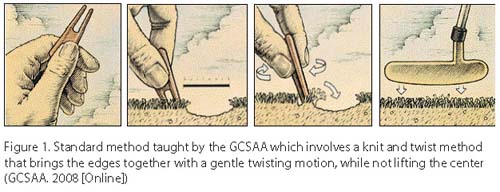
Ball mark Recovery: Does the Repair Tool Matter?

Putting green surface smoothness and uniformity is often disrupted by unrepaired ballmarks. These marks can disrupt surface smoothness and increase the potential for weed (e.g. annual bluegrass) encroachment. The traditional method for repairing ballmarks normally employs a metal pronged tool...
Read More

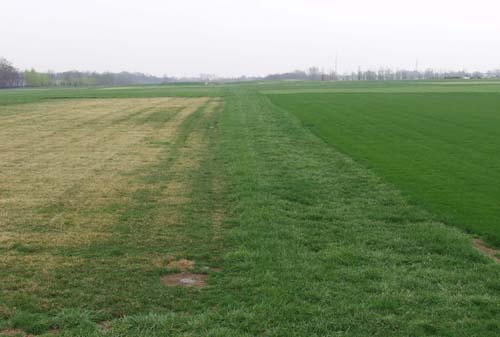
Color Variation in Residential and Commercial Lawns

During spring green-up, home lawns may reveal many variations in color, growth rate, and leaf width. This variation can be due to some of the following reasons: Species and cultivars:  Perennial ryegrass is always the first of the desired cool-season...
Read More

Reicher on Sabbatical until October 15

You’ll probably notice a slight decrease in frequency and number of Turf Tips this summer as I will be on sabbatical until Oct 15. I will be completing a national survey on Poa trivialis contamination in seed lots. This is a weed...
Read More

For professionals: Spring dandelion control

Now that dandelions are flowering or in the puffball stage throughout IN, now is the second best time to control these weeds. Fall applications are still most effective for controlling broadleaf weeds.  It does not take much wind to drift...
Read More

For professionals: Where’s Tenacity Herbicide for Lawns?

Tenacity herbicide (mesotrione) is from Syngenta and it will selectively control crabgrass, creeping bentgrass, nimblewill, and a number of broadleaf weeds in cool-season lawns. It is one of the most unique and effective herbicides that we have tested in a...
Read More

For Professionals: Herbicide Delays after Seeding

Many turf areas required dormant seeding or seeding this spring to help repair damage from last summer and fall. Weed germination is just around the corner and may be problematic on thin turf. Almost all herbicides will affect turfgrass seedlings...
Read More

Regenerating Fall Use Athletic Fields

With the fairly wet weather last fall, football and soccer fields have taken a beating.  The fields that were aggressively aerified, fertilized, and dormant-seeded last fall should improve dramatically by mid-May. Though improvement won’t be as efficient done now compared...
Read More

Nitrogen and Phosphorus: fertilizing lawns to protect water quality

Healthy turf areas provide many environmental and recreational benefits. A properly fertilized turf has fewer weeds, is more resistant to insect feeding and is less disease prone than malnourished turf. Furthermore, a dense turf slow and decreases water runoff following...
Read More

For professionals: Seed thin turf now or use weed control?

With last year’s brutal summer and early fall, many areas are in need of reseeding. The question comes up about seeding and weed control: should the weeds be controlled first or should the seeding be done first? This seems like...
Read More

For Professionals: Choosing a Preemergence Herbicide

There are many, many formulations and combinations of preemergence herbicides available for the professional. Following are some suggestions for purchasing and using preemergence herbicides. Control from every preemergence herbicide can vary from year to year, or location to location. Therefore,...
Read More

For Professionals: Timing of Preemergence Herbicides

If a preemergence herbicide is justified on a turf area, the timing of application is important. In theory, applying too early will expose the herbicide to soil microbes and processes in the soil that may break it down, allowing crabgrass...
Read More

Offering Sound Pest Management Advice to the Public

This publication emphasizes the importance of providing sound pesticide advice to customers. Good diagnostic skills are essential. You personally must know and understand the behavior of various pests and have a working knowledge of various control options available; and must ensure that your customers understand your recommendations.

(PPP-62)


PDF

PDF version of Offering Sound Pest Management Advice to the Public

Read More