Publication Category: Maintaining a Home Lawn

Animal Urine Damage in Turf

Animal urine can aggravate anyone attempting to maintain a uniformly green, aesthetically pleasing lawn. For homeowners, pets (particularly dogs) are the most frequent cause of patches of darker green and/or brown turf, that are often concentrated in a particular part of the lawn. This publication describes symptoms of animal urine damage in turf and provides some management solutions.

(AY-327-W)

PDF

PDF version of Animal Urine Damage in Turf

Read More

Maintaining Lawns on Sandy Soils

Species Selection Maintaining an attractive lawn on sandy soils depends largely on the turfgrass species selected. Species that have improved drought tolerance include tall fescue and some cultivars of Kentucky bluegrass. Fine leaf fescues include red, sheep, hard, and chewing...
Read More

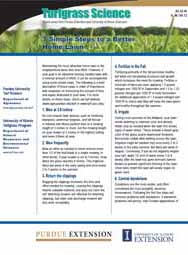
7 Simple Steps to a Better Homelawn

Maintaining the most attractive homelawn in the neighborhood takes time and effort. However, if your goal is a good-looking, healthy lawn with a minimal amount of effort, it can be accomplished using some simple steps. The following is a brief description of those steps in order of importance, with emphasis on minimizing the amount of time and input dedicated to your lawn. test

(AY-32-W)


PDF

PDF version of 7 Simple Steps to a Better Homelawn

Read More

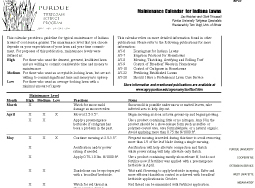
Maintenance Calendar for Indiana Lawns

The “Maintenance Calendar” provides seasonal lawn tips for cool season grasses. Three maintenance levels are established depending on the amount of money and time you are willing to invest. The calendar provides practices and notes on what you should do each month to ensure a healthy lawn.

(AY-27-W)


PDF

PDF version of Maintenance Calendar for Indiana Lawns

Read More

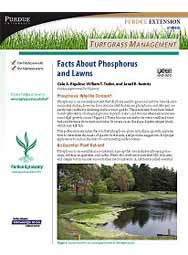
Facts About Phosphorus and Lawns

This publication for both professionals and homeowners examines the role that phosphorus plays in turfgrass growth, explains how to determine the needs of specific turf stands, and provides suggestions for proper application to reduce the risk of contaminating surface waters.

(AY-334-W)


PDF

PDF version of Facts About Phosphorus and Lawns

Read More

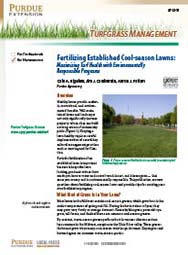
Fertilizing Established Lawns

Fertilizing established lawns keeps the lawn looking good and reduces how much you have to water and control weed, insect, and disease pests — that saves you money and is environmentally responsible. This publication answers questions about fertilizing cool-season lawns and provides tips for creating your own fertilization program.

(AY-22-W)


PDF

PDF version of Fertilizing Established Lawns

Read More

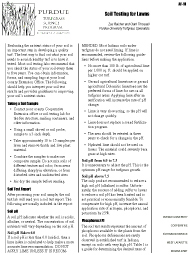
Soil Testing for Lawns

This publication is intended to aid in interpreting soil test results and to provide guidelines on improving soil nutrient status for general turf, commercial and athletic turf, and to home lawn owners.

(AY-18-W)


PDF

PDF version of Soil Testing for Lawns

Read More

Don’t Bag It

How can you handle grass clippings when the city is not going to collect them any more? AY-2 offers tips on how to leave grass clippings on the lawn while maintaining a healthy yard.

(AY-2-W)


PDF

PDF version of Don’t Bag It

Read More

The Selection and Inspection of Hoses: An Integral Component of Everyday Equipment

When worn-out hoses fail or don’t work, it becomes very clear how important those inexpensive parts can be. This publication describes design characteristics to look for to correctly select a hose, and offers inspection guidelines to determine when a hose, clamp, or fitting should be replaced.

(PPP-89)


PDF

PDF version of The Selection and Inspection of Hoses: An Integral Component of Everyday Equipment

Read More