Category: Pesticide Information

September 12, 2024: Fall Armyworms, Again?

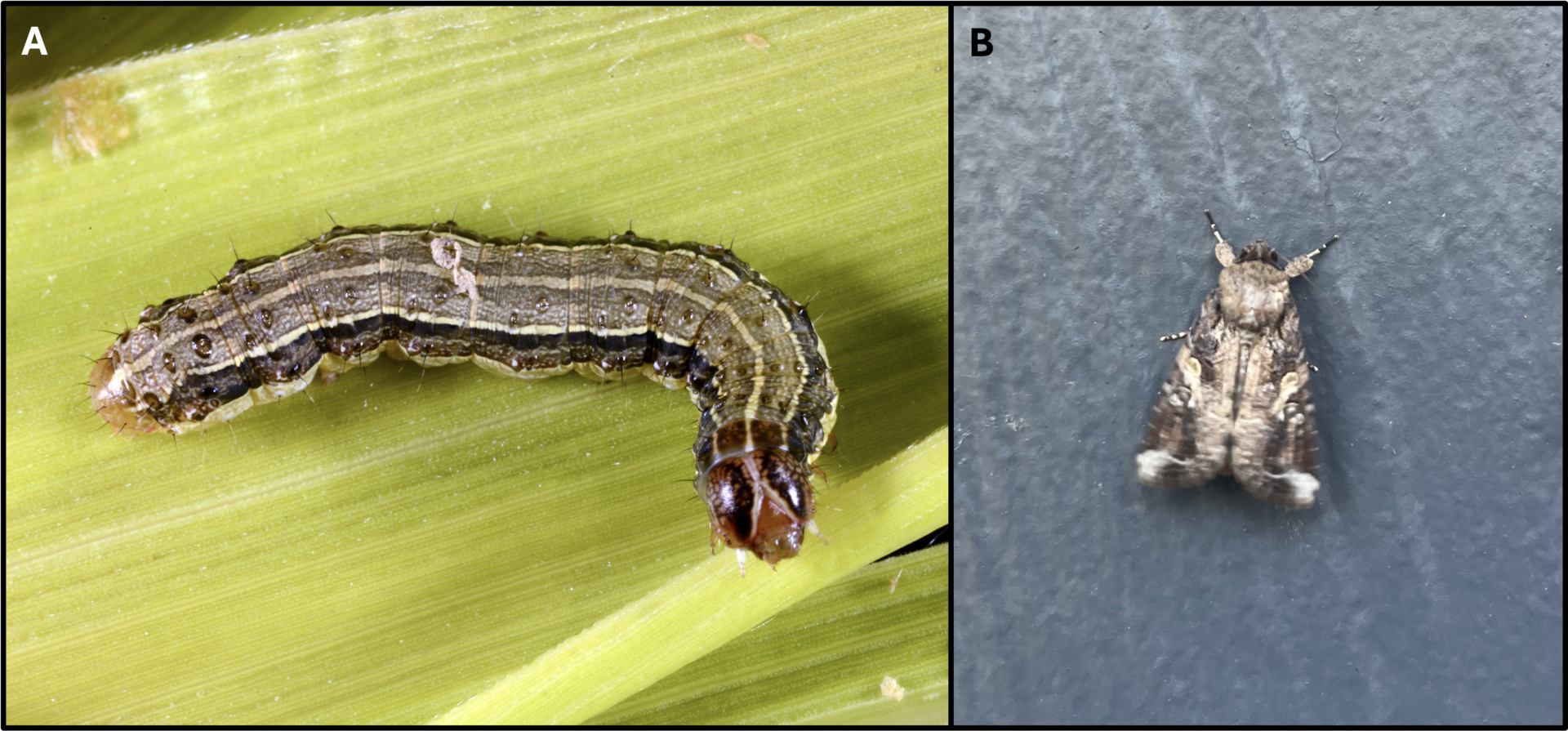
In 2021, the entire Midwest experienced one the worst fall armyworm (Fig. 1A and B) outbreaks in decades, and for turfgrass professionals and enthusiasts it seems like we may be on the verge of another late-season outbreak. These seasonal, but sporadic insects started showing up at the end of August, and adults and egg masses…Read more about September 12, 2024: Fall Armyworms, Again?[Read More]


White Grub Season Approaching: Remember to Follow Label Directions

Last month, a commercial landscape manager in Oregon made an off label application of dinotefuran to flowering linden trees resulting in the death of more than 25,000 bumblebees and immediate action by the Oregon Department of Agriculture to implement a six month ban on all dinotefuran products labeled for landscape use http://www.oregon.gov/ODA/docs/pdf/news/130627dinotefuran.pdf   The labels…Read more about White Grub Season Approaching: Remember to Follow Label Directions[Read More]


2012 Imprelis UPDATE

A new publication, Imprelis Update: 2012 Field Notes on Injury and Recovery, was just developed by Purdue Specialists to address some of the many questions being asked about Imprelis in 2012 including: Did trees recover from Imprelis® injury? Are new symptoms being discovered? What Should I Do if I Suspect Imprelis® Injured Trees BUT I…Read more about 2012 Imprelis UPDATE[Read More]


Imprelis Herbicide Injury: 2011 PPDL ‘Host’ List

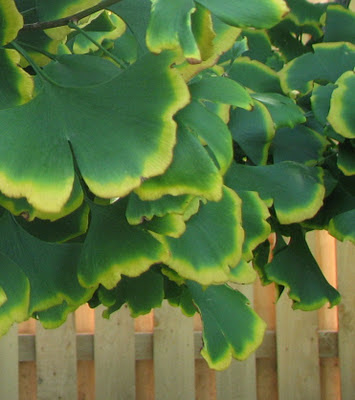
We have received questions pertaining to susceptibility of plants to Imprelis. We do not have a list of “susceptible vs. not susceptible” plants because we do not know exactly which plants might be affected under certain growing conditions. However, based on our experience in the PPDL this past summer the list below contains the names…Read more about Imprelis Herbicide Injury: 2011 PPDL ‘Host’ List[Read More]


Herbicide damage on Spruce and Pine

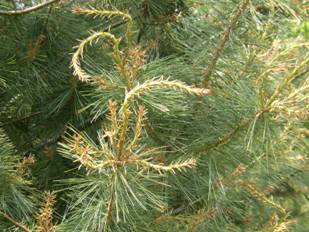
The Plant and Pest Diagnostic Lab (PPDL) has recently received several samples of Norway spruce and white pine with symptoms that appear to be associated with injury caused by synthetic auxin (growth regulator type) herbicides. Typical off-target symptoms caused by these herbicides can include epinasty (twisting and curling) of the shoot and tips (Fig. 1)…Read more about Herbicide damage on Spruce and Pine[Read More]


Professionals: Multiple Targeting with Pesticides

As frequent users of pesticides, it is imperative that turfgrass professionals understand the terminology surrounding their formulation and use.  For example, when we talk about ‘multiple targeting’ we are referring to an attempt to control more than one pest with a single application of pesticide.  Timing of application as well as placement and formulation is critical to success.  To time a…Read more about Professionals: Multiple Targeting with Pesticides[Read More]

 Categories:

Pesticide IQ: Every pesticide may have slightly different requirements for personal protective equipment (PPE)

As mentioned in last months Turf Tip, the Office of the Indiana State Chemist has increased inspections of IN lawn care companies and golf courses. During 2004 through 2006, 31 golf courses were either warned or fined for violations in pesticide use or handling. In 2006 alone, 22 lawn care companies were warned or fined….Read more about Pesticide IQ: Every pesticide may have slightly different requirements for personal protective equipment (PPE)[Read More]


Season-long Grub Control from May Applications???

Grub control products are currently being displayed in the center aisles of retail department and discount stores and are advertised on the radio as providing season-long grub control when applied in early May. Certain insecticides, including imidacloprid (Merit) and halofenozide (Mach 2) do have a very long residual in the soil. However, they should not…Read more about Season-long Grub Control from May Applications???[Read More]

 Categories:

What Happens to Fertilizers and Pesticides Applied to Turf?

Now that we are entering the fertilization season for lawns, questions sometimes arise about where products go after application to lawns. Research at Purdue and many other universities has shown that fertilizers (including both nitrogen and phosphorus) and pesticides applied to turf will not move horizontally (runoff) or vertically (leaching). This is because the relatively…Read more about What Happens to Fertilizers and Pesticides Applied to Turf?[Read More]


New Edition of Re-entry Precautions for Turf Fungicides – March 11, 2004

As a follow-up to earlier Turf Tips, we’ve made some changes to the earlier table of fungicide reentry statements because many of the statements changed in 2004 versus our information from 2003. Since some labeling may change without further notice, be sure to refer to the actual label of the product you use before application….Read more about New Edition of Re-entry Precautions for Turf Fungicides – March 11, 2004[Read More]


Follow-up to State Chemist Office BMP’s for Golf Courses

The Best Management Practices for Golf Course that was in an earlier version of Turf Tips provided ideas for using pesticides safely on golf courses. Though it wasn’t clearly stated, the BMP’s listed assumed that all pesticides must be used per label instructions as is the law. Also, one of the BMP’s included selecting pesticides…Read more about Follow-up to State Chemist Office BMP’s for Golf Courses[Read More]


Best Pesticide Management Practices for Indiana Golf Courses- Jan 2004

As a result of a couple of pesticide spills in the last three years and from recent spot checks on golf courses, the Office of the Indiana State Chemist created a list of common pesticide use violations and they will likely enforce regulations more aggressively on golf courses in the future. Following is that list…Read more about Best Pesticide Management Practices for Indiana Golf Courses- Jan 2004[Read More]


Page last modified: May 15, 2019

Turfgrass Science at Purdue University - Horticulture & Landscape Architecture, 625 Agriculture Mall, West Lafayette, IN 47907

© 2026 Purdue UniversityAn equal access/equal opportunity universityCopyright ComplaintsMaintained by Turfgrass Science at Purdue University

If you have trouble accessing this page because of a disability, please contact Turfgrass Science at Purdue University at kkalbaug@purdue.eduAccessibility Resources