Turf Professional


Turf: Dead or Alive?

Many areas in Indiana have received recent rains to their lawns. Some lawns have greened-up and others are still brown leaving many wondering whether their lawns are dead or alive. Below are some images that illustrate the process of determining whether or not your lawn is dead or alive. Step 1. In an area of…Read more about Turf: Dead or Alive?[Read More]
Certainty Turf Herbicide Label Changes

Monsanto recently updated the Certainty® Turf Herbicide label 2011-1 on packaged goods. These changes are effective on product packaged and shipped after May 2011. All cool season turfgrass uses for Certainty have been removed from the 2011-1 label. The product can still be used on warm-season turf. The label change also adds nursery and landscape…Read more about Certainty Turf Herbicide Label Changes[Read More]

 Categories:

DuPont launches www.imprelis-facts.com Website

This week DuPont launched a new website designed to help answer questions from those who have used Imprelis® and are seeing injury to trees. The website, www.imprelis-facts.com, states the following: “As a precaution until we are able to more fully understand the circumstances surrounding reports of tree damage related to Imprelis®, do not apply Imprelis®…Read more about DuPont launches www.imprelis-facts.com Website[Read More]

 Categories:

Water Restrictions and Managing Turf During Drought

For those in the Indianapolis area, customers of the Department of Waterworks – City of Indianapolis are “asking residential and business customers to not water lawns through Friday, July 29 in the wake of continued lack of rain, high heat, and high water consumption”. The request is voluntary – initially requested on Wednesday, July 20…Read more about Water Restrictions and Managing Turf During Drought[Read More]


Imprelis UPDATE and INFORMATION

Many Indiana turf professionals who used the herbicide Imprelis® in the fall of 2010 or spring of 2011 and now are reporting off-target damage to trees and ornamentals in the landscape. Additionally, many homeowners have read an article or seen a news story about a Imprelis®. Below are links for homeowners and for turf professionals…Read more about Imprelis UPDATE and INFORMATION[Read More]

 Categories:

Turf disease watch

A new posting has been added to Turfcast. See Turfcast (http://btny.agriculture.purdue.edu/turfcast/ ) to read more about this post and for a daily summary of risk for several turfgrass diseases. Rick Latin, Turfgrass Pathologist

 Categories:

The Heat is On!

Extreme heat is stressing turf areas quickly! High temperatures cause turf decline There are many causes of turf decline in the summer, but three primary physiological causes are 1) low photosynthesis rates at high temperatures, 2) lack of sufficient moisture, and 3) photorespiration. Photorespiration occurs instead of photosynthesis at temperatures above 87 °F causing cool-season…Read more about The Heat is On![Read More]


New Website and Blog for Purdue Turfgrass Program

Since last fall, we have been working on revising our turf website and creating a new blog that could be used to deliver our Turf Tips eNewsletter. Among our goals for the development of the website were to 1) answer the most commonly asked questions by clientele and contain commonly needed information, 2) allow easy…Read more about New Website and Blog for Purdue Turfgrass Program[Read More]

 Categories:

Hot Topics at a Hot Field Day!

Thanks to all the 530 attendees and 32 exhibitors who attended the Midwest Regional Turfgrass Field Day Tuesday (July 19, 2011) at the W.H. Daniel Turfgrass Research Center in W. Lafayette, IN. We had golf and lawn research tours in the morning, two afternoon tours, and one afternoon workshop and addressed many current topics including…Read more about Hot Topics at a Hot Field Day![Read More]

 Categories:

Annual bluegrass starting to succumb to summer stress in lawns

Annual bluegrass (Poa annua) is a common weed on golf courses, but is now also becoming a problem on higher mowed turf areas such as lawns and athletic fields. This grass is lighter colored than Kentucky bluegrass and perennial ryegrass and can be identified by its boat-shaped leaf tip and membranous ligule (see Turf Tip…Read more about Annual bluegrass starting to succumb to summer stress in lawns[Read More]


Herbicide damage on Spruce and Pine – Update

A few weeks ago we posted information on herbicide damage to spruce and pine (link here). We are continuing to see some new cases of damage, but many with affected trees are simply waiting to see whether or not their trees will recover. For those of you who might have trees with suspected injury to…Read more about Herbicide damage on Spruce and Pine – Update[Read More]

 Categories:

Herbicide damage on Spruce and Pine

The Plant and Pest Diagnostic Lab (PPDL) has recently received several samples of Norway spruce and white pine with symptoms that appear to be associated with injury caused by synthetic auxin (growth regulator type) herbicides. Typical off-target symptoms caused by these herbicides can include epinasty (twisting and curling) of the shoot and tips (Fig. 1)…Read more about Herbicide damage on Spruce and Pine[Read More]


Drought Damage on Zoysiagrass Lawns

Last summer and fall we experienced some widespread drought throughout the state which we documented with turf tips in July, September, and November as well as tips on reestablishment this March (click here for an archive of these tips). Most were uncertain as to what the extent of the damage would be until the turf…Read more about Drought Damage on Zoysiagrass Lawns[Read More]


Skunks and Raccoons causing Havoc?

We continue to receive reports of spring-time turfgrass damage caused by raccoons or skunks. These animals are not feeding on the grass but rather are foraging for below ground, high populations of white grubs. As the vertebrates forage, they turn over great clumps of turfgrass resulting in an area that resembles a war zone. Sometimes…Read more about Skunks and Raccoons causing Havoc?[Read More]


Cooler Than Average Spring Temperatures for Some May Extend the Window for Preemergence Herbicide Applications

Preemergence herbicides prevent emergence of crabgrass plants. These products must be applied prior to crabgrass germination which on an average year could occur as early as April 1 in southern Indiana and three or more weeks later in northern Indiana. It is essential to apply these products early in spring prior to crabgrass germination. Last…Read more about Cooler Than Average Spring Temperatures for Some May Extend the Window for Preemergence Herbicide Applications[Read More]

 Categories:

Spring Beauty and Star-of-Bethlehem

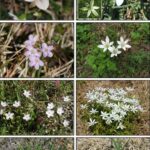
Both spring beauty (Claytonia virginica) and star-of-bethlehem (Ornithogalum umbellatum) are spring flowering weeds that are similar in appearance and sometimes problematic in lawns. Below is a comparison of the two species including control recommendations for both turf professionals and homeowners. Spring Beauty (Claytonia virginica) Star-of-Bethlehem (Ornithogalum umbellatum) Description: Small perennial plant originating from corms. Leaves…Read more about Spring Beauty and Star-of-Bethlehem[Read More]


To whom does this seedhead belong?

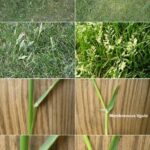
Kentucky bluegrass (Poa pratensis) is beginning to produce seedheads this time of year which are difficult to mow and can cause a lawn to appear uneven. However, there are other grasses such as annual bluegrass (Poa annua) that also produce similar looking seedheads. Annual bluegrass is a winter annual or weak perennial turfgrass species which…Read more about To whom does this seedhead belong?[Read More]

 Categories:

Spilled Fertilizer: Loading and Application

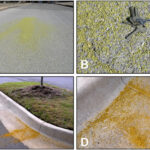
Fertilizer loading Fill spreaders over a hard surface such as a driveway, sidewalk, or other hard concrete or asphalt surface. This will allow easy clean-up if any material is spilled. Fertilizer spills over turf usually result in turf death to the affected spot. If product is spilled during loading (A), clean-up the material immediately by…Read more about Spilled Fertilizer: Loading and Application[Read More]


What’s that brown spot: Nimblewill in lawns

Nimblewill (Muhlenbergia schreberi) is a weed that thin patches in lawns. Since nimblewill is a warm-season grass, it will turn brown at the first frost and is very slow to green-up in the spring. The brown patches seen in lawns in the early spring may be nimblewill contamination. This weed spreads from seeds produced and…Read more about What’s that brown spot: Nimblewill in lawns[Read More]


Page last modified: February 5, 2020

Turfgrass Science at Purdue University - Horticulture & Landscape Architecture, 625 Agriculture Mall, West Lafayette, IN 47907

© 2026 Purdue UniversityAn equal access/equal opportunity universityCopyright ComplaintsMaintained by Turfgrass Science at Purdue University

If you have trouble accessing this page because of a disability, please contact Turfgrass Science at Purdue University at kkalbaug@purdue.eduAccessibility Resources