Turf Tips Archives


Turf disease watch

A new posting has been added to Turfcast. See Turfcast (http://btny.agriculture.purdue.edu/turfcast/ ) to read more about this post and for a daily summary of risk for several turfgrass diseases. Rick Latin, Turfgrass Pathologist

 Categories:

The Heat is On!

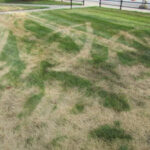
Extreme heat is stressing turf areas quickly! High temperatures cause turf decline There are many causes of turf decline in the summer, but three primary physiological causes are 1) low photosynthesis rates at high temperatures, 2) lack of sufficient moisture, and 3) photorespiration. Photorespiration occurs instead of photosynthesis at temperatures above 87 °F causing cool-season…Read more about The Heat is On![Read More]


New Website and Blog for Purdue Turfgrass Program

Since last fall, we have been working on revising our turf website and creating a new blog that could be used to deliver our Turf Tips eNewsletter. Among our goals for the development of the website were to 1) answer the most commonly asked questions by clientele and contain commonly needed information, 2) allow easy…Read more about New Website and Blog for Purdue Turfgrass Program[Read More]

 Categories:

Hot Topics at a Hot Field Day!

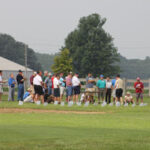
Thanks to all the 530 attendees and 32 exhibitors who attended the Midwest Regional Turfgrass Field Day Tuesday (July 19, 2011) at the W.H. Daniel Turfgrass Research Center in W. Lafayette, IN. We had golf and lawn research tours in the morning, two afternoon tours, and one afternoon workshop and addressed many current topics including…Read more about Hot Topics at a Hot Field Day![Read More]

 Categories:

Annual bluegrass starting to succumb to summer stress in lawns

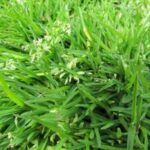
Annual bluegrass (Poa annua) is a common weed on golf courses, but is now also becoming a problem on higher mowed turf areas such as lawns and athletic fields. This grass is lighter colored than Kentucky bluegrass and perennial ryegrass and can be identified by its boat-shaped leaf tip and membranous ligule (see Turf Tip…Read more about Annual bluegrass starting to succumb to summer stress in lawns[Read More]


Warning: High Numbers of Black Cutworms in Traps

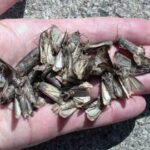
June 28/11. We are reporting very high numbers of black cutworm moths in traps right now. These numbers are, in fact, higher than we have seen in many years. What this means to you is that there is a possibility that these moths will lay eggs on your turf and the resulting caterpillars may damage…Read more about Warning: High Numbers of Black Cutworms in Traps[Read More]

 Categories:

Herbicide damage on Spruce and Pine – Update

A few weeks ago we posted information on herbicide damage to spruce and pine (link here). We are continuing to see some new cases of damage, but many with affected trees are simply waiting to see whether or not their trees will recover. For those of you who might have trees with suspected injury to…Read more about Herbicide damage on Spruce and Pine – Update[Read More]

 Categories:

Turf Disease Watch

A new posting has been added to Turfcast. See Turfcast (http://btny.agriculture.purdue.edu/turfcast/ ) to read more about this post and for a daily summary of risk for several turfgrass diseases. Rick Latin, Turfgrass Pathologist


Educational Opportunity:

Educational Opportunity: Turf Field Day Tuesday, July 19, 2011 Daniel Turf Center, West Lafayette, IN Attendee Registration Form Exhibitor Registration Form Attendee On-line Registration Diagnostic Training: Lawn Care Thursday, July 28, 2011 Daniel Turf Center, West Lafayette, IN Attendee Registration Form Attendee On-line Registration

 Categories:

Herbicide damage on Spruce and Pine

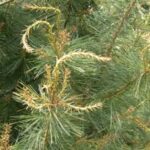
The Plant and Pest Diagnostic Lab (PPDL) has recently received several samples of Norway spruce and white pine with symptoms that appear to be associated with injury caused by synthetic auxin (growth regulator type) herbicides. Typical off-target symptoms caused by these herbicides can include epinasty (twisting and curling) of the shoot and tips (Fig. 1)…Read more about Herbicide damage on Spruce and Pine[Read More]


Turf Disease Watch

A new posting has been added to Turfcast. See Turfcast (http://btny.agriculture.purdue.edu/turfcast/ ) to read more about this post and for a daily summary of risk for several turfgrass diseases. Rick Latin, Turfgrass Pathologist

 Categories:

Mound Making on Greens and Tees

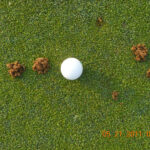
In addition to earthworms, there are several insects that can create small mounds of soil above the surface of turfgrass. Usually such mounding is of minimal consequence and, in fact, is beneficial to turfgrass environments as it accomplishes the same thing as cultivation, aeration and top-dressing – only on a very small scale. On occasion,…Read more about Mound Making on Greens and Tees[Read More]


The Case of the Dead Zoysia in Southern Indiana

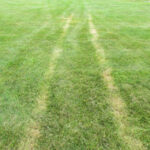
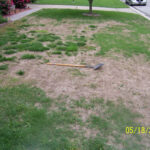
Zoysia grass is a warm-season grass that is being more frequently used in warm, humid and transitional regions. As zoysia is becoming more frequent in our state we are learning more about the pests that attack it. The photograph below was taken of a stand of zoysia in the southern part of Indiana. It was…Read more about The Case of the Dead Zoysia in Southern Indiana[Read More]

 Categories:

Brown Patch–initial outbreaks

A new posting has been added to Turfcast. See Turfcast (http://btny.agriculture.purdue.edu/turfcast/ ) to read more about brown patch and for a daily summary of risk for several turfgrass diseases.   Rick Latin, Turfgrass Pathologist


Drought Damage on Zoysiagrass Lawns

Last summer and fall we experienced some widespread drought throughout the state which we documented with turf tips in July, September, and November as well as tips on reestablishment this March (click here for an archive of these tips). Most were uncertain as to what the extent of the damage would be until the turf…Read more about Drought Damage on Zoysiagrass Lawns[Read More]


Sod webworms

Sod webworms may cause damage to closely mowed turfgrass early in the spring. Damage, similar to that depicted in the photos below, may be seen on golf tees and greens. The overwintered caterpillars become active when the temperatures warm up in the spring and begin to tunnel and feed. They are mostly active at night,…Read more about Sod webworms[Read More]


Educational Opportunity:

Turf Field Day Tuesday, July 19, 2011 Daniel Turf Center, West Lafayette, IN Attendee Registration Form Exhibitor Registration Form


Flooding on turf

April was a wet month in Indiana with rainfall totaling 2-10 inches more than normal in April for areas of Indiana (see precipitation map below). Heavy rainfall can cause flooding stress on turf. Flooding reduces oxygen to the plants from the soil and could ultimately lead to plant death without oxygen. If water saturation is…Read more about Flooding on turf[Read More]


Small Moving Specks on the Windowsill?

No you are not imagining this. The specks are actually moving. That is because they are actually tiny mites called clover mites. Clover mites can become annoying household pests, especially in and around homes where new lawns have recently been established or where there’s a heavy growth of well-fertilized grass close to foundation walls. They…Read more about Small Moving Specks on the Windowsill?[Read More]


Skunks and Raccoons causing Havoc?

We continue to receive reports of spring-time turfgrass damage caused by raccoons or skunks. These animals are not feeding on the grass but rather are foraging for below ground, high populations of white grubs. As the vertebrates forage, they turn over great clumps of turfgrass resulting in an area that resembles a war zone. Sometimes…Read more about Skunks and Raccoons causing Havoc?[Read More]


Page last modified: February 4, 2019

Turfgrass Science at Purdue University - Horticulture & Landscape Architecture, 625 Agriculture Mall, West Lafayette, IN 47907

© 2026 Purdue UniversityAn equal access/equal opportunity universityCopyright ComplaintsMaintained by Turfgrass Science at Purdue University

If you have trouble accessing this page because of a disability, please contact Turfgrass Science at Purdue University at kkalbaug@purdue.eduAccessibility Resources