Category: Fertilizer

Fall Nitrogen Fertilization Benefits All Cool-Season Turfs

All cool-season turfgrasses benefit from fall nitrogen (N) fertilization, regardless if it is a lawn, athletic field, or golf course green, tee or fairway. Normally fertilization should begin in mid-September and continue one or two more times until about mid-November. Starting the fertilization program in September will take advantage of favorable growing weather and encourage…Read more about Fall Nitrogen Fertilization Benefits All Cool-Season Turfs[Read More]


Nitrogen and Phosphorus: fertilizing lawns to protect water quality

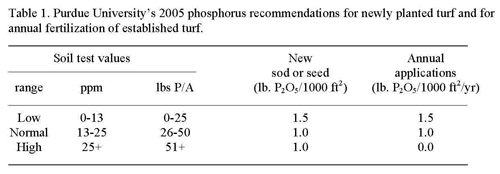
Healthy turf areas provide many environmental and recreational benefits. A properly fertilized turf has fewer weeds, is more resistant to insect feeding and is less disease prone than malnourished turf. Furthermore, a dense turf slow and decreases water runoff following storm events which helps reduce flooding in urban environments. Concern over water quality is growing…Read more about Nitrogen and Phosphorus: fertilizing lawns to protect water quality[Read More]


November fertilization is critical for turf performance next year

A November application of fertilizer is extremely important to keep your lawn healthy and looking good this fall and next year. Late fall N promotes good root development, enhances storage of energy reserves, and extends color retention this fall. Most of the benefits from late fall N will be seen next spring and summer with…Read more about November fertilization is critical for turf performance next year[Read More]


Winterizer Fertilizers?

Currently advertised on television and in home improvement stores are “winterizer” fertilizers. There’s good and bad about winterizer fertilizers. It’s good that they are emphasizing fall and late fall fertilizer. These fertilizers usually contain the same amount of potassium as nitrogen (nitrogen is the first of the three prominent numbers on the bag while potassium…Read more about Winterizer Fertilizers?[Read More]


Renovating Turf: Just fertilize? Add seed? Start Over?

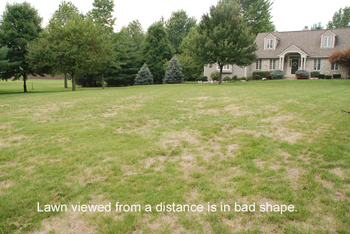
Now that cooler temperatures and at least a little rain is back, it’s critical to help turf recover. Though we’re out of the optimum seeding window in the northern 2/3rds of Indiana, most effective recovery will be through fertilizing with 0.75-1.0 lbs N/1000 every three to four weeks until the grass stops growing in early…Read more about Renovating Turf: Just fertilize? Add seed? Start Over?[Read More]


Renovating Turf: How long should I wait to seed after a glyphosate (Roundup) application?

I have received a number of email questioning the wait for seeding after glyphosate applications. Glyphosate has no soil activity and will therefore not affect seedlings when seeded even the same day of application. However, for maximum control of tough-to-control weeds with stolons or rhizomes, a 7 day delay is recommended before raking or aerification…Read more about Renovating Turf: How long should I wait to seed after a glyphosate (Roundup) application?[Read More]


Fertilization: Do it right and protect the environment

Though much research over the years has shown that when fertilizer is applied properly to turf, it does not leach or runoff. The key to this is proper application as careless applications can cause problems. Following is a quick list of precautions when applying fertilizer (or pesticides) to your lawn. ·Apply the right rate and…Read more about Fertilization: Do it right and protect the environment[Read More]


September is Crucial for Fertilizing All Cool-Season Turfs

With the returning rains in the state, now is the most important time to fertilize cool-season turfgrasses like creeping bentgrass, Kentucky bluegrass, perennial ryegrass, and tall or fine fescue. September fertilization is crucial on all turf areas regardless if it is a lawn, athletic field, or golf course green, tee or fairway. Fertilization in mid-September…Read more about September is Crucial for Fertilizing All Cool-Season Turfs[Read More]


Winter damage on bermudagrass

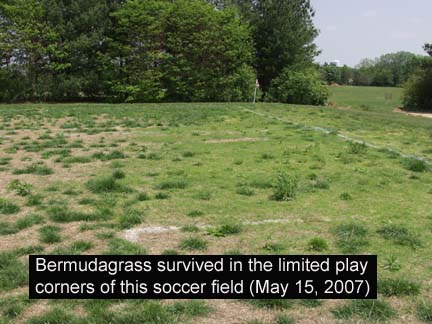
As bermudagrass begins to green up in southern IN and Kentucky , it is apparent that moderate to severe winter damage has occurred. Though we may be a little premature because full green-up and growth is still a week or two away depending on temperatures, it’s important to start formulating a strategy to repair the…Read more about Winter damage on bermudagrass[Read More]


Late May is Good Time to Fertilize Lawns

The annual phase of rapid cool-season shoot growth of cool-season grasses is nearly complete, though it was diminished this year because of the dry and cool weather. It’s now time to consider fertilizing your lawn because fertilizer now will not dramatically increase vertical growth as long as moderate nitrogen rates are used and it will…Read more about Late May is Good Time to Fertilize Lawns[Read More]


Calculating the pounds of fertilizer to apply

There are literally thousands of fertilizers and fertilizer/pesticide combinations available to homeowners and professionals. Therefore, we can’t recommend how many pounds of a specific fertilizer to apply, but rather we must recommend fertilization rates in pounds of nitrogen per thousand square feet or lbs N/1000 sq ft. You can use our fertilizer calculator at http://www.agry.purdue.edu/turf/fertcalc/Fertilization%20calc.html or you…Read more about Calculating the pounds of fertilizer to apply[Read More]


Don’t Give Up Yet, November Fertilization is Critical

A November application of fertilizer is extremely important to keep your lawn healthy and looking good this fall and next year. Late fall N promotes good root development, enhances storage of energy reserves, and extends color retention this fall. Most of the benefits from late fall N will be seen next spring and summer with…Read more about Don’t Give Up Yet, November Fertilization is Critical[Read More]


Little Time to Improve Athletic Turf This Year

Though weather this summer and fall wasn’t as bad as last year, we’ve still had our share of thin turf and fall events are taking their toll on the cool-season grasses. The perennial cause is the naturally shallow rooting of Kentucky bluegrass or perennial ryegrass at the same time that football and soccer seasons get…Read more about Little Time to Improve Athletic Turf This Year[Read More]


Helping Fall-use Athletic Fields

Fall use athletic fields are taking a beating right now. To help those fields, fertilizing aggressively with 1.0 lb N in September and again in October will help. Fertilizing is the most inexpensive but effective way to improve any sports field. Though it’s easier said than done, aerifying during extended breaks in practices or games…Read more about Helping Fall-use Athletic Fields[Read More]


November Fertilization is Money in the Bank

A November application of fertilizer is extremely important to keep your lawn healthy and looking good this fall and next year. Late fall N promotes good root development, enhances storage of energy reserves, and extends color retention this fall. Most of the benefits from late fall N will be seen next spring and summer with…Read more about November Fertilization is Money in the Bank[Read More]


Winterizer Fertilizers

Currently advertised on television and in home improvement stores are “winterizer” fertilizers. There’s good and bad about winterizer fertilizers. It’s good that they are emphasizing fall and late fall fertilizer. These fertilizers usually contain the same amount of potassium as nitrogen (nitrogen is the first of the three prominent numbers on the bag while potassium…Read more about Winterizer Fertilizers[Read More]


Turf 101: Why does a November application of fertilizer work?

Nitrogen stimulates increased photosynthesis and the extra energy derived from this goes directly into growth, respiration to maintain the plant (similar to humans), or into storage. In early November, the temperature is still adequate for photosynthesis, but cool enough to minimize respiration demands and too cold for significant growth. Therefore, most of the extra energy…Read more about Turf 101: Why does a November application of fertilizer work?[Read More]


Tough Year for Turf in Indiana

The summer’s heat and humidity have taken an unusually high toll on turf in lawns, athletic fields, and golf courses. Most of the decline can be attributed to poor root growth weakening cool-season grasses and starting an avalanche of secondary factors leading to further decline. Root growth of cool-season grasses reaches a peak in mid-spring…Read more about Tough Year for Turf in Indiana[Read More]


September is a Crucial for Fertilizing All Cool-Season Turfs

With the returning rains in the state, now is the most important time to fertilize cool-season turfgrasses like creeping bentgrass, Kentucky bluegrass, perennial ryegrass, and tall or fine fescue. September fertilization is crucial on all turf areas regardless if it is a lawn, athletic field, or golf course green, tee or fairway. Fertilization in mid-September…Read more about September is a Crucial for Fertilizing All Cool-Season Turfs[Read More]


Rust in Turf

A few rust calls are starting to trickle in, which is typical at this time of the year. Rust symptoms are reddish-orange lesions or spots on the leaf blades and a rust-colored powder that you can rub off with your fingers. Rust will rarely kill a turf area, but it can thin a turf stand…Read more about Rust in Turf[Read More]


Page last modified: May 15, 2019

Turfgrass Science at Purdue University - Horticulture & Landscape Architecture, 625 Agriculture Mall, West Lafayette, IN 47907

© 2026 Purdue UniversityAn equal access/equal opportunity universityCopyright ComplaintsMaintained by Turfgrass Science at Purdue University

If you have trouble accessing this page because of a disability, please contact Turfgrass Science at Purdue University at kkalbaug@purdue.eduAccessibility Resources