Category: Fertilizer

Controlling Sandbur

The dry summer allowed sandbur to get a competitive edge over the other lawn grasses on the sandy soils in northern Indiana. Most people don’t realize they have sandbur in their lawn until they come into painful contact with it, and unfortunately it is too late to do anything about it then. Sandbur is an…Read more about Controlling Sandbur[Read More]


Fertilizing Sports Turf

Fertilizing sports turf is critical in order to maintain turf vigor in spite of intense wear and tear. However, too little fertilizer or poorly timed fertilizer are common mistakes on sports complexes. Following are our recommendations for sports field fertilization:  Apply fertilizer just prior to the season to insure aggressive growth  Apply60% or…Read more about Fertilizing Sports Turf[Read More]


Phosphorus Fertilization in Turf

Phosphorus (P) fertilization of turf is being questioned nationally for two reasons. Phosphorus fertilization almost never induces a visual turfgrass response and deficiency symptoms are rarely seen, thus calling into question the need for P fertilization. Secondly, higher levels of P contribute to algal blooms and decrease water quality of ponds, lakes, and streams. Since…Read more about Phosphorus Fertilization in Turf[Read More]


Late May is Good Time to Fertilize Lawns

The annual phase of rapid cool-season shoot growth of cool-season grasses is nearly complete, though it was diminished this year because of the dry and cool weather. It’s now time to consider fertilizing your lawn because fertilizer now will not dramatically increase vertical growth as long as moderate nitrogen rates are used and it will…Read more about Late May is Good Time to Fertilize Lawns[Read More]


To Fertilize Lawns or not to Fertilize: That is the Question

For the vast majority of homeowners, resist the urge to fertilize now. Fertilizing now can encourage too much growth and could lead to problems later this summer such as poor root growth and disease. Additionally, since spring rains play havoc with mowing schedules, nitrogen fertilization can further complicate your mowing schedule by causing grass plants…Read more about To Fertilize Lawns or not to Fertilize: That is the Question[Read More]


November Lawn Fertilization

Up until about two weeks ago, autumn 2004 was for the most part a fairly dry season. This means that if you fertilized your cool-season lawn in early September and were unable to regularly irrigate, the nitrogen that was applied probably was not used very effectively by the turfgrass plant. If you missed that fertilizer…Read more about November Lawn Fertilization[Read More]


Fertilization required immediately as turf greens-up after rain

Most of the state has received 0.5 inch of rain or more either this week or last and thus turf areas are starting to green-up again. It is important to take advantage of the few weeks of growing conditions and apply fertilizer immediately to help improve green-up, fill-in from drought damage, and winter survival. Apply…Read more about Fertilization required immediately as turf greens-up after rain[Read More]


A Dry Lawn in October is Reason for Concern

Though areas of Indiana received some rain this week and more is forecasted, most of the state has received precipitation far below normal. Many lawns look as brown now as they normally do in August. This does not bode well for winter survivability of grass and the appearance of the lawn next year. September and…Read more about A Dry Lawn in October is Reason for Concern[Read More]


Coping with Late Season Drought in Turf

(Adapted from the Midwest Regional Turf Foundation Factsheet, Oct 1, 2004) After an extremely wet summer, turf drought stress has come out of nowhere almost throughout the state after a dry August and September. Though September and October are prime growing months, turf will not recover unless the turf receives ample rain or irrigation soon….Read more about Coping with Late Season Drought in Turf[Read More]


What Happens to Fertilizers and Pesticides Applied to Turf?

Now that we are entering the fertilization season for lawns, questions sometimes arise about where products go after application to lawns. Research at Purdue and many other universities has shown that fertilizers (including both nitrogen and phosphorus) and pesticides applied to turf will not move horizontally (runoff) or vertically (leaching). This is because the relatively…Read more about What Happens to Fertilizers and Pesticides Applied to Turf?[Read More]


September Grub Damage

White grub damage on turfgrass may be more widespread than many expected this year. With ample rain and favorable growing conditions for most host plants during the early and mid growing season, high concentrations of adult Japanese beetles were not as common as in previous years. This may have lulled turfgrass managers into forgetting about…Read more about September Grub Damage[Read More]


Turf 101: Why does September Fertilization of Cool-Season Grasses Work?

Normal growth patterns of cool season grass produce most leaf growth in the spring. Therefore fertilization in spring tends to stimulate even more leaf growth which may in turn decrease long-term stress tolerance in the summer months. On the other hand, cool season grasses tend to slow down leaf growth in the fall producing relatively…Read more about Turf 101: Why does September Fertilization of Cool-Season Grasses Work?[Read More]


September is a Crucial Time to Fertilize All Cool-Season Turfs

Early to mid-September is the most important time to fertilize cool-season turfgrasses like creeping bentgrass, Kentucky bluegrass, perennial ryegrass, and tall or fine fescue. September fertilization is crucial on all turf areas regardless if it is a lawn, athletic field, or golf course green, tee or fairway. Fertilization in mid-September encourages the production of new…Read more about September is a Crucial Time to Fertilize All Cool-Season Turfs[Read More]


Rust in Turf

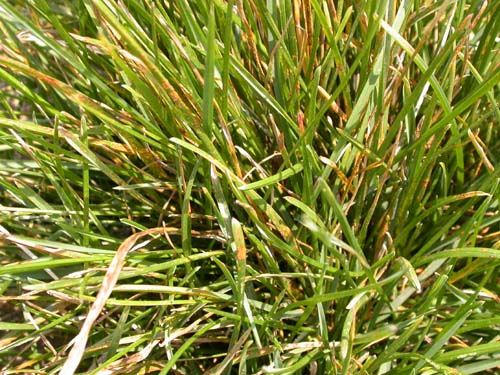
The rain and temperatures this year have favored excellent turfgrass growth, and the N applied this spring is being depleted, thus favoring rust in even regularly fertilized turf areas. Rust symptoms are reddish-orange lesions or spots on the leaf blades and a rust-colored powder that you can rub off with your fingers. Rust will rarely…Read more about Rust in Turf[Read More]


Finicky Poa annua Yellowing and Thinning on Greens

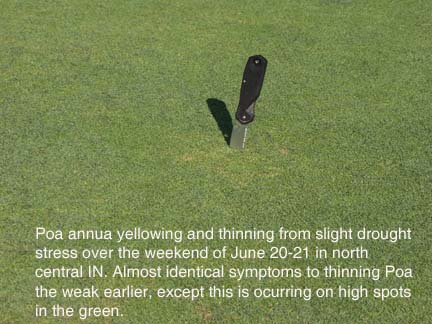
In spite of the cool and dry weather, Poa annua continues to yellow and sometimes thin on golf greens. Last week Poa annua was thinning and dieing in low areas from too much water, heat, and humidity (photo). However, the cool dry weather over the weekend allowed for maximum water loss through evapotranspiration. Plus since many irrigation systems were…Read more about Finicky Poa annua Yellowing and Thinning on Greens[Read More]


Summer stress of Poa annua and Poa trivialis in Lawns and Sports Fields

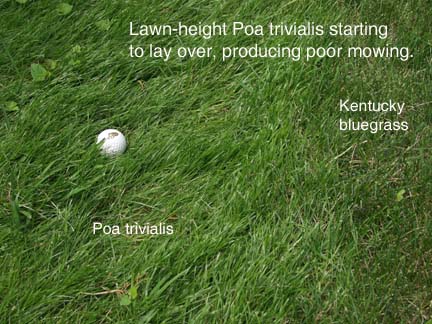
Poa annua (annual bluegrass) and Poa trivialis (rough bluegrass) in athletic fields and lawns are starting to show signs of stress. The signs of stress include laying over (poor mow-ability), yellowing, and thinning. Patches of these fine-bladed grasses seemingly die overnight with even a minimum of drought stress. Though these grasses may have blended in with the desired turf…Read more about Summer stress of Poa annua and Poa trivialis in Lawns and Sports Fields[Read More]


Early Dollar Spot on Golf Courses This Year

If you’re lucky enough to be in the areas of Indiana that have received ample rainfall, you are unfortunately starting to see dollar spot. The excess rain in parts of the state triggered rapid plant growth and infrequent mowing, which in turn forced clipping removal and removal of N from the system. The N in…Read more about Early Dollar Spot on Golf Courses This Year[Read More]


Page last modified: May 15, 2019

Turfgrass Science at Purdue University - Horticulture & Landscape Architecture, 625 Agriculture Mall, West Lafayette, IN 47907

© 2026 Purdue UniversityAn equal access/equal opportunity universityCopyright ComplaintsMaintained by Turfgrass Science at Purdue University

If you have trouble accessing this page because of a disability, please contact Turfgrass Science at Purdue University at kkalbaug@purdue.eduAccessibility Resources