Turf Tips Archives


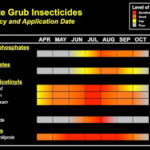
White Grub Season Approaching: Remember to Follow Label Directions

Last month, a commercial landscape manager in Oregon made an off label application of dinotefuran to flowering linden trees resulting in the death of more than 25,000 bumblebees and immediate action by the Oregon Department of Agriculture to implement a six month ban on all dinotefuran products labeled for landscape use http://www.oregon.gov/ODA/docs/pdf/news/130627dinotefuran.pdf   The labels…Read more about White Grub Season Approaching: Remember to Follow Label Directions[Read More]


Goosegrass

      Goosegrass     Biology: Goosegrass (Eleusine indica) is an late-germinating summer annual grass that is often found in compacted areas or areas disturbed in the summer. These areas include compacted areas next to sidewalks or cart paths, golf course tees, and areas were soil is disturbed during the summer. Germination typically starts…Read more about Goosegrass[Read More]

 Categories:

2013 Turf and Landscape Field Day a Success

On Tuesday, July 9th, 2013 the Purdue Turf Program and the Midwest Regional Turf Foundation hosted the Turf and Landscape Field Day. The Turf and Landscape Field Day is Indiana’s largest green industry field day. It was a much cooler day than last year and we were thankful that the rain stayed away and the…Read more about 2013 Turf and Landscape Field Day a Success[Read More]

 Categories:

Fountain Grass

Fountain Grass     Biology: Fountain grass ((Pennisetum spp.) is an ornamental grass common to the landscapes of homes, commercial sites, and golf courses. However, following years of planting in these landscapes, we now realize that this species produces many viable seeds that drop onto the adjacent turf and then become tough-to-control perennial grassy weeds….Read more about Fountain Grass[Read More]

 Categories:

2013 Indiana Pesticide Clean Sweep Project

  WHAT: An Indiana Pesticide Clean Sweep Project designed to collect and dispose of suspended, canceled, banned, unusable, opened, unopened or just unwanted pesticides (weed killers, insecticides, rodenticides, fungicides, miticides, etc.) is being sponsored by the Office of Indiana State Chemist (OISC). This disposal service is free of charge up to 250 pounds per participant….Read more about 2013 Indiana Pesticide Clean Sweep Project[Read More]

 Categories:

Turf and Landscape Field Day: July 9, 2013

Purdue Turf & Landscape Field Day Tuesday, July 9, 2013 W.H. Daniel Turf Center, West Lafayette PREREGISTRATION DEADLINE: Friday, June 28                                                                                                               Register on-line, US mail, fax or call.  Registration Form (PDF format) Exhibitor Contract (PDF format) Register on-line at http://mrtf.org/php/Registration.php?pid=5761    Free Attendance for one person with new MRTF membership   Up…Read more about Turf and Landscape Field Day: July 9, 2013[Read More]

 Categories:

Seed corn beetle being reported by superintendents

In addition to earthworms, there are several insects that can create small mounds of soil above the surface of turfgrass. Occasionally, the mounds can become a nuisance, especially on closely mowed greens where they are more noticeable and may interfere with play. The photos below depict one such insect, the seed corn beetle, and the…Read more about Seed corn beetle being reported by superintendents[Read More]


Yellow Nutsedge: Two New Publications on Controlling this Troublesome Weed

Yellow nutsedge is a troublesome, difficult-to-control turf weed. Understanding this plant’s biology makes it easier to know how to best control it. Two new Purdue publications help answer questions on the best way to control this weed. Yellow Nutsedge Control (AY-19-W) | PDF (for homeowners) Sedge Control for Turf Professionals (AY-338-W) | PDF (turf professionals)…Read more about Yellow Nutsedge: Two New Publications on Controlling this Troublesome Weed[Read More]

 Categories:

Perennial ryegrass seedheads: Now and Later

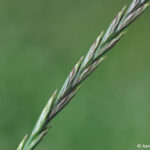
Perennial ryegrass seedheads are in full production now. These seedheads are tough to cut so make sure to keep your mower blades sharp. Now is a good time to sharpen your mower blades if you haven’t yet this year. Close-up of a perennial ryegrass seedhead. Perennial ryegrass seedhead in a lawn. Perennial ryegrass seedheads don’t…Read more about Perennial ryegrass seedheads: Now and Later[Read More]

 Categories:

Rounds 4 Research auction is open through June 16!

    Bid now for get great deals on great golf! Click here to see what’s available. Click Indiana on the left side of the screen to see rounds up for auction now. Whether you choose to bid on courses that have challenged the greatest players in golf or whether you just want a great…Read more about Rounds 4 Research auction is open through June 16![Read More]

 Categories:

Wild Violets

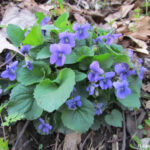
  Wild Violet      Biology: Collectively, turf managers refer to the Midwest species common blue violet (Viola sororia), wooly blue violet (Viola papilionacea), and confederate violet (Viola sororia f. priceana) all as wild violet. Additionally, yellow violet (Viola pubescens) is also found in Indiana. Wild violets are a persistent, perennial, and difficult-to-control broadleaf plant….Read more about Wild Violets[Read More]

 Categories:

Rounds 4 Research

Rounds 4 Research is an innovative program aimed at generating resources to fund research and help ensure golf’s future. The premise is simple: Golf facilities can support the effort by donating rounds of golf for two or four or “stay and play” packages and other items that will be auctioned off online to generate funds…Read more about Rounds 4 Research[Read More]

 Categories:

Caterpillar Update

Although they are fairly easy to control, caterpillars like cutworms and armyworms can have a way of “sneaking” up on turf managers. For golf course superintendents, we’ve reached that point in the spring when black cutworms may be large enough to cause visible damage (»300 Degree Days). Unless you have a preventive program in place,…Read more about Caterpillar Update[Read More]


Guess Who Came to Dinner?

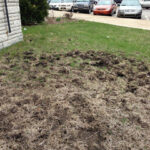
The photos below were submitted to our laboratory for identification.  While there are no animals present in the photos, the damage depicts the problem very nicely. Even without seeing any, I am quite certain that the turf is infested with white grubs.    As you know, white grubs do some damage to grasses, but what…Read more about Guess Who Came to Dinner?[Read More]

 Categories:

Japanese Beetle Emergence Begins

We captured the first Japanese beetle adults of the year last week in our traps on the Purdue Campus. These traps are located in an area where emergence tends to take place much earlier than at most locations, so don’t expect to see any significant wide-scale emergence for another 2-3 weeks. We monitor this particular…Read more about Japanese Beetle Emergence Begins[Read More]


Spring Diseases in the Midwest

Spring has finally arrived and it is accompanied by the usual compliment of infectious turf diseases.  There should be no confusion between two “rhizoctonia” diseases.  Yellow patch (aka cool season brown patch) prevails during early spring, when rainy weather is combined with cool nights.  It also affects al turf species and the circular patches are…Read more about Spring Diseases in the Midwest[Read More]

 Categories:

Purple Deadnettle

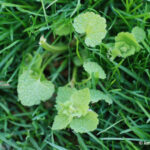
  Purple Deadnettle    Biology: Purple deadnettle (Lamium purpureum) is a common winter annual broadleaf weed found throughout the US. It is closely related to another winter annual broadleaf, henbit (Lamium amplexicaule). Both have vibrant purple flowers that can been seen now in lawns, landscapes, and fields.   Identification: Purple deadnettle is a winter annual…Read more about Purple Deadnettle[Read More]

 Categories:

Weather and Turf Diseases

From a temperature perspective, weather patterns in the Midwest have returned to normal this spring.  I recall the 80 F days in March 2012, and all of the concerns about scheduling fungicide sprays.  Hopefully most turf managers have resisted the temptation (regardless of who or what is doing the tempting) to apply fungicides for early…Read more about Weather and Turf Diseases[Read More]

 Categories:

Black Cutworms Making Their Annual Migration North

Black Cutworms have started showing up in light traps around Indiana. This means they will soon laying eggs, if they haven’t already.  Superintendents should be on the lookout for evidence of feeding damage on greens and tees. Also, remember that a soap flush of vulnerable, short-cut areas will often reveal the presence of black cutworms…Read more about Black Cutworms Making Their Annual Migration North[Read More]


Annual Ryegrass Showing Up in Lawns

I have had several emails and weed samples submitted recently of an unknown grass. In each case, the sample was annual ryegrass (Lolium multiflorum). Annual ryegrass is a common ingredient in low quality seed mixtures. It appears in the spring time in lawns seeded the previous year either from some annual ryegrass in the seed…Read more about Annual Ryegrass Showing Up in Lawns[Read More]

 Categories:

Page last modified: April 2, 2019

Turfgrass Science at Purdue University - Horticulture & Landscape Architecture, 625 Agriculture Mall, West Lafayette, IN 47907

© 2026 Purdue UniversityAn equal access/equal opportunity universityCopyright ComplaintsMaintained by Turfgrass Science at Purdue University

If you have trouble accessing this page because of a disability, please contact Turfgrass Science at Purdue University at kkalbaug@purdue.eduAccessibility Resources