Turf Professional


Overseeding creeping bentgrass into thinning Poa annua

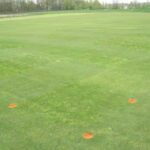
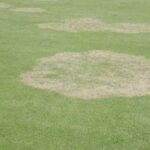
Dry and hot conditions may unfortunately favor early exit of Poa annua from golf turf. However, there is a silver lining to this. Rutgers reported that overseeding creeping bentgrass directly into a Poa stand in summer is effective for gradual conversion when done July 1. Rutgers produced significant (>25% cover) of bentgrass within 12 months…Read more about Overseeding creeping bentgrass into thinning Poa annua[Read More]
 Categories:

Velocity for Poa annua control….Potential and Precautions

Velocity (byspribac) was registered for Poa annua control in creeping bentgrass last November, so this is the first summer of potential widespread use. As with all new pesticides, we’ll learn more of the finer details as we use it. We have a number of studies at Purdue currently and I just stopped at a course…Read more about Velocity for Poa annua control….Potential and Precautions[Read More]

 Categories:

Free Registration for New MRTF Members at Field Day

If you are not a member of the Midwest Regional Turf Foundation, you can join now and receive one free registration to the MRTF Field Day on July 26. Other benefits of joining include reduced registration rates at all of the educational events sponsored by MRTF, regular mailings of newsletter and factsheets to help professionals…Read more about Free Registration for New MRTF Members at Field Day[Read More]

 Categories:

Facts and Advice on Turf Survival in Drought

There are many questions about turf survival in drought with the on-going drought in most parts of the state. Though we understand many of the mechanisms of turf survival in drought, it’s hard to duplicate all of the potential situations on research plots across the country and it’s difficult to give definite “black and white”…Read more about Facts and Advice on Turf Survival in Drought[Read More]


Quicksilver Receives 24C Registration for Moss on Greens in Indiana

FMC’s QuickSilver T&O herbicide has just received special local 24(c) registration for control of silvery thread moss in putting greens in Indiana. Though Quicksilver (carfentrazone) is used widely as a quick knockdown contact broadleaf herbicide, it has good efficacy on silvery thread moss. The recommended rate for moss is 6.7 fluid oz/A (0.154 oz/1000 ft2 followed…Read more about Quicksilver Receives 24C Registration for Moss on Greens in Indiana[Read More]

 Categories:

Midwest Regional Turf Field Day on July 26

Gear up for the Midwest Regional Turf Field Day that will be held on July 26 at the W.H. Daniel Turfgrass Research and Diagnostic Center in West Lafayette. This is a great opportunity for turf professionals to view the latest in turfgrass research, talk to Purdue specialists about turf and ornamental issues, and visit with…Read more about Midwest Regional Turf Field Day on July 26[Read More]

 Categories:

Early Dollar Spot Applications Make Sense

Dollar spot has arrived on golf courses. The standard mid- to late May fertilization of 0.75-1.0 lb N/1000 sq. ft. with primarily slow release N should have helped minimize some dollar spot. On golf courses with a long history of dollar spot, first and foremost review the fertilization practices and increase the annual N if…Read more about Early Dollar Spot Applications Make Sense[Read More]


Update on Black Cutworm

Significant weather events from the south usually are responsible for the movement of the black cutworm moths into our area each spring beginning as early as March. Black light traps stationed throughout the state have failed to catch many black cutworms this year to date. This is good news for our industry and may spell…Read more about Update on Black Cutworm[Read More]


Interactive Turfgrass Identification Tool now available

After about 9 months of development a concept of mine has finally borne fruit.  This week we rolled out the interactive, self-guided, online turfgrass identification tool, located at: http://www.agry.purdue.edu/turf/tool/index.html. Now you can probably identify the mystery grass in your lawn from the comfort of your own computer. If you still can’t identify it, you can always…Read more about Interactive Turfgrass Identification Tool now available[Read More]


Fertilizing Sports Turf

Fertilizing sports turf is critical in order to maintain turf vigor in spite of intense wear and tear. However, too little fertilizer or poorly timed fertilizer are common mistakes on sports complexes. Following are our recommendations for sports field fertilization:  Apply fertilizer just prior to the season to insure aggressive growth  Apply60% or…Read more about Fertilizing Sports Turf[Read More]


Fundraiser Golf Tournament for Don LaPierre

A good friend of the Indiana turf industry, Don LaPierre, has recently been diagnosed with cancer. A fundraiser golf tournament for Don and his family will be held on June 21st at Greenfield Country Club in Greenfield, followed by a live auction. One hundred percent of the proceeds will go to Don and his family….Read more about Fundraiser Golf Tournament for Don LaPierre[Read More]

 Categories:

Which is it, Annual Bluegrass or Kentucky Bluegrass?

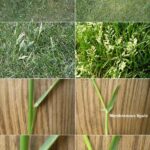
Kentucky bluegrass is currently producing seedheads that are difficult to mow and create an uneven appearance. However, annual bluegrass (Poa annua) is also producing similar looking seedheads. It’s important to distinguish the two because Kentucky bluegrass is highly desirable in a lawn, but annual bluegrass is a weed. It is a weed because it is…Read more about Which is it, Annual Bluegrass or Kentucky Bluegrass?[Read More]


Annual bluegrass (Poa annua) in Full Bloom in Lawns and Athletic Fields

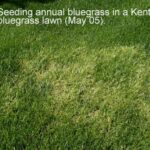
Annual bluegrass is now very common in lawns and athletic fields, though it has been a problem on golf courses for years. Annual bluegrass is a lighter green than Kentucky bluegrass and perennial ryegrass, and will thin and die during the heat and drought of August in Indiana. It’s especially noticeable now because of it’s…Read more about Annual bluegrass (Poa annua) in Full Bloom in Lawns and Athletic Fields[Read More]

 Categories:

Bentgrass Species and Cultivar Selection Impacts Annual Bluegrass Invasion in Renovated Bentgrass Fairways

Along with the warmer spring temperatures two things are certain; crabgrass will eventually germinate and annual bluegrass will profusely flower. For anyone managing bentgrass fairways or considering a bentgrass fairway renovation some of our recent research results will be of particular interest and provide some food for thought.  There has been some mild interest in…Read more about Bentgrass Species and Cultivar Selection Impacts Annual Bluegrass Invasion in Renovated Bentgrass Fairways[Read More]

 Categories:

Time is Running Out for Preemergence Control of Crabgrass

The below average temperatures the last few days has delayed crabgrass germination and thus premergence annual grass herbicides should still be effective if applied this week in the northern half to 2/3rds of the state. Most of the preemergence herbicides do have some post-emergence properties that will burn back small crabgrass (one or two leaf…Read more about Time is Running Out for Preemergence Control of Crabgrass[Read More]

 Categories:

Watch for Breakthrough from Early Preemergence Herbicide Applications

The extremely dry spring may reduce the effectiveness of preemergence herbicides. The products must be watered-in or rained-in to move them below the canopy and down to the soil where they will be effective. Herbicides not watered-in may also photodegrade faster than those wateredin. Early research showed a 44% loss in three days of preemergence…Read more about Watch for Breakthrough from Early Preemergence Herbicide Applications[Read More]

 Categories:

Rhizoctonia Large Patch (Zoysia Patch)

As our zoysiagrass fairways and tees are greening up this spring, we will soon begin to see the symptoms of Rhizoctonia Large Patch (zoysia patch). Rhizoctonia Large Patch (RLP) is the only major disease of zoysiagrass in Indiana. The pathogen is favored by moderate temperatures and long dew periods in the spring, fall and during…Read more about Rhizoctonia Large Patch (Zoysia Patch)[Read More]


Spring Dandelion Control for Professionals

Many turf areas did not get treated for broadleaf weeds last fall because of the dry weather. Though fall applications are most effective for controlling broadleaf weeds, spring applications are warranted for new lawns or areas that did not get treated last fall. Spring applications will be most effective if you wait until dandelions are…Read more about Spring Dandelion Control for Professionals[Read More]

 Categories:

Herbicide Delays after Seeding

Almost all herbicides will affect turfgrass seedlings and application delays are usually needed following seeding. Following is information gleaned from available labels of most herbicides or herbicide types that would be used in Indiana . This is intended to provide a general idea of the limitations of each active ingredient, but please refer to the…Read more about Herbicide Delays after Seeding[Read More]

 Categories:

Page last modified: May 20, 2019

Turfgrass Science at Purdue University - Horticulture & Landscape Architecture, 625 Agriculture Mall, West Lafayette, IN 47907

© 2026 Purdue UniversityAn equal access/equal opportunity universityCopyright ComplaintsMaintained by Turfgrass Science at Purdue University

If you have trouble accessing this page because of a disability, please contact Turfgrass Science at Purdue University at kkalbaug@purdue.eduAccessibility Resources