Turf Professional


 Publication Categories:

Grassy Weeds in Turf Planted Last Fall

Many samples have arrived in the Plant and Pest Diagnostic Lab the past few weeks with the common question of “What’s this grass in the turf I seeded last fall?”. Although there could be a host of answer to this question with annual bluegrass likely on the top of the list, most of what I…Read more about Grassy Weeds in Turf Planted Last Fall[Read More]
 Categories:

Don’t Forget to Sharpen Those Mower Blades

Sharply cut leaf blades increase turf health by improving recovery, decreasing water loss, and increasing photosynthesis. Lawns mown with a dull mower blade have poor aesthetics, heal more slowly and have greater water loss. Seedheads are present in many lawns right now and they are typically tougher to cut than the grass blades themselves. As…Read more about Don’t Forget to Sharpen Those Mower Blades[Read More]

 Categories:

Crabgrass Not Dead After Recent Frosts/Freezes

  Despite some recent frosts and freezes across certain spots in Indiana, crabgrass remains unaffected and was not killed. Although crabgrass was not injured, other cold sensitive plants were such as volunteer tomato seedlings in my garden and my Japanese maple. Recent cold air temperatures cooled down our soil temperatures. Temperatures will be mild for…Read more about Crabgrass Not Dead After Recent Frosts/Freezes[Read More]

 Categories:

Crabgrass is Now Germinating at Most Indiana Locations

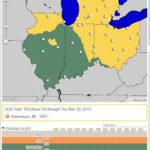
The GDD Tracker website (sponsored by the MRTF and Purdue University) is predicting that crabgrass is now germinating at most Indiana Locations (see figure below). The GDD Tracker estimated that crabgrass germinated in Lafayette, IN after Wednesday this week and I was able to confirm this by identifying newly germinated crabgrass (see figure below) both…Read more about Crabgrass is Now Germinating at Most Indiana Locations[Read More]

 Categories:

When Will Crabgrass Germinate?

With the rapidly warming weather, several are asking “When will crabgrass germinate?” The reason this is so important is because preemergence herbicides used for the control of crabgrass must be applied prior to emergence (except dithiopyr (Dimension) which can be used postemergence on crabgrass up to 1-tiller). There are several different ways to try and…Read more about When Will Crabgrass Germinate?[Read More]

 Categories:

Unwinter, Poa seedheads and Growing Degree Days, Oh MY!!!

As the “un-winter of 2011-2012” rapidly winds to a close golf course managers are already bringing their playing surfaces into peak form. For those managing putting surfaces containing annual bluegrass (Poa annua) this means addressing concerns that seedheads are affecting surface smoothness. With the lack of snow cover this past winter, the seedhead season is…Read more about Unwinter, Poa seedheads and Growing Degree Days, Oh MY!!![Read More]


 Publication Categories:

Get your motor running: Crabgrass control adjustment

With warm temperatures this winter many are questioning how to adjust their turf management practices in 2012. In the past 90 days, Indiana temperatures have averaged 3-4 degrees warmer than normal. The forecast also shows that we will likely continue to be warmer than normal during the next 30 days. Although I do not foresee…Read more about Get your motor running: Crabgrass control adjustment[Read More]

 Categories:

Imprelis Herbicide Injury: 2011 PPDL ‘Host’ List

We have received questions pertaining to susceptibility of plants to Imprelis. We do not have a list of “susceptible vs. not susceptible” plants because we do not know exactly which plants might be affected under certain growing conditions. However, based on our experience in the PPDL this past summer the list below contains the names…Read more about Imprelis Herbicide Injury: 2011 PPDL ‘Host’ List[Read More]


 Publication Categories:

Winter Annual Weeds

Four types of broadleaf weeds exist: 1) perennial (those living more than two years), biennial (those living two years), 3) summer annuals (those germinating in the spring and dying in the fall), and 4) winter annuals (those germinating in the fall and surviving the winter and dying the following spring). Since many of these winter…Read more about Winter Annual Weeds[Read More]

 Categories:

Imprelis Return and Refund Program

On October 17, DuPont began a process to recall and refund Imprelis from Turf professionals. DuPont has contacted distributors, who will be coordinating with turf professionals to ensure that all remaining full and partially full bottles of Imprelis® are returned. Turf professionals have 10 business days to return all Imprelis® product (4.5 fl. oz., 1.0…Read more about Imprelis Return and Refund Program[Read More]

 Categories:

Grass Clippings and Herbicides

I have received a few questions recently regarding the use of grass clippings on lawns treated with herbicides. Here is one of those questions: “Our Master Gardener Association will be working on a project in which they hope to use a great amount of lawn clippings to put down as compost in a large area….Read more about Grass Clippings and Herbicides[Read More]

 Categories:

Imprelis Update: DuPont Begins Claims Resolution Process

On September 6, DuPont began a process to fairly resolve claims for impact on trees that DuPont™ Imprelis® herbicide may have caused. Below are links to documents useful to turf professionals who applied Imprelis® last fall or this spring. More information is available at http://www.imprelis-facts.com/ and at (866) 796-4783. The deadline for submission of claims…Read more about Imprelis Update: DuPont Begins Claims Resolution Process[Read More]

 Categories:

Purdue Turf Scientists and Their Work Highlighted in Recent Press Releases

Scientists make turfgrass safer for animals, deadly for insects September 6, 2011 WEST LAFAYETTE, Ind. – The right combination of compounds produced by a beneficial fungus could lead to grasses that require fewer pesticides and are safer for wildlife and grazing animals, according to Purdue University scientists. Read More   Purdue ‘tool box’ could be…Read more about Purdue Turf Scientists and Their Work Highlighted in Recent Press Releases[Read More]


Making Adjustments to Your Fertilizer Program

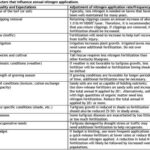
Although the Purdue University Turf Program publishes information about how to fertilize your turf with nitrogen (N)-based fertilizers including standard rates and timings, there are many factors that influence these rates and timings. It is important that each turf area be fertilized according to its needs. For example, some areas require more nitrogen fertilization because…Read more about Making Adjustments to Your Fertilizer Program[Read More]


Staying Dry

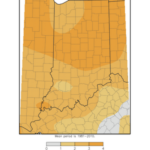
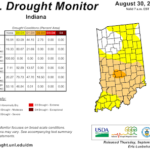
Many in central Indiana are coping again with drought a second year (See drought monitor images for Indiana (current and fall of 2010). While many pockets of Indiana have had sufficient moisture in the second half of summer (including Lafayette) others are facing dry conditions for a second year in a row.     September…Read more about Staying Dry[Read More]


 Publication Categories:

Imprelis® Update: Stop Sale, Use, or Removal Order. Q&A

The following post provides an update on Imprelis® herbicide in a Question and Answer format. Q: What action has the Office of Indiana State Chemist (OISC) recently taken concerning Imprelis®? A: The OISC issued a stop sale, use, or removal order (SSURO) on August 1, 2011 for the herbicide Imprelis®. The OISC has reason to…Read more about Imprelis® Update: Stop Sale, Use, or Removal Order. Q&A[Read More]

 Categories:

Page last modified: December 17, 2020

Turfgrass Science at Purdue University - Horticulture & Landscape Architecture, 625 Agriculture Mall, West Lafayette, IN 47907

© 2026 Purdue UniversityAn equal access/equal opportunity universityCopyright ComplaintsMaintained by Turfgrass Science at Purdue University

If you have trouble accessing this page because of a disability, please contact Turfgrass Science at Purdue University at kkalbaug@purdue.eduAccessibility Resources