Author: Turf Tips

Winter likely to keep a frigid grip on Indiana into late March

Article from: Purdue Agriculture News (2/27/2014)WEST LAFAYETTE, Ind. - Despite a couple of recent mild weather days that made us think spring could be near, the Indiana State Climate Office says winter isn't going away anytime soon.While it isn't abnormal...
Read More

Purdue Turf Students Place 3rd at the Sports Turf Managers Association Annual Student Challenge

Two teams of Purdue students traveled to San Antonio, TX to participate in the Sports Turf Managers Association (STMA) Annual Collegiate Challenge sponsored by Hunter Industries on 24 January, 2014. During the two-hour competition, teams were divided into students pursuing...
Read More

Status: The Office of Indiana State Chemist & Seed Commissioner

Following recent flooding in their office due to a water line break, "the Office of Indiana State Chemist & Seed Commissioner has restored operational status for most of its internal activities of licensing, registering, and responding to telephone calls.  As...
Read More

Weather warms up at week’s end for the Indiana Green Expo (January 8-10, 2014)

January 8-10, 2014 Indiana Convention Center, Indianapolis, IN While the weather outside is frightful today (Monday, January 6 2014) and tomorrow (Tuesday, January 7 2014) it does look to improve considerably by week's end with highs near 40 degrees for the...
Read More

2014 Turf Weed Control for Professionals, Now Available

  The revised edition of Turfgrass Weed Control for Professionals is now available. The 96 page publication includes content on: Turfgrass Culture Weed Types Weed Life Cycles Developing a Weed Control Program Indicator Weeds               Herbicide Information (use, nomenclature, classification, mode...
Read More

Indiana Green Expo 2014

January 8-10, 2014 Indiana Convention Center, Indianapolis, IN Education schedule, workshop descriptions, speaker highlights, exhibitors and trade show events found at www.indianagreenexpo.com or click here for IGE 2014 Brochure.         Speakers We are excited to bring in a great...
Read More

What To Do With All Those Falling Leaves?

It is that time of year when leaves are falling faster than you can rake them in many places. It is important to rake leaves when there are many leaves on the ground (so many that you can't see the...
Read More

New Insecticide Labels to Increase Focus on Pollinator Protection

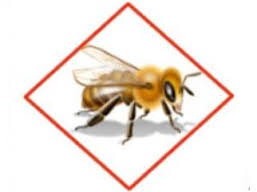
As part of an ongoing effort to raise consciousness about the potential threat to pollinators posed by neonicotinoid insecticides, the USEPA recently unveiled new pesticide labeling criteria.The new labels will contain a bee advisory box and icon with information on...
Read More

Common Bermudagrass

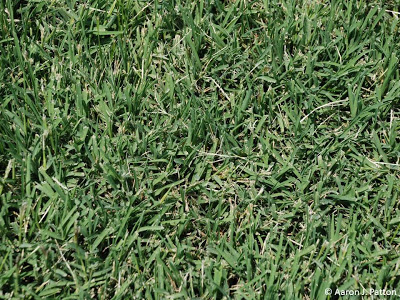
      Common Bermudagrass     Biology: Common bermudagrass (Cynodon dactylon) is the most commonly used turfgrass in the southern United States, but it is also a difficult-to-control weed in northern turf. Bermudagrass is a drought tolerant, warm-season, perennial...
Read More

2013 Imprelis Update: Tree Maintenance, Replacement, and Disposal

This article provides a 2013 update of this issue and what we hope will be the last and final update on Imprelis. This update addresses some of the frequently asked questions about Imprelis® in 2013. 2013 Imprelis® Update: Tree Maintenance,...
Read More

Goosegrass

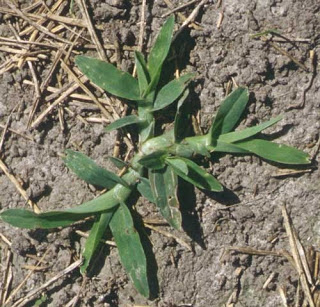
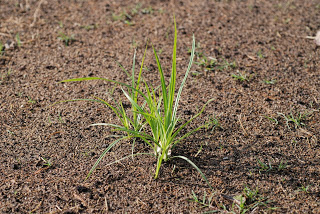
      Goosegrass     Biology: Goosegrass (Eleusine indica) is an late-germinating summer annual grass that is often found in compacted areas or areas disturbed in the summer. These areas include compacted areas next to sidewalks or cart paths,...
Read More

2013 Turf and Landscape Field Day a Success

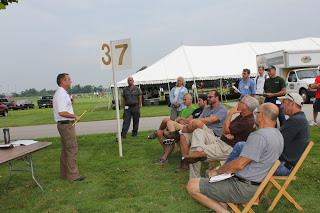
On Tuesday, July 9th, 2013 the Purdue Turf Program and the Midwest Regional Turf Foundation hosted the Turf and Landscape Field Day. The Turf and Landscape Field Day is Indiana’s largest green industry field day. It was a much cooler...
Read More

Fountain Grass

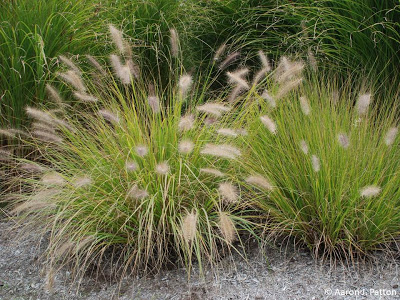
Fountain Grass     Biology: Fountain grass ((Pennisetum spp.) is an ornamental grass common to the landscapes of homes, commercial sites, and golf courses. However, following years of planting in these landscapes, we now realize that this species produces many...
Read More

2013 Indiana Pesticide Clean Sweep Project

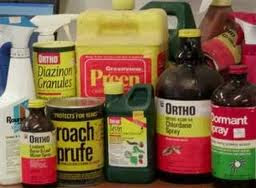
  WHAT: An Indiana Pesticide Clean Sweep Project designed to collect and dispose of suspended, canceled, banned, unusable, opened, unopened or just unwanted pesticides (weed killers, insecticides, rodenticides, fungicides, miticides, etc.) is being sponsored by the Office of Indiana State...
Read More

Seed corn beetle being reported by superintendents

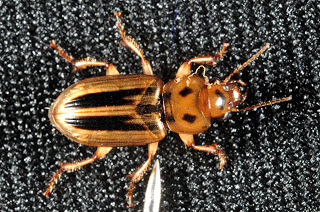
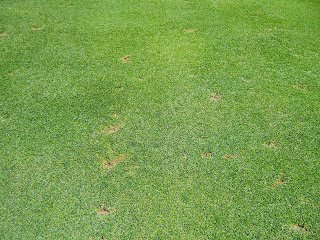
In addition to earthworms, there are several insects that can create small mounds of soil above the surface of turfgrass. Occasionally, the mounds can become a nuisance, especially on closely mowed greens where they are more noticeable and may interfere...
Read More

Yellow Nutsedge: Two New Publications on Controlling this Troublesome Weed

Yellow nutsedge is a troublesome, difficult-to-control turf weed. Understanding this plant’s biology makes it easier to know how to best control it. Two new Purdue publications help answer questions on the best way to control this weed. Yellow Nutsedge Control...
Read More

Perennial ryegrass seedheads: Now and Later

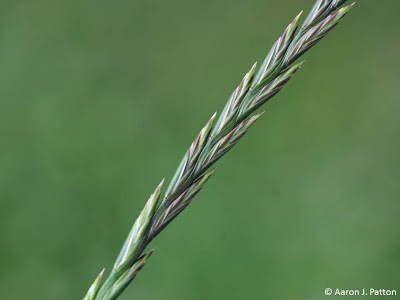
Perennial ryegrass seedheads are in full production now. These seedheads are tough to cut so make sure to keep your mower blades sharp. Now is a good time to sharpen your mower blades if you haven’t yet this year. Close-up...
Read More

Rounds 4 Research auction is open through June 16!

    Bid now for get great deals on great golf! Click here to see what's available. Click Indiana on the left side of the screen to see rounds up for auction now. Whether you choose to bid on courses...
Read More

Wild Violets

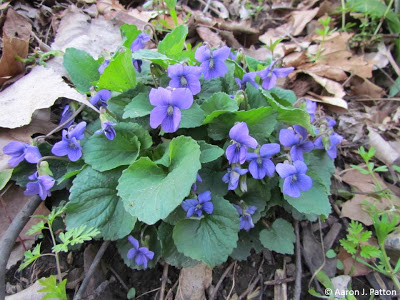
  Wild Violet      Biology: Collectively, turf managers refer to the Midwest species common blue violet (Viola sororia), wooly blue violet (Viola papilionacea), and confederate violet (Viola sororia f. priceana) all as wild violet. Additionally, yellow violet (Viola pubescens)...
Read More

Caterpillar Update

Although they are fairly easy to control, caterpillars like cutworms and armyworms can have a way of “sneaking” up on turf managers. For golf course superintendents, we’ve reached that point in the spring when black cutworms may be large enough...
Read More