Turf Tips Archives


Soil Tests

Soil test are important  for determining P and K fertilization requirements. Though Purdue has been out of the soil testing business for many, many years, there is a list of certified soil testing labs at http://www.agry.purdue.edu/ext/soiltest.html. Taking an soil test is even more important than where it is sent for analysis. More information is available at http://www.agry.purdue.edu/turf/pubs/ay-18.pdf

 Categories:

Winter/spring flood damage on turf

After widespread flooding, many question how well turf will survive. Turf injury from flooding depends on water temperature, species, duration of submergence, and depth of submergence. Turfgrasses can withstand submersion for up to 60 days when water temperatures are 50 degrees or less.  Injury is increased under stagnant water compared to moving water, and injury…Read more about Winter/spring flood damage on turf[Read More]


Nitrogen and Phosphorus: fertilizing lawns to protect water quality

Healthy turf areas provide many environmental and recreational benefits. A properly fertilized turf has fewer weeds, is more resistant to insect feeding and is less disease prone than malnourished turf. Furthermore, a dense turf slow and decreases water runoff following storm events which helps reduce flooding in urban environments. Concern over water quality is growing…Read more about Nitrogen and Phosphorus: fertilizing lawns to protect water quality[Read More]


For professionals: Seed thin turf now or use weed control?

With last year’s brutal summer and early fall, many areas are in need of reseeding. The question comes up about seeding and weed control: should the weeds be controlled first or should the seeding be done first? This seems like a simple question, but it’s fairly complex depending on the turf and weed species present…Read more about For professionals: Seed thin turf now or use weed control?[Read More]

 Categories:

Do it yourself: Choose preemergence herbicides with as little N as possible: Part II

Per the earlier Turf Tip, select preemergence herbicides with as little nitrogen as possible to reduce the growth flush and maximize long-term health of the plant. The problem is finding a product with little or no N. Do not make the mistake of settling for a high N product and then reducing the application rate….Read more about Do it yourself: Choose preemergence herbicides with as little N as possible: Part II[Read More]

 Categories:

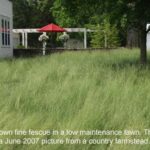
Do it yourself: Searching for that low maintenance lawn?

We get a ton of calls and email inquiring about low maintenance lawns. Simply put, there are no silver bullet grass species that are low maintenance and will also survive summers and winters in IN. That being said, hiring professionals to mow and maintain your lawn is the best method for reducing your input. Following…Read more about Do it yourself: Searching for that low maintenance lawn?[Read More]


For Professionals: Choosing a Preemergence Herbicide

There are many, many formulations and combinations of preemergence herbicides available for the professional. Following are some suggestions for purchasing and using preemergence herbicides. Control from every preemergence herbicide can vary from year to year, or location to location. Therefore, you can’t judge the performance of a product or a specific rate of that product…Read more about For Professionals: Choosing a Preemergence Herbicide[Read More]

 Categories:

For Professionals: Timing of Preemergence Herbicides

If a preemergence herbicide is justified on a turf area, the timing of application is important. In theory, applying too early will expose the herbicide to soil microbes and processes in the soil that may break it down, allowing crabgrass to germinate during the latter part of the summer. Conversely, applying too late may miss…Read more about For Professionals: Timing of Preemergence Herbicides[Read More]

 Categories:

Choose Preemergence herbicides with as Little N as Possible

If a preemergence herbicide is justified on your lawn to control crabgrass now, most of those are available combined with fertilizer and you are forced to apply a fertilizer now. Look for a product with low nitrogen and be sure the majority of the nitrogen is a slow release N. Slow release sources include sulfur-…Read more about Choose Preemergence herbicides with as Little N as Possible[Read More]

 Categories:

Purdue Alumni and Friends Reception at the GCSAA in Orlando

For those making the trip to Orlando for the GCSAA International Conference and Show, the Purdue Alumni and Friends Reception will be held Thursday, January 31 from 6:00 to 8:00 pm in Salon 4 of the Rosen Centre Hotel. It’s a great opportunity to catch up with your classmates and old friends. Please plan on…Read more about Purdue Alumni and Friends Reception at the GCSAA in Orlando[Read More]

 Categories:

There are still openings for the IN-IL Turfgrass Short Courses

The IN-IL Turfgrass Short Course will be held in Lebanon, IN, on Feb. 11-14 and Willowbrook, IL, on Feb. 25-28. This is an outstanding course for new and experienced turf professionals. It’s designed for turf managers with some experience and an understanding of HOW we maintain turf, and meant to improve the understanding of WHY…Read more about There are still openings for the IN-IL Turfgrass Short Courses[Read More]

 Categories:

Thanks to Everyone who Attended Indiana Green Expo

On behalf of the Turf Program, Midwest Regional Turf Foundation (MRTF), Indiana Nursery and Landscape Association (INLA), and Indiana Parks and Recreation Association (IPRA), I’d like to thank everyone who helped with and/or attended the 2008 Indiana Green Expo on January 13-14 at the Indiana Convention Center in Indianapolis.  This marks the second year where…Read more about Thanks to Everyone who Attended Indiana Green Expo[Read More]

 Categories:

Attention Professional Lawn Care Operators: Interested in Organic Options?

Interest in organic lawn care is on the rise throughout the country and many more questions than answers are still out there on how to make this work effectively. A session at the Indiana Green Expo on Monday afternoon Jan 14, will cover some of the basics and how-to’s of organic lawn care. Come with…Read more about Attention Professional Lawn Care Operators: Interested in Organic Options?[Read More]

 Categories:

Still time left to sign up for Indiana Green Expo!

The registration deadline is fast-approaching for the Green Expo and forms must be postmarked by Dec. 31. The Indiana Green Expo is the largest turf, ornamental, nursery, and landscape conference in the Indiana and is jointly sponsored by the Midwest Regional Turf Foundation, Indiana Nursery and Landscape Association, and Indiana Parks and Recreation Association. Over…Read more about Still time left to sign up for Indiana Green Expo![Read More]

 Categories:

Upcoming Education: Basic Training Turfgrass Management

This is a one-day workshop that’s perfect for new-comers to the industry as well as more experienced professionals who want a refresher course on turf management. This is a perfect training opportunity for you or your staff from lawn care operators, sports, golf course, or anywhere turf is managed professionally. Turfgrass growth, cultural practices, and…Read more about Upcoming Education: Basic Training Turfgrass Management[Read More]

 Categories:

Winterkill in warm-season turfgrasses

Winterkill in warm-season grasses is highly variable and difficult to study by scientists. Because of this, our understanding of winterkill is based on science as well as practical experience and observation. Since winterkill in warm-season grasses can be affected by genetics, temperature extremes, and management factors, an endless combination of these factors can interact to…Read more about Winterkill in warm-season turfgrasses[Read More]


How late can you seed?

We are out of the optimum window for seeding turfgrasses in Indiana. However, many are still hoping to seed. Following is a summary of our studies in the early 90’s on seeding at less than optimum times of the year. For optimum establishment, seeding should be done in late August or early September.  Waiting as…Read more about How late can you seed?[Read More]


November fertilization is critical for turf performance next year

A November application of fertilizer is extremely important to keep your lawn healthy and looking good this fall and next year. Late fall N promotes good root development, enhances storage of energy reserves, and extends color retention this fall. Most of the benefits from late fall N will be seen next spring and summer with…Read more about November fertilization is critical for turf performance next year[Read More]


Keep Mowing to Mulch Those Tree Leaves!

The trees are dropping their leaves and it is important to prevent a heavy layer of leaves from building-up on your turf before winter.  Heavy layers of tree leaves will shade the grass can smother and kill grass yet this fall.  Plus tree leaf cover favors a damaging winter turf disease called snow mold.  The…Read more about Keep Mowing to Mulch Those Tree Leaves![Read More]


Winterizer Fertilizers?

Currently advertised on television and in home improvement stores are “winterizer” fertilizers. There’s good and bad about winterizer fertilizers. It’s good that they are emphasizing fall and late fall fertilizer. These fertilizers usually contain the same amount of potassium as nitrogen (nitrogen is the first of the three prominent numbers on the bag while potassium…Read more about Winterizer Fertilizers?[Read More]


Page last modified: May 21, 2019

Turfgrass Science at Purdue University - Horticulture & Landscape Architecture, 625 Agriculture Mall, West Lafayette, IN 47907

© 2026 Purdue UniversityAn equal access/equal opportunity universityCopyright ComplaintsMaintained by Turfgrass Science at Purdue University

If you have trouble accessing this page because of a disability, please contact Turfgrass Science at Purdue University at kkalbaug@purdue.eduAccessibility Resources