Turf Tips Archives


Now is the Time to Start Improving Your Lawn

Tired of the way your lawn looks? If it hasn’t looked up to par this summer reseeding your lawn is an option. Mid-August is the best time to seed a new lawn or overseed an existing lawn, but planning should start now. If the lawn is just thin and needs a little help, fall is…Read more about Now is the Time to Start Improving Your Lawn[Read More]


White Clover in Golf Courses, Sports Turf, and Lawns

The small white flowers of white clover are very visible right now and it may appear that clover is taking over, especially under-fertilized turf areas. Clover is a legume and is very competitive under low N conditions, so increasing annual N is the best method for long-term control. The temptation is to apply a herbicide…Read more about White Clover in Golf Courses, Sports Turf, and Lawns[Read More]


Crabgrass and Yellow Nutsedge

Crabgrass and yellow nutsedge are really starting to flourish. Unfortunately, our options for control of either weed are becoming limited. Plus the hot temperatures increase the risk for turf damage with any herbicide applied now. The best current option for crabgrass is quinclorac (Drive or Quinclorac), which has the best activity among all the post…Read more about Crabgrass and Yellow Nutsedge[Read More]

 Categories:

Midwest Regional Turf Field Day on July 17

There’s still time to register for the Midwest Regional Turf Field Day that will be held on Tuesday, July 17 at the W.H. Daniel Turfgrass Research and Diagnostic Center in West Lafayette . The variety and quality of research tours and other opportunities will make this one of the best field days yet. Topics include…Read more about Midwest Regional Turf Field Day on July 17[Read More]

 Categories:


Lawn blemishes exposed by drought

Maintaining lawns and other turf areas is fairly straightforward in the cool and wet weather of the spring and fall, but things get tougher once the heat and drought set in. We are currently seeing a wide variety of problems, all of which are enhanced by the dry conditions. Problems that we are seeing include:…Read more about Lawn blemishes exposed by drought[Read More]


Don’t raise the mowing height during drought

Typical advice in the paper and TV is to raise the mowing height during drought to help the turf area stay green. However, this is very simplified advice which needs clarification. Here are some well-researched facts: • The higher you mow a grass plant, the deeper the roots.  • Deeper roots mean a larger reservoir…Read more about Don’t raise the mowing height during drought[Read More]


Facts and Advice on Turf Survival in Drought

There are many questions about turf survival in drought with the on-going drought in most parts of the state. Though we understand many of the mechanisms turf survival in drought, it’s hard to duplicate all of the potential situations on research plots across the country and it’s difficult to give definite “black and white” recommendations…Read more about Facts and Advice on Turf Survival in Drought[Read More]


Early Japanese Beetles

It seems that the Japanese beetles have been arriving early for the last few years but this year is truly an exception. The first Japanese beetles of the year were observed in central Indiana on the 3rd of June. This is a full week earlier than we have EVER seen them here before. Normally, Japanese…Read more about Early Japanese Beetles[Read More]


Midwest Regional Turf Field Day on July 17

Don’t forget to register for the Midwest Regional Turf Field Day that will be held on Tuesday, July 17 at the W.H. Daniel Turfgrass Research and Diagnostic Center in West Lafayette . This is a great opportunity for turf professionals to view the latest in turfgrass research, talk to Purdue specialists about turf and ornamental…Read more about Midwest Regional Turf Field Day on July 17[Read More]

 Categories:

Early billbug activity

It appears that our unseasonably warm spring has pushed the activity of many insects as much as 2-3 weeks ahead of traditional expectations. Among the turfgrass insects that are showing up early this year are the billbugs. These insects over-winter as adult weevils and become active in the spring when soil temperatures reach about 50°F,…Read more about Early billbug activity[Read More]


Controlling Poa trivialis in sports fields

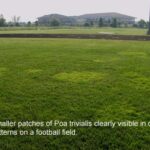
Poa trivialis is now common in sports fields, possibly due to as little as one contaminated seed source from the many overseedings done on sports fields. Once germinated, Poa trivialis spreads via stolons which may be further spread during every hollow tine aerification. Poa trivialis is shallow rooted, has poor wear resistance, is extremely susceptible to dollar spot, and often…Read more about Controlling Poa trivialis in sports fields[Read More]


Controlling ground ivy and/or violets

Ground ivy and violets are currently flowering and at their peak of beauty, but these two weeds remain tough to control in Indiana . Like almost all broadleaf weeds, flowering indicates a point in their lifecycle where they are susceptible to herbicide application. Even though applications now can produce visible damage, long-term control does not…Read more about Controlling ground ivy and/or violets[Read More]

 Categories:

Brown Ring Patch / Waitea Patch

There are sporadic reports of brown ring patch (formerly called Waitea patch) from across the Midwest . Interestingly, the disease currently is causing concern in southern California as well. The risk of structural damage (a.k.a. dying turf) is greater on putting greens than on turf mowed at a half inch or higher. Otherwise, effects are…Read more about Brown Ring Patch / Waitea Patch[Read More]

 Categories:

We need help tracking new white grub species

The presence of two potentially serious white grub pests of turfgrass and ornamental plants has recently been confirmed in three northern Indiana counties; Porter, St. Joseph and Allen. The European chafer and Asiatic garden beetle are similar in biology to their cousins, the masked chafer and Japanese beetle, yet differ enough in behavior, habitat and…Read more about We need help tracking new white grub species[Read More]

 Categories:

Weed Control in Newly Seeded Bermudagrass

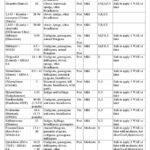
Bermudagrass seeded or sprigged into damaged areas will require weed control to maximize establishment. Most herbicides carry precautions on use in sprigged bermudagrass, but few carry recommendations on use in seeded bermudagrass because of the newness of seeded varieties. Following is a table of herbicide recommendations gleaned from the latest research on seeded bermudagrass. Herbicides…Read more about Weed Control in Newly Seeded Bermudagrass[Read More]

 Categories:

Bermudagrass Winter Survival and Cultivar Selection

With the bermudagrass damage in southern IN and Kentucky , we are fielding many questions on cultivar survival. Following is our winterkill data from 2003 of bermudagrass grown in West Lafayette under fairway conditions. Combining this data and other data from across the country, I would recommend in order the following cultivars of bermudagrass for…Read more about Bermudagrass Winter Survival and Cultivar Selection[Read More]


Winter damage on bermudagrass

As bermudagrass begins to green up in southern IN and Kentucky , it is apparent that moderate to severe winter damage has occurred. Though we may be a little premature because full green-up and growth is still a week or two away depending on temperatures, it’s important to start formulating a strategy to repair the…Read more about Winter damage on bermudagrass[Read More]


Brown Tracks in Lawn

With the mild drought stress over the last week, lawns are extremely susceptible to cosmetic damage from mowers, spreaders, and human traffic (photos). Drought stress may not have been easily visible before mowing. Turf likely was at the drought stressed stage where footprints (or mower tracks) remain in the turf and don’t snap back like…Read more about Brown Tracks in Lawn[Read More]


Late May is Good Time to Fertilize Lawns

The annual phase of rapid cool-season shoot growth of cool-season grasses is nearly complete, though it was diminished this year because of the dry and cool weather. It’s now time to consider fertilizing your lawn because fertilizer now will not dramatically increase vertical growth as long as moderate nitrogen rates are used and it will…Read more about Late May is Good Time to Fertilize Lawns[Read More]


Page last modified: May 21, 2019

Turfgrass Science at Purdue University - Horticulture & Landscape Architecture, 625 Agriculture Mall, West Lafayette, IN 47907

© 2026 Purdue UniversityAn equal access/equal opportunity universityCopyright ComplaintsMaintained by Turfgrass Science at Purdue University

If you have trouble accessing this page because of a disability, please contact Turfgrass Science at Purdue University at kkalbaug@purdue.eduAccessibility Resources