Category: Disease Control

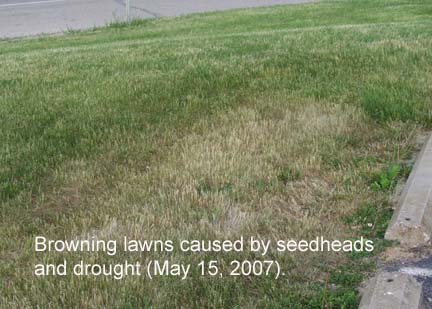
Brown Patches in Lawns Could be Old Seedstalks

We have received a number of calls, email, and electronic photos inquiring about current brown patches in the lawn. Dollar spot is active throughout the state and could be causing problems in lawns. Dollar spot causes very noticeable lesions and cotton candy mycelium in the early morning. However, many of the patches that I have…Read more about Brown Patches in Lawns Could be Old Seedstalks[Read More]

 Categories:

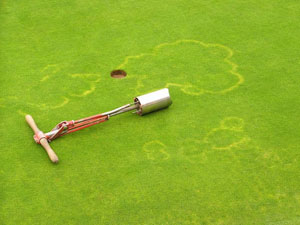
Red thread, pink patch, and dollar spot in lawns and roughs

Red thread and its close relative pink patch, are now appearing on home lawns (and golf course roughs) in the central and southern parts of Indiana. Red thread first appears as small (quarter to golf ball size) gray – tan colored patches in the turf. After extended dew periods, white – pink mold may be…Read more about Red thread, pink patch, and dollar spot in lawns and roughs[Read More]


Pink Snow Mold Active

The cool wet weather the last two weeks is favoring Microdochium nivale, the pathogen that causes pink snow mold (sometimes referred to as Microdochium patch). The color of pink snow mold scars indicates the activity of the patch. Straw colored patches are usually inactive. However, a rust to orange colored band or ring indicates an active…Read more about Pink Snow Mold Active[Read More]

 Categories:

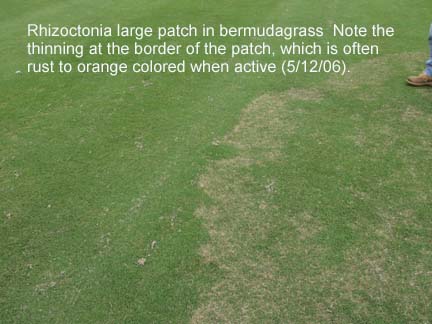
Rhizoctonia Large Patch in Bermudagrass

With the continued cool wet weather, Rhizoctonia Large Patch (RLP) is affecting bermudagrass fairways. Prior to widespread use of bermudagrass in southern Indiana and northern Kentucky, we thought RLP affected only zoysia and was thus known as zoysia patch. However, RLP caused serious thinning in bermudagrass in an occasional spring the last few years. This…Read more about Rhizoctonia Large Patch in Bermudagrass[Read More]

 Categories:

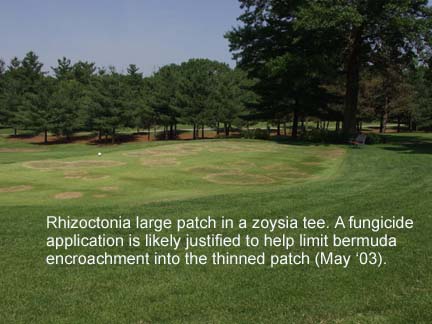
Rhizoctonia Large Patch (Zoysia Patch) in Zoysia

With the continued cool wet weather, Rhizoctonia Large Patch (RLP or zoysia patch) is in high gear. This follows a warm winter that also encouraged RLP, which is the only major disease of zoysiagrass in Indiana. Like snow mold, a rust to orange colored band on the outside of the patch indicates activity. Though best…Read more about Rhizoctonia Large Patch (Zoysia Patch) in Zoysia[Read More]

 Categories:

Tough Year for Turf in Indiana

The summer’s heat and humidity have taken an unusually high toll on turf in lawns, athletic fields, and golf courses. Most of the decline can be attributed to poor root growth weakening cool-season grasses and starting an avalanche of secondary factors leading to further decline. Root growth of cool-season grasses reaches a peak in mid-spring…Read more about Tough Year for Turf in Indiana[Read More]


Rust in Turf

A few rust calls are starting to trickle in, which is typical at this time of the year. Rust symptoms are reddish-orange lesions or spots on the leaf blades and a rust-colored powder that you can rub off with your fingers. Rust will rarely kill a turf area, but it can thin a turf stand…Read more about Rust in Turf[Read More]


Turfgrass nematode damage? … Sample to be sure!

Random patches of wilted turfgrass that are unresponsive to irrigation, assume a gray/green appearance and then turn tan/brown just before dying MAY be suffering from nematodes. These symptoms are somewhat characteristic of several diseases, insect infestations and even environmental stresses, so when making a determination, all possible causes must be considered. The symptoms of nematode…Read more about Turfgrass nematode damage? … Sample to be sure![Read More]


White Grub Damage

Reports of turfgrass damage due to white grub feeding are beginning to trickle in. Damage potential seems to be widely variable this year. Some areas that were dry during the beetle egg laying season last year reported very few Japanese beetles during the entire summer. Other areas, especially in the central and southern portion of…Read more about White Grub Damage[Read More]


Gray Leaf Spot Update

There have been numerous reports of gray leaf spot outbreaks throughout Indiana and the lower Midwest during the past three weeks. We generally expect that hot humid conditions will favor gray leaf spot development. However, you may recall that outbreaks also occurred during the summer of 2004, a year in which temperatures reached 90 F…Read more about Gray Leaf Spot Update[Read More]


Summer stress of Poa annua, Poa trivialis on Golf Courses

Persistent air temperatures of 90F and soil temperatures greater than 80F combine with high humidity and adequate rainfall (in some areas) is doing in the Poa annua (annual bluegrass)and Poa trivialis (rough bluegrass)on golf courses. After a week or two of these conditions, Poa annua greens and fairways will start to thin and die in…Read more about Summer stress of Poa annua, Poa trivialis on Golf Courses[Read More]


Summer stress of Poa annua and Poa trivialis in Lawns and Sports Fields

Persistent air temperatures of 90F and soil temperatures greater than 80F combine with high humidity and adequate rainfall (in some areas) is also doing in the Poa annua (annual bluegrass)and Poa trivialis (rough bluegrass)on lawns and athletic fields. Patches of these fine-bladed grasses seemingly die overnight with even a minimum of drought stress. Though these…Read more about Summer stress of Poa annua and Poa trivialis in Lawns and Sports Fields[Read More]


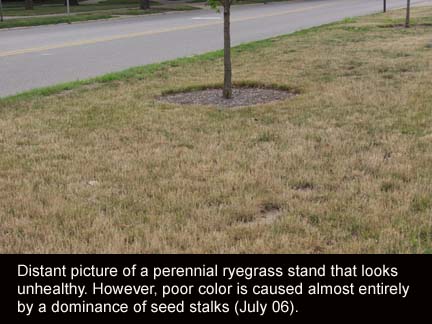
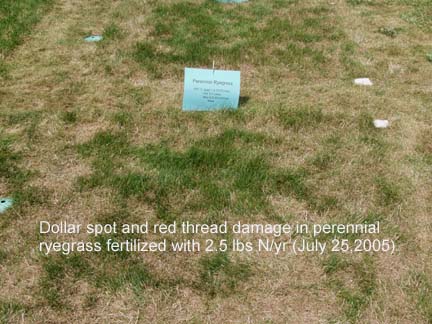
Perennial Ryegrass Looking Exceptionally Bad Right Now

Dollar spot, pythium, brown patch, rust, and perhaps other diseases are ravaging perennial ryegrass lawns currently (See the attached (undoctored!) photos). Turf performance in July and August is the main reason I don’t recommend perennial ryegrass for lawns in Indiana. Perennial ryegrass requires more irrigation, more fertilizer, and more fungicide applications than my preferred grasses,…Read more about Perennial Ryegrass Looking Exceptionally Bad Right Now[Read More]


Early Dollar Spot Applications Make Sense

Dollar spot has arrived on golf courses. The standard mid- to late May fertilization of 0.75-1.0 lb N/1000 sq. ft. with primarily slow release N should have helped minimize some dollar spot. On golf courses with a long history of dollar spot, first and foremost review the fertilization practices and increase the annual N if…Read more about Early Dollar Spot Applications Make Sense[Read More]


Rhizoctonia Large Patch (Zoysia Patch)

As our zoysiagrass fairways and tees are greening up this spring, we will soon begin to see the symptoms of Rhizoctonia Large Patch (zoysia patch). Rhizoctonia Large Patch (RLP) is the only major disease of zoysiagrass in Indiana. The pathogen is favored by moderate temperatures and long dew periods in the spring, fall and during…Read more about Rhizoctonia Large Patch (Zoysia Patch)[Read More]


Tan Patches in an Otherwise Green Lawn

Tan patches in an otherwise green lawn at this time of the year are likely due to either slow-greening warm-season grasses or snow mold. The most common tan patch right now is warm-season grasses like nimblewill or zoysia (photos). Time, warming temperatures, and rainfall are the cures for most of these patches and they should…Read more about Tan Patches in an Otherwise Green Lawn[Read More]


Gray Leaf Spot 2004

We’ve received several reports of gray leaf spot outbreaks throughout the state during the past couple of weeks. It may surprise many, because the summer of 2004 has been one of the mildest (zero days where temperatures reached 90 F in West Lafayette) in recent memory. It did not surprise us, however, because our research…Read more about Gray Leaf Spot 2004[Read More]

 Categories:

September Grub Damage

White grub damage on turfgrass may be more widespread than many expected this year. With ample rain and favorable growing conditions for most host plants during the early and mid growing season, high concentrations of adult Japanese beetles were not as common as in previous years. This may have lulled turfgrass managers into forgetting about…Read more about September Grub Damage[Read More]


Page last modified: May 15, 2019

Turfgrass Science at Purdue University - Horticulture & Landscape Architecture, 625 Agriculture Mall, West Lafayette, IN 47907

© 2026 Purdue UniversityAn equal access/equal opportunity universityCopyright ComplaintsMaintained by Turfgrass Science at Purdue University

If you have trouble accessing this page because of a disability, please contact Turfgrass Science at Purdue University at kkalbaug@purdue.eduAccessibility Resources