Category: Tools and Equipment

Use Purdue Plant Doctor Apps for Android and iPhones to Fix Plant Problems

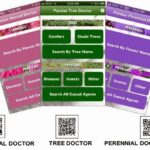
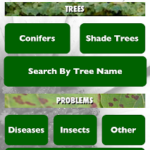
Correct diagnosis is the most important step you can take toward fixing plant problems. We took the best photos we had in our libraries and put them in our apps to help you become better plant managers. The Purdue Plant Doctor suite of smart phone apps will help you diagnose and find recommendations to manage…Read more about Use Purdue Plant Doctor Apps for Android and iPhones to Fix Plant Problems[Read More]
New Publication: Calibrating Ride-on Sprayers and Spreaders

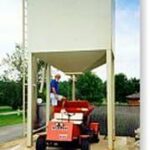
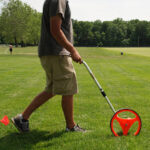
The use of ride-on sprayer/spreaders by lawn care operators (LCOs) and the sports turf industry has increased dramatically since they were introduced in the 1980s. Ride-on equipment offers a number of competitive advantages over walk-behind spreaders and the hand-gun/hose-reel type of application. This publication addresses specific procedures for separately calibrating the pesticide sprayer and the…Read more about New Publication: Calibrating Ride-on Sprayers and Spreaders[Read More]

 Categories:

Use Growing Degree Days to Better Time Your Applications

Monitoring growing degree days can be an effective way to better time applications and increase your weed control. A helpful website (www.gddtracker.net) is available to help you monitor growing degree days for timing herbicide and plant growth regulator applications. What can this website help me with? Need help determining when to apply your preemergence herbicide?…Read more about Use Growing Degree Days to Better Time Your Applications[Read More]


Tree Problems? We Have an App for That!

After two years of development, we have released a new smart phone app that will help you diagnose and find recommendations to manage over 175 tree problems on over 60 kinds of trees. We call it the Purdue Tree Doctor. It will be like having our entire library of photos and recommendations in your pocket…Read more about Tree Problems? We Have an App for That![Read More]


Don’t Forget to Sharpen Those Mower Blades

Sharply cut leaf blades increase turf health by improving recovery, decreasing water loss, and increasing photosynthesis. Lawns mown with a dull mower blade have poor aesthetics, heal more slowly and have greater water loss. Seedheads are present in many lawns right now and they are typically tougher to cut than the grass blades themselves. As…Read more about Don’t Forget to Sharpen Those Mower Blades[Read More]

 Categories:

Check out these new and improved tools!

We have been working hard this winter trying to help you be more efficient….. These tools/calculators are now available on our Purdue Turf Science web-site to help you answer various turf-related questions. An updated Turf Fertilizer Calculator. It still allows you to calculate granular fertilizer needs based on target nutrient rate and product analysis. It…Read more about Check out these new and improved tools![Read More]

 Categories:

New GDDTracker site is live!

The GDDTracker Team (Michigan, Indiana, Illinois, and Ohio) is proud to launch the latest version of our turf pest tracking web site (http://www.gddtracker.net/). We have been very hard at work to bring you an even better product in 2011. You can now drop a star on the map to mark your location and with the…Read more about New GDDTracker site is live![Read More]


Tracking Growing Degree Days for Applications? Indiana now in expanded GDD Tracker

By popular demand, we have joined with Michigan State to include Indiana sites in GDD Tracker (http://www.gddtracker.net/). This site allows you to quickly and easily check your current growing degree day accumulation. It also uses a number of models to help with decisions on timing of growth regulators for Poa annua seedheads, preemergence herbicides for crabgrass, and…Read more about Tracking Growing Degree Days for Applications? Indiana now in expanded GDD Tracker[Read More]


Ball mark Recovery: Does the Repair Tool Matter?

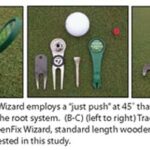
Putting green surface smoothness and uniformity is often disrupted by unrepaired ballmarks. These marks can disrupt surface smoothness and increase the potential for weed (e.g. annual bluegrass) encroachment. The traditional method for repairing ballmarks normally employs a metal pronged tool (≈ 1 in or 3 cm), or tee and using a knit and twist method…Read more about Ball mark Recovery: Does the Repair Tool Matter?[Read More]


Tracking Growing Degree Days

Many of our pest problems in turf can be at least partially predicted through growing degree day models ( Poa annua seedheads is one example). Most of the models use a base temperature of 50 (abbreviated as GDD 50 ) assuming 50 degrees is the temperature when most of our biological activity starts occurring. GDD50 for IN…Read more about Tracking Growing Degree Days[Read More]

 Categories:

Fertilizer Calculator Now Available

With the fall fertilization for cool-season turfgrasses just around the corner I wanted to take a moment to make you aware of another interactive tool that is now available. This tool is intended to help you determine your fertilizer needs. The fertilizer calculator and is located at: http://www.agry.purdue.edu/turf/fertcalc/Fertilization calc.html With this information you can ensure you are…Read more about Fertilizer Calculator Now Available[Read More]


Interactive Turfgrass Identification Tool now available

After about 9 months of development a concept of mine has finally borne fruit.  This week we rolled out the interactive, self-guided, online turfgrass identification tool, located at: http://www.agry.purdue.edu/turf/tool/index.html. Now you can probably identify the mystery grass in your lawn from the comfort of your own computer. If you still can’t identify it, you can always…Read more about Interactive Turfgrass Identification Tool now available[Read More]


Tracking Growing Degree Days

Many of our pest problems in turf can be at least partially predicted through growing degree day models (Poa annua seedheads is one example). Most of the models use a base temperature of 50 (abbreviated as GDD50) assuming 50 degrees is the temperature when most of our biological activity starts occurring. GDD50 for IN can…Read more about Tracking Growing Degree Days[Read More]

 Categories:

Late-summer Aerification check-List

Although this past growing season across most of Indiana has been cool and moist this is no reason to consider skipping fall core cultivation or aerification. In fact, this abnormal weather pattern is actually more conducive to thatch accumulation since many of the microbes responsible for organic matter break-down are less active in these conditions….Read more about Late-summer Aerification check-List[Read More]


Localized Dry Spot Returns for 2004

For those of you managing sand-based putting greens you may have noticed some turf areas that don’t seem to be vigorously growing even with the recent heavy rainfalls or regular irrigation (photo). Looking back, April and the early part of May was a challenging time for turf managers trying to manage water on the golf…Read more about Localized Dry Spot Returns for 2004[Read More]


Page last modified: May 15, 2019

Turfgrass Science at Purdue University - Horticulture & Landscape Architecture, 625 Agriculture Mall, West Lafayette, IN 47907

© 2026 Purdue UniversityAn equal access/equal opportunity universityCopyright ComplaintsMaintained by Turfgrass Science at Purdue University

If you have trouble accessing this page because of a disability, please contact Turfgrass Science at Purdue University at kkalbaug@purdue.eduAccessibility Resources