Homeowner


Dark Green Patches in Otherwise Lighter Green Lawn

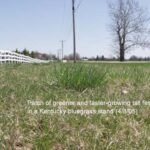
Patches of tall fescue or perennial ryegrass are currently much greener than Kentucky bluegrass (photos). Patches of these two grasses are prominent right now as the bluegrass is just starting to green up. Give it another week and the bluegrass will catch up with the tall fescue or ryegrass. No control is needed to remove…Read more about Dark Green Patches in Otherwise Lighter Green Lawn[Read More]
Star of Bethlehem, Spring Beauty Emerging in Shaded Areas

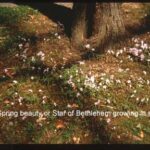
Star of Bethlehem and Spring Beauty are currently emerging and flowering in shaded areas. Both plants have pretty white flowers with the Star of Bethlehem having six petals while Spring Beauty has only five petals . The Star of Bethlehem was once planted as an ornamental while the Spring Beauty is native. Both plants are…Read more about Star of Bethlehem, Spring Beauty Emerging in Shaded Areas[Read More]


Dandelions: Friend or Foe?

The annual bloom of dandelions is already here in southern Indiana and just around the corner in the rest of the state. Though some find dandelions attractive and some may actually eat them in salads or wine, others consider dandelions as weeds and try to control them in a lawn. The optimum time to control…Read more about Dandelions: Friend or Foe?[Read More]

 Categories:

Buyer Beware: Annual Ryegrass is Not a Persistent Turfgrass Species for Indiana Homelawns

There are many cool-season turfgrasses suitable and adapted to home-lawns in Indiana. They include; Kentucky bluegrass, turf-type tall fescue, fineleaf fescue and to a certain extent even “perennial” ryegrass. Many new lawns are established using seed because it is much less expensive than sod. Unfortunately, in many instances inexperienced homeowners or landscape contractors often purchase…Read more about Buyer Beware: Annual Ryegrass is Not a Persistent Turfgrass Species for Indiana Homelawns[Read More]

 Categories:

To Fertilize Lawns or not to Fertilize: That is the Question

For the vast majority of homeowners, resist the urge to fertilize now. Fertilizing now can encourage too much growth and could lead to problems later this summer such as poor root growth and disease. Additionally, since spring rains play havoc with mowing schedules, nitrogen fertilization can further complicate your mowing schedule by causing grass plants…Read more about To Fertilize Lawns or not to Fertilize: That is the Question[Read More]


Fire up the Mower!

Now’s the time to get the mower out of the shed, make sure it starts and is ready to go when you need it in the next few weeks. Be sure to sharpen the blade and make sure the mower is working well mechanically. You should begin mowing at 3 inches or so once the…Read more about Fire up the Mower![Read More]


Control Them Now

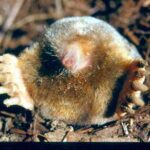
Now is a very good time to spend a little extra effort in controlling those pesky moles. Recent warm, wet weather has returned these nasty little turfgrass destroyers back to the surface of the soil where they are making runs throughout the turfgrass. March and April are ideal times to control moles because this is…Read more about Control Them Now[Read More]


Mid-winter Mole Activity

Mole activity is becoming more apparent with the recent warm weather. Large piles of soil on the lawn surface are evidence of the moles subterranean mining. Unfortunately control of this pest still depends on trapping or possibly a mole-hunting cat or dog. Techniques such as drowning with water, poisoning with car exhaust, shocking or vibrating…Read more about Mid-winter Mole Activity[Read More]


Turf 101: Optimum mowing heights for turf

Below is a table for the optimum mowing heights for turfgrass species in Indiana. The optimum mowing height is where the particular species will perform best, creating the thickest turf, and requiring the fewest inputs. Mowing above these heights will tend to create a less dense turf with coarser leaf blades, and potentially a puffy…Read more about Turf 101: Optimum mowing heights for turf[Read More]


November Lawn Fertilization

Up until about two weeks ago, autumn 2004 was for the most part a fairly dry season. This means that if you fertilized your cool-season lawn in early September and were unable to regularly irrigate, the nitrogen that was applied probably was not used very effectively by the turfgrass plant. If you missed that fertilizer…Read more about November Lawn Fertilization[Read More]


Controlling Wild Onion or Wild Garlic in Lawns

Wild onion and wild garlic emerging in the southern two-thirds of Indiana and these are difficult-to-control weeds. These weeds look very similar to the garden variety onion except the stems of the wild type are much thinner and do not grow as tall as the garden variety. The most effective method for controlling onion and…Read more about Controlling Wild Onion or Wild Garlic in Lawns[Read More]

 Categories:


Fertilization required immediately as turf greens-up after rain

Most of the state has received 0.5 inch of rain or more either this week or last and thus turf areas are starting to green-up again. It is important to take advantage of the few weeks of growing conditions and apply fertilizer immediately to help improve green-up, fill-in from drought damage, and winter survival. Apply…Read more about Fertilization required immediately as turf greens-up after rain[Read More]


Grub damage visible as lawns green up

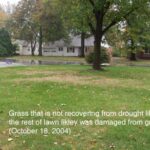
As promised earlier, grub damage is now becoming apparent on lawns that are greening up with the recent rains. Grub damaged turf will not green-up with the rest of the lawn and is likely brown for good (dead) (see accompanying photo). Unfortunately, there’s not much you can do now and insecticides are certainly not effective…Read more about Grub damage visible as lawns green up[Read More]


Options for Seeding Late in the Year

It is now too late to seed a turf area to expect a good stand going into winter. Seeding turfgrasses such as Kentucky bluegrass, perennial ryegrass, or tall fescue during early November may still allow time for germination, but the seedlings are likely to die from winterkill. You currently have 2 viable options: 1. On…Read more about Options for Seeding Late in the Year[Read More]


Controlling broadleaf weeds after the drought

Now that the lawn and weeds have greened-up from the recent rains, broadleaf herbicides should be effective yet this fall. Though these herbicides work faster when the plants are actively growing, these herbicides will still work as long as the plants are green and photosynthesizing. Therefore, applications into November will work, albeit slower. You may…Read more about Controlling broadleaf weeds after the drought[Read More]

 Categories:

A Dry Lawn in October is Reason for Concern

Though areas of Indiana received some rain this week and more is forecasted, most of the state has received precipitation far below normal. Many lawns look as brown now as they normally do in August. This does not bode well for winter survivability of grass and the appearance of the lawn next year. September and…Read more about A Dry Lawn in October is Reason for Concern[Read More]


Coping with Late Season Drought in Turf

(Adapted from the Midwest Regional Turf Foundation Factsheet, Oct 1, 2004) After an extremely wet summer, turf drought stress has come out of nowhere almost throughout the state after a dry August and September. Though September and October are prime growing months, turf will not recover unless the turf receives ample rain or irrigation soon….Read more about Coping with Late Season Drought in Turf[Read More]


What Happens to Fertilizers and Pesticides Applied to Turf?

Now that we are entering the fertilization season for lawns, questions sometimes arise about where products go after application to lawns. Research at Purdue and many other universities has shown that fertilizers (including both nitrogen and phosphorus) and pesticides applied to turf will not move horizontally (runoff) or vertically (leaching). This is because the relatively…Read more about What Happens to Fertilizers and Pesticides Applied to Turf?[Read More]


September Grub Damage

White grub damage on turfgrass may be more widespread than many expected this year. With ample rain and favorable growing conditions for most host plants during the early and mid growing season, high concentrations of adult Japanese beetles were not as common as in previous years. This may have lulled turfgrass managers into forgetting about…Read more about September Grub Damage[Read More]


Page last modified: May 15, 2019

Turfgrass Science at Purdue University - Horticulture & Landscape Architecture, 625 Agriculture Mall, West Lafayette, IN 47907

© 2026 Purdue UniversityAn equal access/equal opportunity universityCopyright ComplaintsMaintained by Turfgrass Science at Purdue University

If you have trouble accessing this page because of a disability, please contact Turfgrass Science at Purdue University at kkalbaug@purdue.eduAccessibility Resources